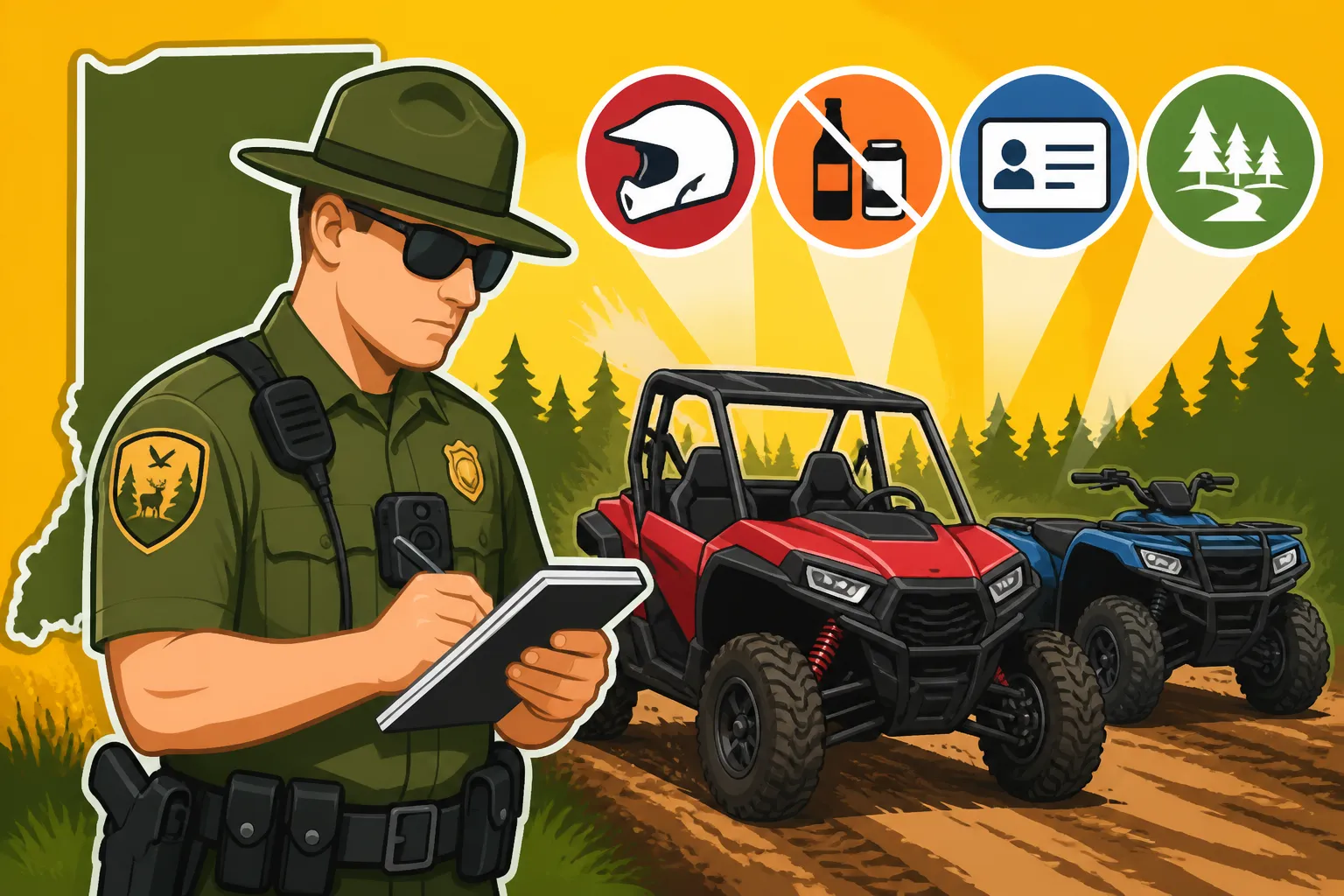
What a Conservation Officer Can Ticket You For
A conservation officer’s ticket can turn a day on an Indiana trail into a legal and costly headache, especially if you mistake a trail permit for permission to ride anywhere. The key is knowing which rules apply to your machine and location, what an officer may check, and what to do if you receive a citation.
What a Conservation Officer May Enforce
Indiana conservation officers enforce state laws and rules within their authority, including rules that apply to Department of Natural Resources properties and activities. On an ORV ride, that can mean checking permits, trail access, rider safety, and other conduct—not just hunting or fishing regulations.
The setting matters. A rule that applies at a state recreation area may not apply in the same way on private land or at a private off-road park. State laws can still apply in those places, and a park may also set its own access conditions. If you are unsure who manages the land, check before unloading.
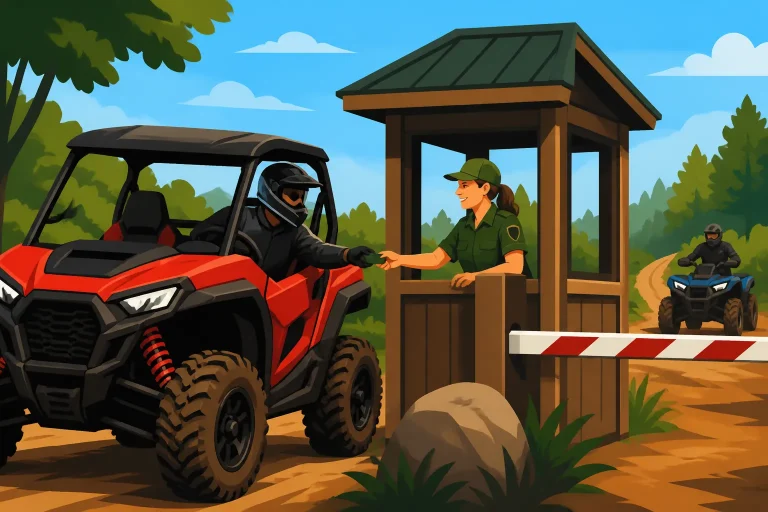
A conservation officer may stop to ask about your machine, your permit, and whether you are riding in an authorized area. Depending on the circumstances, an officer may issue a citation, give a warning, or take another enforcement step. A roadside check or trail encounter does not automatically mean you have done something wrong; it is a chance to show that you are following the rules.
The most useful distinction is between a DNR trail permit and vehicle registration. A DNR permit is generally tied to riding at designated state ORV areas. Registration and its BMV decal are separate requirements that may apply to the machine under Indiana law. Having one does not automatically satisfy the other. For an overview, see Indiana ORV Permits Explained and How Indiana ORV Registration Works.
| What an officer may check | Why it matters | What to verify before riding |
|---|---|---|
| Trail permit | Required access may depend on the riding area and machine | Whether each machine needs a valid permit |
| Trail status | Closed or restricted areas are not open simply because a trail is visible | Current notices, signs, and marked routes |
| Rider age and supervision | Rules can vary with age, vehicle type, and location | Who may operate and what supervision is required |
| Helmet or seat belt use | Safety requirements may apply to particular riders or machines | The rule for your age, machine, and riding area |
| Registration and decal | A state trail permit is not a substitute for required registration | Whether your machine needs a BMV decal |
| Landowner permission | Access to private land is not implied by a trail or road nearby | Written permission and any conditions |
A citation is an allegation, not a final finding that you are responsible. Read the paperwork carefully, note any deadline or required response, and use the court or agency instructions listed on it. Do not assume that paying, ignoring, or informally explaining a ticket will produce the outcome you want.
Permit, Trail, and Access Violations
At a DNR riding area, a common issue is operating without the required trail permit. Indiana’s permit rules are separate from entrance fees: paying to enter an area does not necessarily cover the per-machine permit. Permit needs can also differ for residents and visitors, and an out-of-state registration does not by itself guarantee that a machine may ride without an Indiana permit. Review Does Indiana Honor Out-of-State Registration? and Indiana’s Twenty-Day Visitor Rule if you are bringing a machine from another state.
Permits are generally machine-specific. A group should not assume that one permit covers every vehicle in the truck or trailer. Confirm the requirement for each machine, including rentals, before riding. The practical details are covered in Does Every Machine in the Truck Need Its Own Permit? and Indiana Group Permit Rules.
Even with the correct permit, you can still face trouble for riding where access is prohibited. Examples include entering a closed trail, leaving a marked route, or continuing into an area restricted by a sign or gate. A route that looks rideable is not necessarily open. Closures can be temporary, and conditions such as weather or trail damage may change what is available. Check Indiana Trail Closures to Check and read the notices at the entrance before you unload.
Keep these distinctions in mind:
- A permit gives access only under the conditions that apply to that permit and riding area.
- A permit does not authorize riding on a closed trail or outside designated routes.
- A visible track or tire mark is not proof that a route is open to ORVs.
- A machine’s registration does not replace a DNR trail permit where one is required.
- A private park’s admission or waiver does not automatically satisfy state requirements.
Permission is also central when riding on private land. Do not treat a field, farm lane, utility corridor, or adjoining track as open because there is no fence or sign. Get permission from the person with authority over the property and follow any limits they set. See Indiana Landowner Permission Rules and Indiana Trespass Law and Off-Road Riders for related issues.
The same caution applies to public roads. Indiana does not make every county road an ORV route by default. A county may designate roads for ORV use, and local restrictions can affect where and when riding is allowed. A DNR trail permit does not grant road access. Before planning a connection between trails, check How to Find an Indiana County ORV Ordinance and Indiana Rules for Riding a County Road.
Safety and Conduct That Can Lead to a Citation
An officer may also address safety violations. The applicable rule can depend on the rider’s age, the machine, whether it has an enclosed cab, and where it is being operated. For example, helmet requirements and seat-belt rules are not interchangeable: a machine’s design can affect which requirement applies, but it does not automatically exempt every occupant from safety rules.
Parents and group leaders should check the rules before a ride rather than relying on what another park or state allows. Indiana’s public-land requirements may differ from a private park’s policies. Start with Indiana Helmet and Seat Belt Rules on Public Land, Indiana Rules for a Rider Under 14, and Indiana Supervision Rules for Young Riders.
Other conduct may also be restricted, depending on the place and circumstances. Riding off the marked trail, ignoring a closure, operating carelessly around other riders, or failing to follow an officer’s lawful directions can create separate problems. A park’s posted rules may cover noise, passengers, lighting, or other conditions. Read the gate board and trail notices; do not assume that a rule from one location applies everywhere.
A few practical habits reduce the chance of a preventable citation:
- Confirm the riding area is open and identify its official trail map.
- Check whether each machine needs a permit, and keep proof accessible.
- Review age, supervision, helmet, and seat-belt rules for the people and vehicles in your group.
- Stay on marked, open routes and obey signs and barriers.
- Carry registration documents when applicable, and know where the decal is mounted.
- If an officer stops you, remain calm, follow directions, and ask respectfully what rule is at issue.
You can also check What a Conservation Officer Can Ticket You For—but since this is the current topic, a helpful companion is What an Indiana Officer Checks Roadside if you are preparing for a public-road encounter. Keep in mind that a roadside checklist and a trail-area inspection may involve different rules.
If You Receive a Citation
Do not rely on a quick conversation at the trailhead to resolve a citation. Read the document and follow its instructions. It should identify the alleged violation and explain how to respond. Deadlines and procedures can vary by offense and location, so use the information on the citation or confirm it with the court or agency named there.
Write down what happened while the details are fresh. Record where you were, the route you took, what signs or barriers were present, and what the officer said the violation involved. Keep relevant documents, such as permit confirmation, registration paperwork, photographs of posted notices, and any trail map you used. If another rider witnessed the encounter, note their contact information.
If you believe the citation is incorrect, do not ignore it. Follow the stated process for contesting it and consider getting legal advice if the consequences could be significant or you do not understand the allegation. A permit receipt, for example, may help show that you bought a permit, but it may not answer a separate allegation that you were riding on a closed trail.
For future rides, make it easy to verify compliance. Store permits and paperwork where they stay dry and can be produced without searching through gear. Check that a decal is present and readable when registration requires one. If it has been damaged or lost, handle that before riding again; Ordering a Replacement Indiana Decal explains the related registration issue.
The basic rule is simple: a permit is not blanket permission. It does not override closures, landowner rights, safety requirements, or separate registration rules. Confirm the rules for the specific area, machine, and riders in your group before heading out.
Disclaimer
This article is for general informational purposes only and does not constitute professional advice. Laws, prices and regulations vary by location and change over time. Consult a qualified professional for guidance on your specific situation.