What an Indiana Officer Checks Roadside
There’s nothing quite like hitting the open trail on your ATV or UTV, feeling the rush of the wind, and exploring Indiana’s beautiful landscapes. However, that freedom comes with a responsibility to understand and follow the rules, especially when you find yourself on a road or in a public area. Many riders experience that heart-sinking moment when an officer signals them to pull over, often leaving them wondering exactly what an Indiana officer is looking for during a roadside stop. This comprehensive guide will break down everything an Indiana officer checks roadside, helping you ride confidently and legally.
The Initial Stop: What Prompts an Officer to Pull You Over?
Let’s be honest, an officer doesn't just pull over every ATV or UTV they see for no reason. There's usually a specific observation that catches their eye, leading to the stop. Understanding these common triggers can help you avoid unnecessary encounters and ensure you're always operating within the bounds of the law. It’s all about visible compliance and safe operation.
Visible Violations: Unregistered or Unsafe Equipment
One of the quickest ways to attract attention is by having a machine that visually appears non-compliant. This could be something as obvious as lacking a visible registration decal, which is a major red flag for law enforcement. If your machine doesn't have the required [The Indiana ORV Decal Explained] clearly displayed, it immediately suggests a potential violation. Officers are trained to spot these things from a distance.
Beyond the decal, an officer might notice glaring safety issues. Perhaps a headlight isn't working, or the machine appears to be in disrepair, with missing fenders or excessive modifications that look hazardous. While some modifications are perfectly legal and even enhance safety, like robust aftermarket bumpers or specialized tires, others might suggest a machine isn't roadworthy or safe for general use. For instance, extremely loud exhaust systems often draw attention, as excessive noise can be a violation in certain areas. It’s not about judging your style, but about ensuring basic legal and safety standards are met. If something about your machine screams "not legal" or "unsafe," it significantly increases your chances of being stopped.
Observing Prohibited Road Use
Indiana's rules for ORV road use are quite specific and, in many areas, restrictive. If an officer observes you riding your ATV or UTV in an area where it's clearly prohibited, that's an immediate reason for a stop. This could mean riding on a state highway, a sidewalk, or even a county road that hasn't been specifically designated for ORV use. Many riders mistakenly believe that if a road is unpaved, it's fair game, but that's often not the case outside of designated areas.
The officer isn't just looking for outright illegal riding on major thoroughfares. They're also observing how you interact with public roads, even if it's just a quick crossing. Are you stopping completely before crossing? Are you yielding to traffic? Are you making an unsafe maneuver? Riding your machine through a local parking lot that's clearly marked "No ATVs" or attempting to use a rail trail not open to motorized vehicles will definitely catch an officer's attention. Even a brief, seemingly harmless detour onto a prohibited road can lead to a stop. Understanding [Indiana Counties That Allow ORVs on Roads] and where those specific roads are is crucial for avoiding these situations.
Operator Behavior and Obvious Impairment
Just like with any other vehicle, an officer will pay close attention to the operator's behavior. Erratic driving, excessive speed for conditions, or operating the machine in a reckless manner are all reasons for a stop. This isn't unique to ATVs or UTVs; it applies to all vehicles on or near public thoroughfares. If you're "hooning" around, doing donuts, or generally causing a disturbance, you're practically inviting a conversation with law enforcement.
Furthermore, signs of impairment are a serious concern. If an officer observes someone operating an ORV in a way that suggests they might be under the influence – weaving, slow reactions, or inability to maintain control – they will absolutely initiate a stop. Operating an ORV while impaired is just as dangerous, and illegal, as operating a car while impaired, and the penalties can be severe. It's not just about what your machine looks like, but how you handle it and how you present yourself as an operator. Understanding [Indiana DUI Rules for ORV Riders] is paramount for every ORV operator.
Decals, Titles, and Paperwork: Proving Your Machine is Legal
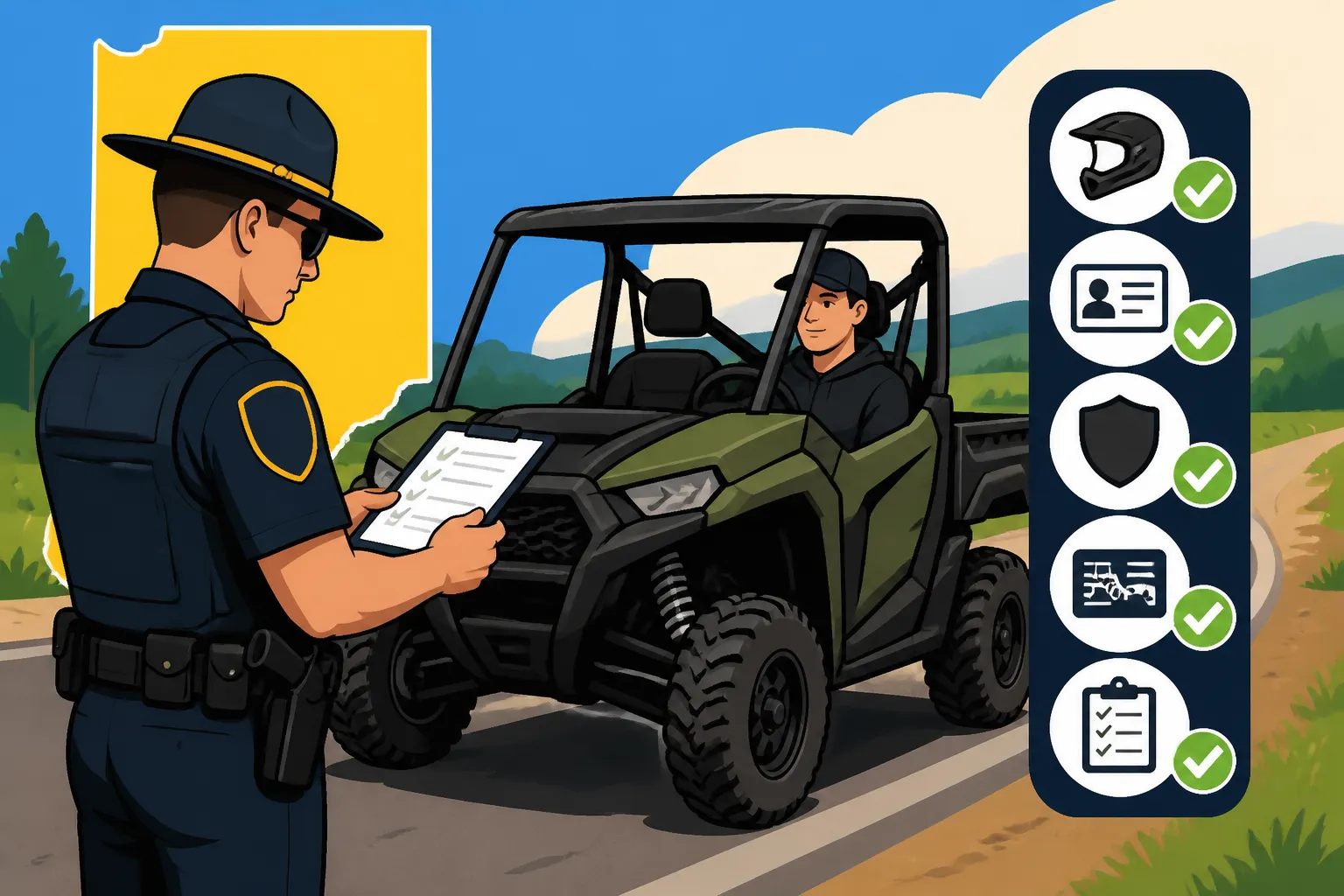
Once an officer has made a stop, their next step is almost always to verify the legality of your machine and your right to operate it. This means checking your documentation. Many riders, especially those new to the ORV world, can get tripped up here, so knowing exactly what paperwork to have on hand is incredibly important.
The Indiana ORV Decal: Placement and Validity
The registration decal is the first and most obvious piece of paperwork an officer will look for. In Indiana, off-road vehicles (ORVs) generally need to be registered with the Bureau of Motor Vehicles (BMV) if they are to be operated anywhere other than private property with the landowner's permission. This is clearly explained in resources like [Registering an ORV in Indiana]. The BMV issues a specific decal that must be prominently displayed on the machine.
An officer will check not only if you have a decal but also its validity and placement. Is it current? Does it match the year? Is it peeling off or obscured by mud? The law specifies where the decal should be mounted, typically on the forward half of the machine, clearly visible. If your decal is missing, expired, or improperly placed, it can lead to a citation. Officers also check the decal number against their records, sometimes using their in-vehicle computers to quickly confirm that the decal is legitimate and registered to your machine. Don't underestimate the importance of this small sticker – it's your machine's primary identifier.
Registration Certificate and Ownership Proof
While the decal is visible, the registration certificate is the physical document that confirms your machine is registered with the state. This is essentially your ORV's "driver's license." When an officer stops you, they'll ask for this certificate. It contains vital information about your machine, including its Vehicle Identification Number (VIN) and your ownership details. This helps them confirm that the machine you're operating is indeed registered and that you are the legal owner or authorized operator.
In addition to the registration certificate, an officer might also ask for proof of ownership, especially if there's any discrepancy or suspicion. This could be your title. While not all ATVs in Indiana require a title – particularly older machines – newer ones and UTVs almost always do. If you purchased your machine after 2009, it likely needs a title. An officer will want to see that you have this document or, at the very least, a bill of sale that clearly establishes your legal ownership, especially if you've recently purchased the machine. This is where topics like [Indiana ORV Titling Deadline] become critical, as delays in titling can create issues. Having a clear chain of ownership, whether through a title or a bill of sale, is crucial for demonstrating that the machine isn't stolen and belongs to you.
Insurance Documentation
Although Indiana does not mandate statewide liability insurance for all ORVs, individual counties that allow ORV use on their roads may require it. For example, some counties that have opened their roads to ORVs, like Vanderburgh County, explicitly require operators to carry proof of insurance. If you're riding in one of these areas, an officer will definitely ask to see your insurance card or declaration page.
Even if you're not in a county with a specific insurance mandate for road use, having insurance is always a smart idea for your own protection. Many riders choose to carry comprehensive ORV insurance regardless of state or local requirements. If an officer asks, and you have it, it demonstrates a responsible approach to ORV ownership. It's important to know the rules of the specific area you're riding in regarding insurance, as outlined in guides like [Indiana ORV Registration and Insurance Proof]. Being caught in a county that requires it without proof can lead to fines and other legal complications. Always keep your insurance documentation in a waterproof bag on your machine, easily accessible.
Operator and Passenger Requirements: Who Can Ride and How
Beyond the machine itself, the officer will be very interested in who is riding and how they are riding. Indiana has specific rules regarding operator age, supervision, and safety equipment, which are designed to protect everyone on the trails and roads. These rules are non-negotiable and often a key focus during a roadside stop.
Age and Supervision Rules for Riders
Indiana has clear guidelines on the minimum age for ORV operation and when supervision is required. Generally, if a rider is under 14 years old, they must be under the direct supervision of an adult who is at least 18 years old. This isn't just about having an adult present at the park; it means the adult must be close enough to directly control or influence the actions of the minor. For instance, an officer might ask how closely you are supervising a younger rider, or if a teenager operating the machine has the proper age to do so independently.
For riders aged 14 to 17, while they may not require the same direct supervision as younger children, they often still fall under specific rules regarding where they can ride and the type of machines they can operate. These rules are in place because ORVs can be dangerous if operated improperly, and younger riders may not have the judgment or experience to handle all situations. Understanding [Indiana Rules for Riders Under 14] is crucial for any family enjoying ORV activities, as violating these rules can lead to serious legal repercussions for the supervising adult.
Helmet and Seat Belt Compliance
Safety gear is another major checkpoint for an Indiana officer. The state has specific helmet laws that apply to ORV riders, particularly those under a certain age. Generally, all ORV riders under 18 years old are required to wear a U.S. DOT-compliant helmet. This rule applies whether they are on public land, designated trails, or even on private property (unless the property owner explicitly waives the requirement). An officer will check if helmets are present and if they appear to meet safety standards (looking for that DOT sticker).
For those riding UTVs, seat belt compliance is just as important. If your side-by-side is equipped with seat belts (which most modern UTVs are), all occupants are generally required to wear them, regardless of age. While a quad or dirt bike rider won't have a seat belt, a UTV operator and passenger will. An officer will quickly assess if seat belts are being worn. Even if you're riding a modified machine, like one outfitted with a SuperATV roll cage, the expectation for occupants to be properly restrained remains. These rules are in place to reduce injuries in case of an accident, and an officer will take them very seriously. Failure to comply with [Indiana Helmet Law for ORV Riders] or seat belt mandates can result in fines.
Passenger Rules and Safe Operation
Carrying passengers on an ORV also has specific rules, especially regarding ATVs. Most ATVs are designed for a single operator, and carrying a passenger can significantly alter the machine's balance and handling, making it unsafe. If an officer sees more than one person on a single-rider ATV, that's an immediate safety concern and a likely reason for a stop.
UTVs, on the other hand, are typically designed to carry multiple passengers, with designated seating positions and seat belts. An officer will check that passengers are only occupying designed seating areas and that they are all properly restrained. Overloading a UTV, or having passengers ride in the cargo bed without proper restraints, is a definite safety violation. Officers are looking for safe operation practices, ensuring that the machine is not just registered, but also being used in a manner that protects all occupants and others around them.
Machine Condition and Equipment: What an Officer Scrutinizes
An officer's inspection isn't limited to just paperwork and who's riding. The physical condition and specific equipment on your ATV or UTV are also under the microscope. Indiana laws specify certain equipment that ORVs must have, especially if they are going to be operated in situations that might bring them into contact with public spaces or other vehicles.
Lighting and Visibility Gear
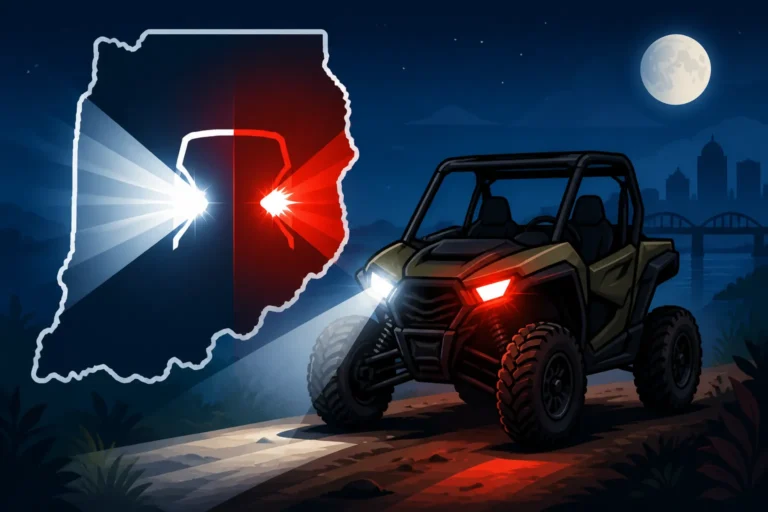
If you're riding after dark, or even at dusk or dawn, your machine's lighting is absolutely critical. Indiana law requires ORVs to have specific lighting when operated during hours of limited visibility. This typically includes at least one headlamp and one taillamp, both illuminated. An officer will check to make sure these lights are functional and visible. If you’ve upgraded your machine with an aftermarket light bar or additional LED pods, that’s great for visibility on the trail, but the primary headlamp and taillamp must still be working correctly and comply with basic road safety standards.
Beyond basic lights, if you're riding on roads designated for ORV use by a county, those local ordinances might have additional requirements, such as dual headlights or specific reflector placements. An officer might also look for things that enhance overall visibility, like a bright flag on an antenna when riding in certain off-road parks or areas with challenging terrain. For instance, a bright orange flag, easily attachable with a SuperATV flag mount, can greatly increase your visibility to other riders and even officers. Any missing or non-functional essential lighting will raise a red flag. [Indiana Rules for Riding After Dark] provides further details on these requirements.
Spark Arresters and Sound Levels
Environmental and noise regulations are also part of an officer's roadside check, particularly for exhaust systems. Most public lands and designated ORV areas require machines to be equipped with a U.S. Forest Service-approved spark arrester. This device prevents hot carbon particles from escaping the exhaust and potentially igniting dry vegetation, which is a significant fire hazard. An officer might visually inspect your exhaust pipe to see if a spark arrester is present.
Additionally, excessive noise can be a nuisance and a violation. While specific decibel limits can vary, an officer has the discretion to determine if your machine's exhaust is excessively loud, particularly if it's been modified to bypass factory mufflers or spark arresters. Super loud exhausts are often one of the first things that draw negative attention in residential or environmentally sensitive areas. Be familiar with [Indiana Spark Arrester Rules] to ensure your machine is compliant and considerate of others and the environment.
General Machine Safety Checks (Brakes, Tires)
While an officer isn't going to perform a full mechanic's inspection on the side of the road, they will do a quick visual check for obvious safety concerns. This could include things like:
- Brakes: Are they functional? Can you stop the machine effectively? While they might not test them extensively, they might ask you to demonstrate a quick stop.
- Tires: Are they severely worn or damaged? Are they appropriate for the terrain (especially if you’re on a road with off-road-only tires that might not be legal)?
- Steering: Does the steering system appear to be in good working order, without excessive play or damage?
- Mirrors: Some county ordinances may require mirrors if operating on public roads, so an officer might check for their presence and functionality if you’re in such an area.
These checks are about ensuring the basic safe operability of your machine. If an ORV appears to be a hazard to yourself or others due to its poor condition, an officer has a right to intervene. Regular maintenance and pre-ride inspections are not just good practice, they can help you pass a roadside check with flying colors.
Understanding Road Use Ordinances: County Specifics
This is where many riders get confused, and it’s a major point of contention during roadside stops. Indiana’s ORV road use laws are not uniform across the state. They vary significantly by county, and knowing the specific rules for the area you're riding in is absolutely essential. An officer from that local jurisdiction will be highly knowledgeable about their own county's ordinances.
Knowing Your Local County's ORV Rules
Indiana state law generally restricts ORVs from public roads, but it also provides a mechanism for counties to open their roads to ORV use through local ordinances. This means that what's legal in one county might be strictly prohibited just across the county line. An officer will expect you to know the rules of the specific county you're in. This includes knowing which roads are designated, what times of day ORVs are allowed, and any specific equipment or insurance requirements.
Many counties will have maps or lists of approved roads available on their county government websites or through local sheriff's departments. If you're planning to ride through a new area, always do your homework beforehand. Relying on word-of-mouth or assuming "it's probably fine" is a recipe for a ticket. The officer isn't going to care that you're "just passing through" if you're on a prohibited road. Checking resources like [Indiana Counties That Allow ORVs on Roads] is a great first step, but always verify with the local county’s official resources.
Designated Roads vs. Prohibited Areas
An officer will confirm that you are operating your ORV only on roads explicitly designated for such use by the local ordinance. This means staying off state highways, interstates, and generally any road that hasn't been specifically marked or listed as open to ORVs. Even in counties that have opened some roads, there are often exceptions, such as within city limits, on certain types of highways, or during specific events.
If you're found riding on a road that is not designated, the officer will likely explain the local ordinance and issue a citation. They're not just being difficult; they're enforcing rules put in place for public safety and to manage traffic flow. It's not uncommon for an ORV to be pulled over for riding on a highway shoulder or attempting to cross a limited-access road, both of which are generally prohibited. An officer’s roadside check will quickly determine if you're on a "red" road when you should only be on "blue" roads, based on local mapping.
Trespass and Private Property Concerns
Even if you're not on a public road, an officer might get involved if you're suspected of trespassing. Riding an ORV on private property without the landowner's explicit permission is illegal, and officers respond to trespass complaints. If a property owner has called the police because ORVs are on their land, an officer will investigate, and if you're found, they'll ask for proof of permission or issue a trespass citation.
This is particularly relevant if you're using a field or a private drive to access an ORV-friendly road, or if you're riding through unposted wooded areas that are actually private land. Always assume land is private unless it's clearly marked as public access or you have direct permission. An officer stopping you for suspected trespassing will not only check your machine's legality but also your right to be on that specific piece of land.
The Consequences of Non-Compliance: What to Expect
No one wants to get a ticket, especially when you're out trying to enjoy your hobby. However, if an Indiana officer determines that you are in violation of ORV laws or local ordinances, there will be consequences. Understanding these potential outcomes can underscore the importance of proper preparation and compliance.
Fines and Administrative Penalties
The most common consequence of non-compliance is a fine. These can vary widely depending on the nature and severity of the violation. For example, operating an unregistered ORV, riding without a required helmet, or illegally using a public road can all result in monetary penalties. These fines can add up quickly, especially if there are multiple violations.
In addition to the initial fine, some violations might carry administrative penalties. For instance, repeatedly riding an unregistered machine or failing to appear in court could lead to further complications, including higher fees or even the suspension of your driving privileges for other vehicles, in some cases. It's not just a slap on the wrist; these are legal infractions that can have a lasting impact. You can find more specific details in resources like [Indiana Fines for an Unregistered ORV] or [Indiana Fines for Illegal ORV Road Use].
Machine Impoundment and Escalating Penalties
In more serious cases, an officer might have the authority to impound your ORV. This typically happens if the machine is unregistered, appears stolen, or if the operator is arrested for a severe offense like operating while intoxicated. Having your machine impounded means not only the initial fines but also towing fees, storage fees, and the hassle of retrieving your ORV, which can be a significant financial burden.
Repeat offenses or very serious violations can also lead to escalating penalties. A first offense might be a warning or a minimal fine, but subsequent offenses can result in much higher fines, mandatory court appearances, and potentially even criminal charges, depending on the nature of the violation. For example, a third offense for certain ORV infractions can carry a significantly higher fine than the first. The goal of law enforcement is to deter unsafe and illegal behavior, and the penalties reflect this.
Your Rights During a Roadside Stop
It's important to remember that even during an ORV roadside stop, you have rights. An officer must have reasonable suspicion or probable cause to initiate a stop. If they pull you over, they should be able to articulate why they stopped you. You have the right to remain silent, and you generally do not have to consent to a search of your machine without a warrant or probable cause (though there are exceptions, such as if contraband is in plain view).
Always be polite and cooperative, but know your limits. You will be asked for your identification, the machine's registration, and any other required documentation. If you believe your rights are being violated, note the officer's name and badge number, and calmly state your objection. It’s always best to consult with a legal professional if you receive a citation and believe it was issued improperly or if you face serious charges. A calm and respectful demeanor goes a long way in any roadside interaction, even if you feel frustrated or unfairly targeted.
Disclaimer
This article is for general informational purposes only and does not constitute professional advice. Laws, prices and regulations vary by location and change over time. Consult a qualified professional for guidance on your specific situation.