Does Every Machine in the Truck Need Its Own Permit?
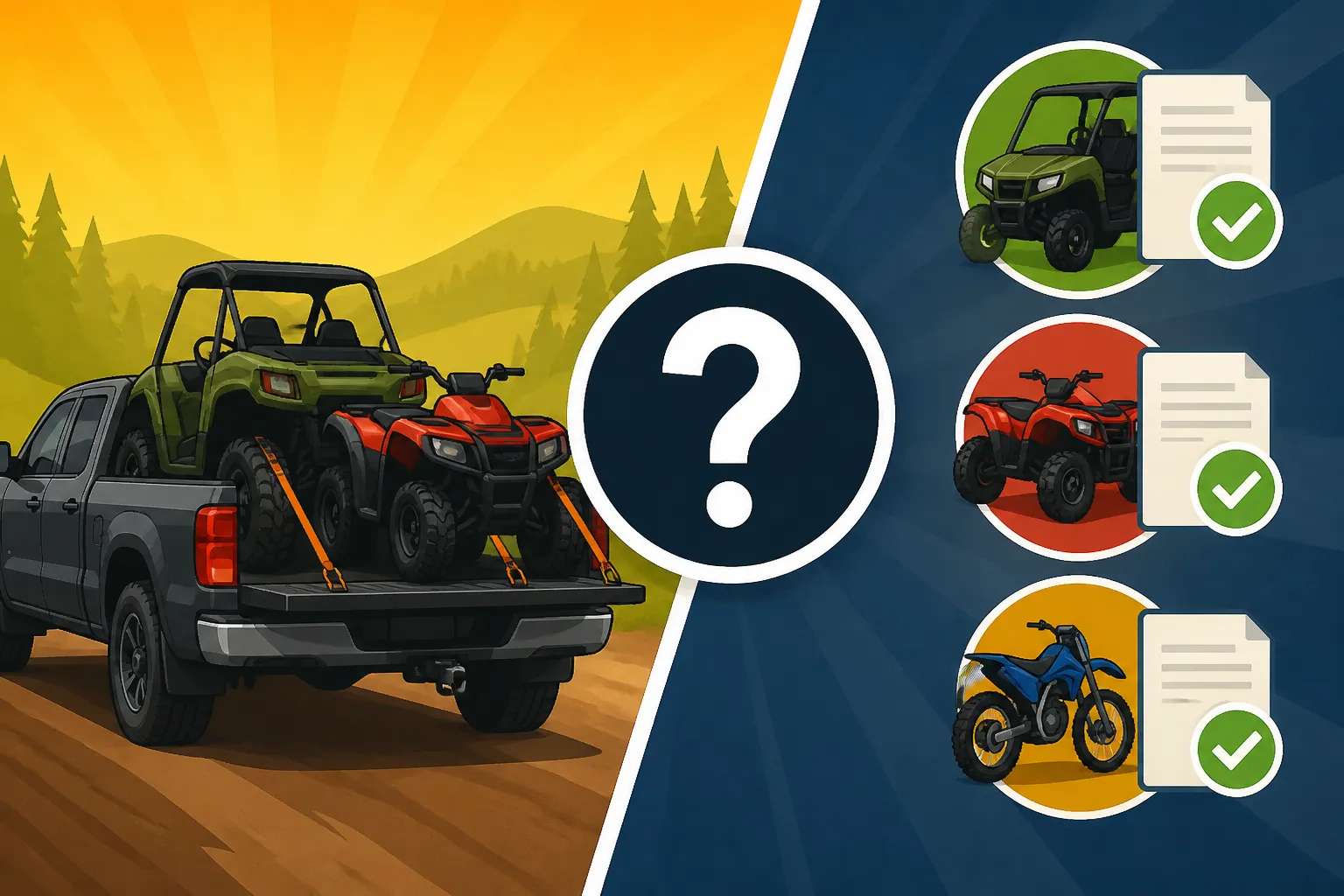
If you load two ATVs or UTVs on one trailer, it is easy to assume one trail permit covers the whole load. In Indiana, permits for state off-road riding are generally tied to individual machines, not to the truck, trailer, owner, or riding group. Here’s how to plan for each vehicle and avoid mixing up trail permits with registration or entrance fees.
The short answer: plan on one permit per machine
When you ride at an Indiana state off-road area that requires a Department of Natural Resources trail permit, each machine needs its own permit. A single permit should not be treated as covering every ATV or UTV hauled to the park, even if all the machines belong to one household or arrive in the same truck.
The practical test is simple: count the machines that will be ridden, not the vehicles towing them. If three machines are going to ride, plan for three permits. If a machine stays on the trailer and never enters the riding area, it ordinarily does not need a trail permit for that visit—but check the park’s current instructions if you are unsure how it handles unloaded or staged vehicles.
| Situation | How to plan |
|---|---|
| One ATV in a truck or trailer | Get a permit for that ATV if the riding area requires one |
| Two machines arriving together | Plan for a permit for each machine that will ride |
| Several riders sharing one machine | The permit is associated with the machine, not each rider |
| One machine carried as a spare and not ridden | Ask the park whether it needs a permit before unloading it |
| Annual permit on one machine, with a second machine in the group | Do not assume the annual permit covers the second machine |
| Riding more than one state area | Check whether the permit type applies at both destinations |
Indiana’s state trail permits are separate from an Indiana BMV registration or decal. A machine may need the appropriate registration or decal for its ownership and use, and it may also need a DNR trail permit to ride at a state off-road area. One document does not automatically replace the other. For the differences between trail-permit options, see Indiana’s Daily and Annual Trail Permits and Indiana Permit for a Second Machine.
A permit is also separate from an entrance fee. Some locations charge for access to the property in addition to the trail permit, so paying one charge does not necessarily satisfy the other. Before you leave, check the current rules for your destination and budget for each applicable charge. Why an Entrance Fee Sits on Top in Indiana explains why these costs are separate.
What counts as a separate machine
For trip planning, treat every ATV, UTV, or other off-road vehicle you intend to operate as its own machine. A permit attached to or issued for one vehicle should not be assumed to transfer to another just because the machines travel together.
That distinction matters most for families and groups. A parent may be driving the tow vehicle, while several riders bring separate machines. The permit count follows the machines that will be used on the trails. It does not follow the number of adults, passengers, households, or trailers.
One machine with more than one rider
If two eligible riders take turns using the same machine, that does not usually mean they need two vehicle permits. The permit requirement is based on the machine, while age, supervision, helmet, and other operating rules may apply separately to each person.
Do not confuse a shared machine with a passenger arrangement. A UTV that carries more than one occupant is still one vehicle for permit planning, but it must be operated in a way that meets the park’s passenger and safety rules. A permit for the UTV does not authorize someone who is otherwise too young or unqualified to operate it.
Several machines in one household
A household permit purchase is not necessarily a permit for the household fleet. If one adult owns several ATVs, or a family brings a youth machine in addition to a full-size UTV, make a list of each vehicle that will ride and confirm which permit is needed for each one.
This is especially useful when one machine has an annual permit and the others will be used only for a day. Avoid assuming that the annual permit can be moved from one machine to another or used for a friend’s vehicle. The rules depend on the permit type and how it is issued or displayed. For a group bringing a mix of annual and daily permits, One Annual Permit and Three Day Passes gives a useful example of why the permit count needs to match the machines.
A machine that stays on the trailer
If you bring an extra vehicle but do not unload or operate it, it may not need the same trail access permit as a machine you ride. However, a plan can change once you reach the park: a breakdown, a rider switching machines, or a last-minute decision to take the spare out can turn it into a machine being used on the trails.
The safest approach is to confirm the park’s instructions before travel, especially if you expect to unload a machine for inspection, staging, or repair. If you think there is a chance you will ride it, arrange its permit before starting. Do not rely on a permit assigned to another vehicle to cover the spare.
Registration, reciprocity, and park charges are different questions
Visitors sometimes arrive with a registration, plate, or decal issued by another state and assume it replaces every Indiana requirement. That can be a costly misunderstanding. Registration and trail access are separate issues: a visiting machine may be recognized for some purposes while still needing an Indiana trail permit at a state riding area.
Similarly, a machine’s Indiana BMV decal does not by itself mean the rider has paid for DNR trail access. And a DNR permit is not a substitute for registration where registration is required. Check both requirements for the machine and the place you intend to ride. The rules for visitors are covered in Does Indiana Honor Out-of-State Registration? and Indiana’s Twenty-Day Visitor Rule.
This distinction is also important if you ride only at private parks. A private park sets its own access and fee requirements, which may not match the DNR permit rules for state off-road areas. Do not assume that a permit accepted at one destination will be accepted at another. Confirm the rules with each park before hauling your machines.
Annual permits and multiple riding areas
An annual permit can be a convenient option for a machine used repeatedly, but it should not be treated as a group pass. If you have multiple machines, check whether each one needs its own annual permit or whether a daily permit makes more sense for occasional use. Compare the options for the machines you will actually ride, not just the number of trips you expect to take.
Also verify where a particular permit is valid. An annual permit may cover more than one eligible state riding area, but that does not mean it covers every park fee, private park, or vehicle in your group. Does One Annual Permit Cover Redbird and Interlake? addresses the question of using an annual permit across Indiana’s state areas.
Permit details, prices, where permits are sold, and display instructions can change. Check the current DNR information for your destination before setting out. If you plan to buy ahead, confirm that the online purchase process provides the permit or proof you need at the gate. Where to Buy an Indiana ORV Permit and Buying an ORV Permit Online Before You Leave Home can help with those planning steps.
A simple checklist before loading
A few minutes of planning can prevent confusion at the entrance and keep a group from discovering that one machine is not covered.
- Count the machines that will ride. Include youth machines, backup machines, and any vehicle a rider might switch to.
- Identify the destination. State off-road areas, private parks, and public roads can have different rules.
- Check each machine’s requirements. Confirm whether it needs a DNR trail permit, registration or decal, or both.
- Choose a permit for each machine. Do not assume one permit covers several vehicles or transfers between them.
- Check additional charges. Confirm whether the destination also charges an entrance or access fee.
- Review purchase and display instructions. Keep proof accessible and follow the park’s requirements for showing or affixing the permit.
- Recheck before leaving. If rules or fees have changed, a recent confirmation from the park or DNR is more reliable than an old receipt or advice from another rider.
At the gate, be ready to show the required proof for each machine. Keep permits and related documents organized so the person checking in the group can match them to the vehicles. Showing a Permit at an Indiana Gate covers what to have ready.
The bottom line is to budget a trail permit for every machine you plan to ride where Indiana requires one. The truck and trailer bring the machines to the park; they do not combine the machines into one permit. Then check registration, park entrance charges, and location-specific rules separately.
Disclaimer
This article is for general informational purposes only and does not constitute professional advice. Laws, prices and regulations vary by location and change over time. Consult a qualified professional for guidance on your specific situation.