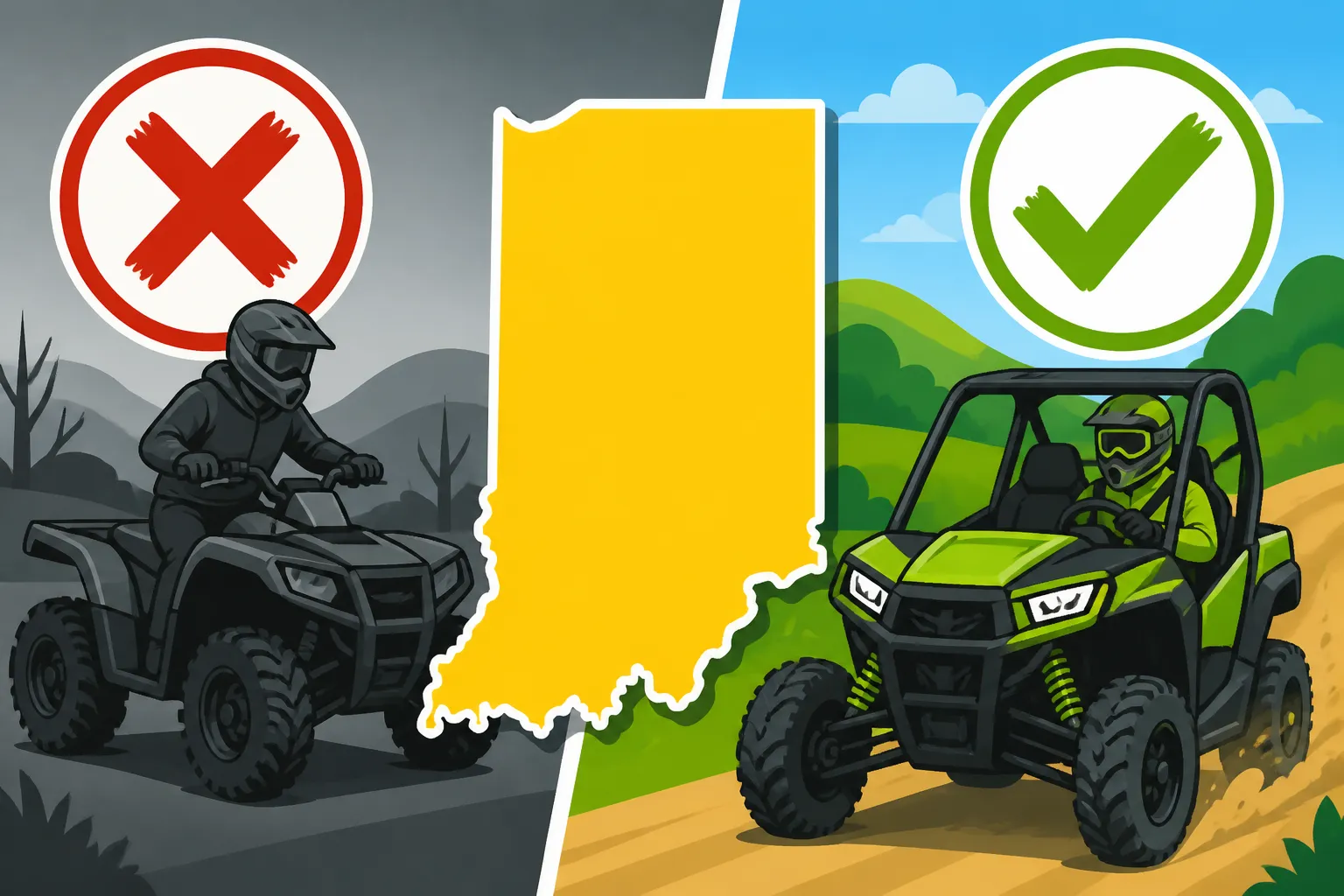
The Safety Course Indiana Does Not Require
Indiana riders often hear conflicting advice about whether an ATV or UTV safety course is legally required. In general, Indiana does not make a course a statewide prerequisite for riding or getting an ORV trail permit. That does not mean every rider can go anywhere: age and supervision rules, permits, local laws, and park policies still matter.
Does Indiana require an ATV or UTV safety course?
Indiana does not generally require riders to complete an ATV or UTV safety course before riding an off-road vehicle or obtaining a state ORV trail permit. A course can still be useful, especially for a new rider or a family teaching a child, but it is different from a permit, registration, or legal permission to ride.
The distinction matters because several requirements can apply at the same time:
- Training helps a rider learn safe operation. It is generally voluntary in Indiana.
- A trail permit may be required to use a public riding area. Training does not replace it.
- Registration or a decal may be required for a machine in certain circumstances. A course certificate does not substitute for the vehicle paperwork.
- Age and supervision rules can restrict who may ride and whether an adult must supervise. Completing a course does not automatically remove those restrictions.
- Park and local rules may add conditions for a particular location or activity.
For a broader explanation of the distinction, see Why Indiana Mandates No Rider Certificate. If you are planning to ride on state recreation area trails, Indiana Safety Training for Riders can help you understand the role of voluntary training alongside the rules that still apply.
A course also does not make an otherwise prohibited ride legal. A rider who has completed training still needs to use an allowed trail or road, follow the applicable rules, and have the required documents and equipment. Likewise, a rider without a course certificate is not automatically breaking Indiana law simply by riding where riding is allowed.
The word “generally” is important. A private park, rental operator, organized event, club, or insurer may set its own conditions. Those are not the same as a statewide course mandate. Before a trip, check the rules of the specific place or activity rather than assuming either that a certificate is always needed or that nobody can ever ask for one.
How the course question changes by riding location
The most useful question is often not “Does Indiana require a course?” but “What rules apply at the place where I plan to ride?” Public trails, private parks, county roads, and private property are governed by different combinations of state law and local or facility rules.
| Where you plan to ride | Is a course generally a statewide prerequisite? | What to check instead |
|---|---|---|
| Indiana state ORV recreation area | No general course prerequisite | Trail permit, age and supervision rules, helmets, machine rules, and current park requirements |
| Private off-road park | Not as a general statewide requirement | The park’s current admission, waiver, age, and operating rules |
| County road or other public road | A course does not grant road access | Whether the road is designated for ORVs and any local operating requirements |
| Private land | No general course prerequisite simply to ride | The landowner’s permission, safe boundaries, and any rules that apply to the activity |
| Rental or organized event | No general rule that every rider must have a course certificate | The rental company’s or event organizer’s conditions, plus applicable law |
State recreation areas
At a state ORV area, focus first on the requirements for that site and the riders in your group. A permit requirement is separate from training, and age or supervision rules can still apply even if a rider has taken a course. Check Do You Need a Permit for Indiana ORV Trails? for the permit question, and review Indiana Minimum Age to Ride Public Land and Indiana Supervision Rules for Young Riders before bringing a minor.
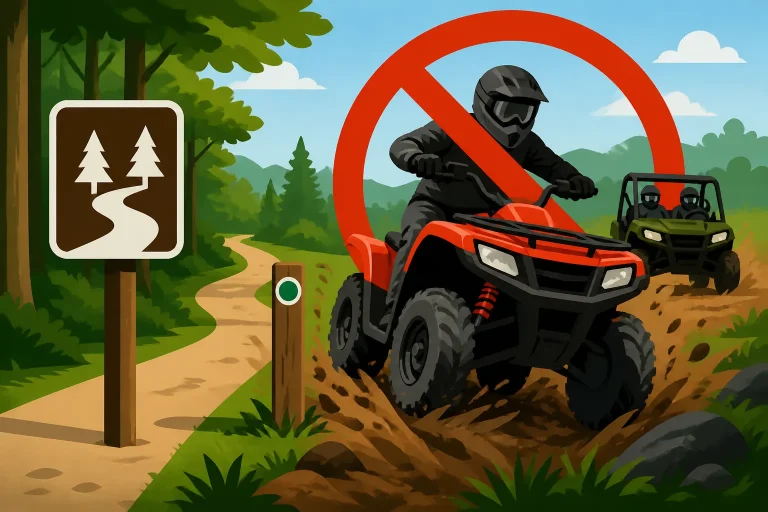
Do not treat a course completion card as a pass to ride an unmarked or closed trail. Stay on routes that are open to your machine and follow posted directions. Park rules about helmets, passengers, machine type, and operating hours also remain in force regardless of training.
Private parks, rentals, and events
A private business can make its own participation rules within the law. It may ask riders to sign a waiver, meet an age requirement, attend an orientation, or follow other operating conditions. A rental company may have its own requirements for drivers and passengers. An event organizer may also provide a briefing or require participants to demonstrate that they understand the course rules.
These policies do not establish a statewide requirement for every Indiana rider. Call or check the specific operator’s current rules before traveling, particularly if a child will ride, you plan to rent, or you are joining a group event. If the operator requires training or an orientation, that condition applies to participation there even though Indiana does not generally require a course for all riders.
Roads and private land
A safety course does not authorize riding on a public road. Indiana road access depends on the law and, in some cases, local designation. A county may open particular roads under its ordinance, while other roads remain closed to ORVs. See Indiana Rules for Riding a County Road and How to Find an Indiana County ORV Ordinance before planning a road route.
On private land, permission is essential. A course certificate does not give a rider access to someone else’s property. If you have permission, confirm the boundaries and any conditions with the landowner, then choose a route that keeps riders and bystanders away from hazards.
What voluntary training can do for a rider
A course is not a substitute for legal compliance, but it can help riders build habits that matter when a machine behaves differently than expected. New riders may benefit from instruction on controls, starting and stopping, turning, braking, selecting a safe speed, and identifying terrain that is beyond their ability. Families can also use structured instruction to make expectations clearer before a child rides.
Training is most useful when it matches the rider and machine. A short-wheelbase ATV and a side-by-side have different controls and handling characteristics. A rider familiar with one type should not assume that experience transfers completely to another. Likewise, a beginner practicing on flat ground may need additional preparation before tackling steep slopes, deep ruts, mud, or loose material.
A practical course or supervised practice session should cover more than how to start the engine. Useful topics include:
- How to inspect the machine before riding, including tires, brakes, controls, lights, and visible damage.
- How to fit and secure protective equipment, including a properly fitted helmet where required or appropriate.
- How to use the machine’s controls without sudden inputs that can upset balance or traction.
- How to judge speed and stopping distance for the surface and visibility.
- How to approach hills, uneven ground, water, and obstacles cautiously.
- How to ride with other people while leaving room to stop and avoiding blind corners.
- What to do if a rider becomes separated from the group or a machine breaks down.
Parents and supervisors should also consider whether the rider can reach the controls, understand instructions, and operate the machine smoothly. A certificate alone cannot establish that a particular rider is ready for a particular machine or trail. Practice should happen in a safe, permitted area, at a pace the rider can manage.
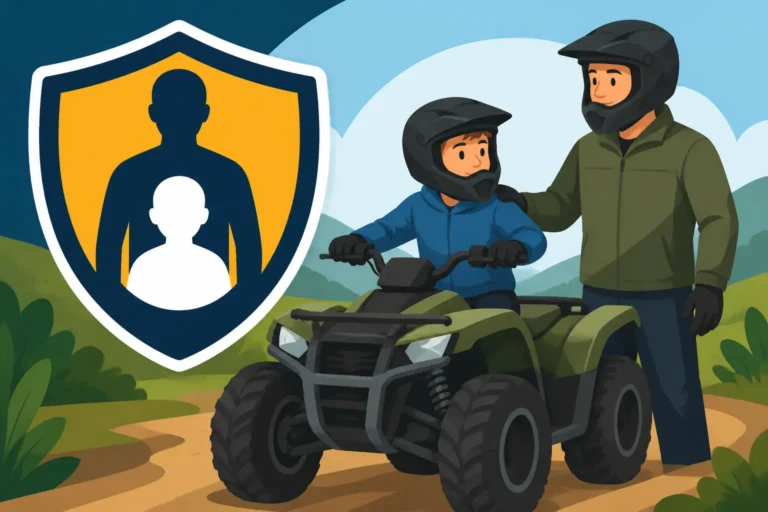
For minors, training is especially useful as a teaching tool, but it does not override legal age or supervision conditions. Read Under Sixteen and Direct Parental Supervision and Turning 16 and Riding Indiana Trails Unsupervised when planning a ride with a young person. Do not assume that taking a course allows a minor to ride independently if the rules for that rider still require adult supervision.
Choosing a course or practice session
If you decide to seek training, choose instruction that fits the machine and the rider’s experience. Confirm what the course covers, whether it includes practical riding, what equipment participants need, and whether the course is suitable for the rider’s age. Ask whether the completion document is simply a training record or whether a specific facility recognizes it for one of its own policies.
A well-run class should make room for questions and explain the limits of the training. A short course cannot prepare every rider for every trail condition. It should help a participant make better decisions, not encourage riding beyond their skills.
If formal training is unavailable, a responsible adult can still help a beginner build familiarity in a controlled setting. Start with basic controls and low-speed practice, keep the area free of traffic and obstacles, and stop when the rider is tired or uncomfortable. Do not use a public trail as a first practice area.
What to check before you ride
Because a safety course is only one small part of preparation, use a pre-ride check that covers the machine, the location, the rider, and the paperwork. This prevents the common mistake of focusing on a certificate while missing a permit, closed trail, age rule, or local restriction.
- Confirm where you will ride. Identify whether the route is a state recreation area, private park, public road, or private property. Check that the machine is allowed there and that the route is open.
- Check current rules for that location. Look for permit requirements, operating hours, age and supervision conditions, helmet rules, passenger limits, and any event or rental policies.
- Confirm road access separately. If your route includes a county road, verify that the road is designated for ORV use and check the local ordinance. A course certificate does not make a closed road legal.
- Review the rider and machine together. Consider the rider’s size, experience, ability to follow instructions, and familiarity with the specific controls. Make sure the machine is maintained and suitable for the terrain.
- Use appropriate protective equipment. Follow legal and facility requirements, and choose gear that fits. Training does not replace protective equipment or safe riding practices.
- Carry the required documents. Keep any permit, registration information, or other required proof available in the manner accepted by the riding area. A training certificate is not a substitute for these documents.
- Set a conservative plan. Agree on a meeting point, ride within the least experienced person’s ability, and turn back when conditions or fatigue make the route unsafe.
For state trail use, Indiana ORV Permits Explained can help separate permits from other paperwork. For the age-related rules, start with Indiana Rules for a Rider Under 14 and check the requirements that apply to the specific rider. If you are unsure whether a particular facility has its own training condition, ask its staff before loading the machine.
The practical takeaway is straightforward: Indiana generally does not require an ATV or UTV safety course as a statewide condition of riding, but training can still make a ride safer. Check the rules for the rider and location, and do not confuse a course certificate with a permit, registration, supervision requirement, or permission to use a road or property.
Disclaimer
This article is for general informational purposes only and does not constitute professional advice. Laws, prices and regulations vary by location and change over time. Consult a qualified professional for guidance on your specific situation.