Indiana Supervision Rules for Young Riders
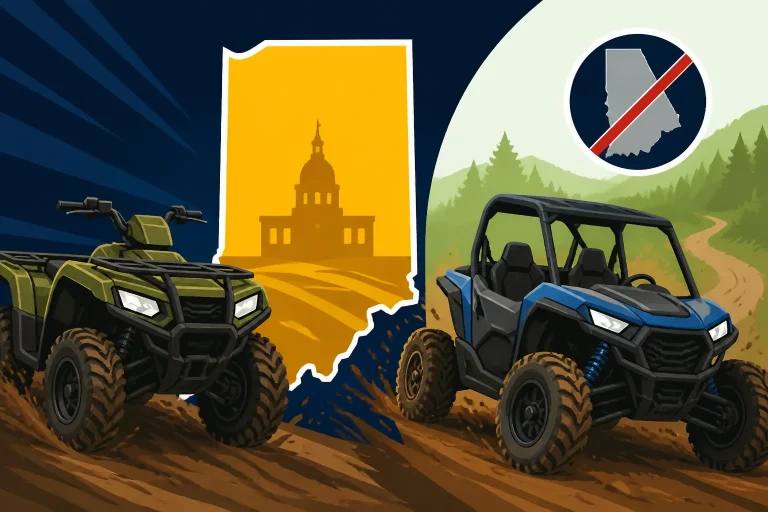
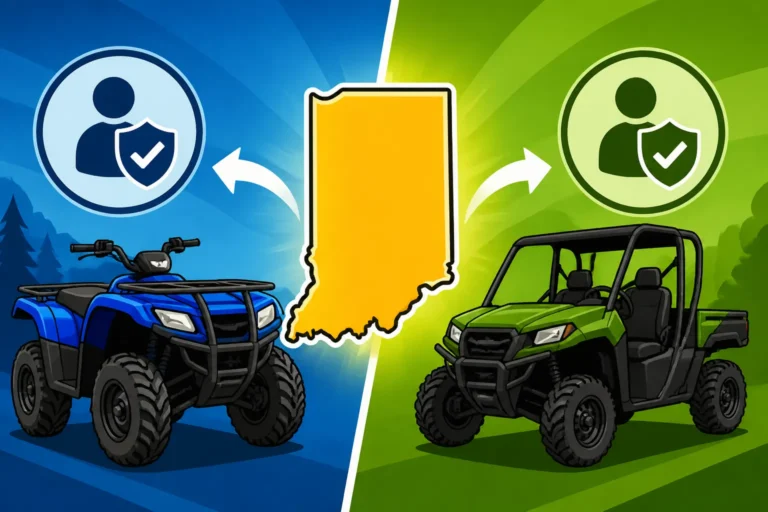
Taking a young rider to an Indiana ORV trail means more than choosing a machine that fits. Supervision rules can depend on the rider’s age, the vehicle and where you ride. The safest plan is to know who must supervise, stay close enough to maintain real oversight, and confirm the rules for the specific riding area before unloading.
What supervision means for young Indiana riders
Indiana’s rules for young ORV riders are not simply a matter of choosing a birthday at which supervision stops. The applicable requirement can depend on whether the machine is being operated on public land, at a state recreation area or somewhere else. Park rules can also add conditions. For a ride on public land, check the current rules for the property rather than assuming that a rider allowed on private ground may ride the same way on a public trail.
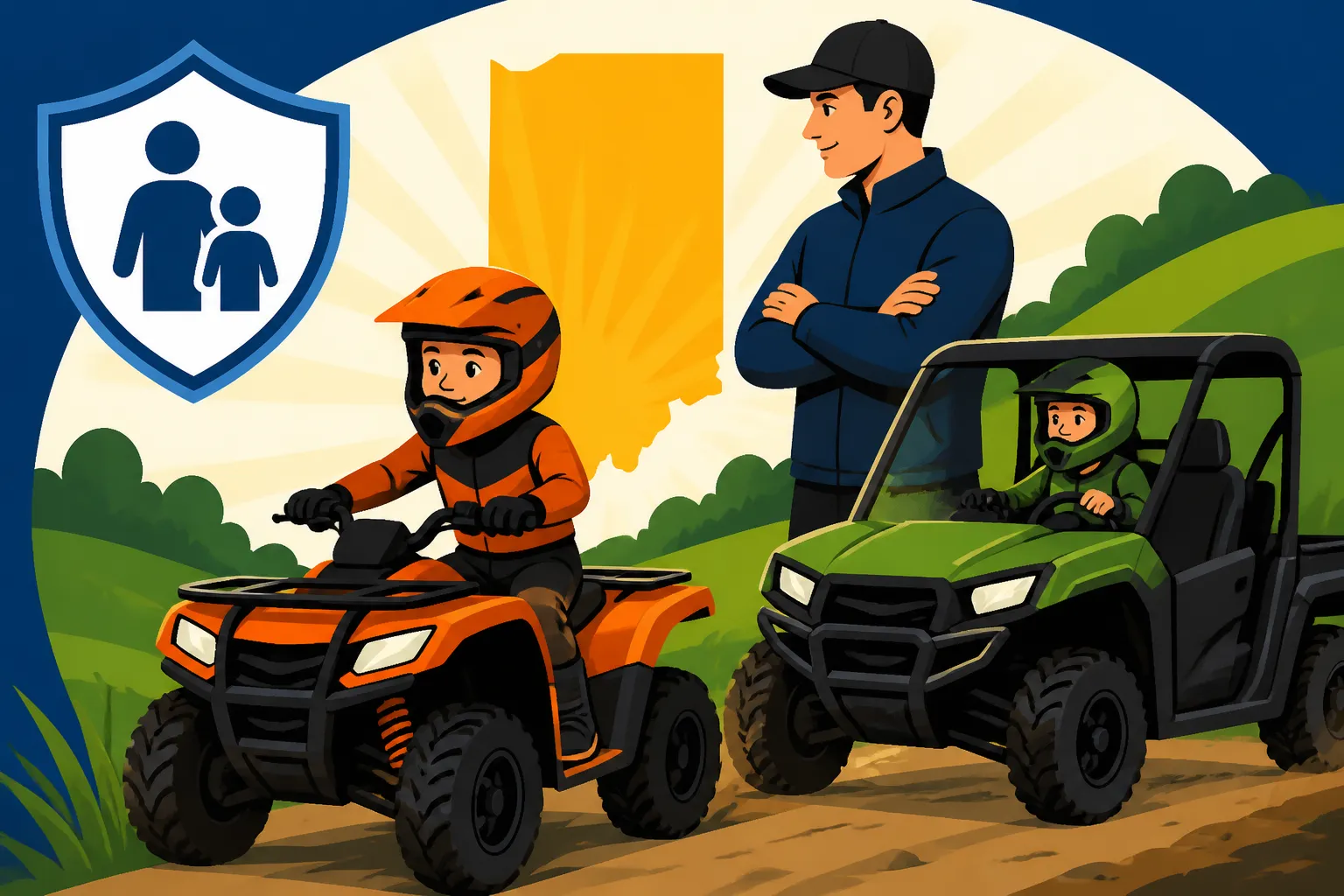
For younger riders, the safest approach is to treat supervision as active and continuous. An adult should be able to see the rider, respond promptly and help prevent unsafe decisions. Being somewhere else in the park, waiting at camp or checking in only at the trailhead is not a dependable substitute for supervision while the child is riding.
The exact arrangement may depend on the current rule for the site and the rider’s age. Do not assume that an adult in another vehicle automatically meets the requirement, or that a young rider may continue alone once the group spreads out. If the rules say direct supervision, plan to remain close enough to observe and intervene. Ask the property manager if you are unsure how its rule applies to your group.
A parent or guardian should also decide whether the child is ready for the specific terrain and machine. Legal supervision does not make an oversized or unfamiliar vehicle a sensible choice. A child who can handle a machine on a flat, open practice area may not be ready for hills, mud, deep ruts or encounters with larger vehicles.
These distinctions help separate the main questions:
| Question | What to check before riding |
|---|---|
| Is the child old enough to operate this machine here? | The rule for the rider’s age, vehicle type and riding location |
| Who must supervise? | Whether the applicable rule specifies a parent, guardian or another adult |
| How close must the adult stay? | Whether direct supervision is required and what the site expects |
| Does the machine have the right permit? | Registration or trail-permit requirements for that vehicle |
| Are there additional rider conditions? | Helmet, passenger, lighting and property-specific rules |
For public riding areas, use the relevant rules for the place you are visiting as your starting point. Indiana Minimum Age to Ride Public Land explains the age question more broadly, while Indiana Rules for a Rider Under 14 is useful when planning for a younger child. For site-specific requirements, check Indiana State Park Rules for Riders Under 16.
Age, machine choice and the adult’s role
Age is only one part of the decision. The child needs to be able to reach and use the controls, steer and stop reliably, and understand basic trail directions. A supervising adult should consider the child’s experience as well as the machine’s size, speed and handling. A vehicle that is too powerful or difficult to control can turn a routine trail feature into a serious problem.
A useful starting point is to choose a machine the child can operate without stretching, struggling to turn or relying on the adult to correct every maneuver. Practice should happen in a controlled area before the child enters a shared trail system. Build up gradually: start with basic starting, stopping, turning and braking, then introduce uneven ground and obstacles only when the rider is ready.
The adult’s role should not be limited to satisfying a rule. A young rider may need reminders about following the trail, slowing for blind turns, keeping distance from other machines and stopping when conditions change. An adult who is responsible for supervision should be prepared to interrupt the ride if the child becomes tired, frightened or overconfident.
A practical pre-ride conversation can cover:
- Where the child must stay in relation to the adult.
- What signal means stop immediately.
- What to do if the group separates or the machine stalls.
- How to approach other riders, trail intersections and blind corners.
- Which areas or obstacles are off limits.
- When the adult may call a break or end the ride.
The adult should also consider whether the child can follow those directions under real trail conditions. Noise, dust, mud and excitement can make it harder to hear or respond. If the child cannot reliably stop or stay with the group, choose a simpler area or postpone the trail ride.
Rider age can affect other rules, too. Helmet requirements, passenger limits and restrictions on particular kinds of vehicles may apply alongside supervision requirements. Check Indiana Helmet Law for Riders Under 18 and Indiana Rules for a Passenger Under 18 if the child will ride with someone else. A parent’s presence does not necessarily make a helmet rule or passenger restriction disappear.
For riders who are close to an age threshold, do not rely on a general assumption that turning a certain age makes every machine or trail available. Rules may differ for a youth-sized ORV and a full-size vehicle. Confirm the conditions for the particular ride and machine. [Indiana Rules for a Rider Aged 15] and Indiana Rules for a Full-Size Vehicle Operator can help identify the questions to resolve before you go.
Supervision does not replace permits or property rules
A young rider’s supervision status and a machine’s permission to use a trail are separate issues. An adult may be supervising properly while the machine still lacks a required registration, decal or trail permit. Likewise, a valid permit does not make a rider eligible to operate a machine or remove a supervision requirement.
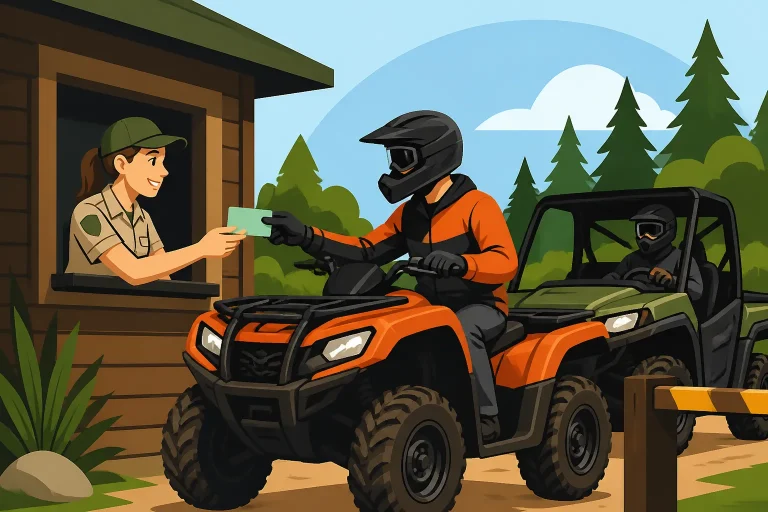
Before visiting a state recreation area or another managed riding site, check what the machine needs for that property. Indiana’s trail-permit system and vehicle-registration rules can apply differently depending on where the machine is registered and where you plan to ride. Review Do You Need a Permit for Indiana ORV Trails? and Does Indiana Honor Out-of-State Registration? if you are visiting from outside Indiana or are unsure which requirement applies.
Permits are generally tied to the vehicle, not to the child or supervising adult. If more than one machine will be used, check whether each needs its own permit. Do not assume that a permit on the adult’s machine covers a child’s separate machine. The permit requirement is also distinct from any entrance fee charged by a riding area, so check both before leaving.
Property rules matter even when a machine is properly registered or permitted. A trail may be closed, a route may be limited to certain vehicle types, or a site may have its own operating conditions. Check current trail notices and follow posted signs. A young rider may not know when a route becomes unsuitable, so the supervising adult should make that judgment and be ready to turn back.
If you are renting rather than bringing your own machine, ask the rental provider and the riding area about age limits, supervision, waivers and permit coverage before booking. The rules for operating a rented vehicle can be different from what a family expects based on its own machine. Indiana Rules for a Rented Machine covers that issue.
A practical plan for riding with a child
Use a simple check before every ride. It is easier to resolve questions at home or at the entrance than after a child is already on the trail.
- Confirm the rider’s age and the type of machine. Check the rules for the specific property and vehicle rather than relying on a rule remembered from another park.
- Identify the required supervising adult. If the rule is unclear about who qualifies, contact the site before you go. Do not assume that being somewhere nearby is enough.
- Plan how the adult will maintain supervision. Keep the group together and choose a route where the adult can observe the child and respond quickly. Avoid routes that force the child out of sight or beyond the adult’s ability to intervene.
- Check permits and registration for every machine. Confirm whether a DNR trail permit, BMV registration or another authorization is required. A child’s age does not replace the machine’s paperwork.
- Review equipment and riding conditions. Make sure the child has properly fitting protective equipment, knows how to stop and can handle the controls. Consider the trail surface and weather, not just the posted difficulty.
- Set clear stop-and-regroup rules. Agree on what to do if a machine stalls, the group separates or the child feels uncomfortable. Make stopping early an acceptable choice.
- Recheck the site on the day of the ride. Trail conditions, closures and operating instructions can change. Read posted notices and ask staff when something is not clear.
The best supervision plan is one that works in practice, not just on paper. If the adult cannot keep the child in view, if the route is beyond the child’s ability or if the applicable rule is uncertain, choose another trail or wait until you can confirm the requirements. An enjoyable ride is not worth stretching a rule or taking a risk that the child is not ready to manage.
Disclaimer
This article is for general informational purposes only and does not constitute professional advice. Laws, prices and regulations vary by location and change over time. Consult a qualified professional for guidance on your specific situation.