When an Enclosed Cab Excuses the Helmet Rule
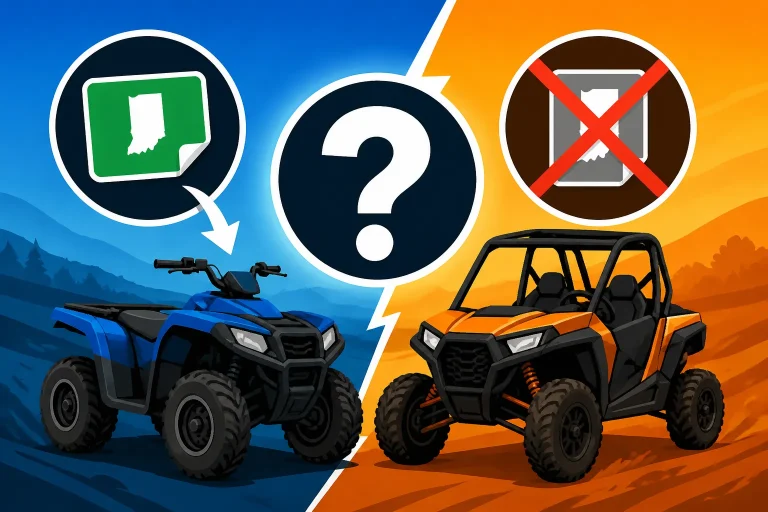
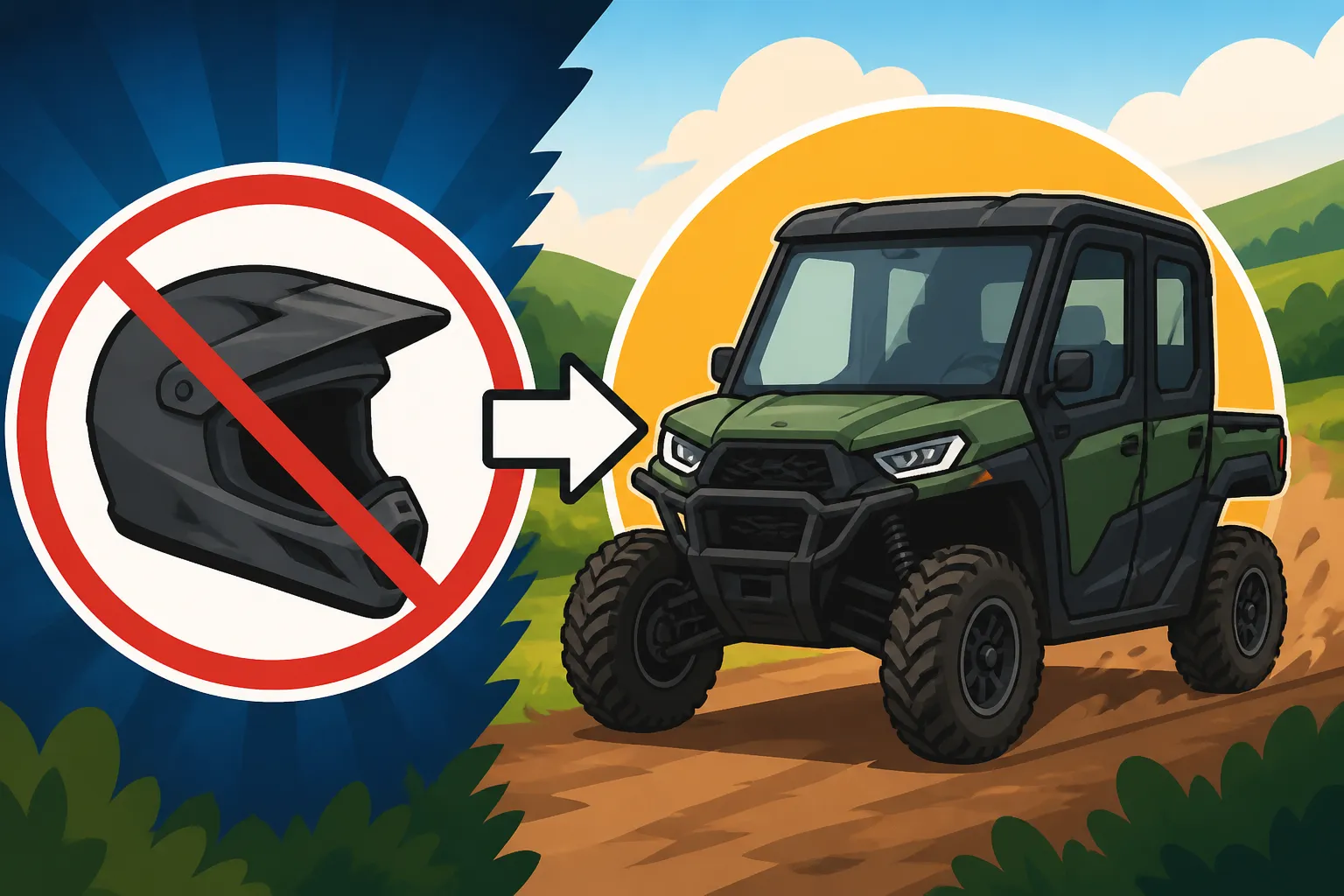
An enclosed cab can look like a clear substitute for a helmet, especially in a side-by-side. In Indiana, though, the answer depends on who is riding and where the machine is being used. The key distinction is that a cab exception in a recreation-area rule does not cancel the state helmet requirement for riders under 18.
The short answer: an enclosed cab does not excuse a child’s helmet
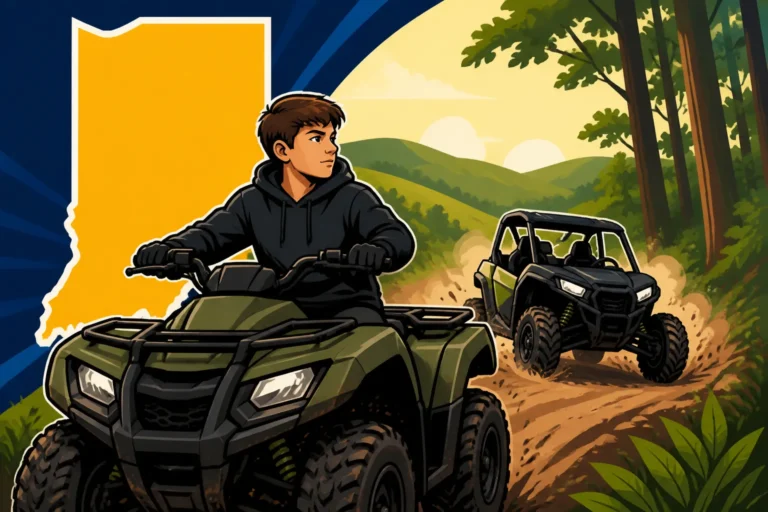
Indiana’s helmet rule for young riders is broad. The Indiana Department of Natural Resources says children under 18 must wear a helmet on or in an off-road vehicle, including an ATV, UTV, side-by-side, or dirt bike. It also says the rule applies on both public and private property.
That means a child riding inside a side-by-side with an enclosed cab still needs a helmet. A cab may offer protection from weather and some kinds of contact, but it does not change the age-based requirement. The same is true if the child is secured in a car seat: according to the Indiana Department of Natural Resources, using a car seat does not remove the helmet requirement.
The confusion often comes from a separate rule for riding at Indiana’s state off-road recreation areas. The Indiana Department of Natural Resources says DOT-approved safety helmets are required at all times at these properties except in vehicles with fully enclosed metal cabs or roll bar protection. That exception can matter for some occupants, but it should not be read as permission for a child under 18 to ride without a helmet. The same property rules specifically say children under 18 must wear helmets in side-by-side ORVs and UTVs.
| Situation | Does an enclosed cab excuse the helmet? | What to keep in mind |
|---|---|---|
| Rider under 18 in an ORV | No | Indiana’s age-based helmet rule applies on or in the vehicle. |
| Rider under 18 in a side-by-side or UTV at a state ORV area | No | The property rules expressly require helmets for children under 18 in these machines. |
| Adult in a fully enclosed metal cab at a state ORV area | The property rule lists an exception | Confirm the rule for the property and ride; local requirements can differ. |
| ORV used for farm purposes | The Indiana Department of Natural Resources lists a farm-use exception | The helmet rule applies when the machine is used for non-farm purposes. |
For a broader explanation of the statewide requirement and who it covers, see Indiana’s ORV Helmet Rule Explained. For property-specific rules, Indiana Helmet Rules at a State ORV Area is also relevant.
Why the statewide rule and park rule can sound different
The wording in the state recreation-area rules can lead riders to assume that any enclosed cab ends the helmet question. It does not. The rules address more than one situation: they state a general helmet requirement with an exception for certain vehicle protection, while separately requiring helmets for children under 18 in side-by-sides and UTVs.
For a child, the age-based requirement is the practical answer: wear a helmet, even inside the cab. The Indiana Department of Natural Resources says the helmet law applies to ORVs on private property as well as public property, so moving the ride off a designated trail or onto private land does not by itself change the rule.
For an adult, the details are less uniform. The statewide facts provided here establish a helmet requirement for children under 18, while the state recreation-area rules include the cab or roll-bar exception. Counties may also set local rules for ORV use on public roads, and the Indiana Department of Natural Resources says those rules can include helmet requirements. A rider should not assume that a recreation-area exception applies on a county road, another property, or a private park.
The right way to read the exception is narrowly: it may affect the helmet rule at the particular recreation area where that rule applies, but it does not create a blanket statewide exemption for everyone in every enclosed-cab ORV.
What counts as an enclosed cab?
The property rule refers to a fully enclosed metal cab or roll bar protection. It does not say that a windshield, roof, doors made from soft material, or an aftermarket enclosure automatically qualifies. Nor does the available rule establish that every cage or partial cab counts as roll-bar protection.
If the machine’s design is unusual, or the cab has been modified, ask the property where you plan to ride before relying on the exception. A manufacturer’s description of a cab can help identify the vehicle’s configuration, but it does not replace the rules set by the riding location.
Choosing and checking a helmet for a young rider
When a helmet is required, Indiana’s standard is not simply “any helmet.” The Indiana Department of Natural Resources says approved ORV helmets must meet U.S. Department of Transportation standards. It says helmets meeting FMVSS 218 must have a DOT sticker on the outside back of the helmet.
Before riding, check the helmet itself rather than relying only on a product title or a seller’s claim. Look for the DOT sticker and make sure the helmet is intended to fit the rider. A loose helmet, damaged helmet, or novelty item without the required marking is not a reliable substitute for an approved helmet.
If you are shopping through Amazon or another retailer, treat the listing as a starting point, not proof of compliance. Review the helmet’s markings and product details, and confirm that the actual helmet carries the DOT sticker described by the Indiana Department of Natural Resources. If a listing is unclear about certification, choose a different product or ask the manufacturer or retailer to clarify before buying.
A helmet also does not replace other protections required for the machine. At Indiana state recreation areas, seat belts are required for vehicle operators and occupants except on ATVs and dirt bikes, according to the Indiana Department of Natural Resources. In a side-by-side, follow the seat-belt requirement as well as the helmet rule for any rider under 18. For related details, see Indiana Seat Belt Rules at an ORV Park.
Keep in mind that protective equipment rules can depend on the location and the type of vehicle. Before heading out, check the park’s current requirements and any county ordinance that applies to a public-road portion of the trip. Indiana Counties That Allow ORVs on Roads can help you understand why a road-use answer may depend on where you are riding.
A practical pre-ride check for a side-by-side
When a child will ride in an enclosed-cab UTV, the safest way to avoid a last-minute disagreement at the gate is to plan around the more protective requirement. Use this checklist:
- Identify the rider’s age. If the rider is under 18, plan for a helmet, even if the UTV has an enclosed cab.
- Check the helmet. Confirm that it meets U.S. Department of Transportation standards and has the DOT sticker described by the Indiana Department of Natural Resources.
- Use the vehicle’s restraints. A helmet does not replace a required seat belt. Follow the rules for the machine and the location.
- Check where you will ride. State recreation areas, private parks, county roads, and private land may not all apply the same operating rules.
- Ask before relying on an exception. If you are an adult and believe the cab or roll bar qualifies for a property-specific exception, confirm that with the property before unloading.
That approach is particularly useful when a ride includes more than one type of riding area. An exception that applies at a state recreation area should not be assumed to apply on a road or at another park. County rules can include helmet requirements, and the Indiana Department of Natural Resources notes that county restrictions may also cover vehicle types, hours, insurance, lights, and other operating conditions. For road questions, see How an Indiana County Opens Its Roads.
The other important exception is farm use. The Indiana Department of Natural Resources says the helmet law does not apply when an ORV is used for farm purposes, but it does apply when the machine is used for non-farm purposes. A machine’s usual role or location does not automatically make every ride a farm-use trip. If the same UTV is used for work and recreation, consider the purpose of the particular ride and follow the helmet rule for recreational use.
What happens if a child rides without a helmet?
The responsibility does not fall only on the child. The Indiana Department of Natural Resources says an ORV owner who allows a child younger than 18 to ride without a helmet can be charged with a Class C infraction. It also says the vehicle operator is ultimately responsible for a helmet-law violation and that the adult responsible for the ATV can be cited.
The maximum penalty stated by the Indiana Department of Natural Resources is $500. That is a maximum, not a guaranteed amount for every case. The practical takeaway is simpler: do not treat the cab as a substitute for a child’s helmet, and do not assume that a child’s seat, a private-property ride, or an enclosed vehicle removes the requirement.
If you are unsure whether an exception applies to an adult rider, verify the rule with the specific property or county before riding. For a child under 18, the answer is clear: put on a compliant helmet, regardless of the cab. For more on age-related requirements, see Indiana Helmet Law for Riders Under 18.
Sources
- Indiana Department of Natural Resources — Law Enforcement: Off-Road Vehicle Child Helmet Law (checked November 3, 2026)
- Indiana Department of Natural Resources — State Parks: Interlake Off-Road State Recreation Area (checked November 3, 2026)
Disclaimer
This article is for general informational purposes only and does not constitute professional advice. Laws, prices and regulations vary by location and change over time. Consult a qualified professional for guidance on your specific situation.