Indiana Helmet Rules at a State ORV Area
Indiana’s helmet rules can feel confusing when a family is preparing for Redbird or Interlake: the statewide age rule, a park’s own requirements, and the gear riders should wear are not always the same thing. This guide explains how to think about helmets at Indiana state ORV areas, what changes for children and UTV occupants, and what to check before unloading.
Indiana helmet rules at state ORV areas
The statewide rule is only the starting point
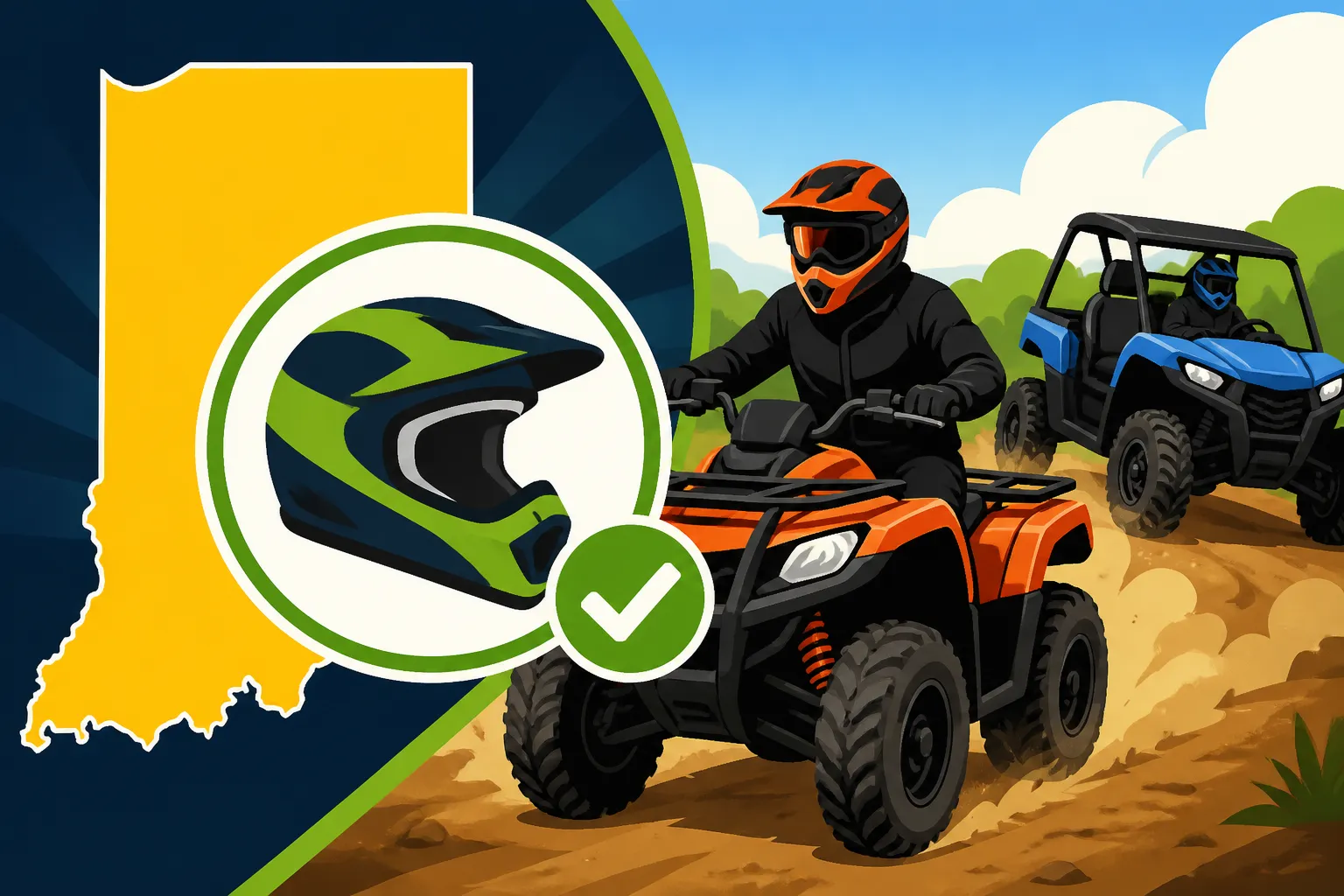
Indiana has helmet requirements for younger ORV riders on public property. In general, a rider under 18 should expect to wear a protective helmet while operating or riding as a passenger on an ORV. That age-based rule is a legal minimum, not a reason for an adult to assume that every trail, event, or facility has identical requirements.
State ORV areas are public riding destinations, so the age rule matters when planning a visit. But a managed area can also have property-specific rules, posted conditions, or event requirements. Those additional rules may affect what is allowed at the gate or on a particular part of the property. A rider who has checked only the statewide law may miss a requirement listed in the facility’s visitor information.
For a broader explanation of the age-based law, see [Indiana Helmet Law for ORV Riders]. It is also useful to understand how helmets fit within the wider set of property rules in [Indiana Helmet and Seat Belt Rules on Public Land]. Treat those statewide requirements as your baseline, then check the rules for the specific place where you intend to ride.
Redbird and Interlake are DNR-managed riding areas
Redbird Off-Road State Recreation Area near Dugger and Interlake Off-Road State Recreation Area near Lynnville are Indiana’s principal state ORV riding areas. They are not simply open fields where riders can make their own rules. Visitors need to follow facility requirements, trail designations, closures, and any instructions posted at the entrance or along the trail system.
For helmet planning, the safest approach is straightforward: have every person bring and wear a properly fitted helmet, regardless of age or machine type. That protects younger riders who are covered by the state rule and avoids a last-minute scramble if an area rule, event condition, or posted direction is stricter. Adults benefit from the same protection even if a particular rule does not require them to wear one.
Before you leave, review the facility’s current visitor information and read the gate board when you arrive. Conditions and instructions can change, and a rule that applies to one ride or event may not apply in the same way to another. The practical details for each property are covered in [Indiana Helmets at Redbird and Interlake].
Adults should not confuse “not required” with “not needed”
A helmet helps protect against impacts, flying debris, and contact with branches or the ground. Those risks do not disappear when a rider turns 18. At a place like Redbird, a trail can move from a smooth section to ruts, loose soil, or a steep climb within a short distance. At Interlake, changing terrain and encounters with other machines can create hazards even when a rider is travelling cautiously.
An adult may look at a quiet trail and think a helmet is unnecessary for a short loop. But a fall does not have to happen at high speed to cause a serious head injury. A low branch, a sudden stop, or a machine tipping at low speed can still lead to a hard impact. The helmet decision is less about how confident a rider feels and more about preparing for the unexpected.
For groups, making helmets standard for everyone also keeps the conversation simple. Parents do not have to explain why one person is protected and another is not, and nobody needs to decide at the trailhead whether an adult exemption applies. Everyone wears a helmet, checks the fit, and then focuses on riding responsibly.
Choosing and fitting a helmet for an Indiana trail ride
Look for a helmet designed for riding
A helmet should be made for the kind of riding you are doing and should fit securely. A decorative or novelty helmet may look protective but may not provide the coverage and construction expected of a real riding helmet. Before a trip, check the helmet’s safety label and make sure it is in good condition, with no known impact damage or cracks.
For ATV and dirt-bike riding, riders commonly choose a full-face or other purpose-built off-road helmet that covers the head and offers a suitable face opening for goggles. A full-face design can add protection around the chin and jaw. A helmet designed for a different activity may not fit the same way or provide the same coverage, so do not assume that any hard shell is an adequate substitute.
Try the helmet on before ride day rather than discovering at the gate that it is uncomfortable or loose. It should sit level, cover the forehead, and remain stable when the wearer moves their head. The chin strap should be fastened snugly. If the helmet shifts around, presses painfully, or can be pulled off easily while secured, it may be the wrong size or shape.
Fit children carefully and check again as they grow
A child’s helmet should not be bought oversized with the hope that they will grow into it. A loose helmet can shift during a fall, leaving parts of the head exposed. A helmet that fits well today may become too small or uncomfortable as a child grows, so check the fit before each riding season and whenever the child complains of pressure or has trouble fastening the strap.
Have the child put on the helmet themselves, then check it together. It should sit evenly, without rocking when they move their head. Fasten the strap and ask them to open their mouth: a properly secured strap should feel snug at the jaw rather than dangling loosely. If the child removes the helmet because it pinches, fogs their goggles, or feels too heavy, address the problem before starting the ride.
A comfortable helmet is more likely to stay on throughout the day. That matters on a family outing where children may want to take it off between stops or after a warm climb. Build helmet checks into the routine: before the first trail, after a longer break, and after any adjustment to goggles or other gear.
Pair the helmet with gear that works together
Helmet fit is affected by what a rider wears with it. Goggles should sit comfortably against the face and work with the helmet opening. If the helmet and goggles leave a large gap, press painfully, or make it difficult to see, try a different combination before riding. Poor visibility can be a safety problem of its own, particularly when dust, mud, or low light affects the trail.
Consider the rest of the rider’s clothing too. Long sleeves, gloves, sturdy footwear, and eye protection can help with common trail hazards such as branches, grit, and machine controls. A helmet is important, but it is not a complete safety system. A rider who is protected at the head but cannot see clearly or keep a secure grip still has avoidable risks.
For a young rider, give them time to practise wearing the complete setup while stationary. They can get used to the helmet, goggles, and gloves before the engine starts. A short driveway check is much less stressful than trying to solve a gear problem beside a busy trail entrance.
Helmet considerations for children and UTV occupants
Children need both protection and appropriate supervision
A helmet does not make a child ready to ride every machine or trail. Parents should consider the child’s size, coordination, attention, and ability to follow instructions, as well as the vehicle’s controls and power. A young rider who is distracted or cannot reach the controls comfortably may be at risk even with excellent protective gear.
At an ORV area, keep children within the supervision required by applicable law and facility rules. Do not assume that riding in a group, following an older sibling, or staying on a familiar trail is the same as direct supervision. The rules for younger riders are discussed in [Indiana State Park Rules for Riders Under 16] and [Indiana Supervision Rules for Young Riders].
Plan a first ride around the child’s ability, not the pace of the most experienced person in the group. Choose an appropriate route, leave room for breaks, and avoid pressuring a child to continue when they are tired or overwhelmed. A helmet should be part of a broader plan that includes suitable equipment, close adult attention, and a sensible route.
A UTV’s roll cage does not automatically settle the helmet question
UTVs can create a false sense of security because they have a frame around the occupants. That frame is an important part of the vehicle, but it does not eliminate the risk of a head striking the interior, an occupant being thrown around, or debris entering the cab. Seat belts and helmets address different risks; one should not be treated as a substitute for the other.
Whether an enclosed cab or another vehicle feature affects a particular helmet requirement depends on the applicable rule and the exact machine. Do not rely on a general assumption such as “we are inside a cage, so helmets are optional.” Check the law and the specific facility’s rules, and follow any posted instruction. The related distinction is explained in [Do You Need a Helmet Inside a Roll Cage?].
Regardless of legal minimums, all occupants should use the vehicle’s safety equipment as intended. Wear the seat belt, keep arms and legs inside the vehicle, and do not carry more passengers than there are designated seats and restraints. For under-18 riders, be especially cautious about assuming that a windshield, roof, or enclosed cab replaces protective headgear.
Passengers need the right helmet too
A passenger’s helmet should fit as well as the operator’s. Sharing a helmet that is too large, too small, or uncomfortable can undermine its protective value and make the ride unpleasant. If several family members are riding, make sure each person has a suitable helmet rather than treating one adult-sized helmet as a spare for everyone.
Before moving, confirm that passengers are seated properly and understand how to hold on or use the vehicle’s designated handholds. In a UTV, passengers should be buckled in. On a two-person ATV designed for a passenger, the passenger should sit in the intended position and follow the operator’s instructions. A passenger leaning, shifting suddenly, or looking away at the wrong moment can affect the machine’s balance.
Set a simple group rule: nobody rides until every occupant has a helmet on, fastened, and checked. This works well for families and mixed-experience groups because it prevents pressure to “just go for one quick loop” without gear. It also gives the operator a chance to check that passengers are ready before entering a shared trail.
Getting ready for Redbird or Interlake
Check the facility rules before loading
Make helmet checks part of your pre-trip routine rather than a gate-side decision. Confirm which state ORV area you plan to visit, review its rules and visitor information, and check for any event-specific instructions. Then pack helmets for every rider and passenger, including adults who may not be covered by the same age-based requirement.
Here is a practical way to organize the check:
- Confirm the destination and identify whether you will ride at Redbird or Interlake.
- Review the facility’s posted rules and any notices relevant to your planned visit.
- Match each rider with a properly fitting helmet and inspect it for damage.
- Pack compatible goggles or eye protection, straps, and other riding gear.
- Read the entrance signage and gate board before unloading or heading onto a trail.
- If a rule is unclear, ask facility staff before riding rather than guessing.
This routine is especially useful when travelling with children or borrowing a machine. It is easy to remember the helmet but forget goggles, or to bring a child’s old helmet that no longer fits. A quick check at home avoids delays after the trailer has been unhitched and the group is ready to ride.
Use maps to plan around the trail, not to replace rules
Planning a route before leaving can help you select trails that suit the group and avoid spending the day navigating unfamiliar ground. Tools such as onX Offroad can help riders review mapped routes and orient themselves around riding areas. Use mapping as a planning aid, then confirm that the route is open and permitted at the property itself.
A digital map does not establish that a trail is currently open, safe, or authorized for your machine. Closures, local conditions, and facility directions take priority. If the map and a posted sign disagree, follow the sign and ask staff if you are unsure. A paper or offline backup is also sensible if phone service is unreliable where you are riding.
Before your trip, consider the group’s experience, the length of the route, weather, and machine capability. A family with new riders may want a shorter, easier outing than a group familiar with steep or uneven ground. For trail-planning details, see [Indiana Trail Conditions Before You Ride] and [Where to Ride an ORV in Indiana]. onX Offroad can support route preparation, but it does not replace local notices or sound judgment.
Make a simple pre-ride helmet inspection
A helmet should be inspected before it goes on, not only after a crash. Look for cracks, damaged straps, loose fasteners, or signs that the helmet has taken a hard impact. If you know it was involved in a collision or fall that may have damaged it, do not assume that an intact outer surface means it is safe to keep using.
Check the fit again after adding goggles or adjusting clothing. A strap that was secure before the goggles went on may have loosened while the rider moved the helmet. For children, confirm that the helmet remains stable and that the strap is still fastened properly. For adults, use the same check rather than relying on habit or experience.
Give the group a brief pre-ride talk. Point out that helmets stay on while riding, riders should stop in a safe place before adjusting gear, and nobody should enter a closed trail. An organized start prevents avoidable confusion and supports the broader safety guidance in [Indiana Safety Training for Riders].
Common helmet mistakes to avoid
Assuming an adult exemption applies everywhere
One common mistake is hearing that a rule applies to riders under 18 and concluding that adults never need helmets. Age-based state requirements and facility rules are not necessarily identical. A specific park rule, event condition, or posted instruction may apply beyond the statewide minimum, so check the location before riding.
A second mistake is relying on what a friend remembers from a previous season. They may be thinking of a different property, a different type of machine, or a rule that has since been clarified. Confirm the details for the place you are visiting rather than treating a past trip as proof of the current requirement.
If the rules leave room for doubt, wear the helmet. That choice avoids a compliance problem and is a sensible form of personal protection. It is much easier to bring and wear a helmet than to discover at the trailhead that the one you left at home was needed.
Treating a novelty helmet or loose strap as good enough
A helmet that looks sturdy is not automatically suitable for ORV riding. A novelty item, poorly fitting helmet, or damaged shell may fail to provide the protection the rider expects. Check the product’s intended use and safety information, and replace a helmet that has been compromised.
A strap left unfastened is another preventable problem. In a fall, an unsecured helmet can shift or come off. Make fastening the strap part of the same routine as buckling a seat belt or checking that a UTV passenger is seated correctly.
Avoid buying a helmet for a child based only on age or clothing size. Head shapes vary, and the right fit matters more than a label. If a child complains that a helmet hurts, slips, or blocks their view, resolve the fit issue before the ride rather than asking them to tolerate it on the trail.
Letting the helmet distract from other safety rules
Helmet use does not make a closed trail open or an unsuitable route appropriate for a beginner. It does not replace supervision, safe speed, machine-specific passenger limits, or required restraints. A rider can wear excellent protective gear and still make a dangerous choice by riding beyond their ability or ignoring a closure.
The same is true of planning tools. onX Offroad may help with route awareness, but riders still need to read signs and follow facility instructions. A mapped line is not permission to travel wherever it appears on a screen. Keep the helmet decision, route decision, and vehicle-safety checks as separate parts of your preparation.
The most dependable approach is simple: know the age-based rule, verify the state area’s requirements, wear a suitable helmet, and make sure every occupant is prepared before moving. That routine works for a quick visit as well as a full day at Redbird or Interlake.
Disclaimer
This article is for general informational purposes only and does not constitute professional advice. Laws, prices and regulations vary by location and change over time. Consult a qualified professional for guidance on your specific situation.