An Arrester on an Indiana Trail
An exhaust spark arrester can be easy to overlook when you’re getting an ATV or UTV ready for a ride. But Indiana DNR rules for its ORV properties require functioning spark arrestors and mufflers. Here’s what that means, how to check your machine, and what to do if the exhaust is modified, damaged, or missing parts.
What Indiana’s spark arrester rule means
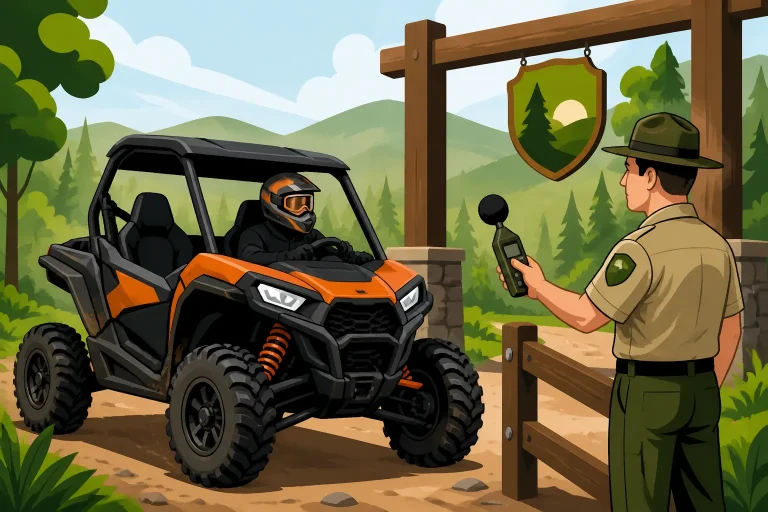
According to the Indiana Department of Natural Resources, off-road vehicles at its ORV riding areas must have functioning spark arrestors and mufflers. The arrester is part of the exhaust system, designed to limit sparks escaping from the exhaust. The muffler serves a different role, so having one does not necessarily mean the machine has a spark arrester.
For riders, the practical takeaway is to check the complete exhaust setup rather than relying on how quiet the machine sounds. An exhaust may have a muffler but lack an arrester, or it may have an arrester that is damaged, loose, clogged, or no longer working as intended. A modified or replacement exhaust deserves particular attention: don’t assume it meets the park’s requirement just because it fits the vehicle.
The rule matters when you’re planning a ride at an Indiana DNR ORV property such as Redbird or Interlake. It’s also a sensible equipment check before visiting a private park, but don’t assume that every riding area uses identical rules. Review the venue’s current requirements before loading up, and check Indiana Spark Arrester Rules for related details.
A spark arrester is not the same as a permit, registration, or general exhaust inspection. It is a piece of required equipment. Having the right paperwork won’t make up for a missing or nonfunctioning arrester, and a working arrester does not replace any permit or registration that applies to your ride.
| What you’re checking | What to look for | What to do if it’s not right |
|---|---|---|
| Spark arrester | The exhaust setup includes an arrester, and it appears intact and secured | Check the owner’s manual or ask a qualified service provider to identify the correct part |
| Muffler | The machine has a muffler that is present and secure | Repair or replace damaged or missing components before riding |
| Modified exhaust | The installed parts are appropriate for your exact machine and retain the required equipment | Verify the configuration with the exhaust manufacturer or a service provider |
| Park requirements | The riding area permits the machine and its exhaust setup | Contact the park or review its posted rules before you travel |
This table is a practical inspection aid, not a substitute for the rules at a particular riding area. If a park’s staff or posted notice gives more specific instructions, follow those requirements.
How to check the exhaust before a ride
A quick look during loading can catch obvious problems, but it won’t confirm that an internal part is present or working. Check the machine when it is off and cool, and avoid reaching into the exhaust or removing components unless you know how to do so safely.
Look for missing or loose parts
Inspect the exhaust from the engine toward the outlet. Look for obvious gaps, loose connections, damaged housings, missing fasteners, or parts that appear to have been recently changed. If you can see that a component is absent or the exhaust is not securely assembled, don’t treat the machine as ready for a DNR ORV property.
Some arresters are internal or integrated into an exhaust assembly, so appearance alone may not tell you what is installed. If you’re unsure, check the vehicle’s owner documentation and the documentation for the exhaust system. A qualified mechanic or the parts manufacturer can help identify whether the setup includes the required equipment.
Pay attention after exhaust work
A replacement muffler or aftermarket exhaust can change the configuration of the system. Before buying or installing parts, confirm they fit the exact make and model and determine whether the complete setup retains a functioning spark arrester and muffler. Don’t rely on a general claim that a part is “trail ready” if it does not clearly answer those questions.
If you shop through a marketplace such as Amazon, compare the listing with the manufacturer’s part information and your machine’s documentation. Check that the component is intended for your exact model and that the listing explains whether the arrester is included. If the listing is vague, ask the seller or manufacturer before ordering rather than guessing from a product photo.
Keep any installation information and product documentation with your maintenance records. That material can help a service provider confirm what was fitted and help you identify the correct replacement later. It is not a substitute for a functioning component, but it can make questions about an unfamiliar exhaust setup easier to resolve.
Don’t guess based on sound
A quiet exhaust may still be missing a spark arrester, and a loud exhaust may have one installed. Sound alone does not establish whether the required components are present or functioning. Similarly, a clean-looking outlet does not prove that an internal part is in place.
If you can’t verify the setup through documentation or a competent inspection, treat it as unresolved. Get the system checked before riding at a property with the requirement. That is more reliable than arriving at the gate and finding out that a part is missing or the installation needs attention.
Getting ready for Redbird, Interlake, or another riding area
Before leaving, check both the machine and the destination. The Indiana DNR lists Redbird and Interlake as ORV properties, and its rules require functioning spark arrestors and mufflers on off-road vehicles. The two properties may differ in day-to-day notices or conditions, so confirm the information for the specific place you plan to visit.
Start with the park’s official notices, then check the machine’s exhaust. If you are traveling with a group, don’t assume every vehicle has the same equipment just because the machines look similar. Exhaust systems can differ by model, previous repairs, or modifications. Give each machine its own check.
You can use this pre-trip sequence:
- Identify the riding area and read its current rules and notices.
- Check that the machine’s exhaust has a muffler and an arrester, and that the parts appear secure and undamaged.
- Confirm the exhaust configuration against the owner or parts documentation if anything has been modified.
- Arrange service or a correct replacement if you cannot verify that the equipment is in place and functioning.
- Recheck the exhaust after repairs or installation, before loading the machine.
Posted conditions can matter even when the machine is mechanically ready. Review Reading the Gate Board Before You Unload and Checking an Indiana Trail Notice First as part of your arrival routine. Trail closures and changing conditions may affect where or whether you can ride; Indiana Trail Closures to Check First covers that separate part of trip planning.
The arrester requirement is also only one part of preparing for a DNR riding area. Check the rules for permits, safety equipment, age and supervision, and where vehicles may be operated. For a broader overview of what to expect at Indiana’s designated riding properties, see Indiana Rules for Riding a Reclaimed Mine Park. If you’re unsure whether a general trail rule or a property-specific notice applies, contact the riding area before you depart.
If the arrester is missing, damaged, or uncertain
If the machine has no arrester, the part is damaged, or you can’t tell whether the exhaust includes one, don’t plan to ride it at a DNR ORV property until the issue is resolved. According to the Indiana Department of Natural Resources, functioning spark arrestors and mufflers are required on off-road vehicles at its ORV properties. A last-minute assumption is a poor substitute for checking the equipment.
Start by identifying the exhaust system and the correct part for the vehicle. The owner’s manual, parts information, or the exhaust manufacturer may explain what is installed and what replacement components are compatible. If that information is incomplete, have a repair professional inspect it. Avoid fitting a part based only on a similar-looking model or a vague listing; incompatible parts can create installation or operating problems.
If the arrester has been removed during maintenance, verify that it has been correctly reinstalled and that the assembly is secure. If it is damaged or visibly obstructed, get advice on repair or replacement rather than trying to alter it yourself. Do not assume that removing an internal component to improve exhaust flow is acceptable at an ORV property.
Sometimes the most practical option is to leave that machine at home and bring another one with a verified exhaust setup. That can be frustrating, but it is better than making a long trip with a machine that may not meet the venue’s requirement. For shared-park etiquette and other preparation details, see Indiana Trail Etiquette on Shared Ground.
Treat the arrester as routine maintenance, not a one-time box to tick. Recheck it after exhaust repairs, after changing components, and before trips when you have not used the machine for a while. A brief inspection and a clear understanding of what is fitted can prevent an avoidable problem at the trailhead.
Sources
- Indiana Department of Natural Resources — State Parks: Interlake Off-Road State Recreation Area (checked November 3, 2026)
- Indiana Department of Natural Resources — State Parks: Redbird Off-Road State Recreation Area (checked November 3, 2026)
Disclaimer
This article is for general informational purposes only and does not constitute professional advice. Laws, prices and regulations vary by location and change over time. Consult a qualified professional for guidance on your specific situation.