Indiana Counties That Allow ORVs on Roads
It's a familiar scene for many Indiana ORV enthusiasts: you've got your quad or side-by-side loaded up, ready for an adventure, but you know that getting from point A to point B often means hitting the pavement—and that's where the confusion and frustration begin. Indiana's rules about riding off-road vehicles on public roads can feel like a tangled mess, leaving many wondering if it's even possible to legally connect trails or access amenities without trailering. This guide is here to untangle that knot, delving into the specific Indiana counties that have taken the initiative to open their roads to ORVs and what you need to know to ride legally and safely within their limits.
The General Principle: Why Indiana Roads Are Usually Closed to ORVs
Let's cut right to it: Indiana isn't a "street legal" state for ATVs and UTVs by default. This often catches newcomers or those from neighboring states off guard, leading to confusion and, unfortunately, sometimes citations. The foundational Indiana statute designates off-road vehicles as just that—vehicles off-road. This means that unless specific exceptions are carved out, you're expected to keep your machine off paved public thoroughfares.
The Default Position: No ORVs on State Roads and Highways
The Indiana Bureau of Motor Vehicles (BMV) and the Department of Natural Resources (DNR) generally align on this: state roads, U.S. highways, and limited-access interstates are strictly off-limits for ORVs. This isn't just about speed or vehicle type; it's deeply rooted in safety and infrastructure concerns. Imagine a trail-ready UTV, designed for rugged terrain and lower speeds, attempting to keep pace with highway traffic. The risks are substantial, not just for the ORV rider but for all other motorists.
This blanket prohibition means that even if you're just trying to cross a state highway to get to another section of trail or reach a gas station, you're technically in violation. It's a major pain point for riders, as it often necessitates loading up your machine and trailering it just for short distances, which can feel incredibly inefficient. While there are a few very narrow exceptions, such as crossing a road at a right angle after coming to a complete stop and yielding to all traffic, these are typically meant for agricultural or very specific access needs, not general recreational travel. You can read more about [Crossing a Road on an ORV in Indiana] to understand these limited scenarios.
Limited Exceptions: Shoulders, Ditches, and Specific Uses
Now, Indiana law does provide for some very specific, highly restricted scenarios where an ORV might technically be present near a road, but these are not for general travel. We're talking about riding in a road's shoulder or ditch, only if the shoulder or ditch is wide enough to safely accommodate the ORV without impeding traffic or becoming a hazard.
For instance, a farmer might use a UTV in the ditch alongside a county road to access fields. Even then, the intent is generally not for recreational travel, and the ORV must be operated in a manner consistent with its off-road nature, not as a substitute for a street-legal vehicle. This isn't a loophole for joyriding; it's a recognition of practical needs in certain situations. The rules for [Indiana Rules for Riding a Ditch] are quite specific and important to understand before considering it. Always remember, the spirit of the law intends for ORVs to be off the main flow of traffic on public roads, and any exceptions are incredibly narrow.
How Counties Gain ORV Road Access
So, if the state generally says no, how do some Indiana counties manage to say yes? It's all thanks to a provision in Indiana law that grants local governmental units—counties, cities, and towns—the authority to pass their own ordinances regarding ORV use on their roads. This is a crucial distinction: they can't override state law on state highways, but they can legislate for the roads they maintain.
The Power of Local Ordinances
Indiana counties, and even some cities or towns within those counties, have the power to enact local ordinances that permit ORVs on specific public roads or classes of roads under their jurisdiction. This authority comes with a significant responsibility: these local governments must consider public safety, traffic flow, and the impact on their communities.
The process usually involves local government officials, often the county commissioners or city council, discussing the issue, gathering public input, and then voting on a new ordinance. It's not uncommon for these discussions to be lengthy, weighing the economic benefits of increased tourism from ORV riders against potential noise complaints or safety concerns. This local control means that rules can—and do—vary dramatically from one county to the next, making it essential for riders to do their homework before exploring new areas. For a general overview, you might want to look into [How an Indiana County Opens Its Roads].
Common Conditions in County Ordinances
When a county decides to open its roads to ORVs, it rarely means a free-for-all. Local ordinances almost always come with specific conditions designed to mitigate risks and ensure responsible riding. While the exact details differ, some common requirements include:
- Operator Age and Licensing: Many ordinances will specify a minimum age for operators, often 16 or 18, and may require a valid driver's license. For example, some counties might require operators to be at least eighteen years old, regardless of whether they have a driver's license. [Indiana Minimum Age to Ride an ORV] covers more on statewide rules.
- Proof of Insurance: Liability insurance is a frequent requirement. Just like with cars, if you're on a public road, you need to be covered in case of an accident. This is where your standard ORV insurance policy might need a closer look to ensure it covers road use.
- Safety Equipment: Lighting requirements, especially for night riding, are standard. This often includes headlights, taillights, and sometimes turn signals or a brake light. Some counties may even specify reflective tape or slow-moving vehicle emblems. Helmets are almost universally required for riders under 18, and sometimes for all riders, even on private property. [Indiana Rules for Riding After Dark] and [Indiana Helmet Law for ORV Riders] are good resources.
- Designated Roads vs. All Roads: Some counties will open all county roads (excluding state and federal routes, of course), while others will create specific maps or lists of approved roads. It's crucial to know which approach your target county uses.
- Time of Day Restrictions: Night riding might be prohibited or require additional lighting.
- Speed Limits: Most counties will impose specific, often lower, speed limits for ORVs on their roads.
It’s a patchwork, for sure, and it highlights the need for due diligence.
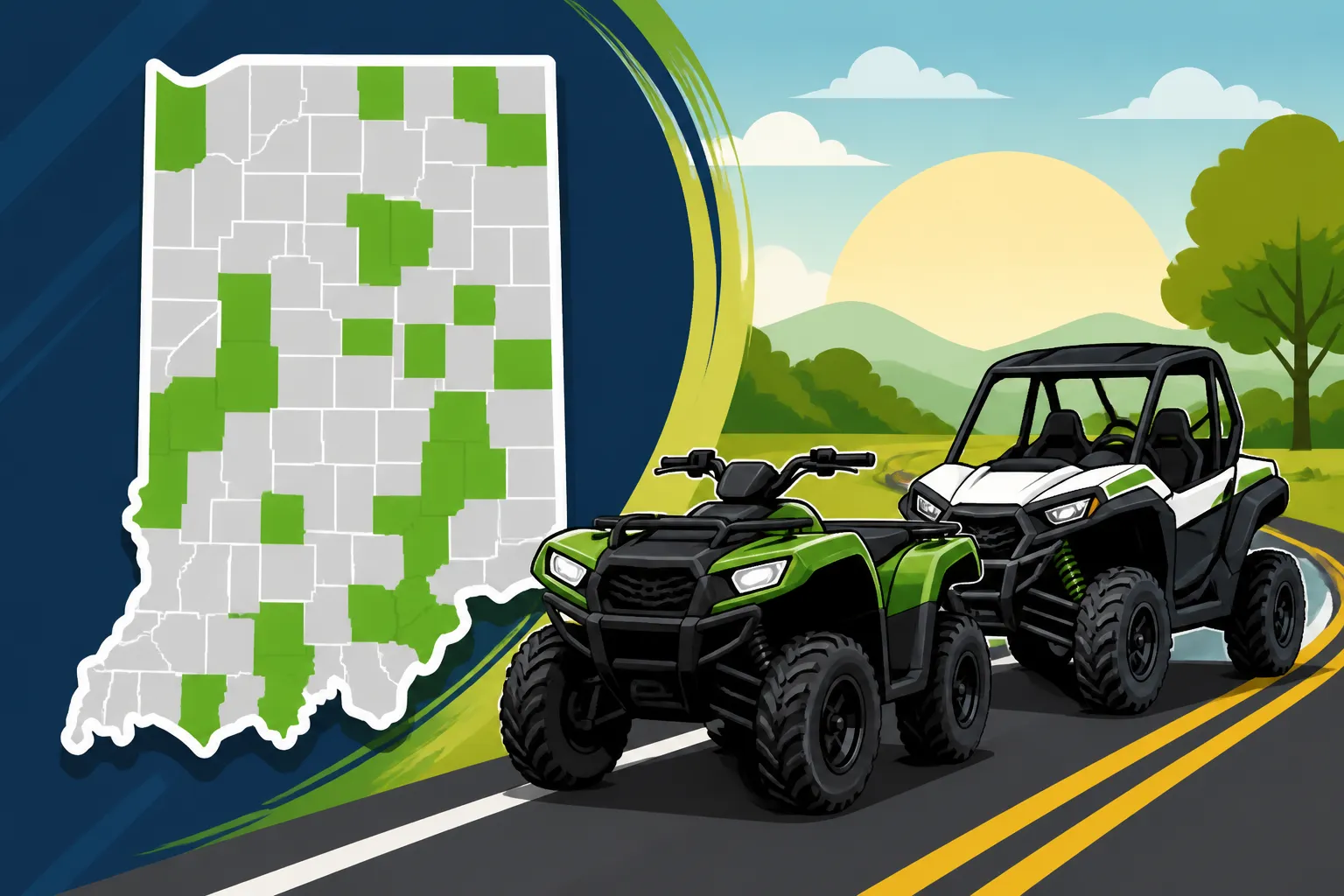
Specific Indiana Counties That Have Opened Roads
Alright, let's get down to brass tacks. Which counties in Indiana have actually embraced ORV road use, and what should you expect when you visit them? It’s important to remember that these ordinances can change, so always, always double-check with the specific county's official government website or highway department before you plan your trip.
Vanderburgh County: A Pioneering Approach
Vanderburgh County, located in southwestern Indiana, is one of the more well-known counties for having a comprehensive ORV ordinance. Their approach is particularly detailed, using a color-coded map to designate which roads are open and under what conditions. This is a fantastic example of a county actively managing ORV access.
- Designated Roads: Vanderburgh County uses a map system. Generally, you'll find green roads, which are open to ORVs, and red roads, which are closed. This specific designation is crucial, and riders are expected to consult the official map. You can learn more by reading [Reading Vanderburgh's Color-Coded Map].
- Operator Requirements: In Vanderburgh County, you generally must be 18 years of age or older to operate an ORV on county roads, and you need a valid driver's license. They also require proof of financial responsibility (insurance).
- Equipment Rules: Machines must have working headlights and taillights, visible from a specific distance, and a slow-moving vehicle emblem if traveling under 25 MPH. The ordinance also addresses noise limits. If you're looking for parts to ensure your machine meets these specs, aftermarket providers like SuperATV offer a range of lighting solutions and mirrors that could be essential.
- Enforcement: Vanderburgh County takes its ordinance seriously, with fines for violations. It's not uncommon for local law enforcement to be actively checking for compliance. For more details, check out [Vanderburgh's $75 First Fine].
Hancock County: Opening the Gates
Hancock County, just east of Indianapolis, is another county that has opened its roads to ORVs. Their ordinance is generally more permissive in terms of which roads are open, often allowing ORVs on almost all county roads within its jurisdiction, again, excluding state and federal highways.
- All County Roads (with caveats): Hancock County's ordinance typically permits ORVs on all county roads, unless specifically posted otherwise. This means a rider needs to pay attention to signage. You can explore [Riding Hancock County Roads] for specific details.
- Operator and Equipment: Like Vanderburgh, Hancock County has age and licensing requirements, usually requiring a valid driver's license. Essential safety equipment like headlights, taillights, and sometimes a flag or reflective material, are also part of their requirements. For riders looking to upgrade their machines for such conditions, parts from companies like SuperATV can help ensure compliance and enhance safety.
- Speed and Time: Specific speed limits are usually enforced, often lower than the posted limit for cars. There might also be restrictions on night riding or requirements for additional lighting during those hours.
Dearborn County: Specific Road Sections
Dearborn County, in southeastern Indiana, also has an ordinance permitting ORVs on certain county roads. Their approach tends to be more specific, often designating particular sections or types of roads rather than a blanket opening.
- Designated Road Sections: Dearborn County's ordinance, like Section 70.04 you might find references to, often outlines specific roads or road segments where ORV use is permitted. This means riders must consult the official ordinance or maps provided by the county to understand where they can legally ride. [Riding Dearborn County Roads] could give you more insights.
- Safety and Insurance: Similar to other counties, Dearborn County will require ORVs to be insured and operators to meet age and licensing criteria. Lights, brake lights, and other safety features are standard.
- Responsible Riding: The ordinance will emphasize responsible operation, including obeying all traffic laws, yielding to other vehicles, and not disturbing residential areas with excessive noise.
Finding Out About Other Counties
The best advice for any county not listed above, or for verifying current information, is to contact the county highway department or the county commissioners' office directly. Their websites are often the most accurate source for current ordinances. Many counties simply haven't passed such ordinances, meaning the default state rules of "no ORVs on roads" apply. It's a bit like a treasure hunt, but finding those open roads can significantly enhance your riding experience. For guidance on this, see [How to Find an Indiana County ORV Ordinance].
| County | Status of ORV Road Access | Key Requirements (Typical) | Important Note |
|---|---|---|---|
| Vanderburgh | Designated Roads Open | 18+ years old, valid driver's license, insurance, headlights/taillights, map-specific. | Requires consulting specific color-coded county map. |
| Hancock | Many County Roads Open | Valid driver's license, insurance, lighting, often posted speed limits. | Generally more open, but always check for specific closures/signage. |
| Dearborn | Specific Sections Open | Age/license requirements, insurance, safety equipment, adherence to specific sections. | Must verify exact road sections permitted by county ordinance. |
| Most Others | Closed by Default | ORVs generally prohibited on public roads. Exceptions for crossing or limited shoulders. | Always assume closed unless a specific county ordinance states otherwise. |
What to Expect When Riding County Roads (and remaining safe/legal)
So, you've found a county that allows ORVs on its roads, you've checked the ordinance, and your machine is ready. What should you expect when you actually hit the asphalt, and how can you ensure you're riding safely and legally?
Shared Roads, Shared Responsibility
When you take your ORV onto a public road, even one designated for such use, you are now sharing that space with cars, trucks, motorcycles, and bicycles. This means your responsibilities increase significantly. You are no longer just navigating trails; you are operating in a mixed-traffic environment.
- Obey All Traffic Laws: This might sound obvious, but it's critical. All stop signs, yield signs, speed limits (which may be lower for ORVs), and traffic signals apply to you. Signal your turns if your machine has them, or use clear hand signals. Yield to pedestrians and other vehicles. This isn't just a suggestion; it's the law, and infractions can lead to tickets and endanger everyone.
- Visibility is Key: ORVs are often smaller and less visible than typical road vehicles. Consider adding extra reflective tape, bright flags, or upgrading your lighting. High-quality LED light bars and whip lights, available from brands like SuperATV, can significantly improve your visibility, especially at dawn, dusk, or in less-than-ideal weather conditions. Remember, you're responsible for making yourself seen.
- Anticipate Other Drivers: Not every motorist will be expecting to see an ORV on the road, even in counties where it's legal. Drive defensively. Assume others don't see you and be prepared to react. Avoid sudden movements and maintain a safe following distance.
Preparing Your Machine for Road Use
Even if your ORV is a beast on the trails, road use puts different demands on it. Some considerations for preparing your machine:
- Tires: Mud tires, while excellent for grip off-road, can wear quickly and handle poorly on pavement. Consider a more all-terrain tire or even street-specific tires if you plan on significant road mileage.
- Brakes: Ensure your brakes are in excellent condition. Road riding often means more consistent braking from higher speeds than typical trail riding.
- Mirrors: Side mirrors are often required by county ordinances and are crucial for seeing traffic behind you. If your machine doesn't have them, invest in a good set.
- Horn: A horn is a fundamental safety device for road use. Make sure yours is working and easily accessible.
- Maintenance: Regular maintenance is always important, but road use can accelerate wear on certain components. Keep up with your service intervals.
The Paperwork in Your Pocket
When riding on public roads, you absolutely must have your paperwork readily accessible. This typically includes:
- Your Driver's License: If required by the county ordinance.
- Proof of Insurance: A physical or digital copy of your ORV liability insurance.
- ORV Registration Certificate: Proof of your [Registering an ORV in Indiana] and current decal.
- The County Ordinance (Optional but Recommended): While not required, having a digital copy of the specific county ordinance on your phone can be a lifesaver if you encounter a law enforcement officer unfamiliar with the local rules.
Getting ticketed for an unregistered or uninsured ORV on a public road can be a costly lesson, so make sure all your ducks are in a row.
Navigating the landscape of Indiana ORV road laws can feel like a maze, but with the right information and a commitment to safety and legality, you can enjoy more expansive adventures. Always remember: local ordinances are your best friend, and due diligence is your most important tool. Stay safe out there!
Disclaimer
This article is for general informational purposes only and does not constitute professional advice. Laws, prices and regulations vary by location and change over time. Consult a qualified professional for guidance on your specific situation.