How Close a Supervising Parent Has to Stay
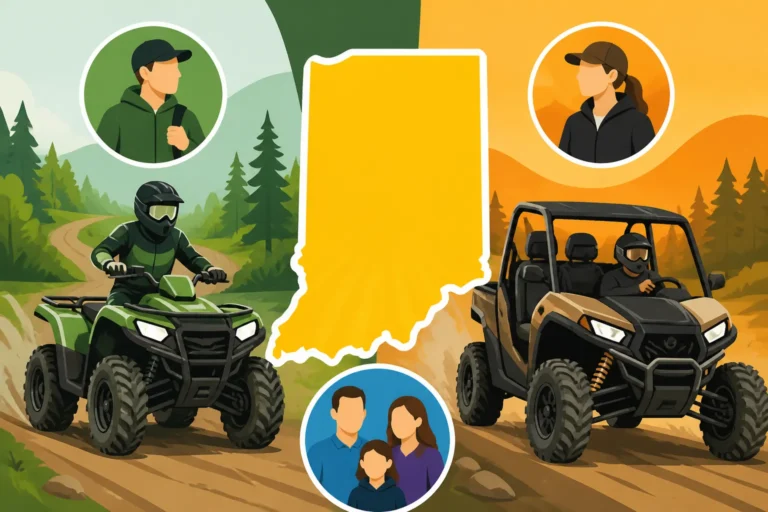
If your child is riding an ATV or UTV at an Indiana public riding area, “I’m somewhere in the park” is not a safe assumption about supervision. The practical standard is close, active oversight: stay where you can keep track of the rider and respond quickly. Here’s how to apply that standard, what can change by location, and what to check before unloading.
What “direct supervision” means in practice
For a rider under 16, Indiana’s public-land rules make supervision an important part of whether the rider may operate an off-road vehicle. The key idea is direct supervision—not simply being somewhere on the property or available by phone. Under Sixteen and Direct Parental Supervision explains the age-related issue; the practical question is how present the supervising adult needs to be.
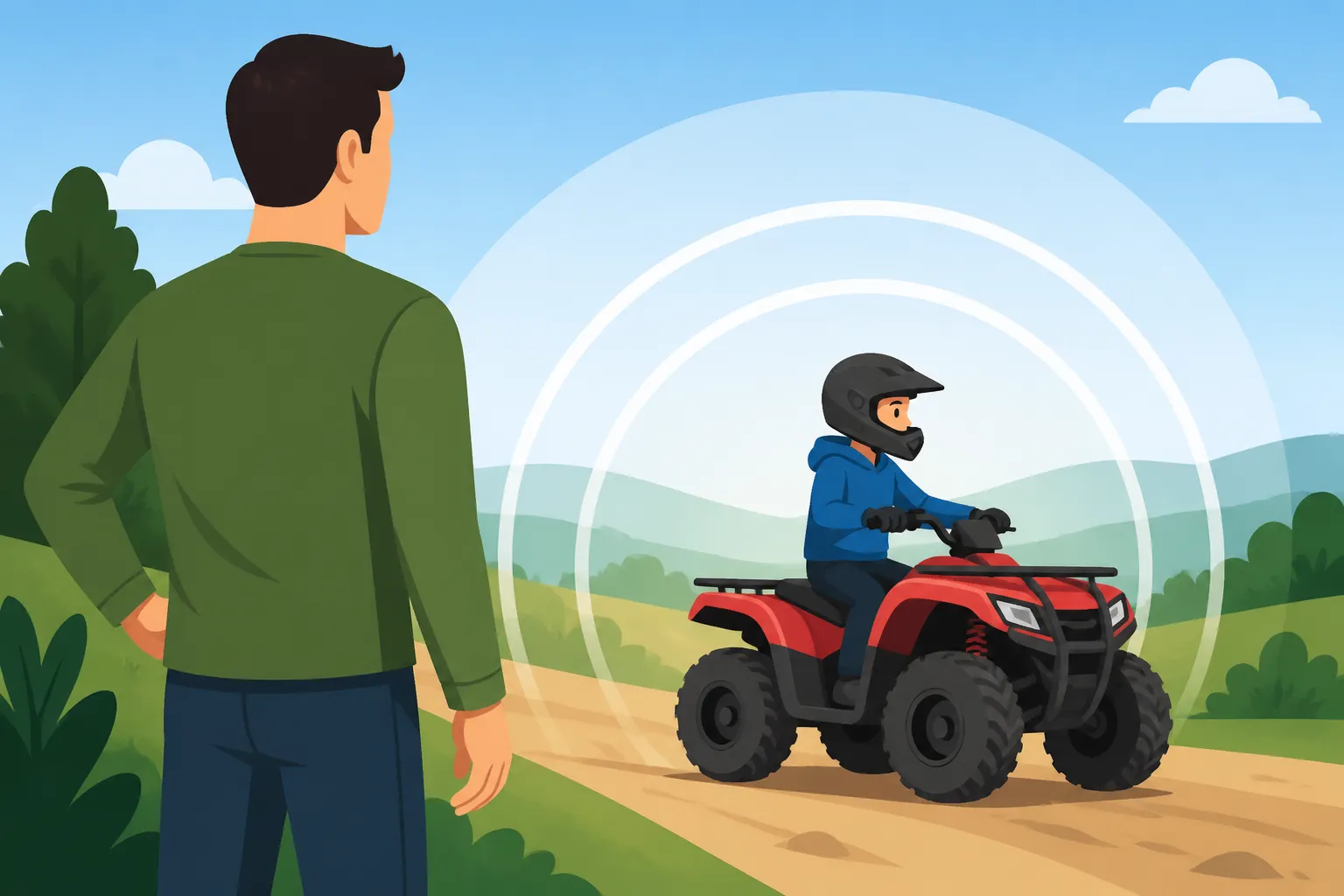
A useful way to apply the rule is to remain close enough to watch the child’s riding and step in promptly if something goes wrong. That usually means keeping the child in sight, staying near the same trail or riding area, and avoiding a gap where terrain, trees, distance, or other riders prevent you from monitoring them. It is a practical safety standard, not a universal distance measured in feet.
There is no good reason to treat a specific number of feet as a safe harbor unless the rule for the exact riding area states one. A parent positioned far away may be unable to supervise even if the child is technically within the same park. On the other hand, an adult who is close enough to observe and intervene can supervise effectively without following inches behind the machine.
Direct supervision also involves attention. Watching from a staging lot while the child rides out of sight is different from staying with the rider and paying attention to where they are going. If you are using your phone, preparing another machine, or riding a separate route, you may not be able to respond when the child needs help.
The adult should be able to do more than hear the engine. A ridge, wooded turn, dust cloud, or noisy group can make it difficult to see what is happening. If you cannot tell where the child is or whether they have stopped, you may have lost the kind of oversight the rule is intended to require.
A simple check before the ride is: “Could I see what this rider is doing, communicate with them, and get to them quickly if they stopped or fell?” If not, move closer or choose a route where you can keep supervision continuous.
| Situation | A safer supervision approach |
|---|---|
| Child is riding a short, visible loop | Stay nearby with an unobstructed view and remain attentive |
| Child is heading behind a hill or into woods | Do not assume supervision continues out of sight; reposition or choose another route |
| Adult and child are on separate trails | Ride together or select a route that keeps the adult close and able to monitor |
| Child is with a group | Identify which adult is supervising and make sure that adult can keep track of the child |
| Adult is at the staging area | Do not treat the same park location as direct supervision if the child is riding beyond view |
These are practical examples, not a substitute for the rule or posted conditions at a particular facility. If a park’s instructions are more specific, follow those instructions.
How age, vehicle, and location affect the answer
Supervision is only one part of the rules for young riders. Age limits, the type of machine, and where it is being operated can all matter. A parent should not assume that close supervision makes every rider or vehicle combination permissible.
The rules for a child riding a small youth ATV may not be identical to the rules for a teenager operating a full-size UTV. A side-by-side may have passenger seating and restraint requirements that a quad does not. A child riding as a passenger raises different questions from a child operating the vehicle. Check the requirements for the rider and machine, not just the supervision rule. Indiana Minimum Age to Ride Public Land and Indiana Supervision Rules for Young Riders cover related age questions.
Location matters as well. Indiana public riding areas, county roads, private property, and private off-road parks may have different rules. A rule that applies to a state recreation area should not be assumed to apply in the same way on a county road or on private land. For public riding, check the area’s current instructions before the trip. If a route leaves the designated riding area, the applicable rules may change.
For example, a child who is properly supervised on a marked trail is not automatically allowed to ride onto a closed trail, a public road, or another area where machines are not permitted. Supervision does not replace a required permit, make an unapproved route legal, or excuse unsafe riding. Do You Need a Permit for Indiana ORV Trails? is useful when planning a public-land ride.
A rider under 14 may face additional restrictions, so do not use the rules for an older teenager as a shortcut. Review Indiana Rules for a Rider Under 14 if that age group is involved. Riders who are 15 should check the separate guidance in Indiana Rules for a Rider Aged 15, rather than assume the same conditions apply to every rider under 16.
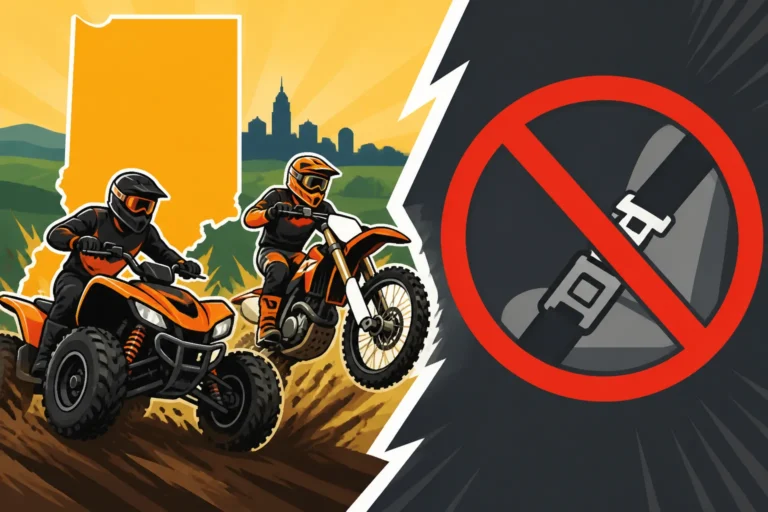
When the machine is a UTV, consider whether the child is driving or riding as a passenger. Confirm that the vehicle is permitted for the rider’s age and that the operator and passengers use the required safety equipment. On public riding areas, check the facility’s instructions for helmets, seat belts, and any enclosed-cab exception. Indiana Helmet Rules at an ORV Park covers another part of that preparation.
A useful pre-ride checklist is:
- Confirm the rider’s age and whether that age is allowed to operate the particular machine at the location.
- Check that the adult supervising the rider meets the location’s requirements.
- Confirm that the machine is allowed on the intended trail or riding area.
- Review permit, helmet, and restraint requirements.
- Agree on a route and a clear way to stop or regroup if the adult and child become separated.
Staying close when the trail is difficult or busy
A parent’s position should change with the conditions. A clear, short loop with good visibility may make it easier to monitor a child than a winding trail with blind corners, steep terrain, or heavy traffic. There is no single distance that works in every setting; the more difficult it is to see or reach the rider, the closer the adult should stay.
On a narrow trail, avoid riding so close that the child feels pressured or cannot stop safely. Following too tightly can create its own risk, especially if the child brakes suddenly or loses control. The goal is not to crowd the rider. It is to maintain a position that allows you to observe, communicate, and respond.
On a group ride, make supervision explicit. Decide which adult is responsible for the child, and do not assume that another person is watching. If the group spreads out, the designated adult should stay with the child rather than relying on someone ahead or behind to notice a problem. A head count at trail junctions and stops can help, but it does not replace staying close enough to supervise while riding.
Agree on simple instructions before starting:
- Stop at the next safe place if the adult is no longer in view.
- Do not take a different trail or follow another group without checking in.
- Wait at a junction if the adult has not arrived.
- Use a clear signal or communication plan if the engines make it hard to talk.
These directions are especially helpful for younger riders who may be excited, distracted, or unsure how to respond when separated. Keep the plan simple enough for the child to remember.
If the trail becomes too challenging to supervise safely, turn around or choose an easier route. A parent cannot reliably watch a child who is beyond a ridge or out of view around multiple turns. A phone or radio may help with communication, but it does not make distant supervision equivalent to staying close and observing the ride.
The same principle applies to stops. If the child is riding while the parent is stopped out of sight, the parent may not be able to supervise directly. Coordinate the ride so the child does not continue beyond the adult’s ability to monitor. When you need to handle equipment, help another rider, or leave the trail, have the child stop in a safe place and stay with you.
Before you ride: verify the facility’s rule
Because the rule is tied to the riding location and the rider’s circumstances, confirm the current requirements with the facility or relevant official source before you load the machines. Check posted notices at the entrance and trailhead, and ask park staff if the instructions are unclear. Do not rely on an old social media post or another rider’s memory to settle a question about age or supervision.
When you call or check the official information, ask a focused question: “For a rider of this age operating this kind of machine, what does the facility require of the supervising adult?” Also ask whether the adult must be a parent or guardian, whether another qualifying adult may supervise, and whether any special rule applies to the vehicle type or trail.
Carry out the rule in a way that leaves little room for doubt: keep the child within view when possible, stay close enough to intervene, and choose a route that suits the rider’s ability. If the adult cannot maintain that level of oversight, the child should not continue riding independently on that route.
Supervision is not a replacement for good preparation. Check the machine, use appropriate protective gear, set expectations about speed and stopping, and make sure the child can operate the controls before entering a busy trail. A rider who is nervous or struggling may need a quieter area, a shorter ride, or a different machine. Teaching a Young Rider in Indiana offers related preparation advice.
The short answer is that a supervising parent should stay close enough to see what the child is doing and respond promptly—not merely remain somewhere within the same park. Because the location, age, and machine can affect what is allowed, confirm the specific rule before riding and keep the adult’s attention on the young rider throughout the trip.
Disclaimer
This article is for general informational purposes only and does not constitute professional advice. Laws, prices and regulations vary by location and change over time. Consult a qualified professional for guidance on your specific situation.