Under Sixteen and Direct Parental Supervision
Indiana’s under-16 supervision rule can be easy to misread: having a parent nearby does not automatically make every trail, machine or ride legal. The practical answer is to confirm where the rule applies, what “direct supervision” requires, and which permits and safety requirements remain in force for both rider and machine.
What Direct Parental Supervision Means in Indiana
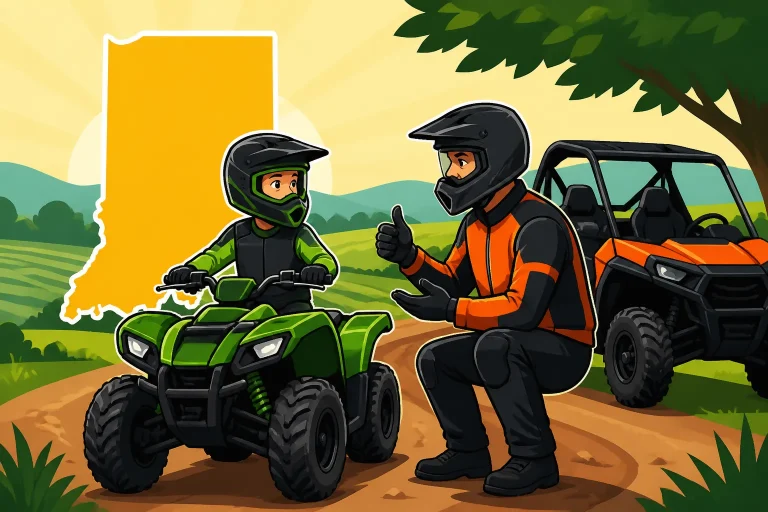
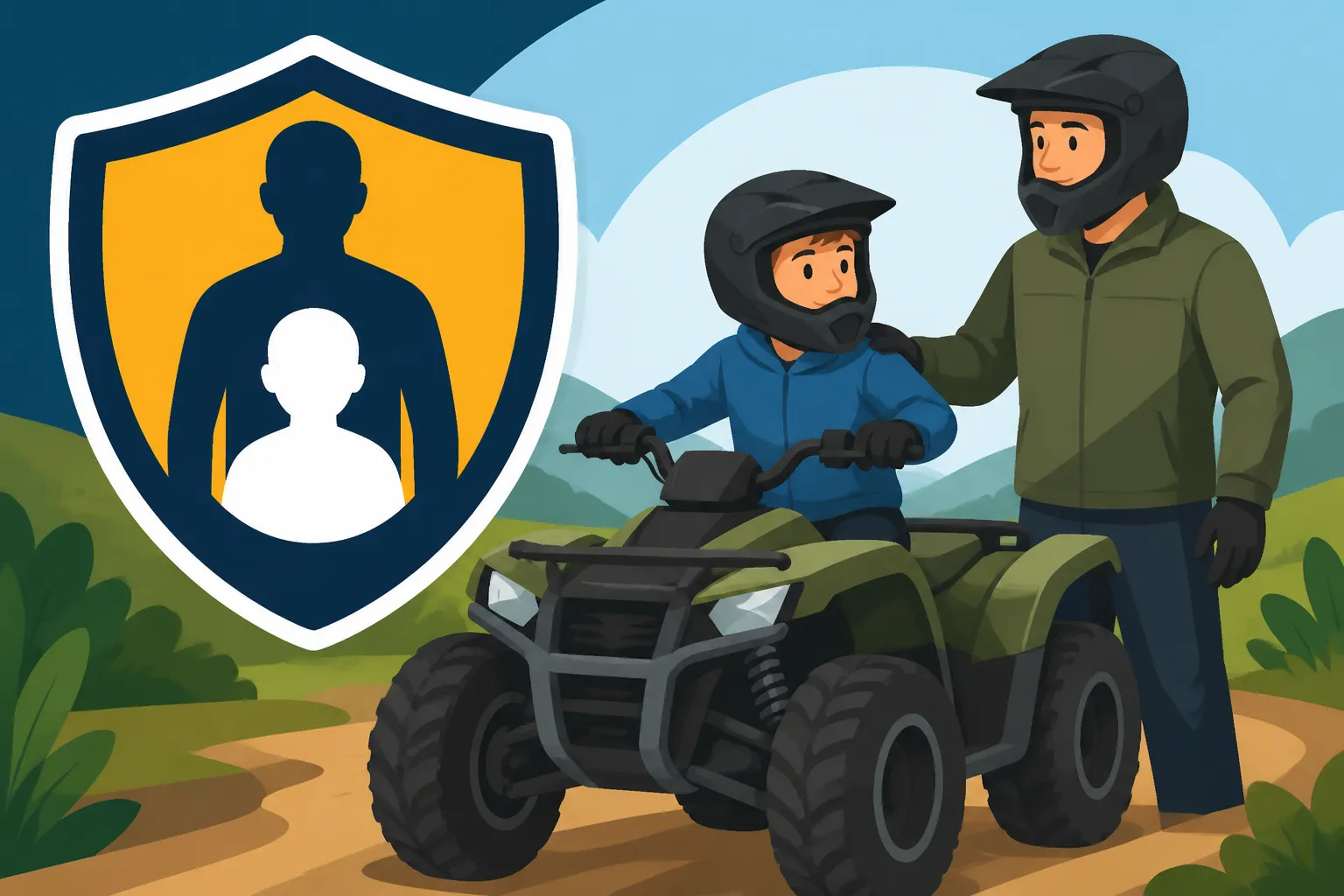
For riding at Indiana’s public off-road vehicle areas, a rider under 16 must be under the direct supervision of a parent or guardian. The requirement applies to the ride itself, not just the trip to the park. A parent who drops a young rider at the trailhead, stays at camp, or is available by phone is not providing direct supervision.
The rule is about active oversight. The parent or guardian should be close enough to keep track of the young rider and respond promptly if the rider gets into trouble. It is not a reason to assume that a child can ride independently as long as an adult is somewhere on the property.
The word “direct” matters, but riders should avoid relying on a made-up distance. A fixed number of feet or trail intersections is not a safe substitute for checking the applicable park rules. Terrain, visibility, speed, traffic on the trail, and the child’s ability all affect whether an adult can genuinely supervise. For a closer look at the practical question of distance, see How Close a Supervising Parent Has to Stay.
This requirement is separate from the general age rules that may apply to public-land riding. It also does not mean every rider under 16 can operate every type of ORV. A supervising parent cannot override a machine restriction, a posted trail closure, a permit requirement, or a rule that applies to a specific area. For the broader age framework, see [Indiana Minimum Age to Ride Public Land] and [Indiana Supervision Rules for Young Riders].
| Before the ride | What to check |
|---|---|
| Rider’s age | If the rider is under 16, arrange direct supervision by a parent or guardian at applicable public ORV areas. |
| Riding location | Confirm the location is open to ORVs and identify which marked trails allow the machine. |
| Machine | Check that the ORV is allowed there and suitable for the rider and trail conditions. |
| Permit | Make sure the machine has the required permit for the riding area. |
| Safety equipment | Check helmet requirements, seat belts where applicable, and any posted site rules. |
| Parent’s role | Plan to stay close enough to actively oversee the young rider throughout the outing. |
Indiana’s public riding opportunities are specific places, not a general permission to ride anywhere on public land. State recreation areas with ORV trails have designated riding areas and rules; other state properties may prohibit ORV use or allow it only in limited circumstances. Before setting out, check the location’s current rules and any notices about closures or trail access. Indiana State Park Rules for Riders Under 16 explains the age-related rules in the state recreation area context.
Where the Rule Applies and What It Does Not Allow
A common mistake is treating “public land” as one uniform category. Indiana has state recreation areas with ORV trails, but that does not mean all state parks, state forests, fish and wildlife areas, or other public properties are open to riding. Permission depends on the specific property and the designated route.
At an ORV area, follow the marked trail system and the site’s rules. A valid permit does not authorize riding off a marked trail, entering a closed section, or using a road or path that is not open to the machine. If a route is closed, the parent’s presence does not make it available. If the area’s rules restrict a machine type or rider activity, supervision does not cancel that restriction.
Private riding parks are a separate case. They set their own admission, waiver, age, supervision, and equipment requirements, subject to applicable law. A parent should ask the park directly about its current rules before paying or signing a waiver. Do not assume that a state-area rule automatically describes a private park’s policy, or that a private park’s policy replaces Indiana requirements.
Public-road riding is also different from riding a designated ORV trail. A young rider who is supervised on a trail is not thereby authorized to ride on a county road, highway shoulder, or other public roadway. Road access depends on state law and local rules, and may involve separate age, equipment, and route restrictions. For context, see Where Indiana Allows ORVs on Public Roads and Indiana Local Ordinances on ORV Riding.
The parent should be clear about the boundaries before the child starts the machine:
- Which trails are open to the child’s machine?
- Are there sections that are closed or restricted?
- Is there a designated area for younger or less experienced riders?
- What should the child do if separated from the supervising adult?
- Is the machine permitted to carry a passenger, and is that passenger allowed?
- Are there posted requirements about speed, lights, noise, or protective equipment?
These are practical questions, not a substitute for reading the current rules at the riding area. Conditions and access can change. Check the official park information and read the notices posted at the entrance before unloading.
Permits, Reciprocity, and the Machine
Direct supervision and permits address different things. Supervision concerns who must oversee the young rider. A permit concerns whether the machine can use a particular Indiana ORV area. Satisfying one requirement does not satisfy the other.
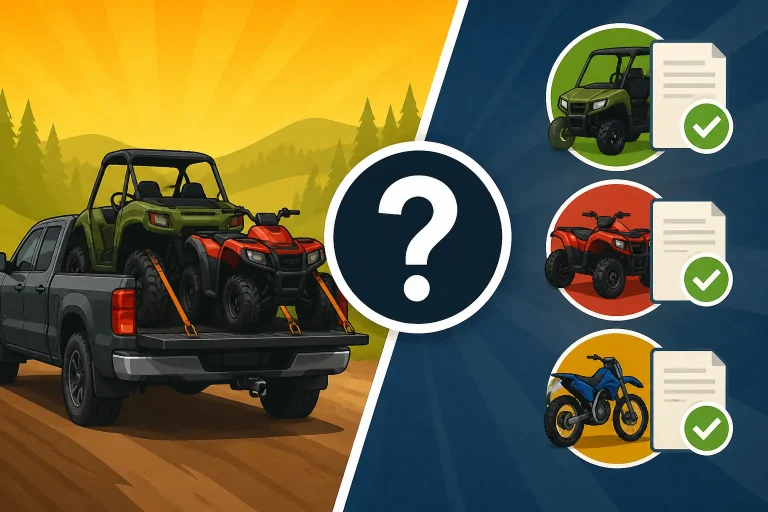
Indiana’s state ORV areas use trail permits, and the permit is generally tied to the vehicle rather than to the whole riding group. Make sure each machine that will use the trails has the required permit. A parent’s permit does not automatically cover a child’s separate ATV or UTV. Permit choices and current requirements can vary with the type of visit, so review Indiana’s Daily and Annual Trail Permits before planning the trip.
A permit also does not serve as a registration decal, title, or general license to ride everywhere. Trail access, state registration rules, and local road rules are separate systems. If the machine is registered in another state, do not assume that its out-of-state registration replaces an Indiana trail permit. Check Does Indiana Honor Out-of-State Registration? and the rules for the specific riding area.
Visitors should also distinguish trail permits from the visitor registration rule. Indiana has a separate rule for out-of-state machines, including a limited period of riding before Indiana registration is required. That rule does not mean a visitor can skip an ORV-area permit, and it does not change the under-16 supervision requirement. Details are covered in Indiana’s Twenty-Day Visitor Rule and Riding Indiana With an Out-of-State Decal.
Before heading out, work through the paperwork in this order:
- Confirm that the destination is open to the machine and that the intended trails allow it.
- Check whether the machine needs an Indiana registration or whether a visitor rule applies.
- Confirm which ORV-area permit the machine needs and how to obtain it.
- Keep any required registration or permit information available for inspection.
- Recheck the destination’s current notices before leaving, especially if weather or maintenance could affect access.
Do not treat the permit as proof that a machine is safe or appropriate for a child. A large, heavy UTV may be permitted on a trail but still be a poor match for a young rider’s size, reach, strength, and experience. A parent should verify that the child can reach the controls, operate them smoothly, stop safely, and understand how to respond to changing terrain.
Supervising Safely Before and During the Ride
Direct supervision works best when it is planned rather than improvised at the trailhead. Before starting, explain where the child may ride, what pace to maintain, and what to do if the adult is no longer visible. Agree on a simple plan for stopping and regrouping. On a busy trail, this can prevent a young rider from speeding ahead or turning onto an unfamiliar route.
A parent’s supervision also needs to match the child’s actual ability. Age alone does not show whether a rider can control a machine. Consider experience, attention, judgment, comfort with the terrain, and whether the child can operate the brakes and controls without strain. A young rider who has practiced only on flat ground may not be ready for steep, rutted, muddy, or crowded trails.
Choose the machine and route conservatively. A child should not be placed on a machine that is too powerful or physically difficult to control merely because an adult is nearby. Start with terrain and a pace that leave the rider room to make mistakes safely. If the child struggles to steer, stop reliably, or follow instructions, end the ride or move to an easier area.
The adult should be prepared to intervene. That means avoiding a plan where the parent rides far ahead, becomes separated by terrain, or is occupied with another task. It can also mean choosing a position that lets the adult keep the young rider in sight without creating a second hazard. If the trail is too narrow, crowded, or difficult for the parent to remain close, choose a different route.
A useful pre-ride check includes:
- Helmet fit and condition, along with any other required protective equipment.
- Brakes, throttle return, tires, steering, lights, and safety equipment on the machine.
- A reminder to keep both hands and feet in their proper positions.
- Instructions to slow down near other riders and yield where required.
- A plan for stopping if the rider becomes tired, frightened, or separated.
- A clear understanding that posted signs and ranger instructions take priority.
Helmets and other safety rules remain important even when a parent is supervising. Indiana requirements can depend on the rider’s age, the machine, and whether the vehicle has an enclosed cab. Check the rules that apply at the specific riding area, rather than assuming that a helmet is optional because the machine has a roll cage. See Indiana Helmets at Redbird and Interlake for the public-area context.
A parent should also consider whether the child is ready to ride as a passenger rather than as an operator. A passenger needs a designated seat and must be able to sit securely and use any required restraint. A machine designed for one rider should not be treated as a two-person vehicle. For UTVs, confirm seat-belt rules and make sure the young passenger can remain properly positioned.
Rentals, Common Mistakes, and a Pre-Trip Checklist
Renting a machine does not remove the supervision rule. A rental operator may have its own minimum-age policy, adult-signature requirement, training, waiver, or machine restrictions. Those rules can be stricter than a general public-area requirement. Ask the rental provider exactly who may operate the machine, who may ride as a passenger, and what age-related conditions apply. Indiana Rules for a Rented Machine covers the rental issue separately.
A waiver is not permission to ignore safety rules or site restrictions. Likewise, a rental employee’s approval does not necessarily establish that the child meets every requirement for the area. Before signing, confirm that the machine is suitable for the rider and that the rental includes the required trail permit or clearly explains how to obtain one. Rental paperwork, a permit, and direct parental supervision each serve a different purpose.
The most common planning errors are straightforward:
- Assuming “an adult is somewhere nearby” is enough. Direct supervision means active oversight during the ride, not simply being on the same property.
- Assuming any public land is open. ORV use is limited to designated locations and routes.
- Assuming one permit covers every machine. Check the permit requirement for each vehicle.
- Assuming an out-of-state registration is a trail permit. Registration and area access permits are not interchangeable.
- Assuming the child can ride any machine because the parent is present. Machine and age restrictions still apply.
- Assuming a helmet exemption based on a cage or cab without checking. Equipment rules depend on the applicable requirements and vehicle configuration.
- Assuming a rental waiver replaces the park’s rules. Verify age, supervision, permit, and equipment conditions separately.
For a family trip, use this final checklist before unloading:
- Confirm the destination is open and identify its current ORV rules.
- Verify that the child is allowed to operate the chosen machine there.
- Make sure a parent or guardian can provide direct supervision throughout the ride.
- Obtain the correct permit for each machine.
- Check registration requirements, especially for an out-of-state machine.
- Inspect the machine and protective equipment.
- Choose a route that fits the child’s ability and the adult’s ability to supervise.
- Read entrance signs and follow any ranger or staff instructions.
A short delay to check the rules is better than discovering at the gate that a rider, machine, or permit does not meet the requirements. If anything is unclear, ask the riding-area office before making the trip. Rules at a state facility, private park, and public road are not interchangeable.
Frequently Asked Questions
Does a parent have to ride on the same machine as a child under 16?
Not necessarily. The important point is direct supervision, not sharing a vehicle. The parent or guardian must remain close enough to actively oversee the young rider. Check the specific riding area’s rules and choose a plan that keeps the child within effective supervision.
Can another adult supervise the child?
Do not assume that any adult can substitute for a parent or guardian. Check the exact rule for the riding area and confirm who it recognizes as an eligible supervisor. If the wording or application is unclear, ask the park before riding.
Does direct supervision let a child ride on a closed or unmarked trail?
No. Supervision does not authorize riding where ORVs are prohibited, off marked trails, or through a closed area. The rider and parent must follow the same trail-access rules that apply to other users.
Does an out-of-state registration replace an Indiana ORV-area permit?
No. Registration and a trail permit serve different purposes. Check the rules for the machine’s registration status and obtain the required permit for the Indiana riding area.
Does a rental company’s approval settle the age question?
Not by itself. The rental company may have its own requirements, while the riding area has separate rules. Confirm both before the ride, including who may operate the machine and whether the rental includes the required permit.
Disclaimer
This article is for general informational purposes only and does not constitute professional advice. Laws, prices and regulations vary by location and change over time. Consult a qualified professional for guidance on your specific situation.