Why Quads and Dirt Bikes Skip the Belt Rule
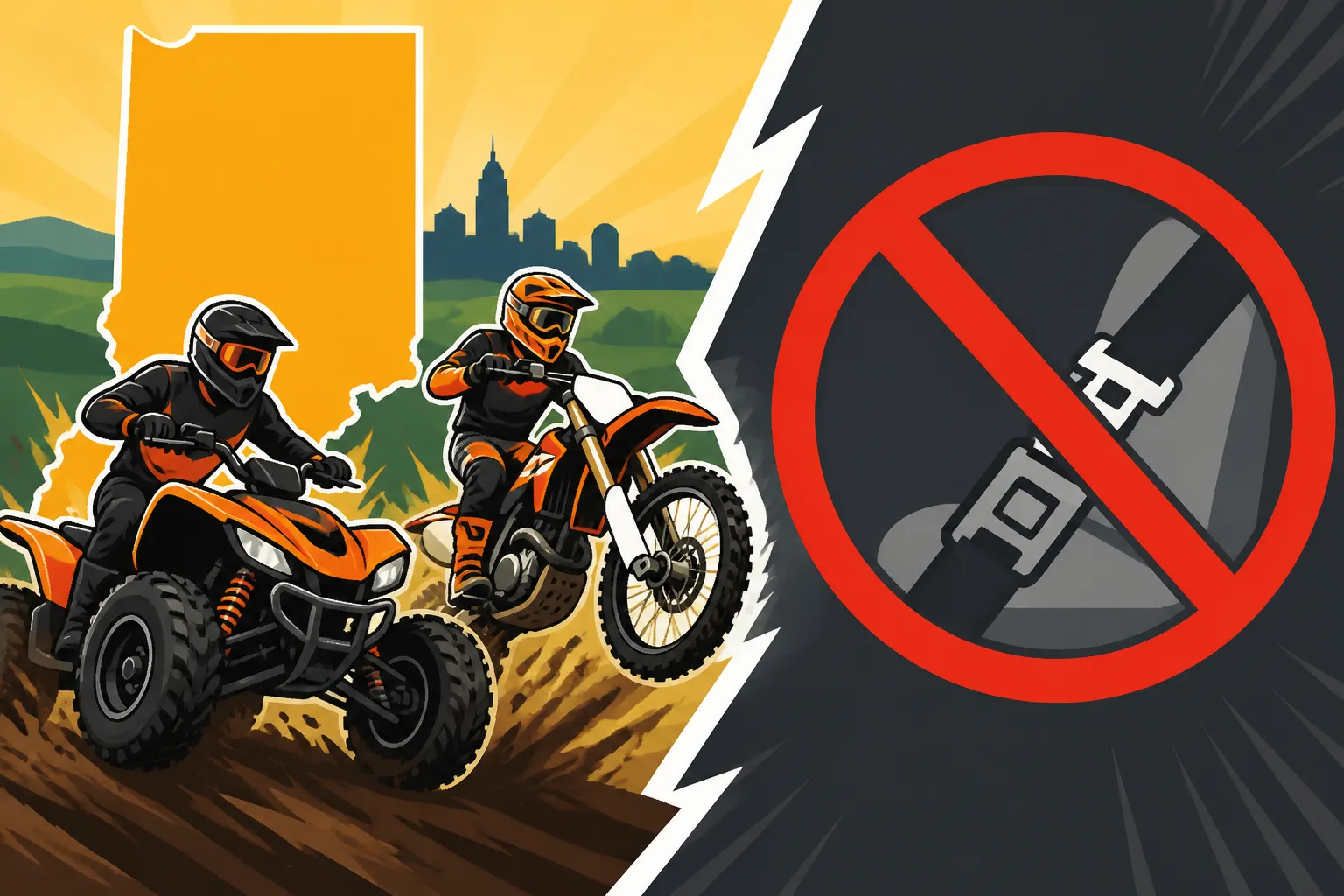
A quad or dirt bike has no seat belt to buckle, while a side-by-side usually has seats and restraints. That difference explains why Indiana’s belt rule applies differently across machines. Here’s what riders should know about the rule on public riding areas, how it relates to helmets, and what to check before unloading.
Why the rule treats machines differently
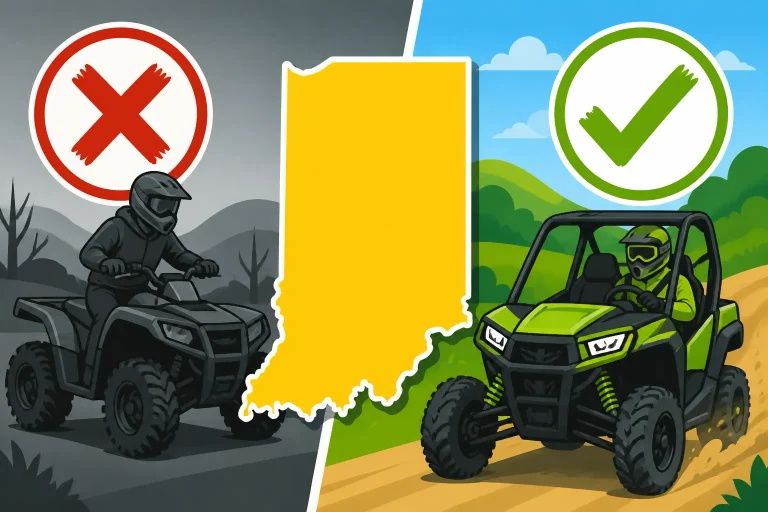
A seat-belt rule depends on the vehicle having a seat belt in the first place. Most quads and dirt bikes are designed for riders to sit astride the machine, not in an enclosed seating position with a belt. A side-by-side, by contrast, has individual seats and is built with occupant restraints. On Indiana public riding areas where seat belts are required, occupants in a side-by-side must use the belts provided.
That’s the practical distinction: the rule is about using the restraint designed for the machine, not adding a belt to every off-road vehicle. A quad or dirt bike does not become subject to a belt requirement simply because it is an off-road machine. Riders still have other safety responsibilities, including helmet requirements that may apply on public land.
It helps to separate three questions:
- What kind of machine are you riding? A quad, dirt bike, side-by-side, or full-size off-road vehicle may have different safety equipment and rules.
- Where are you riding? Rules for a public riding area may not be the same as rules on private land, a county road, or a private park.
- What safety equipment is fitted? A side-by-side’s seat belts are there to be worn by its occupants. A quad or dirt bike is not designed around that restraint system.
For the broader public-land requirements, see Indiana Helmet and Seat Belt Rules on Public Land. This article focuses on why the belt rule differs by machine type rather than trying to cover every rule that applies at every property.
What to do in each type of machine
Quads and ATVs
A quad is ridden astride the seat, with the operator controlling it using handlebars. It is not a seated, side-by-side vehicle with individual belted passenger seats. For that reason, a quad rider does not have a seat belt to buckle under the rule discussed here.
That does not mean a quad has no safety requirements. On public riding areas, riders may still need to meet helmet rules, age and supervision rules, permit requirements, and site-specific conditions. Requirements can also depend on whether the rider is using public land or private property. For riding-age and helmet details, see Indiana Minimum Age to Ride an ORV and Indiana Helmets at Redbird and Interlake.
A passenger should never be carried unless the quad is designed and equipped for one. A belt is not a substitute for a proper passenger seat, and adding an improvised restraint to an ATV can create a serious hazard if the machine tips or the rider needs to separate from it.
Dirt bikes
Dirt bikes also have no seat belt. The rider sits astride the motorcycle-style seat and controls the machine with handlebars and foot controls. A belt would not function like a side-by-side’s occupant restraint and is not part of the normal design.
Dirt-bike riders should focus on the safety equipment and rules that actually apply to their ride. That includes wearing a helmet when required, using suitable protective gear, riding within their ability, and checking whether the trail or area permits dirt bikes. Do not assume that a rule written for a belted vehicle is the only relevant safety requirement.
Side-by-sides and other seated vehicles
A side-by-side has seats beside one another, typically with a steering wheel and a roll cage or similar protective structure. Its restraint system is part of the vehicle’s design. If it has seat belts, the operator and passengers should buckle them before the machine moves. For details specific to those occupants, see Seat Belts for Indiana Side-by-Side Occupants.
The same basic safety logic applies to other off-road vehicles designed with belts: use the installed restraint system as intended. Do not assume that an open-sided cab means belts are optional. The presence or absence of doors is not the key question; the vehicle’s seating and restraint equipment, along with the applicable site rules, matter more.
| Machine type | Typical riding position | Seat belt normally fitted? | Practical takeaway |
|---|---|---|---|
| Quad or ATV | One or more riders astride the machine | No | No belt to buckle; check helmet and other rules |
| Dirt bike | Rider astride the seat | No | No belt to buckle; follow motorcycle-style safety requirements |
| Side-by-side | Occupants seated side by side | Yes | Use the installed belts as required |
| Full-size off-road vehicle | Seated occupants, depending on model | Often | Check the vehicle’s restraints and the riding-area rules |
This table describes common vehicle designs, not every custom build or unusual model. If the machine has belts, make sure they are present, working, and used by every occupant. If you are unsure how a particular model is classified at a riding area, ask the site before you arrive.
Where the rule applies and what it does not mean
A common mistake is to take a public riding-area rule and assume it applies in exactly the same way everywhere in Indiana. The place of the ride matters. Public land, private parks, private property, and roads can have different requirements. A local road ordinance may address road use, while a state recreation area may set rules for riding within its boundaries.
The belt requirement discussed here is not a general instruction to add seat belts to quads or dirt bikes. Nor does the lack of a belt on those machines mean they are exempt from every other rule. It simply reflects that those vehicle types do not normally have occupant seat belts.
Before a trip, identify the property and confirm its current requirements. If you are going to a state riding area, check the rules for that site. If you are riding at a private park, check that park’s rules rather than assuming the state-area rules apply. For more on site permits, see Indiana’s Daily and Annual Trail Permits. A permit is separate from the vehicle’s safety equipment and does not replace the need to follow the riding-area rules.
Keep road use separate from trail use, too. An off-road vehicle may face different restrictions when it leaves a trail and enters a public road. A belt rule for a public riding area should not be read as permission to use a road, and a road rule should not be assumed to settle what is required inside a park. For the distinct rules that apply to a full-size vehicle operator, see Indiana Rules for a Full-Size Vehicle Operator.
Check the riding area before you load
A quick check before departure can prevent a frustrating stop at the gate:
- Confirm that the property allows your machine type. Some riding areas may have different access rules for dirt bikes, ATVs, and side-by-sides.
- Check the current safety requirements, including helmets, seat belts, age limits, and supervision.
- Confirm permit and entrance requirements. These are separate from seat-belt compliance.
- Make sure every belt installed in a side-by-side is present and functional.
- If the machine is modified or its category is unclear, contact the park before traveling.
Rules can differ between locations and can be updated. When instructions posted at a gate or provided by the property operator address a specific situation, follow those instructions and ask staff if you are uncertain.
Seat belts and helmets are separate protections
Seat belts and helmets protect against different kinds of injury, so one does not replace the other. A side-by-side occupant may need to wear a seat belt and may also need a helmet, depending on the vehicle and the applicable rule. Conversely, a quad rider may have no belt to wear but can still be required to wear a helmet.
The details around helmets can depend on age, vehicle design, and where the machine is being operated. For example, riders should not assume that a roll cage automatically removes a helmet requirement. The distinction between a cab and an open machine is addressed in The Enclosed Cab Exemption in Indiana and Do You Need a Helmet Inside a Roll Cage?. Those issues are separate from whether the vehicle has seat belts.
That separation matters because riders sometimes treat safety equipment as interchangeable: “I’m inside a cage, so I don’t need a helmet,” or “I’m wearing a helmet, so the belt doesn’t matter.” Neither is a sound assumption. A belt is intended to keep an occupant in the vehicle’s seating position. A helmet protects the head. Follow the rules for both, where they apply.
For a side-by-side, belt use should be part of the start-up routine. Everyone should be seated properly, buckled, and ready before the driver moves. Do not let a passenger ride standing up, leaning outside the vehicle, or sitting somewhere not intended as a seat. Belts are designed for occupants in designated seats, not for improvised passengers.
For a quad or dirt bike, focus instead on fit-for-purpose protective equipment and rider control. A helmet that meets the relevant requirements, protective clothing, and sensible speed matter far more than trying to retrofit a belt that the machine was not designed to use.
Common mistakes and practical checks
Assuming every off-road vehicle follows one safety rule
“ORV” is a broad category. It can include machines with very different layouts, from dirt bikes and quads to side-by-sides. A safety requirement written around one type of vehicle may not translate neatly to another. Check the rule as it applies to your machine, rather than assuming that all ORVs have the same seating and equipment.
Treating belt absence as an exemption from everything
A quad or dirt bike’s lack of a seat belt does not remove requirements for helmets, permits, age limits, supervision, or staying on authorized trails. If you are taking a young rider, review the age and supervision rules before the trip. A useful overview is [Indiana Supervision Rules for Young Riders].
Buying or adding a belt without checking the vehicle design
Do not install a generic belt simply to make a quad or dirt bike resemble a belted vehicle. A restraint that is not engineered for the machine can interfere with the rider’s ability to move or exit, and it may create new risks during a rollover. If you are replacing a side-by-side belt, use a restraint intended for that vehicle and confirm that it fits the manufacturer’s mounting points and specifications.
Aftermarket parts sold through broad marketplaces, including Amazon, can vary in fit and intended use. A listing that says a belt is compatible does not by itself establish that the part is appropriate for your specific machine or meets the requirements of a particular riding area. Check the owner’s manual, the vehicle manufacturer, and the park’s instructions before relying on a replacement.
Forgetting passengers in a side-by-side
The driver is not the only occupant who needs to follow the belt rule. Every passenger in a designated seat should use the restraint provided for that seating position. Before leaving the staging area, check that each belt latches, adjusts properly, and is not twisted or damaged. Do not take more passengers than the machine is designed to carry.
If the machine has a belt that will not latch, a missing strap, or a damaged buckle, do not treat the problem as a minor inconvenience. Repair the restraint before riding, or use another suitable machine. A belt that is present but does not work cannot provide the intended protection.
Assuming a rental handles every rule automatically
A rental may include some equipment or paperwork, but the operator remains responsible for understanding the rules that apply to the ride. Ask the rental provider what is included, whether the vehicle’s belts are inspected, and what the riding area requires. For related questions, see Indiana Rules for a Rented Machine.
Before signing a waiver or heading out, check the vehicle’s seating capacity and make sure every occupant has a proper seat and restraint where fitted. A rental agreement does not make an unsafe passenger arrangement acceptable.
Leaving the check until the gate
A belt problem discovered at the park entrance can delay the whole group. Inspect side-by-side restraints before loading the trailer: check the webbing for cuts or fraying, verify that buckles latch, and look for loose or damaged attachment points. For a quad or dirt bike, check the equipment that is actually relevant to that machine and rider, such as helmet condition, controls, tires, and brakes.
It is also worth confirming that all riders understand the difference before the trip. A group with several vehicle types may have different safety checks for each machine. A quick conversation at home is easier than sorting out confusion at the trailhead.
Frequently Asked Questions
Do quad riders need to install seat belts in Indiana?
No. Quads are not normally designed with seat belts, and the rule discussed here does not mean riders must add a belt to one. Follow the other requirements that apply to the machine and riding location.
Do dirt bikes need seat belts?
No. A dirt bike is ridden astride the seat and does not normally have an occupant seat belt. Helmet and other safety requirements can still apply.
Do side-by-side passengers have to buckle up?
Where the applicable public riding-area rule requires belt use, occupants must use the seat belts provided. Check the current rules for the specific property and make sure every passenger has a designated seat and functioning belt.
Does wearing a helmet replace wearing a seat belt?
No. They protect against different hazards. If a side-by-side has seat belts and the rule requires their use, occupants should buckle up even when helmets are also required.
Disclaimer
This article is for general informational purposes only and does not constitute professional advice. Laws, prices and regulations vary by location and change over time. Consult a qualified professional for guidance on your specific situation.