Teaching a Young Rider in Indiana
A young rider may be ready to try an ATV or UTV before they are ready to handle every situation a trail can create. Indiana’s age, supervision, helmet, and permit rules depend on where you ride and what machine you choose. A safe plan starts with checking the rules for the specific riding area, then matching the machine and instruction to the child—not the other way around.
Check the rules before choosing a place to ride
Indiana does not have one simple age rule that answers every question about a young rider. The rules can differ by setting: a designated state riding area, a private off-road park, private property, or a public road. A child’s age, the type of machine, and whether an adult is supervising can all matter.
Before you unload, check the official rules for the specific place. State recreation areas can have requirements for riders, machines, permits, and safety equipment. Private parks may set their own age limits or require a parent or guardian to sign a waiver. A landowner’s permission to ride on private ground does not automatically make every activity or machine appropriate for a child.
The general rules for young riders on public land are a useful starting point, but not a substitute for checking the site itself. Review [Indiana Minimum Age to Ride Public Land] and [Indiana Supervision Rules for Young Riders], then confirm the rules with the riding area before setting out. For state recreation areas, the requirements at Indiana State Park Rules for Riders Under 16 can help you identify what to verify.
| Where you plan to ride | What to check first | What a young rider should have |
|---|---|---|
| Indiana state recreation area | Age and supervision rules, permit requirements, approved trails, and safety equipment | A suitable machine, properly fitted helmet, adult supervision as required, and the correct permit for the machine |
| Private off-road park | Park age limits, waiver rules, permitted machine types, and trail difficulty | Adult permission, required gear, and a route suited to the rider’s ability |
| Private property | Landowner permission, boundaries, hazards, and any applicable local rules | A controlled practice area, adult oversight, and clear limits on where to ride |
| Public road or road right-of-way | Whether that road or segment is legally open to ORVs, and the rules for crossing or riding there | Do not assume a child may ride just because the road is nearby or the machine is registered |
Public-land rules are not the same as road rules. A child learning to ride on private ground does not gain permission to use a county road, shoulder, ditch, or trail that is closed to machines. Before planning any road use, check Indiana Rules for a Rider Under 14 and the rules for the particular road or county. In many cases, the safest and simplest choice for a new rider is to keep practice off public roads entirely.
Supervision means staying involved
Indiana’s rules for riders under 16 on public land include direct parental supervision. Read the specific requirements in Under Sixteen and Direct Parental Supervision, and do not treat “supervision” as merely being somewhere on the property. A responsible adult should be close enough to observe the rider, recognize trouble, and step in when needed. The park may spell out who qualifies as a supervising adult and what “direct” supervision means in practice.
Even where a rule does not require a particular adult to stand beside the machine, active supervision is a sound safety standard. A child may look confident on familiar ground and still be unprepared for a sudden rut, a blind corner, a stalled machine, or another rider approaching from the opposite direction. Stay close enough to communicate and intervene, especially during early practice.
Age is only one part of the decision. Two children of the same age can differ greatly in reach, strength, judgment, and ability to follow instructions. A child should be able to use the controls correctly, keep their attention on the route, and stop when asked before moving into a more demanding riding situation.
Match the machine to the child and the setting
A young rider needs a machine they can control without stretching, straining, or relying on speed to get through a difficult spot. An ATV that is too large can be hard to steer or stop. A UTV’s seat, controls, and protective structure may feel reassuring, but they do not remove the risk of a rollover or collision. The machine must fit the rider and the place you plan to use it.
Start with the manufacturer’s age and size guidance for the specific model. Consider the child’s height, reach, strength, and coordination—not just the label on the machine. The child should be able to reach the controls, operate the brakes, and maintain a stable position. If the machine feels difficult to manage in a flat practice area, a trail with mud, slopes, or other riders will not make it easier.
Avoid using engine size as the only measure of suitability. Two machines with similar engine capacity can handle differently, and weight, throttle response, braking, width, and seat height all affect control. A machine designed for one rider should not be treated as a passenger vehicle. Likewise, a child should not be placed in a UTV seat unless it is appropriate for that occupant and the seat belt can be used as intended.
For an older teen, a driver’s license does not mean every ORV is automatically a suitable or lawful choice. Check the rules for the type of vehicle and the riding area, including What a Sixteen-Year-Old With a Driver’s License May Ride. A full-size vehicle can have different operator requirements from a youth ATV, and a road-driving credential does not replace trail-specific rules or experience.
A practical fit check includes:
- The child can sit comfortably and reach the main controls without leaning or losing balance.
- They can operate the throttle gradually, use the brakes, and bring the machine to a controlled stop.
- They can keep both hands where they need to be and maintain a stable riding position.
- They understand how to shut the machine off and what to do if it stalls.
- The adult has checked the machine’s size guidance and the riding area’s rules.
A child who passes these checks on level ground may still need a smaller machine or more practice before attempting uneven terrain. Be willing to step back. Switching to a gentler route—or ending the ride—is a safer choice than asking a young rider to push through a machine or trail that is beyond their ability.
Avoid carrying a passenger unless the machine is designed for it
A second person changes the machine’s balance and can interfere with the rider’s control. Do not assume that a passenger can ride safely on a single-rider ATV just because there is room to sit. Check the manufacturer’s instructions and the riding area’s rules. UTV passengers should use the proper seats and restraints; do not let a rider hold onto an adult in place of using the designated seating and safety equipment.
A child should also know that being allowed to ride with an adult does not mean they are ready to operate the same machine. Riding as a passenger and controlling a vehicle are different tasks. Give each child an appropriate role, and do not let peer pressure or a group’s pace decide who is ready to drive.
Teach skills in small, controlled steps
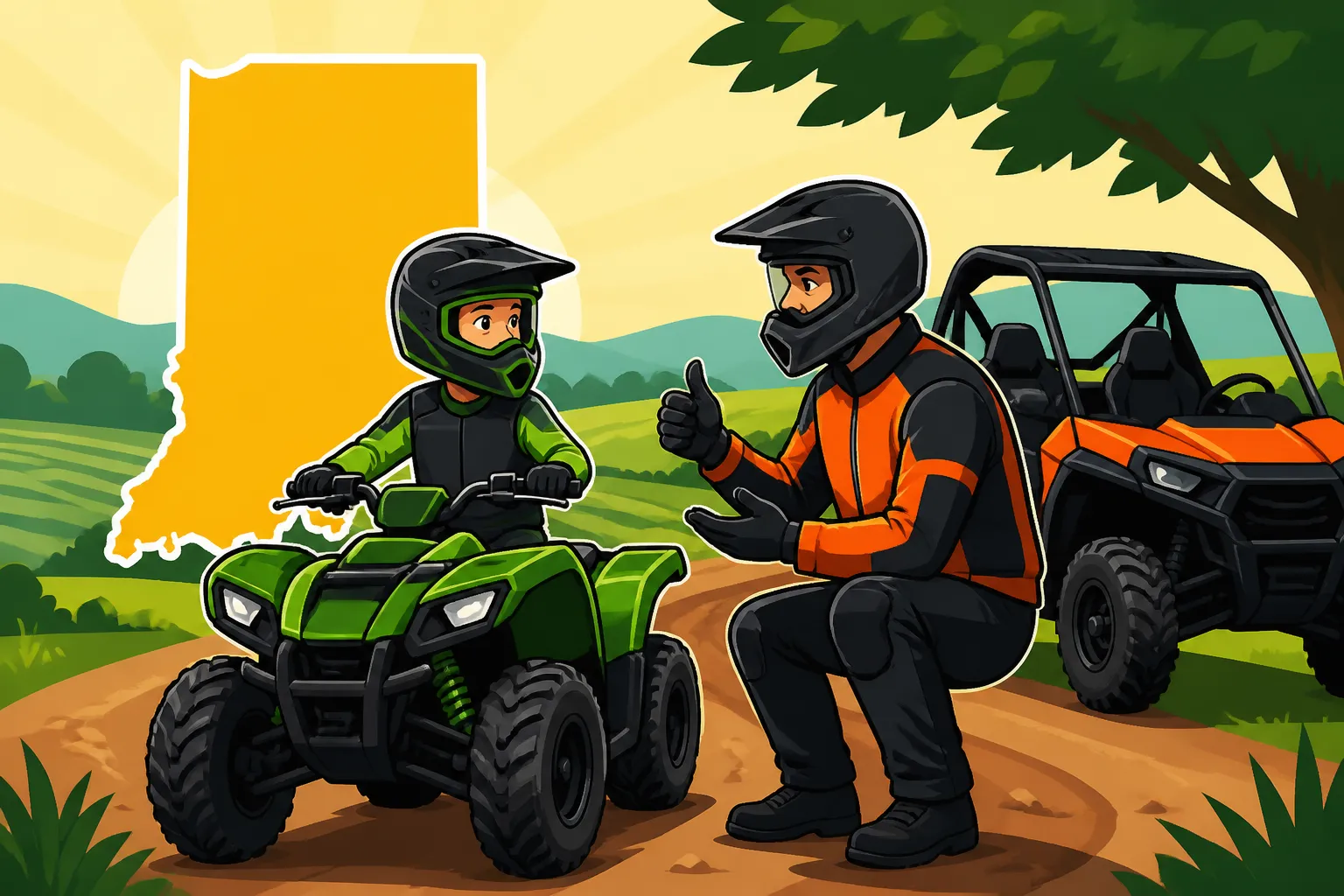
A good first lesson is not a trail ride. Start in a flat, open area with no traffic, obstacles, or bystanders in the machine’s path. Choose a place where the adult can communicate clearly and where a mistake will not send the rider toward a road, ditch, fence, water, or steep edge.
Explain the controls before the engine starts. Show the child how to start and shut off the machine, use the throttle and brakes, and respond to a stop command. Explain what to do if the machine stalls or they feel unsure: stop, secure the machine, and wait for an adult. Keep the first session short. Fatigue and excitement can make it harder for a child to focus.
A gradual lesson might follow this order:
- Review the ground rules. Agree on where the child may ride, which direction to travel, how far they may go, and what signal means “stop now.” Make clear that the rider must stop if they lose sight of the supervising adult or feel uncertain.
- Identify the controls with the engine off. Have the child point to the throttle, brakes, ignition or stop control, and any other controls they need to use. Check that they can reach and operate them.
- Practice mounting and starting safely. Show how to approach and mount the machine, start it only when ready, and shut it down before getting off. Follow the machine’s operating instructions.
- Practice moving slowly and stopping. Use a short, straight path. Ask the rider to start gently, travel a controlled distance, and stop when instructed.
- Add turning and direction changes. Practice wide turns at low speed. The child should look where they intend to go and leave room to stop without striking an obstacle.
- Introduce simple terrain only after basic control is consistent. Add small, predictable changes in ground surface one at a time. Do not combine hills, mud, other traffic, and unfamiliar controls in an early lesson.
- Review the ride before moving to a trail. Ask the child to explain the stop signal, the boundaries, and what they will do if the machine feels out of control. If they cannot explain or demonstrate these basics, continue practicing in the controlled area.
Keep practice sessions low-pressure. Give one clear instruction at a time, and stop to reset if the child becomes distracted or frustrated. Praise careful stopping, looking ahead, and following boundaries—not speed or daring. A rider who knows that stopping is a good decision is easier to supervise than one who feels expected to keep going.
Training courses and informal practice
Indiana does not generally require every ORV rider to hold a statewide safety-course certificate before riding, but that does not make training unnecessary. A structured course can help a young rider understand basic controls, safe decisions, and how to avoid common hazards. Check Indiana Safety Training for Riders for current options, and consider The Voluntary Indiana Offroader Course as one way to build skills before a trip.
A course does not replace adult supervision or make an unsuitable machine safe. Nor does completing a course grant permission to ride somewhere that is closed, remove a park’s age requirements, or satisfy a permit requirement. Treat instruction as one part of a safety plan: machine fit, proper equipment, adult oversight, and suitable terrain still matter.
If the child has little experience, do not make the first outing a long group ride. A group can move faster than a beginner is comfortable with, and a young rider may feel pressure to follow others into a difficult section. Choose a simple route, tell the group the child is learning, and have an adult ride close enough to help. If the park offers a beginner area or clearly marked easy routes, use them before attempting more challenging trails.
Use protective gear and set clear riding limits
A properly fitted helmet is essential protective equipment for a young rider. Check the requirements for the location, the rider’s age, and the machine. At Indiana state recreation areas, review Indiana Helmets at Redbird and Interlake before leaving home. Helmet rules may be only one part of a site’s equipment requirements.
Choose a helmet that is designed for the activity and fits securely. It should not wobble or slide around, and the fastening system should be used as instructed. A novelty helmet or a helmet intended for a different activity may not meet the relevant requirements. If you shop online, including through Amazon, confirm the helmet’s safety certification, intended use, fit, and return policy rather than relying on a product photo or a broad size label. A local fitting can be useful when you are unsure.
The rest of the gear should protect the rider from the conditions they will face. Consider eye protection, gloves, long sleeves, long pants, and sturdy footwear that stays on securely. The exact requirements can vary by place, so check the park’s rules. Gear that fits an adult but slips on a child can become a distraction or fail to protect the intended area.
For a UTV, make sure the child is seated in a proper seat and uses the required restraint. A roll cage is not a substitute for a seat belt. For an ATV, make sure the rider is on a machine designed for the number of occupants and is not carrying an extra passenger. Review Indiana Seat Belt Rules at an ORV Park for the relevant UTV requirements.
Set limits before the ride begins. Tell the young rider:
- Which trails or areas are allowed and which are off limits.
- How close they must stay to the supervising adult.
- What signal means to stop, and what to do if they become separated.
- Whether they may pass another rider or must wait for the adult.
- That they must not ride toward a road, trail exit, or unfamiliar route without permission.
- That stopping is always acceptable if they feel uncomfortable.
Adjust those limits as conditions change. A route that felt manageable on dry ground may become slippery after rain. Traffic, visibility, fatigue, and the child’s concentration can change during a ride. An adult should be prepared to turn back or take a break rather than insist on finishing a planned loop.
Sort out permits and paperwork before the trip
A young rider’s age does not make permit requirements disappear. For an Indiana state riding area, confirm what permit is required for the machine and how it must be displayed or carried. Do not assume an adult’s permit covers every machine in the trailer. Check Does Every Machine in the Truck Need Its Own Permit? and verify the details with the official park or permit information before you travel.
Indiana’s trail permit and BMV registration are separate matters. A state recreation area may require its own ORV permit even when the machine has a registration decal. Conversely, having a BMV decal does not mean every trail or public area is open to the machine. A trail permit is not a general license to ride on public roads, private land without consent, or a closed trail.
If you are bringing a machine from another state, do not assume that its registration or sticker automatically satisfies Indiana’s requirements. Indiana has rules for visiting riders and for how long an out-of-state machine may be used before registration requirements apply. Check Indiana’s Twenty-Day Visitor Rule and the official requirements for the particular trip. Ask the riding area whether it also requires a separate permit; registration and area access are not interchangeable.
A rental machine can have its own paperwork and rules. Before reserving, ask whether the rental includes the required trail permit, whether the child is allowed to operate that model, what age or supervision rules apply, and who must sign the rental agreement or waiver. Review Indiana Rules for a Rented Machine and confirm the rental provider’s current conditions. Do not assume the rental company’s permission overrides a park’s age or safety rules.
A pre-trip check can prevent a frustrating turn-around:
- Confirm that the planned riding area is open and that the chosen trails are suitable for your group.
- Check the current age, supervision, helmet, seat belt, and machine requirements.
- Confirm the permit needed for each machine and whether the permit must be displayed.
- Check the machine’s registration status and any requirements for an out-of-state machine.
- Ask about rental conditions or event rules if the machine or ride is organized by someone else.
- Pack the required paperwork and equipment where you can find them at the gate.
Rules and park operations can change. Use official sources for current requirements, and contact the riding area if a rule is unclear—especially if the child is close to an age threshold, the machine is unusual, or you are visiting from out of state.
Make the first ride a confidence-building outing
Plan around the young rider, not around the distance an adult wants to cover. Choose a short outing with an easy place to stop, take a break, or turn back. Arrive with time to check the machine and gear without rushing. A child who feels hurried at the gate is more likely to miss instructions or become anxious before the ride begins.
Talk through expectations with other adults and riders in the group. Agree that no one will pressure the child to keep up, take a difficult line, or ride faster. An adult should be assigned to supervise the young rider rather than dividing attention between that task and leading the whole group. If the group becomes spread out, stop and regroup instead of letting the child try to catch up.
Watch for signs that the rider is no longer comfortable or attentive. Repeated missed instructions, stiff posture, delayed reactions, difficulty keeping a steady pace, or frustration are reasons to pause. A break may help; if not, end the ride. A young rider does not need to complete a loop to have a successful first day. Learning when to stop is part of learning to ride.
Afterward, ask what felt easy and what felt difficult. Use the answer to plan the next lesson, not to criticize. If the child struggled to stop smoothly, practice stopping again on level ground. If the trail felt intimidating, return to an easier area. Progress should come from consistent control and sound decisions, not from age alone or the number of rides completed.
The adult’s role is to keep conditions manageable. That means checking the rules, choosing a fitting machine, teaching in stages, and being willing to say no when the route or conditions are beyond the rider’s ability. Those choices help a young rider gain confidence without mistaking confidence for readiness.
Frequently Asked Questions
Is there a single minimum age for every young rider in Indiana?
No single age answer covers every setting, machine, and activity. Requirements can depend on where the child rides and whether they are operating an ATV, UTV, or other vehicle. Check the rules for the specific riding area and machine before the trip.
Does a parent have to ride beside a child under 16?
Indiana public-land rules include direct parental supervision for riders under 16. Check the current rule and the riding area’s requirements to understand who may supervise and how close they must remain. Even when a site’s rule is less specific, close, active supervision is prudent for a beginner.
Does Indiana require a safety course before a child rides?
Indiana does not generally require every ORV rider to hold a statewide safety-course certificate, but a course can be valuable. It does not replace supervision, a suitable machine, protective gear, or the riding area’s rules.
Does a BMV decal replace an Indiana trail permit?
No. BMV registration and a permit for a designated riding area serve different purposes. Check what the specific area requires for each machine, even if the machine already has registration paperwork.
Can a child learn on an adult-sized ATV?
A child should ride only a machine that fits their size and ability and is permitted for their age and location. Follow the manufacturer’s guidance and the applicable rules. If the child cannot reach and use the controls reliably, choose a more suitable machine or wait.
Disclaimer
This article is for general informational purposes only and does not constitute professional advice. Laws, prices and regulations vary by location and change over time. Consult a qualified professional for guidance on your specific situation.