Indiana Landowner Permission Requirements
Riding on private land in Indiana can feel straightforward until a boundary, shared driveway, or neighbor’s field complicates the plan. Permission from the owner is the starting point, but it does not automatically cover every rider, machine, route, or activity. Here’s how to get clear authorization, avoid trespass problems, and understand which state and local rules still apply.
Get Permission From the Person Who Controls the Land
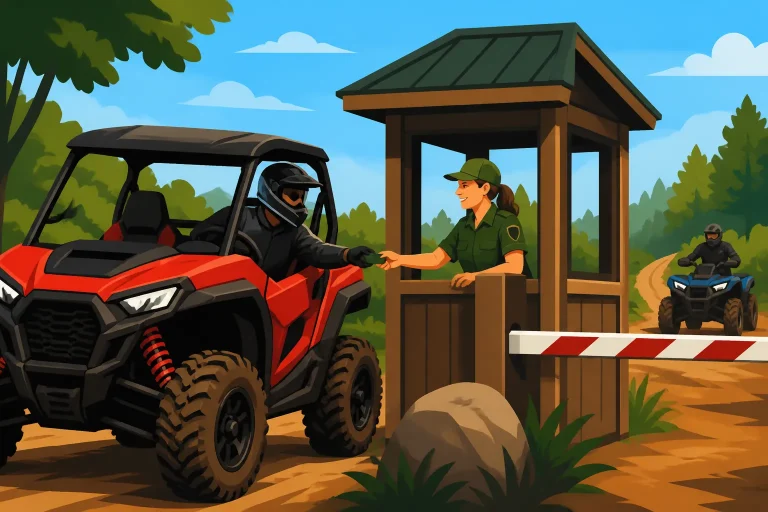
Before unloading an ATV or UTV, make sure the person granting access has authority over the exact property you plan to use. The owner may be able to give permission, but a tenant, farm operator, property manager, or hunting-lease holder may have only limited rights. If someone other than the owner manages the land, ask what authority they have and whether the owner’s approval is needed.
Indiana does not make a written permission form the only way to arrange ordinary private-property access. Still, written permission is much easier to verify than a vague conversation, especially when several people, parcels, or routes are involved. A text or email can help document what was agreed. For regular access, a signed note or agreement may be clearer.
Permission should come from the person responsible for the land you will actually ride on. Approval to cross one field does not automatically cover a wooded parcel next door, a farm lane beyond the property line, or a neighbor’s bridge. If a route crosses more than one property, get permission from each person with authority over the relevant section.
Be specific about the permission
A useful permission agreement answers practical questions before anyone starts the machine:
- Which parcel, trail, field, or access route is included?
- Which riders are allowed, and may they bring guests?
- Are ATVs, UTVs, dirt bikes, or other machines permitted?
- Is riding limited to certain dates, hours, or seasons?
- Are there areas to avoid, such as crops, livestock pens, drainage areas, or buildings?
- May riders park, unload, refuel, or make minor repairs on the property?
- Are passengers, children, dogs, or hunting activities part of the arrangement?
- Does the landowner require proof of insurance or any safety conditions?
- How should riders contact the owner if conditions change or damage occurs?
These details are not just paperwork. They prevent a rider from assuming that “you can use the property” means unlimited access for a group, any machine, and any route.
If permission is temporary, identify when it ends. For ongoing access, agree on how the owner will communicate closures or changes. A landowner may withdraw permission, so riders should not treat a previous invitation as permanent authorization.
Treat verbal permission carefully
A clear conversation may be enough to establish that a landowner invited you onto the property, but verbal arrangements are easy to misunderstand. One person may believe permission covered only a short crossing, while another thinks it included a full afternoon of trail riding. A written message helps settle basic questions about who may ride and where.
If a landowner gives permission by phone or in person, follow up with a short message that confirms the details. Keep the reply with your riding paperwork. Do not assume silence means agreement; ask for an affirmative response.
Permission also does not give riders permission to damage crops, cut fences, move equipment, or use a route the owner has excluded. If a gate is closed or a path is blocked, stop and ask rather than treating access as an invitation to find another way through.
Know What Permission Does Not Authorize
Landowner permission addresses access to private property. It does not replace registration, trail permits, road rules, safety requirements, or other restrictions that apply to a particular machine or activity.
For example, an owner’s invitation to ride a private field does not make a nearby county road legal for ORV use. Indiana generally does not allow off-road vehicles on public roads just because the rider has permission from someone who owns land beside the road. Road access depends on applicable state law and local designation. See Indiana Rules for Riding Private Property and Indiana Counties That Allow ORVs on Roads for the difference between private-land riding and public-road access.
Likewise, permission to use a private route does not authorize riding through a public area that is closed to machines. Do not assume that land next to a trail, recreation area, or wildlife property is open because an adjacent landowner welcomed you. Public land has its own access rules. Indiana’s fish and wildlife areas, for example, have restrictions riders need to check before entering; see Indiana Rules on Fish and Wildlife Areas.
Permission also does not automatically satisfy rules for riding at a designated public riding area. Indiana state recreation areas have their own permit and operating requirements. A private landowner cannot waive those rules, and a private-property invitation does not substitute for the required park authorization. Check Indiana’s Daily and Annual Trail Permits and Do You Need a Permit for Indiana ORV Trails? when your trip includes a state riding area.
| Situation | What landowner permission covers | What to check separately |
|---|---|---|
| Riding within a private field | Access to the field, within the agreed limits | Machine requirements, safety rules, and any conditions set by the owner |
| Crossing a private parcel | The specific route and time authorized | Permission from every property owner along the crossing |
| Using a private farm lane | Access only if the owner included that lane | Whether it connects to a public road where ORV riding is restricted |
| Riding at a state recreation area | Nothing, unless the landowner also controls that area | State permit, entrance, hours, and area rules |
| Riding a county road beside private land | Nothing by itself | Whether the county has legally opened or designated that road |
| Bringing guests or additional machines | Only if the permission includes them | Owner approval and any applicable registration or permit rules |
Permission is not the same as ownership or access rights
A landowner’s permission is limited to the rights that person can grant. If land is leased, jointly owned, managed by a business, or subject to another person’s access rights, the arrangement may need additional approval. A person who rents a house on rural land, for instance, should not assume that the rental automatically includes permission to use a landowner’s fields with an ATV.
The same caution applies to easements and shared roads. An access road may be used by several owners or controlled under a separate agreement. Ask who has authority over the route and whether motorized recreation is included. Permission to ride on one person’s portion of a lane may not authorize riding across the full route.
If you are buying or renting rural property and expect to ride there, ask about machine access before relying on a listing description or casual assurance. Confirm which areas are included, whether access is exclusive or shared, and whether the right to ride continues if ownership or management changes.
Follow the Rules That Apply to the Machine and the Riders
Once access is settled, check the rules that attach to the machine, the rider, and the location. These are separate questions from whether the owner has invited you.
Indiana’s BMV registration requirements can apply to off-road machines, with exceptions depending on the vehicle and circumstances. A private-property setting does not necessarily make registration requirements disappear. The details can depend on the type of machine and its use, so review Indiana Rules for Riding Private Property alongside Machines Indiana Exempts From Registration and Registering an ORV in Indiana.
For riding on public land, a state trail permit may be required even when the machine has an Indiana registration decal. Those systems serve different purposes. A BMV registration is not a substitute for a DNR permit to use a state riding area, and a trail permit does not resolve title or registration requirements. See Indiana ORV Permits Explained if your route includes public riding grounds.
Riders should also check age, helmet, and passenger requirements. Do not assume that private land is exempt from rules that apply to the rider or machine. Indiana’s helmet rules can extend to private-property riding; Do You Need a Helmet on Your Own Land? explains that issue. Rules for younger riders and supervision may also matter, so review Indiana Rules for a Rider Under 14 and Indiana Supervision Rules for Minors before inviting children to ride.
If the group will use a UTV, check whether passengers have proper seating and restraints, and follow the owner’s limits on the machine and route. A landowner’s permission does not make it safe to carry more people than the vehicle is designed for or to ride in areas that cannot support its weight.
Check insurance and liability expectations
There may not be one insurance condition that applies to every private-property ride. A landowner may nevertheless ask riders to carry liability coverage or show proof before granting access. Insurance may also be required by a local ordinance when riding on certain public roads. If the property owner has a written agreement, read the insurance language rather than relying on a general assumption.
Ask your insurer whether your policy covers the activity you plan to do and where you plan to ride. Coverage can depend on the machine, the location, how it is used, and who is operating it. Do not assume that an automobile policy, homeowners policy, or a policy on the machine covers every injury or damage scenario.
Landowners should be equally careful about relying on a waiver as a complete solution. A signed document may record conditions and communicate risks, but it does not guarantee that the owner has no legal responsibilities or that every claim is barred. For recurring commercial, club, or organized access, get advice from a qualified professional about the agreement and insurance arrangements.
A Practical Permission Check Before You Ride
A short check before each visit can prevent the most common problems. This matters especially when access is informal, the property is shared, or the land changes with the season.
- Confirm who is granting permission. Ask whether the person owns or manages the property and whether anyone else must approve the ride.
- Identify the exact area. Use parcel boundaries, a marked map, or a clear description. Confirm entry points and routes.
- List the riders and machines. Get approval for each guest, vehicle type, and any passenger arrangement.
- Agree on timing and conditions. Confirm the hours, dates, weather restrictions, parking, and any areas that are off limits.
- Check separate legal requirements. Review machine registration, rider safety rules, and any public-road or state-area rules that apply to the trip.
- Keep proof of permission available. Save a text, email, or written agreement on a phone and, when useful, keep a copy with the machine’s paperwork.
- Respect signs, gates, and changed conditions. If access appears closed or the owner changes the arrangement, stop and confirm before proceeding.
- Leave the property as agreed. Avoid crop damage, livestock disturbance, litter, and unauthorized trail changes; report damage promptly.
A written permission note can be simple, but it should be precise enough that the owner and riders understand the same arrangement. For repeated use, spell out how notice of closure will be given and who is responsible for telling guests about the rules. Keep a current copy rather than relying on an old message that may refer to a different season or route.
If a landowner says “yes” but sets limits, those limits are part of the permission. Do not extend the invitation to friends without asking, and do not treat another rider’s access as transferable. When a group is involved, choose one person to confirm the conditions with the owner and share them with everyone before the ride.
Good permission is clear, limited to the landowner’s authority, and separate from other legal requirements. Confirm the route, riders, dates, and machine types in advance; then check registration, permits, and safety rules for the locations you plan to use.
Disclaimer
This article is for general informational purposes only and does not constitute professional advice. Laws, prices and regulations vary by location and change over time. Consult a qualified professional for guidance on your specific situation.