Indiana Rules for Campfires at a Park
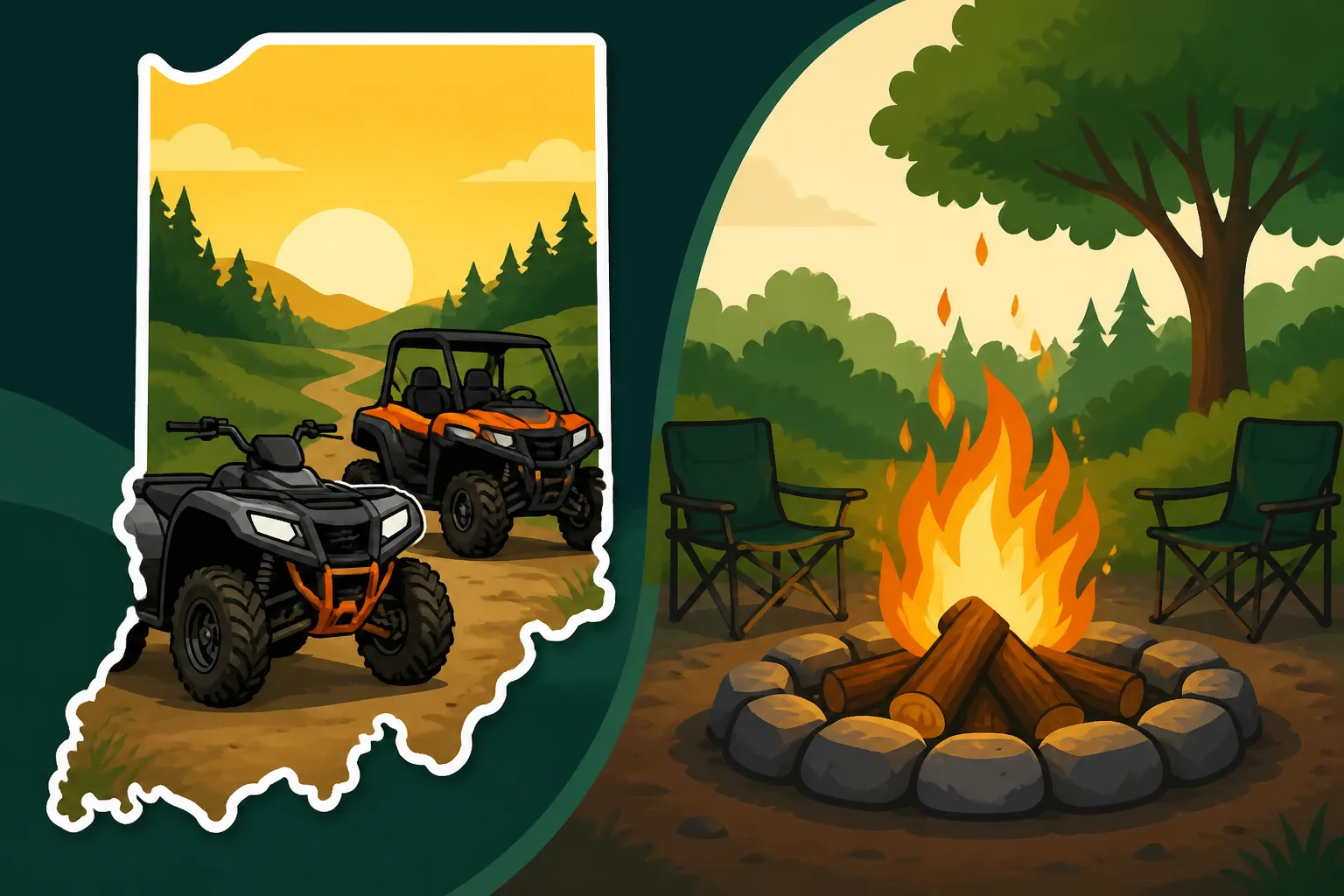
A campfire can be a welcome end to an Indiana riding day, but permission depends on where you’re staying and what the park allows that day. A trail permit or an out-of-state registration does not automatically authorize a fire. Check the campground’s rules, use only approved fire areas, and be ready to skip the fire if conditions or a temporary restriction make it unsafe.
A Trail Permit Does Not Give You Campfire Permission
Indiana’s ORV trail permits and a park’s fire rules address different things. A permit may be needed to ride, while campfires are controlled by the land manager and the rules for the specific campground or recreation area. Buying a permit does not give you permission to build a fire wherever you park, camp, or unload.
This distinction matters at public riding areas such as Redbird and Interlake, and at private parks such as Badlands or Haspin Acres. Each property can set its own rules, and a campground within or near a riding area may have rules separate from the trail rules. A fire ring at one campsite is not permission to light a fire in a parking area, beside a trail, or at an unoccupied site.
The same caution applies to reciprocity. An out-of-state registration or permit may help satisfy a riding requirement, but it does not override the fire rules at an Indiana park. Visitors and Indiana residents should follow the same site-specific fire instructions and any temporary restrictions announced by the park.
Before leaving home, check the park’s current notices and contact the campground if the information is unclear. Ask where fires are allowed, whether firewood or charcoal is permitted, and whether a temporary restriction is in place. Park rules can change with weather, maintenance, or fire conditions, so an old trip report or a photo of a fire ring is not a reliable substitute for current instructions.
For the riding side of your plans, see Indiana’s Daily and Annual Trail Permits and Indiana’s Out-of-State Annual Permit. Keep those requirements separate from campground rules when planning your trip.
Where Fires Are Usually Allowed and What to Confirm
The safest default is to make a fire only in a designated fire ring or other facility the park specifically approves. If there is no clear, established fire area at your campsite, don’t create one by moving rocks, scraping a new pit, or burning directly on the ground. Ask park staff what to do instead.
Even a built-in ring may not be usable during a restriction. The campground could close fire areas temporarily, prohibit wood fires while allowing a stove, or ban all open flames. A posted notice, gate sign, campground host, or park office is the best guide. If different signs appear to conflict, ask staff before lighting anything.
| Situation | Safe approach |
|---|---|
| A designated ring is at your campsite | Use it only if current park rules allow fires |
| There is no fire ring or approved fire area | Don’t build a new pit; ask the park about alternatives |
| A burn restriction is posted or announced | Follow it, even if a ring is available |
| You’re at a private riding park | Check that property’s own campground and fire rules |
| You’re visiting from another state | Follow the same local fire rules; riding reciprocity is separate |
| You’re unsure whether a stove counts as an open flame | Ask the park before using it |
Don’t assume that a fire is allowed just because other campers have one. They may be at a different site, following a different rule, or acting against the current restriction. Similarly, a fire ring may be present for appearance or occasional use but closed during dry or windy conditions.
If your riding destination includes camping, check both the trail information and the campground information. Camping Near Indiana ORV Trails can help with trip planning, while Indiana Trail Closures to Check is useful for confirming riding conditions. Neither replaces the park’s current directions about fires.
Campfires, grills, and camp stoves are not always treated alike
A wood fire, a charcoal grill, and a fuel-burning camp stove can each be subject to different rules. Some sites may permit cooking equipment while prohibiting open wood fires; others may restrict flames more broadly. Don’t assume that a small stove is automatically exempt. Ask the park how it defines and handles each type of flame.
For a group ride or organized event, check event requirements as well as campground rules. A group’s event authorization does not necessarily settle where participants can make fires or what equipment they can use. See Indiana Rules for an Organized Ride and Indiana Permits for a Race or Event if your gathering involves more than a casual trip.
Fire Safety at an ORV Campground
A riding trip can leave people tired, muddy, and distracted. Set up the fire before settling in for the evening, and keep it small enough to manage. A campfire should be attended by a responsible adult from the time it is lit until it is fully out. Never leave it burning while the group heads back to the trails, goes to bed, or drives away.
Keep machines, fuel cans, spare gasoline, and oily equipment well away from the fire. Don’t use gasoline, diesel, or other flammable liquids to start or revive a fire. Keep children and pets at a safe distance, and make sure everyone in the group knows who is watching the fire. A fire ring is not a safe place to dry riding gear, gloves, boots, or fuel-soaked clothing.
Have water and a shovel close at hand if the park permits a fire. A compact extinguisher can be useful in a camp setup, but it is not a replacement for following the park’s rules or having enough water to put the fire out. If you’re buying equipment, check the extinguisher’s rating and instructions rather than choosing one based only on its size; Amazon is one place to compare product details, but confirm that the item is suitable for the risks at your campsite.
Wind can carry embers into dry grass, leaves, tents, or nearby vehicles. If gusts pick up, the fire is throwing sparks, or the surrounding ground is dry, stop adding fuel and put the fire out. Don’t try to make a fire larger to keep a group warm. Bring appropriate layers instead.
Use only clean, untreated firewood if wood fires are allowed. Painted, stained, glued, or pressure-treated wood can release harmful smoke. Don’t burn plastics, cans, food packaging, oil, or household trash. Pack waste out or use the campground’s designated bins. These practices reduce smoke and keep sharp or hazardous debris out of the fire ring.
Firewood can also carry insects and plant diseases. When possible, buy wood near the campground and follow any local instructions about bringing wood onto the property. Check park notices before packing a large load from home; restrictions can be place-specific and may change.
After the fire, let the wood burn down only if that is consistent with park directions, then thoroughly extinguish the remaining coals. Add water carefully, stir the ashes with a shovel, and check for heat beneath the surface and around the edges of the ring. Repeat until there is no steam, glow, or warmth. Don’t bury hot coals: they can remain hot and reignite. Never leave the site until the fire is fully out.
Planning a Campfire Into Your Riding Trip
A little planning avoids arriving at camp with firewood and no legal place to use it. Confirm the campground reservation or access requirements, check current fire notices, and identify the approved fire area before unpacking. If the park cannot confirm that fires are allowed, plan a no-fire evening rather than relying on assumptions.
A practical pre-trip check is:
- Identify the exact property where you’ll camp, not just the nearby trail system.
- Check that property’s current fire and campground notices.
- Ask whether wood fires, charcoal grills, or camp stoves are allowed.
- Confirm whether there are designated rings and whether you need to bring any permitted equipment.
- Pack water, a shovel, and safe lighting tools if a fire is allowed.
- Bring a backup plan, such as warm clothing and food that does not require an open fire.
- Recheck signs and instructions when you arrive, then put the fire out completely before leaving.
This is especially useful when a trip includes several parks or an overnight stay near a riding area. A rule that applies at one campground may not apply at the next. The trail permit can also differ from the campground’s entrance or overnight arrangements, so verify each requirement separately. Indiana’s Two State ORV Areas Compared and Indiana ORV Park Camping can help you sort out the riding and lodging parts of a multi-day plan.
If a fire restriction is in effect, treat it as part of the trip conditions, just like a closed trail or a storm warning. Don’t move the fire to an unapproved spot, use a concealed flame, or assume a small fire will go unnoticed. The sensible alternative is to cook with equipment the park explicitly allows, or choose food that needs no cooking.
The rule to remember is simple: ride under the permit that applies to your machine, camp where the property allows, and make a fire only when the campground expressly permits it. When instructions are unclear or conditions have changed, ask park staff and err on the side of no fire.
Disclaimer
This article is for general informational purposes only and does not constitute professional advice. Laws, prices and regulations vary by location and change over time. Consult a qualified professional for guidance on your specific situation.