Registering an ORV in Indiana
Owning an off-road vehicle (ORV) in Indiana brings a ton of joy—exploring Redbird, tackling the trails at Interlake, or simply getting chores done around the farm. But let's be honest, navigating the state's registration and titling rules can feel like trying to find your way through a dense woods without a map. It’s enough to make you scratch your head and wonder if it’s all worth it. This guide is here to cut through the confusion, break down the process step-by-step, and ensure you're street legal (on the trails, that is!) and ready to ride without the nagging worry of fines or legal headaches.
Why Register Your Off-Road Vehicle in Indiana?
I know, I know—more paperwork, more fees, right? It’s tempting to just hit the trails and hope for the best. But in Indiana, registering your ORV isn't just a suggestion; it's a legal requirement that carries some pretty significant benefits, not to mention penalties if you skip it. It's really about more than just a sticker; it's about being a responsible rider and contributing to the community we all love.
The Legal Mandate and Enforcement
First and foremost, riding an unregistered ORV on public lands or designated trails in Indiana is against the law. It’s not one of those minor infractions that might get a casual glance; conservation officers and local law enforcement are absolutely within their rights to stop you and check for proper registration. Getting caught without it can lead to fines and an unwelcome interruption to your day of fun. Imagine being deep into a fantastic ride at Redbird, only to be pulled over and ticketed because that little decal wasn't on your machine. It’s a frustrating scenario that's entirely avoidable. The state wants to ensure accountability and track machines, which is why they have these rules in place.
Funding Trails and Supporting the ORV Community
This is where your registration fees truly come full circle. Those dollars aren't just vanishing into a bureaucratic black hole; a significant portion of them are directly allocated to maintaining and expanding Indiana’s ORV trail systems. Think about the improvements you’ve seen at places like Interlake or the work being done to manage user impact—that all takes money. When you pay your registration fee, you’re essentially investing in the future of off-road riding in Indiana. You're helping to ensure that the trails remain safe, accessible, and enjoyable for everyone. It's a collective effort, and your contribution, however small it might seem individually, really does add up to make a difference. [Where Indiana ORV Fees Go]
Proving Ownership and Preventing Theft
Beyond the legal aspect of riding, proper registration and titling serve a crucial role in establishing and proving ownership of your ORV. Let's face it, these machines are significant investments, and unfortunately, they can be targets for theft. Having your ORV properly registered and, where required, titled with the state provides an official record of ownership. If your machine is ever stolen, this official documentation is invaluable for law enforcement trying to recover it and for insurance purposes. Without it, proving that the machine is yours can become a complicated, drawn-out nightmare. It's peace of mind that goes a long way.
Understanding Indiana's ORV Definition and Exemptions
Before you even think about heading to the Bureau of Motor Vehicles (BMV), it's really helpful to understand what Indiana considers an "off-road vehicle" and, just as importantly, what machines might be exempt from registration. You don't want to go through all the trouble only to find out your particular rig doesn't even need a decal, or worse, you assume it's exempt and you're wrong!
What Qualifies as an ORV in Indiana?
Indiana law broadly defines an ORV as a motorized vehicle that is not intended for highway use and is designed to travel on land other than public roads. This encompasses a pretty wide range of machines that we all love. We're talking about your typical all-terrain vehicles (ATVs), those popular side-by-sides (UTVs), and off-road motorcycles (dirt bikes). If it has a motor, wheels or tracks, is designed for off-pavement travel, and isn't specifically exempted, it's very likely an ORV in the eyes of the Indiana BMV and the Department of Natural Resources (DNR). It’s important to recognize this broad definition because it means most recreational machines will fall under these rules. [How Indiana Defines an Off-Road Vehicle]
Machines That Don't Need Registration
Now, for the exceptions! While the general rule is to register, Indiana does provide a few scenarios where your ORV might not need that coveted decal. One of the most common exemptions is for machines used solely for agricultural purposes on private land. So, if your quad is strictly for hauling feed, checking fences on your own farm, or doing other farm chores, and it never leaves your property or designated farm-to-farm access roads, you might be off the hook. However, if you decide to take that same "farm machine" out for a joyride at Redbird, it immediately loses its exemption and needs to be registered.
Other exemptions include ORVs owned by the United States or Indiana government, or those used exclusively in organized races or on private property not for commercial purposes. The "competition-only" clause can be tricky, as it usually means the machine is trailered to an event and never ridden recreationally outside of that specific, closed-course environment. It’s always best to err on the side of caution and check with the BMV or DNR if you're unsure about your specific situation. The last thing you want is a misunderstanding costing you a ticket. [Machines Indiana Exempts From Registration]
Why Snowmobiles Are Different
It’s easy to lump all off-road recreation together, but when it comes to registration, snowmobiles in Indiana operate under a completely different set of rules. They have their own dedicated registration system, distinct from ORVs. This means if you have both an ATV and a snowmobile, you'll be dealing with two separate registration processes. The state views them differently because of their specific use, seasonal nature, and the types of terrain they access. So, don't try to register your snowmobile with your quad paperwork; it won't work! [Why Indiana Snowmobiles Are Never Titled]
The Registration Process Step-by-Step
Alright, let's get down to brass tacks. You've figured out your machine needs to be registered. What now? The process itself, while involving a bit of legwork, is pretty straightforward once you know what to expect. Think of it less like a mountain to climb and more like a well-marked trail you just need to follow.
Gathering Your Required Paperwork
This is often where the biggest headaches start, right? You get all the way to the BMV only to realize you forgot one crucial piece of paper. Don't let that be you! To register an ORV in Indiana, you’ll generally need:
- A Bill of Sale: This document proves you bought the machine. It needs to clearly state the buyer, seller, date of sale, purchase price, and a description of the ORV, including its Vehicle Identification Number (VIN). For private sales, a comprehensive bill of sale is absolutely vital for your protection and to satisfy the BMV. If you're struggling to find a good template, resources like LawDepot can be incredibly helpful for drafting a legally sound document quickly and easily. [An Indiana Bill of Sale for an ORV]
- The Certificate of Title: If your ORV was manufactured after December 31, 2009, it must have a title. This is the official document of ownership issued by the state. If you bought it new from a dealer, they'll usually handle the initial titling. If you bought it used, the previous owner should provide you with their properly signed-over title.
- Proof of Residency: You'll need an Indiana driver's license or state ID.
- The ORV's Vehicle Identification Number (VIN): This unique identifier is critical. Make sure it's legible on your machine and matches all your paperwork.
- Payment for Fees: Have your payment ready for the registration and any applicable sales tax.
Gathering all these items before you leave home will save you a ton of frustration and a potential second trip. [Indiana ORV Registration Paperwork]
Where to Go: BMV License Branches
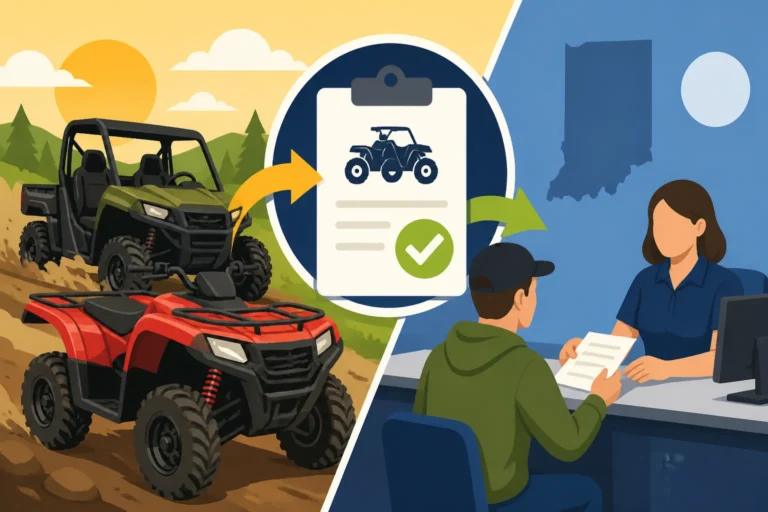
This is a point of common confusion for many ORV owners. While the DNR manages the trails and sets many of the rules for riding, the actual registration and titling of your ORV happens at an Indiana BMV license branch. That's right, the same place you go to renew your driver's license or register your car.
You can visit any BMV license branch across the state. When you arrive, you’ll present your paperwork, and a customer service representative will guide you through the process. They'll verify your documents, collect the necessary fees, and process your registration. It's usually a pretty quick transaction once you're called up, provided you have all your ducks in a row. Don't forget, they're there to help, so don't hesitate to ask questions if something isn't clear. [Where to Register an ORV in Indiana] [Why the BMV and Not the DNR in Indiana]
The Fees Involved
Let's talk money. The actual ORV registration fee in Indiana is set and typically covers a three-year period. This triennial registration helps keep things simple, so you’re not thinking about it every single year. You'll pay this fee at the BMV when you register.
Beyond the registration fee, you’ll also need to account for Indiana's sales tax. If you purchased your ORV from a dealer, they would have collected this at the time of sale. However, if you bought your machine through a private sale, you are responsible for paying the 7% Indiana sales tax to the BMV when you register or title the vehicle. This is a common oversight for private buyers, so budget for it! The BMV will collect the sales tax on the purchase price listed on your bill of sale. [Indiana ORV Registration Cost] [Indiana's 7 Percent Sales Tax on a Machine]
Titling Your ORV in Indiana: A Critical Step
Titling is often conflated with registration, but in Indiana, they are two distinct, though related, processes. While registration gives you the decal to legally ride, titling officially establishes legal ownership of your machine. It’s a very important piece of the puzzle, especially when buying or selling.
The 2009 Cutoff: Why It Matters
This is arguably one of the most significant and sometimes frustrating aspects of Indiana's ORV laws. For machines purchased after December 31, 2009, Indiana law mandates that they must be titled. If you bought your quad or side-by-side in 2010 or later, a title is non-negotiable. This rule was put in place to combat theft and help establish clear ownership chains.
However, if your ORV was purchased before January 1, 2010, it's generally considered a "title-optional" machine. This means you aren't legally required to get a title for it, though you still need to register it if you plan to ride on public land. This distinction often trips up buyers and sellers of older machines, leading to confusion. It's crucial to know the purchase date of your machine to understand its titling status. [Why Indiana Titles Machines Bought After 2009]
New vs. Used: Titling Scenarios
- Buying a New ORV from a Dealer: This is usually the easiest path. When you buy a new machine from an authorized Indiana dealer, they will typically handle all the initial titling and registration paperwork for you, often including collecting the sales tax. They'll submit everything to the BMV, and you'll eventually receive your title and registration decal in the mail. They are experts in this process, so lean on their knowledge.
- Buying a Used ORV: This can get a bit more complex.
- Machine purchased after 2009: The seller must provide you with a properly signed-over title. Without it, you simply cannot title the machine in your name, and you should be extremely wary of completing the purchase.
- Machine purchased before 2010 (title-optional): While not required to have a title, having one still simplifies ownership transfer. If the seller has a title, get it. If not, you'll rely heavily on a detailed bill of sale. Regardless, always get a robust bill of sale. This is another area where LawDepot can be invaluable for creating clear, legal documents to protect both parties in a private sale. [Buying a Used ORV in Indiana]
Dealing with Lost Titles or No Paperwork
This is a common pain point for many ORV owners. You buy a used machine, and the seller either lost the title or never had one (especially for older, title-optional machines). Don’t despair entirely, but be prepared for a bit more effort.
If a title exists but is lost, the registered owner can apply for a duplicate title through the BMV. If you bought a machine where a title should exist, but the seller claims it's lost, insist they get a duplicate before you finalize the purchase. This is your strongest position.
If you bought an older, title-optional machine and the previous owner never had a title, or you simply have no record of ownership beyond a handwritten receipt, you might be able to apply for a title using an Ownership Affidavit (Form 55068). This form allows you to attest to your ownership under penalty of perjury and usually requires other supporting documentation, such as a detailed bill of sale and possibly a VIN inspection. It's not a guaranteed solution and can take time, but it’s an option for those legitimate situations where paperwork has been lost to the sands of time. LawDepot can assist with creating clear ownership declarations and bills of sale that can support this process. [What Indiana's Ownership Affidavit Asks For]
| Document Type | Required For Registration | Required For Titling (Post-2009) | Purpose |
|---|---|---|---|
| Bill of Sale | Yes | Yes | Proves purchase, details transaction, identifies VIN |
| Certificate of Title | Yes (if applicable) | Yes | Official proof of legal ownership, required for post-2009 machines |
| Proof of Residency | Yes | Yes | Establishes Indiana residency for owner |
| VIN | Yes | Yes | Unique machine identification |
| Ownership Affidavit | No (used in lieu of title) | Yes (when title is missing) | Used to establish ownership when a title is unavailable (for older machines, or when a title is lost, but ownership is clear) |
What Happens After You Register and Title
So, you've battled the paperwork beast, visited the BMV, and paid your fees. Congratulations! But your journey isn't quite over. There are a few key things to know about what comes next, especially regarding your new decal and keeping your registration current.
Receiving and Placing Your ORV Decal
After your registration is processed at the BMV, you won't walk out with the actual decal in hand. Instead, the BMV will mail your official ORV decal to you. This usually takes a few weeks, sometimes up to three, so don't panic if it doesn't show up immediately. [How Long an Indiana Decal Takes to Arrive]
Once you receive it, you need to apply it correctly. The Indiana ORV decal is designed to be placed on the forward half of the machine, typically on a visible, permanent component like the frame, or a plastic fender that is unlikely to be easily removed or replaced. It must be clearly visible. It’s not just a sticker; it's your official proof of registration and helps law enforcement quickly identify compliant machines. Make sure the area is clean and dry before applying to ensure good adhesion, as you don't want it peeling off after a muddy ride. [The Indiana ORV Decal Explained] [Where the Indiana Decal Mounts] [Indiana ORV Decal Placement]
Understanding Your Registration Certificate
Along with your decal, you'll also receive a registration certificate. This document is just as important as the decal itself. It contains all the pertinent information about your ORV, including the VIN, your name, and the registration period.
You are legally required to carry this registration certificate with you whenever you are operating your ORV on public lands or designated trails. It’s your official proof that your decal is valid and your machine is properly registered. Think of it like your vehicle's registration in your car. Many riders keep a laminated copy in a waterproof bag on their machine, or at least a clear photo on their phone, although a physical copy is always safest. [Riding Without Your Registration Certificate in Your Pocket]
Renewing Your Indiana ORV Registration
Remember that your ORV registration in Indiana is valid for three years. This means you won’t have to go through this whole process annually, which is a nice break! However, it's easy to forget about it after such a long period.
As your registration approaches its expiration date, the BMV should send you a renewal notice. This notice will provide instructions on how to renew, which can often be done online, by mail, or in person at a license branch. Don’t wait until the last minute or, worse, until after it expires. Riding with an expired registration is just like riding without one at all, and it carries the same potential penalties. Mark your calendar, set a reminder on your phone—do whatever it takes to stay on top of that three-year cycle! [Renewing an Indiana ORV Registration] [How Long an Indiana ORV Registration Lasts]
Special Cases and Common Pitfalls
While the general process covers most situations, there are always those unique circumstances or common mistakes that can trip up even experienced riders. Being aware of these can save you a lot of grief.
Out-of-State ORVs and Non-Resident Riders
Indiana welcomes out-of-state ORV enthusiasts, but there are specific rules visitors need to know. If you're visiting Indiana from another state and your ORV is properly registered in your home state, you are generally allowed to ride on Indiana's designated trails for up to twenty consecutive days in a calendar year without having to register your machine in Indiana. This is a great grace period for a weekend trip or even a longer vacation.
However, if you plan to ride in Indiana for more than twenty days in a calendar year, or if your machine isn't registered in your home state, then you must register it with the Indiana BMV. This also applies if you move to Indiana permanently. Don't assume your out-of-state registration means you're good forever; the clock starts ticking when you cross the border for that first ride. [Registering an Out-of-State Machine in Indiana] [Twenty Days a Visitor May Ride]
Avoiding Late Penalties and Fines
One of the most common pitfalls involves missing deadlines, particularly for titling. If your ORV was purchased after 2009 and requires a title, Indiana imposes a 45-day deadline from the date of purchase to get it titled in your name. Missing this deadline can result in late penalties. The BMV charges an administrative penalty for titles filed more than 45 days after the date of sale. It's an extra cost that's entirely avoidable if you take care of the paperwork promptly.
Beyond titling, simply riding an unregistered ORV on public lands will lead to fines. These aren't usually cheap, and they certainly detract from the enjoyment of your ride. Always ensure your registration is current and your decal is properly displayed before heading out. A few minutes spent on paperwork can save you significant money and hassle down the road. [Indiana's Forty-Five Day Titling Deadline] [Indiana ORV Late Title Penalty]
Transferring Ownership When Selling or Buying
Whether you're selling your beloved machine or buying a new-to-you rig, proper ownership transfer is paramount.
- As a Seller: When you sell your ORV, you are responsible for providing the buyer with a properly signed-over title (if applicable) and a clear bill of sale. Make sure the VIN on the title and bill of sale matches the machine exactly. It's also a good idea to keep a copy of the bill of sale for your records. This protects you from any future issues related to the machine's use after you've sold it. [Selling an ORV in Indiana]
- As a Buyer: You need to be diligent! Insist on seeing the title (if required for the machine) and ensure the VINs match. Get a detailed bill of sale from the seller, even if it's just a simple handwritten document. LawDepot offers excellent templates for bills of sale that can be customized to protect both parties and ensure all necessary details are included, making the transfer process much smoother and more secure. This is also your chance to ask about any liens on the machine before you complete the purchase. Taking these steps protects your investment and ensures you can register and title the ORV in your name without any unwelcome surprises. [An Indiana Bill of Sale for an ORV] [Checking a VIN Before an Indiana Purchase]
Disclaimer
This article is for general informational purposes only and does not constitute professional advice. Laws, prices and regulations vary by location and change over time. Consult a qualified professional for guidance on your specific situation.