The Enclosed Cab Exemption in Indiana
Indiana’s enclosed-cab exemption can make it unclear whether a young ATV or UTV rider needs a helmet. The key is not simply whether the machine has a roof or roll cage: the exemption is tied to an enclosed cab, and it does not replace trail permits, other safety rules, or park requirements. Here’s how to assess the setup before you ride.
What the enclosed-cab exemption means
Indiana has helmet requirements for young off-road vehicle riders, and an enclosed cab can be an exception. That exception is narrow: it concerns the helmet rule, not whether the machine is allowed on a trail or whether its occupants must use seat belts.
The practical question is whether the rider is inside a vehicle that qualifies as having an enclosed cab. A UTV with a cab designed to surround its occupants is a stronger candidate than an open machine with a roof, roll cage, or a few add-on panels. A roof can help protect from sun and rain, but by itself it does not make an open cockpit an enclosed cab.
Do not treat “UTV,” “side-by-side,” or “cab” in a product description as a final legal answer. Vehicle designs and accessory packages vary. If the classification is unclear, check with the agency responsible for the land where you plan to ride and describe the actual configuration, including its doors, windows, and other panels. For more on the distinction, see Indiana Helmet and Seat Belt Rules on Public Land and Do You Need a Helmet Inside a Roll Cage?.
The exemption also does not mean that an enclosed cab makes a machine generally exempt from Indiana’s off-road rules. Registration, trail-use permits, age and supervision rules, and local restrictions can still apply. A cab is relevant to one safety question; it does not turn an ATV or UTV into a passenger vehicle or create permission to ride wherever you like.
Think of the exemption as one part of the checklist
Before heading out, separate the rules into distinct questions:
- Helmet: Does the rider’s age and the machine’s cab configuration qualify for the exemption?
- Seat belt: Is the machine equipped with seat belts, and are occupants required to use them?
- Permit: Does the riding area require a DNR trail-use permit for this vehicle?
- Registration: Does the machine need Indiana registration, or does a visitor rule apply?
- Access: Is this trail or property open to the machine and rider?
That separation avoids a common mistake: assuming that one exemption answers all the others. For example, a visitor from another state may qualify to use an out-of-state registration for a limited period, yet still need the appropriate Indiana trail permit. A rider may be exempt from a helmet requirement because of an enclosed cab, yet still need to buckle up in a UTV.
Which machines are likely to qualify
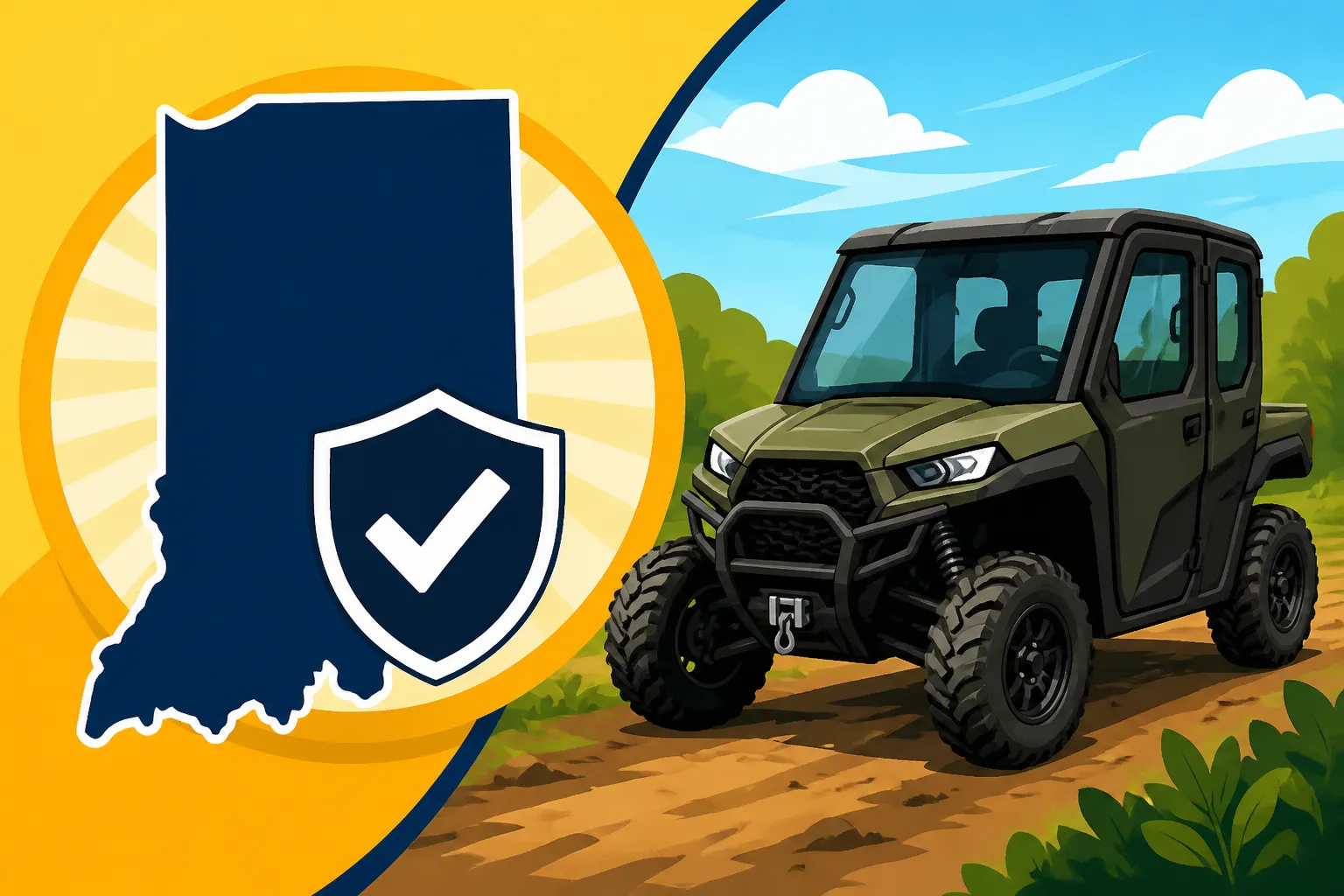
A factory-built UTV with a cabin that surrounds its occupants is the clearest situation. A fully enclosed cab typically has a roof and sides, with doors or panels that close the space around the seating area. But do not rely on appearance alone or assume every machine marketed as a “cab model” meets the rule. The controlling definition and the particular setup matter.
An open UTV with a roll cage and roof is different. The cage is a structural frame, not a cab enclosure. A roof covers the top but leaves the sides open. Those features may be useful for protection and comfort, but they do not automatically establish that the occupants are in an enclosed cab.
Aftermarket accessories can make the answer less obvious. Half doors, soft doors, full doors, windshields, and rear panels may change how enclosed the cab is. Some accessories leave large openings; others may close most of the cabin. Do not assume that adding one or two panels converts a vehicle into an exempt one. Ask the land manager or relevant state agency about the specific configuration before relying on the exemption.
| Machine or setup | How to treat the helmet question | Practical next step |
|---|---|---|
| Factory UTV with a cab that closes around occupants | It may qualify for the enclosed-cab exception, but confirm the applicable rule | Check the vehicle configuration and rules for the riding area |
| UTV with a roll cage and roof but open sides | Do not assume it qualifies as an enclosed cab | Plan for required helmets unless the responsible agency confirms otherwise |
| Open ATV or dirt bike | The enclosed-cab exception does not apply | Check the age-based helmet rule and carry appropriate helmets |
| UTV with partial or aftermarket doors and panels | The answer may depend on how the cab is configured and defined | Describe the exact setup to the land manager or agency |
| Enclosed-cab UTV with seat belts | The helmet exception does not remove separate seat-belt obligations | Use the belts as required and follow manufacturer guidance |
This is a practical comparison, not a substitute for the legal definition. If a park employee, conservation officer, or other enforcement official assesses the machine differently than you do, the fact that a seller called it “enclosed” may not settle the issue.
When the answer is uncertain, the safest course is to have a properly fitting helmet available and use it. A helmet is not a substitute for seat belts or safe riding, but it avoids depending on a disputed interpretation of the cab. For helmet selection and age-related rules, see Indiana’s Helmet Law for Riders Under 18 and Why Under-18 Riders Wear Helmets in a UTV.
What the exemption does not change
Seat belts remain a separate issue
An enclosed cab does not automatically excuse occupants from using seat belts. If the UTV has belts and the riding-area rules require them, occupants should buckle up. Belts help keep riders in their designated seating positions, where the vehicle’s protective structure is intended to work. Riding unbelted can increase the chance of being thrown from the vehicle or striking its interior during a rollover.
Use only the seating positions the manufacturer designed for occupants. Do not carry extra passengers on cargo areas, fenders, or improvised seats. Keep hands, arms, and legs inside the vehicle, and follow the owner’s manual for the machine’s capacity and restraints. The cab exemption is about the helmet question; it is not a general waiver from safe operation.
A helmet exception is not a trail permit
Indiana’s trail-use permit system is a separate requirement from helmet rules. A qualifying enclosed cab does not make the vehicle permit-free at a place that requires a permit. Before riding, confirm whether the property requires a daily or annual permit, whether the permit applies to each machine, and where it must be displayed or carried.
That distinction matters for both residents and visitors. A vehicle may be registered in another state and still need a permit to use an Indiana riding area. Conversely, a permit does not establish that the machine meets the helmet, seat-belt, or access rules. Review Indiana’s Daily and Annual Trail Permits and Does Indiana Honor Out-of-State Registration? before planning a visit.
Registration and visitor rules are not cab rules
Registration requirements depend on the machine, ownership, and how it is used. Indiana also has a visitor rule for certain out-of-state machines, but that rule concerns registration and the time a visitor may ride before Indiana registration is required. It does not create a helmet exemption, and it should not be confused with a state recreation area permit.
If you are visiting with an out-of-state UTV, check the details in Indiana’s Twenty-Day Visitor Rule and Indiana Rules for a Visiting Rider. If you have recently moved to Indiana or bought a machine locally, registration may involve different steps. The enclosed-cab question does not change those paperwork requirements.
Age, supervision, and access restrictions still apply
A cab does not make a young rider old enough to operate a machine in a place where age limits apply. Nor does it remove any supervision requirement. Check the rules for the specific property and the type of vehicle, especially when a rider is under 16 or under 18.
Also confirm that the route is open to your machine. Some areas may have separate rules for ATVs, side-by-sides, motorcycles, or full-size vehicles. A UTV that qualifies for an enclosed-cab helmet exception can still be too wide for a trail or prohibited from a particular route. See Indiana State Park Rules for Riders Under 16 and [Indiana Minimum Age to Ride Public Land] for related age and access questions.
How to check your setup before a ride
The best way to avoid an argument at a trailhead is to confirm the specific machine and location before loading it. A quick general question such as “Are enclosed UTVs exempt?” may not get a useful answer if the uncertain part is whether your particular doors and panels count as an enclosed cab.
Use this process:
- Identify the riding location. Determine whether you will be on a state recreation area, a private off-road park, private property, or another type of land. Rules can differ by property.
- Check the current rule for that location. Look at the official park or agency information, including any rules posted for youth riders, helmets, and seat belts.
- Describe the vehicle accurately. Include the make and model, whether the cab is factory-built, and which doors, windows, roof, or panels are installed. If the cab is aftermarket, say so.
- Ask the responsible office or land manager. Get clarification before the trip rather than relying on a dealer’s description or an informal online comment.
- Prepare for the stricter interpretation. If you cannot confirm the exemption, bring properly fitting helmets and have young riders wear them.
- Check the other requirements separately. Confirm permits, registration, age and supervision rules, seat belts, trail access, and any equipment restrictions.
- Recheck before each visit. Park rules, trail closures, and operating conditions can change. Do not assume that an answer for one property applies everywhere in Indiana.
When contacting a park office, make the question concrete: “Does this specific UTV configuration qualify for the enclosed-cab helmet exception for riders under 18 at this property?” That is more useful than asking whether “UTVs need helmets,” because the answer may depend on rider age, vehicle design, and location.
Keep the response with your trip notes, but do not treat an informal phone answer as a permanent legal ruling. If the vehicle is borderline, a helmet remains the more reliable choice. A rider can wear one even when an exemption might apply; the reverse is harder to fix once a ride is underway and an official questions the setup.
Common misunderstandings to avoid
“It has a roof, so it is enclosed.” A roof covers the top; an enclosed cab surrounds the occupants. An open-sided UTV should not be treated as exempt solely because it has a roof.
“The roll cage counts as a cab.” A roll cage is a protective structure, not necessarily an enclosure. The presence of a cage does not settle the helmet question.
“The dealer said the doors make it legal.” A dealer may be describing comfort, accessories, or a product category rather than interpreting Indiana’s rule for a particular property. Confirm with the responsible agency.
“The exemption covers everyone in the vehicle.” The exception concerns the helmet requirement. It does not erase seat-belt obligations or other rules that apply to individual occupants.
“The permit proves the machine is compliant.” A trail permit is permission to use a particular facility under its rules. It does not certify the cab, waive a helmet rule, or guarantee that the vehicle is permitted on every route.
“An out-of-state registration covers everything.” Registration reciprocity and trail-use permits are separate. Visitors should check both, along with the safety rules at the destination.
“An adult is exempt, so a child in the same machine is too.” Do not assume that rules for adults and minors are identical. Check the rider’s age and the exact wording of the applicable rule.
These distinctions are especially important when a group includes children. One machine may have an enclosed cab while another is open; riders may be of different ages; and the group may cross between properties with different requirements. Check each vehicle and rider rather than applying one answer to the whole group.
Before leaving, make sure each passenger has a seat and belt if the vehicle is equipped for them, and that required helmets are available in the correct sizes. If you are bringing more than one machine, confirm that each one meets the same permit and access conditions. For help with the broader permit question, see Do You Need a Permit for Indiana ORV Trails?.
Frequently Asked Questions
Does a roof and roll cage qualify as an enclosed cab in Indiana?
Do not assume so. A roof and roll cage can leave the sides open, and those features alone do not establish that the machine has an enclosed cab. Confirm the specific setup with the agency or land manager for the riding area.
Does the enclosed-cab exemption remove the seat-belt requirement?
No. Treat helmets and seat belts as separate requirements. If the UTV has seat belts and the rules require their use, occupants should buckle up.
Does an enclosed cab mean I do not need an Indiana trail permit?
No. The exemption concerns the helmet rule. Check the riding area’s permit requirements separately, including whether a permit is needed for each machine.
Should a young rider wear a helmet if the cab may qualify for the exemption?
If the classification is uncertain, wearing a properly fitting helmet is the safer choice. Confirm the rule with the responsible agency before relying on an exception.
Disclaimer
This article is for general informational purposes only and does not constitute professional advice. Laws, prices and regulations vary by location and change over time. Consult a qualified professional for guidance on your specific situation.