Brown County’s 2024 ORV Ordinance
If you've ever dreamed of exploring Indiana's scenic backcountry trails and winding rural roads on your ATV or UTV, you know the frustration of navigating a patchwork of regulations. For years, Brown County, with its stunning landscapes and popular outdoor attractions, has been a bit of a grey area for off-road vehicle enthusiasts. Thankfully, the county has taken significant steps to clarify things, and this guide will walk you through everything you need to know about Brown County's 2024 ORV ordinance so you can ride legally and responsibly.
The Journey to Brown County's ORV Ordinance
For a long time, riders across Indiana faced a common dilemma: where exactly can you ride your ATV or UTV legally outside of designated off-road parks? The state generally prohibits ORVs on public roads, but it also gives individual counties the power to open certain roads to these machines. This creates a confusing situation where what's legal in one county might land you a ticket in the next. Many of us have felt that disappointment of loading up the machines, driving to a beautiful area, only to realize we're unsure of the local rules.
The Need for Clarity in a Popular Destination
Brown County, famous for Nashville and its fall foliage, draws countless visitors every year. Many of these visitors bring their off-road vehicles, hoping to explore the scenic backroads and access recreational areas. However, without clear guidelines, both locals and tourists were often left guessing about permissible riding areas. This lack of clarity led to uncertainty for riders and enforcement challenges for local authorities, creating an environment ripe for accidental violations.
Imagine pulling your side-by-side into Brown County, eager to hit some trails or just cruise around for a bit, only to spend hours agonizing over whether that gravel road you saw online is actually open. This kind of ambiguity can really dampen the spirit of adventure. Local residents, too, were often caught in the middle, either frustrated by what they perceived as illegal riding or confused about their own rights to use their machines for practical purposes like accessing hunting grounds or managing property.
Community Input and the Ordinance's Development
Recognizing these challenges, Brown County officials embarked on a process to create a clear, comprehensive ORV ordinance. This wasn't a quick or easy task, as it involved balancing the interests of residents, business owners, and recreational riders. Public meetings were held, and community input was actively sought to ensure the ordinance reflected the unique character and needs of Brown County. This collaborative approach aimed to create a framework that supported safe and responsible ORV use while addressing concerns about noise, environmental impact, and public safety.
The discussions likely touched on everything from road maintenance to property access, reflecting the diverse perspectives within the community. It’s important to remember that these ordinances aren't just about giving riders more places to play; they're about creating a harmonious environment for everyone. Understanding the spirit behind the ordinance can help riders appreciate the rules and contribute positively to the riding community. [How an Indiana County Opens Its Roads] explains the general process counties follow.
Key Provisions of the 2024 Brown County ORV Ordinance
The heart of the new ordinance lies in its specific rules regarding where, when, and how ORVs can be operated on county roads. It’s not a free-for-all, but it does open up significant opportunities for responsible riders. Getting familiar with these core provisions is your first step toward enjoying Brown County’s beauty from your ATV or UTV.
Designated Roads and Speed Limits
Brown County's ordinance specifically designates which county roads are open to ORV traffic. This is crucial because it means only certain roads are permissible, and riding on undesignated roads is still illegal. The county has identified specific roads, often gravel or less-trafficked routes, that are deemed suitable for ORV use. These roads are typically marked or listed in an official capacity, so it's vital to check the latest information from the Brown County government or local law enforcement. Riders should expect to adhere to specific speed limits when operating on these designated roads, which are often lower than traditional vehicle speed limits to ensure safety for all road users.
For example, a winding gravel road leading to a popular trailhead might be designated, but a major paved county highway leading to Nashville might not be. The idea is to create a network of trails and access points without disrupting main thoroughfares or residential areas where traditional vehicle traffic is heavy. Always remember that even on designated roads, ORVs are sharing the space with cars, trucks, and even bicycles, so caution is paramount. This contrasts with some counties that opened every road to ORVs.
Operating Hours and Seasons
The ordinance also addresses operating hours, a common concern in many communities regarding ORV noise and disturbance. Brown County's rules likely specify times of day when ORVs can be operated on designated roads, often restricting night riding to minimize noise impacts on residential areas. Additionally, there might be seasonal restrictions or considerations, particularly if certain roads are prone to damage during wet seasons or if local events require temporary closures.
Think about the impact a group of loud ORVs might have on a quiet rural neighborhood at midnight. These time restrictions are put in place to maintain peace for residents and protect natural resources. While it might mean planning your rides around these hours, it’s a small price to pay for the privilege of riding on public roads. Always check for any seasonal advisories, especially during hunting seasons or periods of heavy rain, which might affect trail conditions or access.
Where Can You Actually Ride? Navigating Designated Roads
One of the biggest hurdles for riders is figuring out the approved routes. Brown County's ordinance aims to provide clarity, but it still requires riders to do their homework. Relying on outdated information or assumptions can lead to fines and frustration.
Identifying Officially Opened Roads
The most important step for any rider is to consult the official list or map of designated ORV roads provided by Brown County. This information is typically available through the county's government website, the local sheriff's department, or the highway department. Without this official guidance, you're essentially riding blind. These resources will outline the specific roads or sections of roads where ORVs are permitted, ensuring you stay on the right side of the law. Some counties even provide detailed, color-coded maps, similar to the approach taken in Vanderburgh County to clearly differentiate open and closed roads.
Imagine planning a weekend trip and just hoping for the best – that’s a recipe for disaster. Instead, a little pre-trip research can save you a lot of headache. Print out a map, download a GPS file, or at least have a screenshot on your phone. This way, if a question arises, you have tangible proof of your route. Remember that these designations can change, so always check for the most current version before heading out. [Indiana Counties That Allow ORVs on Roads] delves into the broader context of how different counties approach this.
Understanding Road Types and Restrictions
Even on designated roads, riders need to understand the nuances of the ordinance. The type of road – whether it's gravel, paved, or a secondary route – might influence specific rules. For instance, while some designated roads might allow ORVs, the ordinance could still prohibit riding on shoulders or ditches of any road, even those open to ORVs, if such areas are not explicitly part of the designated path. The goal is to keep ORVs within the safe, established travel lanes, just like any other vehicle. [Indiana Rules for Riding a Gravel Road] might offer additional insights into best practices on such surfaces.
Moreover, the ordinance likely specifies that these are county roads, meaning state highways or federal routes remain off-limits, even if they pass through Brown County. These major arteries are generally never opened to ORV traffic due to higher speeds and greater traffic volumes. Knowing the difference between a county road and a state highway is critical. A quick check of road signs or a GPS app can often clarify road ownership if you're ever in doubt.
Essential Requirements for Riding on Brown County Roads
Simply knowing where to ride isn't enough; you also need to meet specific requirements for your vehicle and yourself. Brown County’s ordinance will include provisions for registration, equipment, and operator eligibility to ensure safety and accountability.
Vehicle Registration and Decal Display
Like all ORV use on public lands or roads in Indiana, your ATV or UTV must be properly registered with the Indiana Bureau of Motor Vehicles (BMV). This means acquiring an [Indiana's Three-Year ORV Registration] and displaying the official BMV decal on your machine. This decal serves as proof that your vehicle is legally recognized and has paid the necessary fees that contribute to trail maintenance and safety initiatives across the state. Without a valid registration and decal, you're immediately in violation of state law, regardless of county ordinances.
Imagine getting pulled over on a beautiful Brown County backroad, only to find out your machine isn't properly registered. That’s an instant end to your ride and a potential fine. Make sure your decal is current, clearly visible, and affixed in the correct location on your machine. The ordinance might also specify that any out-of-state ORVs still need to adhere to Indiana's [Indiana Twenty-Day Visitor Rule] regarding reciprocity and temporary permits. It's a small but vital detail that ensures everyone is contributing to the system.
Operator and Passenger Safety Gear
Safety is paramount, and Brown County's ordinance, like state law, will emphasize the use of appropriate safety gear. For instance, Indiana has a [Indiana Helmet Law for Riders Under 18], which mandates helmets for anyone under the age of 18 operating or riding as a passenger on an ORV. While adults might not always be legally required to wear a helmet in every situation, it’s always a wise choice, especially on unfamiliar county roads. Additionally, side-by-sides typically require occupants to wear seat belts, especially those that come equipped from the factory.
This isn't just about avoiding a ticket; it's about protecting yourself and your loved ones. Brown County, with its rolling hills and sometimes unpredictable terrain, demands respect. Investing in quality helmets, eye protection, and sturdy riding gear from brands like SuperATV can make all the difference in preventing serious injury. Always ensure your passengers, particularly children, are also equipped with the right gear and understand basic safety protocols before you set out. [Indiana Helmet Law at an ORV Park] offers a good perspective on helmet requirements in general.
Lighting and Other Equipment
To ensure visibility and safety, especially during dusk, dawn, or adverse weather conditions, the ordinance will likely stipulate requirements for your ORV’s lighting. This typically includes working headlights and taillights. Some ordinances may even require turn signals or brake lights, even if not standard on all ORVs, to improve road safety. Beyond lighting, your machine should be in good working order, with functional brakes, a horn, and a spark arrester to prevent wildfires.
Think about how easily an ORV can be overlooked by a car, especially on a dusty road or around a blind curve. Proper lighting dramatically increases your visibility and helps prevent accidents. Before every ride, do a quick check: are your lights working? Is your horn loud enough? Are your tires properly inflated? These routine checks can save lives and ensure you're compliant with all local requirements. Many SuperATV accessories, like their advanced lighting kits, can enhance your machine's visibility beyond the basic requirements, adding an extra layer of safety.
| Requirement | Details | Why It Matters |
|---|---|---|
| BMV Registration | Valid, current Indiana ORV registration and displayed decal | Legal proof of ownership and contribution to ORV programs |
| Designated Roads | Only ride on officially mapped and posted Brown County ORV roads | Riding off-designated roads is illegal and can lead to fines |
| Speed Limits | Adhere to posted ORV speed limits, often lower than vehicle limits | Ensures safety on shared roads, reduces dust and noise impact |
| Operating Hours | Typically sunrise to sunset, check specific county details for night riding | Minimizes noise disturbance for residents, enhances safety in low light |
| Helmet (Under 18) | Mandatory for all operators and passengers under 18 years old | Critical for head protection, a state law that applies on county roads |
| Seat Belts (UTVs) | Required for all occupants in UTVs equipped with them | Prevents ejection in rollovers or collisions |
| Headlights/Taillights | Functional headlights and taillights required for visibility | Essential for being seen by other vehicles and operators |
| Spark Arrester | Required to prevent wildfires, especially in dry conditions | Protects natural resources and prevents dangerous incidents |
| Insurance (Recommended) | While not universally required, some counties may ask for it | Protects you financially in case of an accident or property damage |
Understanding Enforcement and Penalties
Ignoring the ordinance isn't just a minor oversight; it can lead to real consequences. Brown County, like other jurisdictions with ORV rules, will enforce its ordinance to ensure safety and maintain the balance between recreation and community well-being. Knowing what to expect regarding enforcement and potential penalties is crucial for every rider.
Fines and Citations
Riding an ORV on undesignated roads, operating outside of specified hours, or failing to meet equipment requirements can result in fines and citations. These penalties can vary in severity depending on the specific infraction. For a first offense, you might receive a warning or a relatively modest fine, but repeat offenses typically lead to escalating penalties. Local law enforcement, including the Brown County Sheriff's Department and Indiana Conservation Officers, will be responsible for enforcing the ordinance.
Imagine being pulled over and issued a ticket that could easily pay for a new set of SuperATV tires or a winch. That’s a frustrating way to end a fun day of riding. It's far better to invest a little time in understanding the rules than to face unexpected financial penalties. These fines aren't just an inconvenience; they’re a clear message that the county takes its ORV regulations seriously. Remember, ignorance of the law is rarely an excuse that holds up. [What a Class C ORV Infraction Costs in Indiana] gives a general idea of state-level penalties that could apply.
Vehicle Impoundment and Owner Liability
In more severe cases, or for habitual offenders, ORVs could potentially be impounded. This means your machine could be towed and stored at your expense, adding significant costs beyond just the fine itself. Furthermore, the ordinance likely reiterates Indiana's stance on owner liability, meaning that the owner of the ORV can be held responsible for violations committed with their machine, even if they weren't the one operating it at the time. This is especially important for parents who lend their machines to younger riders or for individuals who allow friends to use their ORVs.
The thought of your prized ATV or UTV being impounded is enough to make any rider reconsider cutting corners. It's not just about the money; it's the hassle, the lost riding time, and the potential damage to your machine. Always be mindful of who is operating your ORV and ensure they understand and follow all applicable laws. [Indiana Fines for an Unregistered ORV] highlights specific penalties for one of the most common infractions.
Tips for a Smooth Ride in Brown County
Navigating new regulations can feel like a chore, but with a little preparation and a commitment to responsible riding, you can have an incredible experience in Brown County. Here are some practical tips to help you make the most of your adventure while staying compliant with the new ordinance.
Plan Your Route in Advance
Before you even load your machine, take the time to study Brown County's official ORV road map or list. Plan your route, identifying designated roads and any connecting trails or points of interest. Consider downloading a GPS app on your phone or a dedicated GPS unit that allows you to pre-load maps and track your location, ensuring you stay on approved routes. Having a clear plan reduces the chances of accidentally straying onto closed roads and helps you maximize your riding time.
Think about it like this: you wouldn't go hiking in an unfamiliar wilderness without a map, so why would you ride your ORV without one? A well-planned route can also help you identify fuel stops, scenic overlooks, or even lunch spots. It’s all about preparation. Some riders even use action cameras to document their rides, which can be helpful if any questions about your route or conduct arise.
Ride Responsibly and Respectfully
When riding on Brown County's designated roads, always remember you are sharing the space with other vehicles, residents, and nature. Practice respectful riding habits: keep your speed appropriate for the conditions, control dust, and minimize excessive noise. Yield to pedestrians, bicycles, and horses, and be courteous to other motorists. Avoid riding in large, noisy groups that might disturb residents. The long-term success of ORV access in Brown County depends on riders demonstrating a high level of responsibility and respect for the community.
This is more than just following the law; it's about being a good ambassador for the ORV community. When you ride responsibly, you help foster a positive image of off-roading, making it more likely that these privileges will continue. Conversely, a few bad apples can ruin it for everyone. Many riders appreciate the quiet beauty of Brown County and choose accessories from brands like SuperATV that help reduce noise, like exhaust silencers or quieter tires, further demonstrating respect for the environment. [Indiana Trail Etiquette on Shared Ground] offers broader advice on sharing the outdoors.
Stay Informed and Carry Essential Documents
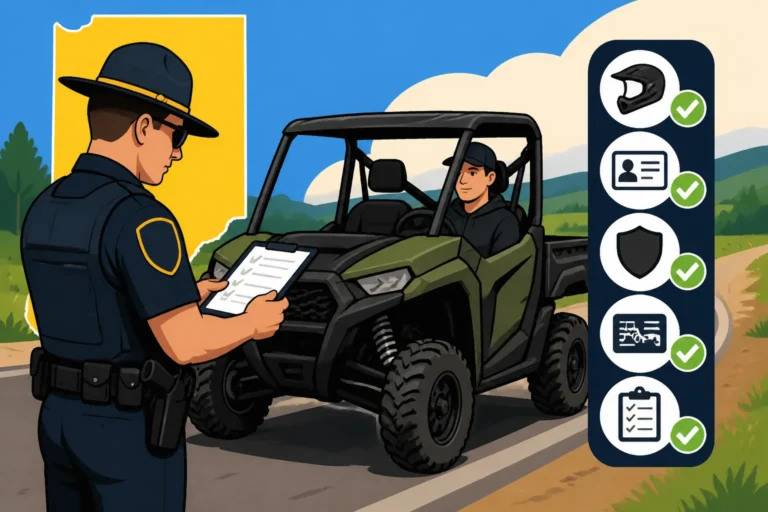
Ordinances and regulations can change, so it's a good practice to periodically check for updates from Brown County government sources. Always carry your ORV registration certificate, proof of insurance (if applicable, or simply a good idea), and any required identification on your person while riding. Keeping these documents in a waterproof bag or container can protect them from the elements and ensure they are legible if an officer requests them.
Consider the scenario where an officer pulls you over for a routine check. Having all your paperwork in order and readily accessible makes the interaction smooth and efficient. It shows you're a responsible rider who knows the rules. Keep copies of the Brown County ORV ordinance with you, or at least have a digital version on your phone, so you can reference it if needed. This level of preparedness ensures your Brown County ORV adventure is both memorable and legal.
Disclaimer
This article is for general informational purposes only and does not constitute professional advice. Laws, prices and regulations vary by location and change over time. Consult a qualified professional for guidance on your specific situation.