Tell City’s Own Registration
Navigating the patchwork of rules for riding your ATV or UTV on public roads in Indiana can feel like trying to hit a moving target, especially when you encounter an unexpected local ordinance. Most folks assume a state-level registration covers everything, but as many have discovered in places like Tell City, that's not always the full story. This guide is here to shed light on what makes Tell City unique and how to ensure your off-road adventures there stay compliant and worry-free.
Understanding Indiana's General Approach to ORVs on Roads
Indiana has a nuanced stance on off-road vehicles (ORVs) on public roads, which can be a source of confusion for many riders. It's not a straightforward "yes" or "no," but rather a system built on specific allowances and strict prohibitions. The key takeaway for anyone wanting to ride their ATV or UTV off the trails and onto pavement is that you absolutely cannot assume anything.
The Default "No" and the Exceptions
The general rule across the Hoosier State is that ORVs are not permitted on public highways, streets, or roads. This includes state highways, county roads, and city streets. It's designed to keep the flow of traffic safe and prevent conflicts between machines built for rugged terrain and vehicles designed for paved surfaces. Many riders get frustrated by this default ban, especially when they just need to get from their home to a trailhead a mile down the road, or perhaps to the gas station for a quick fill-up. They often wonder why their machine, perfectly capable off-road, is suddenly a hazard on a paved lane.
However, like most rules, there are exceptions. These exceptions typically involve crossing roads, riding on shoulders or ditches, or specific allowances made by local municipalities. For example, Indiana law usually allows you to cross a highway at a right angle after coming to a complete stop, yielding to all traffic. You might also be allowed to ride on a highway shoulder or in the ditch line if there's sufficient width to stay safely away from moving traffic. These are limited permissions, not a carte blanche to cruise down Main Street. Understanding these subtle differences is crucial to avoid tickets and ensure safety. It's a fine line between legal and illegal, and sometimes that line is just a few feet over. You can learn more about [Indiana Rules for Riding a Highway Shoulder] and [Indiana Rules for Riding a Ditch] to better understand these specifics.
How Counties Can Open Roads
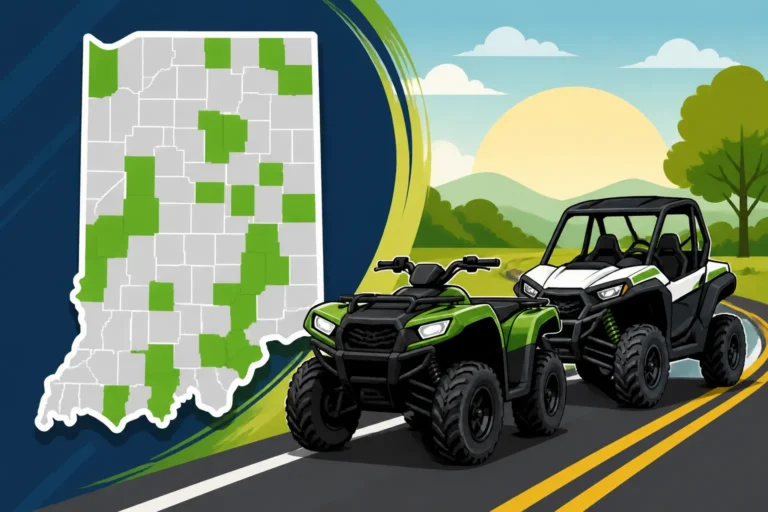
While the state sets the general framework, Indiana empowers individual counties and cities to designate certain roads as open to ORV use through local ordinances. This is where the complexity truly begins, as what's allowed in one county might be strictly forbidden just across the county line. Riders often express bewilderment at this patchwork system, asking why there isn't a unified statewide approach. The reason lies in local control, allowing communities to decide what makes sense for their specific infrastructure, traffic patterns, and resident preferences.
The process for a county or city to open roads typically involves the local legislative body – often the county commissioners or city council – passing an ordinance. This ordinance will specify which roads, or sections of roads, are open, what hours of operation apply, and what safety requirements (like helmets, insurance, or lighting) must be met. These local rules can vary wildly. Some counties might open nearly all their roads, while others might open only a few miles of gravel roads in a rural area. It's not uncommon for these ordinances to require things like specific lighting configurations for night riding, or even higher insurance minimums than the state mandates for car insurance. This means a rider needs to actively seek out and read the specific ordinance for every county or city they plan to ride in. For general information, you can refer to [Indiana Counties That Allow ORVs on Roads].
What Makes Tell City Different?
Tell City, like other local municipalities, has the authority to enact its own ordinances regarding ORV use within its corporate limits. However, Tell City has taken a unique step that sets it apart from many other Indiana towns: it requires its own local registration for ORVs to be ridden on its designated open roads. This is a crucial distinction that often catches riders off guard, as it adds an extra layer of compliance on top of any state-level requirements.
The Local Ordinance Power
The power for cities and towns like Tell City to create their own ORV rules stems from their authority as local governmental entities. Indiana law grants municipalities a degree of home rule, allowing them to address local concerns and manage local services, including traffic and public safety. This means that while the Indiana Bureau of Motor Vehicles (BMV) handles state ORV registrations and titles, a city can still implement additional regulations for use within its specific boundaries. It’s a common source of frustration for ORV owners who feel they’ve already jumped through enough hoops at the state level. Many expect a single [Indiana ORV Registration Cost] to cover all scenarios, only to discover there are additional local charges or processes.
This local control is often exercised to address specific community needs or concerns. For instance, a city might have unique traffic patterns, a higher population density, or particular safety considerations that lead them to implement stricter rules than a rural county. They might also want to ensure local enforcement has a clear and concise way to identify and track machines operating within their jurisdiction. It's not necessarily designed to be an inconvenience, but rather a localized solution to perceived local problems.
Tell City's Specific Registration Requirement
Unlike many Indiana counties that simply designate roads as open and rely on the state's BMV registration for identification, Tell City has opted for its own municipal registration system. This means that if you plan to ride your ATV or UTV on any of the roads within Tell City that are designated as open for ORV use, you must obtain a separate, local registration from the city itself. This local registration is distinct from, and in addition to, the three-year ORV registration decal you get from the Indiana BMV.
This creates a scenario where a rider might have a perfectly legal, state-registered ORV with a current BMV decal, yet still be in violation of Tell City's ordinance if they haven't also secured the local city registration. This requirement is often a surprise for visitors and even some local residents who are accustomed to the standard state registration process. It underscores the importance of thoroughly researching local rules before embarking on a ride. Ignorance of the law, even a local one, is rarely an excuse when facing a citation for [Indiana ORV Fines for Illegal ORV Road Use]. It's another example of how deeply local ordinances can impact your riding experience, forcing you to think beyond just state-level compliance.
Navigating Tell City's Local Registration Process
So, you've decided to ride your ORV within Tell City's designated areas, and you know about the unique local registration requirement. The next step is understanding how to actually get your machine registered with the city. While the state BMV process can feel a bit cumbersome, local city processes are often more straightforward, though they still require attention to detail.
Who Needs to Register in Tell City
Essentially, anyone who intends to operate an ORV on the public roads specifically opened for such use within Tell City's corporate limits needs this local registration. This applies whether you're a long-time resident of Tell City, a new homeowner, or just visiting from a neighboring town or county. It doesn't matter if your machine is already registered with the Indiana BMV and has a valid [Indiana ORV Decal Placement] on its frame; the city's requirement is a separate layer of permission.
Think of it this way: your Indiana BMV registration proves your machine is legally registered in the state for off-road use and identifies it for property tax purposes. Tell City's registration, on the other hand, specifically grants you permission to ride on its roads. It's a local permit for local access. This means even if you just bought a new side-by-side from a dealer and completed your state registration, you’ll have another stop to make before you hit Tell City streets. This can be especially frustrating for riders who live just outside the city limits but frequently travel into town for errands or to access local businesses.
The Practical Steps to Register
While specific details can change, the general process for obtaining Tell City's ORV registration typically involves a visit to a municipal office, likely the City Clerk's office or a similar administrative department. You'll usually need to bring your machine's documentation and be prepared to pay any applicable local fees. It's always a good idea to call ahead to the Tell City municipal building or check their official website for the most current procedures and office hours.
Here’s a general idea of the steps you might take:
- Gather Your Documents: Before you head out, make sure you have all the necessary paperwork (more on that below). Being prepared saves you a second trip.
- Visit the City Office: Go to the designated city department during their business hours.
- Complete the Application: You'll fill out a form that collects information about you and your ORV.
- Present Documentation: Show the city staff your proof of ownership, state registration, and potentially proof of insurance.
- Pay the Fee: There will likely be a fee associated with the local registration. While it won't be as substantial as purchasing a new machine, it's an additional cost to factor into your budget.
- Receive Your Local Permit/Sticker: Once approved and paid, you'll typically receive some form of local permit, sticker, or certificate that you'll need to display on your ORV or carry with you.
Remember, this is a distinct process from what you'd do at an Indiana license branch for your statewide [Registering an ORV in Indiana]. It's specific to Tell City's ordinance.
Required Documentation and Information
To complete your Tell City ORV registration, you'll need to have certain documents and information readily available. This helps the city verify ownership, ensure compliance with state laws, and confirm that you meet any local prerequisites. While the exact list can vary, common requirements often include:
- Proof of Ownership: This could be your vehicle title or a bill of sale if you recently purchased the machine. The city needs to verify that you are the legal owner of the ORV you're trying to register.
- Indiana BMV ORV Registration: You'll likely need to show proof that your ORV is already registered with the Indiana BMV. This confirms that your machine meets state-level requirements and is identified as a legitimate off-road vehicle.
- Proof of Insurance: Many local ordinances that open roads to ORVs also require specific liability insurance coverage. You'll need to provide proof that your ORV is adequately insured. This protects you and others in case of an accident.
- Operator's Identification: You'll need to provide personal identification, such as a valid driver's license. This helps the city identify who is registering the machine and ensures they are of legal age to operate it on public roads where such age restrictions might apply.
- Vehicle Information: Be ready to provide details like your ORV's make, model, year, and Vehicle Identification Number (VIN). This helps the city accurately record and track your machine within their system.
It’s also wise to ensure your ORV itself complies with any local equipment requirements before you register. For example, some cities might mandate specific mirrors, turn signals, or even a horn – accessories that often aren't standard on an ORV but are readily available from aftermarket providers like SuperATV. Having your machine properly equipped makes the registration process smoother and ensures you’re ready to ride safely and legally.
The Implications of Tell City's Local Rules
Understanding that Tell City has its own ORV registration requirement is one thing; grasping the full implications of this localized approach is another. It adds layers of complexity and responsibility for riders, impacting everything from compliance checks to potential legal ramifications.
Beyond State Registration and Titling
The most significant implication is that your statewide [Registering an ORV in Indiana] and [Titling an ORV in Indiana] are simply not enough to legally ride within Tell City's designated areas. While these state-level processes are fundamental for any ORV owner in Indiana, they don't automatically grant you permission to use local roads if that municipality has imposed additional requirements. This often comes as a surprise to riders, leading to frustration and potential citations. Many people reasonably assume that if their machine is legally registered with the state, that should be sufficient.
This additional local registration means you're effectively dealing with two separate bureaucratic processes for one machine if you intend to ride in Tell City. It's not just about paying an extra fee; it's about staying informed and diligent. You must understand the specific rules of the road (e.g., speed limits, times of day, specific routes) and ensure your paperwork is in order at both the state and local levels. For instance, while your Indiana ORV decal might last for three years, Tell City's local registration might have a different renewal cycle or require annual renewal. This duality means a rider has a greater burden to stay on top of expiring registrations and changing rules.
Enforcement and Penalties
Local law enforcement, such as Tell City police officers or county sheriff's deputies operating within the city's jurisdiction, are empowered to enforce these local ORV ordinances. If you are caught riding an ORV on a designated Tell City street without the proper local registration, you could face penalties. These penalties might include fines, which can range from a warning for a first offense to substantial financial penalties for repeat violations. In some cases, authorities might even impound your vehicle, especially if there are other violations involved, such as reckless operation or a lack of state registration.
An officer checking your machine roadside will look for both your state BMV decal and your Tell City permit. If either is missing or expired, you're in violation. It’s a bit like having a state driver’s license but needing an additional city permit to drive a taxi within city limits; both are required for that specific activity. Riders should be aware that these local fines are distinct from, and in addition to, any fines you might receive for violations of state law, such as operating without a helmet if you're under 18, or riding under the influence. It adds a layer of financial risk that many riders don't anticipate. Being pulled over and being unable to produce the proper documentation can quickly escalate into a costly situation. Understanding [What an Indiana Officer Checks Roadside] can help you prepare.
The Rider's Burden of Knowledge
Perhaps the biggest implication of Tell City's unique approach is the increased burden on the rider to know and understand all applicable rules. You can't just rely on general state guidelines or what you've heard from a friend in a different county. Every time you plan to ride your ORV in a new municipality or county in Indiana, you are responsible for researching and understanding their specific ordinances.
This requires proactive effort. It means visiting city websites, calling local administrative offices, or consulting published ordinances. It also means staying updated, as local rules can change over time. For example, a city might decide to open more roads, close certain routes, or update their registration fees. As a responsible ORV owner, it's on you to keep current with these local nuances. This can be particularly challenging for riders who travel frequently across county and city lines, where the rules might shift every few miles. Without this due diligence, you risk not only fines but also damaging the reputation of the ORV community, which can lead to even stricter regulations in the future. Websites like SuperATV can be a good source for finding accessories that help you meet various local requirements, like specific mirrors or safety lights, making compliance a bit easier once you know the rules. You can also utilize resources like [How to Find an Indiana County ORV Ordinance] to start your research.
Practical Tips for Riding Your ORV in Tell City and Beyond
Navigating the unique local requirements, such as Tell City's own ORV registration, can seem daunting. However, with a little preparation and a proactive mindset, you can enjoy your off-road machine responsibly and legally on designated roads. It all comes down to being informed and ready for anything.
Verifying Local Rules Before You Ride
This is perhaps the single most important piece of advice for any ORV rider in Indiana, especially when venturing into municipalities like Tell City. Never assume that your state registration is a universal pass to ride on local roads. Always, always verify the local ordinances for any city or county where you plan to operate your ORV on public thoroughfares.
- Check Official Sources: Start with the city or county's official website. Most municipalities will publish their ordinances online. Look for sections related to "off-road vehicles," "ATVs," "UTVs," or "recreational vehicles."
- Contact Local Offices: If you can't find clear information online, don't hesitate to call the City Clerk's office, the County Commissioner's office, or even the local police department (for non-emergency inquiries). They can usually direct you to the correct information or department.
- Look for Posted Signs: Once you're in an area, pay attention to any signage that designates ORV routes, speed limits, or restrictions. These are visual cues that local rules are in effect.
- Ask Experienced Local Riders: While not an official source, local riding groups or experienced enthusiasts can often provide valuable insights into specific areas, though you should always cross-reference their advice with official sources.
By taking these steps, you prevent the frustrating scenario of getting a ticket because you were unaware of a specific local rule. This is particularly true for unique requirements like [Tell City's Own Registration], which are not standard across the state. Remember, it's about respect for local governance and ensuring everyone's safety on the roads.
Essential Gear and Machine Setup for Road Use
Beyond the specific registration, many local ordinances for road use will also mandate certain equipment on your ORV to ensure it's safe for public roads. These requirements are often designed to make your machine more visible and controllable in a mixed-traffic environment. Even if not explicitly required by every ordinance, equipping your ORV appropriately is a smart move for your own safety and the safety of others.
Here's a checklist of common items to consider, many of which can be found through aftermarket providers like SuperATV:
- Proper Lighting: Most ordinances require at least two headlights and two taillights that are functional after dark. Often, brake lights are also necessary. If your ORV's stock lighting isn't bright enough or comprehensive enough for road use, consider upgrades. Check [Indiana Lighting Requirements for ORVs] for state-level guidance, as local rules will build upon this.
- Turn Signals: While not always required for off-road use, turn signals are typically a must for road riding to communicate your intentions to other drivers.
- Mirrors: You'll likely need at least one, if not two, rearview mirrors to see traffic approaching from behind.
- Horn: A working horn is essential for alerting pedestrians or other vehicles.
- Seat Belts (for UTVs): If you're riding a side-by-side, seat belts are a common requirement for all occupants.
- Helmets: Indiana has specific helmet laws, particularly for riders under 18, but some local ordinances or private parks might extend helmet requirements to all riders on their designated roads. Always wear a DOT-approved helmet.
- Insurance Card and Registration Documents: Always carry physical or digital proof of your state registration, any local permits (like Tell City's), and your insurance card. These are the documents an officer will immediately ask for during a stop.
Many riders, myself included, often invest in robust aftermarket accessories from companies like SuperATV to ensure their machines are road-ready. Things like upgraded LED light bars, side mirrors, and sturdy horns are not just about compliance, but about enhancing your safety when your ORV shares the road with cars and trucks.
Interacting with Local Law Enforcement
Despite all your preparation, there's always a chance you might be stopped by law enforcement while riding your ORV on public roads. Knowing how to interact respectfully and effectively can make a significant difference in the outcome of the stop. Local officers are simply doing their job to enforce ordinances, and a calm, cooperative attitude goes a long way.
- Pull Over Safely: As soon as you realize you're being signaled to stop, find a safe spot to pull over, completely off the traveled portion of the road if possible.
- Stay in Your Vehicle/Machine: Remain seated with your hands visible, unless otherwise instructed. If on a dirt bike or ATV, stay on your machine.
- Be Prepared to Present Documents: Have your driver's license, state ORV registration, proof of insurance, and any local permits (like Tell City's) readily accessible.
- Answer Questions Truthfully and Respectfully: Respond to the officer's questions clearly. If you don't understand a question, ask for clarification.
- Do Not Argue or Become Defensive: If you believe there's a misunderstanding or a mistake, address it calmly and factually. The side of the road is rarely the place to debate the nuances of a local ordinance. You can always address any citation in court if you feel it's unwarranted.
- Be Aware of [What an Indiana Officer Checks Roadside]: They will likely look for your decals, check your lights, and verify your paperwork. Being ready for this makes the stop much quicker.
By being polite, prepared, and cooperative, you show respect for the law and the officer, which often leads to a more positive interaction, even if you do receive a citation. Understanding specific local rules, like [Tell City's Own Registration], is a vital part of being a responsible ORV owner and helps ensure you can continue to enjoy the trails and roads Indiana has to offer.
Disclaimer
This article is for general informational purposes only and does not constitute professional advice. Laws, prices and regulations vary by location and change over time. Consult a qualified professional for guidance on your specific situation.