Indiana Helmets on Private Property Too
It’s a common scenario for many of us who love hitting the trails or just cruising our own property on an ATV or UTV in Indiana: you pull out your machine on your own land, far from public roads or crowded parks, and the thought of a helmet barely crosses your mind. After all, it's your property, right? You might think that the rules and regulations that apply to public trails or county roads simply don't extend to your backyard, your woods, or your sprawling farm. But here's the kicker: when it comes to helmets, especially for younger riders, Indiana law has a way of reaching further than you might expect, meaning those public-land safety habits often need to be carried over to private property too. This guide will dive deep into Indiana's helmet laws, owner liability, and the practical reasons why a helmet is a smart choice no matter where you ride.
The Common Misconception About Private Land Riding
For many ATV and UTV enthusiasts, especially those of us who grew up with machines on family land, there’s an almost ingrained belief that private property is a sanctuary from rules and regulations. This "my land, my rules" mentality is incredibly common, and honestly, it makes a lot of sense on the surface. You maintain the property, you pay the taxes, and you set the boundaries for what happens there. So, why would the state have a say in whether you or your kids wear a helmet while zipping around your own woods?
The "My Land, My Rules" Mentality
It's a very natural assumption to believe that if you own the ground your tires are on, then you're the sole arbiter of what's allowed. For generations, people have ridden dirt bikes, quads, and side-by-sides on their own farms and private tracts without much thought given to state statutes. The idea that a government regulation might dictate safety gear choices in such a personal setting can feel intrusive or even unnecessary to some. After all, you know your property best, you understand its unique hazards, and you’re often the one supervising the activity. This deeply held belief forms the bedrock of the confusion many riders experience when confronted with the reality of Indiana’s ORV laws. You're not alone if you've ever felt that disconnect between personal freedom on your own acreage and the reach of state law.
This mindset is particularly prevalent in rural areas where families have large parcels of land. It’s a place where kids learn to ride, where machines are used for work and recreation interchangeably, and where the sense of community often relies on informal understandings rather than strict adherence to every letter of the law. However, while the spirit of "my land, my rules" is understandable and deeply rooted in our sense of property rights, the reality for ORV helmet laws in Indiana sometimes requires a different perspective, especially when minors are involved. The state's interest in protecting its youngest citizens often overrides perceived property sovereignty, creating a legal gray area that can surprise even seasoned landowners and riders.
When "Public" Rules Seem to Fade
Think about the distinct difference between riding at a designated public ORV park like [Redbird Off-Road State Recreation Area] and riding a sprawling private farm. At Redbird, you see clear signage, rangers patrolling, and fellow riders consistently adhering to safety protocols, including helmets. The rules are palpable, immediate, and universally understood. You expect to be held accountable for following them. This structured environment naturally primes riders to think about regulations.
Now, contrast that with the serene isolation of a private property. There are no gatekeepers, no posted rule boards (unless you put them up yourself), and often, no other riders to observe. The external pressure to conform to safety standards, which is ever-present on public lands, simply vanishes. This absence of visible enforcement or peer example can lead to a subconscious (or conscious) assumption that the rules governing public spaces simply don't apply. Many riders mentally "switch off" the regulatory part of their brain when they leave the public trails and pull onto their own driveways.
However, this perceived fading of rules is precisely where many misunderstandings arise. While the direct enforcement mechanism (like a park ranger issuing a citation) might be less visible on private land, the underlying statutes often remain in effect. The Indiana Code doesn't always make a distinction between public and private property when it comes to certain fundamental safety requirements, particularly those designed to protect vulnerable individuals like children. It's not about an officer hiding in your bushes, but about the legal framework that applies should an incident occur, regardless of where it happens. This subtle but crucial distinction can have significant implications for riders and property owners alike, turning what feels like a private matter into one with public legal consequences.
Indiana's Core Helmet Law: What it Says and Doesn't Say Directly
When we talk about off-road vehicles in Indiana, the law has some very specific things to say about helmets. And here's where that "private land exception" often hits a wall. The core of Indiana's helmet law isn't about where you're riding as much as who is riding. Understanding this distinction is absolutely crucial for any ORV owner or parent in the state.
The Age-Based Helmet Requirement in Indiana
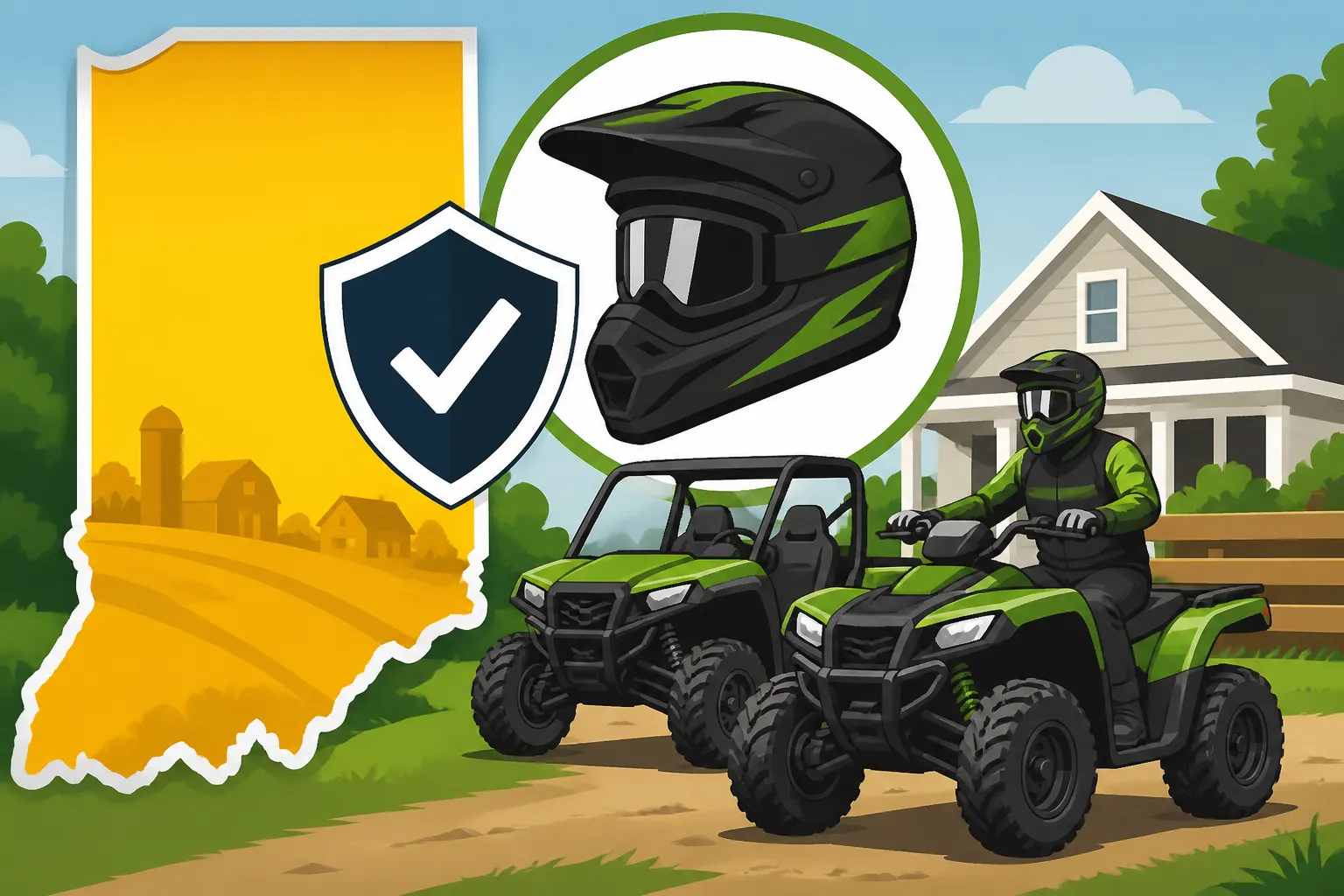
Indiana's primary helmet law for off-road vehicles centers squarely on age. The law generally dictates that anyone operating or riding as a passenger on an off-road vehicle must wear a helmet if they are under the age of eighteen (18). This isn't a suggestion; it's a legal requirement. And here's the part that often catches people off guard: the statute typically does not make an explicit exception for riding on private property. What this means in practice is that if your child, niece, nephew, or any other minor under 18 is riding an ATV or UTV on your 20 acres, they are legally required to wear a helmet, just as they would be at a state park or on an authorized county road.
This aspect of the law is designed to protect minors from serious head injuries, regardless of the perceived safety of the riding environment. The legislature understands that accidents can happen anywhere, and the consequences of a head injury for a developing young person can be particularly devastating. So, while the immediate oversight of law enforcement might be less direct on private land, the legal obligation for minors to wear helmets remains. For more details on this, you might want to look into [Indiana Helmet Law for Riders Under 18]. It's not about catching you in the act, but ensuring fundamental safety standards are met for those who are legally deemed more vulnerable.
Think of it this way: if you owned a swimming pool, there would be state or local regulations about fencing and supervision, even though it's on your private property, because it's a known hazard, especially for children. Similarly, an ORV is a powerful piece of machinery with inherent risks. The helmet law for minors is a similar protective measure, acknowledging the risks involved and mandating a basic level of safety equipment regardless of the property lines. This is a point where many well-meaning parents or landowners might inadvertently be non-compliant, simply because the distinction between public and private use isn't clearly delineated in their minds for this specific rule.
Enclosed Cabs and the Helmet Exception
While the under-18 helmet rule is quite broad, Indiana law does provide a specific and notable exception that often applies to UTVs: the enclosed cab exemption. If an ORV, typically a side-by-side or UTV, is equipped with a factory-installed roll bar or roll cage and an enclosed cab, riders inside that cab may be exempt from the helmet requirement, even if they are under 18. This exemption is predicated on the understanding that the enclosed structure of the cab, combined with the use of seat belts, offers a substantial level of protection equivalent to or exceeding that of a helmet in many scenarios.
However, it's crucial to understand what "enclosed cab" truly means in this context. It's not just having a roof over your head. It generally implies a more substantial enclosure, often with doors, a windshield, and other protective elements that create a passenger compartment. Simply having a roof and a roll cage on an otherwise open-air UTV usually does not qualify for this exemption. The intent is to differentiate between a utility-focused side-by-side that provides a car-like protective shell and a more open recreational model or an ATV, which offers no such structural protection. Riders must also be properly secured with seat belts for this exemption to apply. This specific detail is often covered in regulations pertaining to [Indiana Helmet Rules at an ORV Park] because such parks have to enforce these nuances.
So, if you have a UTV with a legitimate, factory-designed enclosed cab, and all occupants are properly belted in, the helmet requirement for minors might not apply. This is a significant distinction that sometimes influences purchase decisions for families with younger riders. However, it's vital to verify that your machine truly meets the legal definition of an "enclosed cab" to qualify for this exception. Don't assume an aftermarket roof or a partial enclosure will suffice; always refer to the specific wording of the law or consult with the Indiana DNR or BMV for clarification. For ATVs, dirt bikes, and open-cab UTVs, the under-18 helmet rule stands firm, regardless of seat belts or roll bars.
Owner Liability and the "Permitting" Clause
Here's where the rubber truly meets the road for property owners: Indiana law includes provisions that extend liability to individuals who permit or allow someone to operate an ORV in violation of state regulations. This is particularly relevant when it comes to minors and helmet use on private property. If you, as the property owner or legal guardian, knowingly allow a child under 18 to ride an ORV on your land without a helmet, you could potentially be held liable for any injuries or violations that occur. This legal principle underscores why [Why an Indiana Owner Is Liable] is such a critical consideration for anyone with an ORV.
The "permitting" clause means that even if you're not physically present or directly supervising at the moment a minor rides helmet-less on your property, if it's generally known or understood that you allow it, you could face legal consequences. This isn't just about fines; in the event of a serious injury, liability could extend to medical costs, pain and suffering, and other damages. This shifts the responsibility from solely the rider (who is a minor, after all) to the adult who has the power to control the activity and ensure compliance with safety laws. It transforms the private property discussion from a mere preference to a serious legal obligation.
Consider a scenario: a group of teenagers, including your 16-year-old, are riding ATVs on your large, privately owned property. Your 16-year-old isn't wearing a helmet, which you've tacitly allowed because "it's just on our land." If they have an accident and suffer a severe head injury, the fact that they were on private property does not absolve you of responsibility for failing to ensure they complied with the state's helmet law. Your homeowner's insurance might even balk at covering an incident if it's found that a state law was disregarded. This potential for significant liability is a powerful reason why the "my land, my rules" mentality needs to be re-evaluated against the backdrop of Indiana's ORV statutes. It’s a stark reminder that ensuring safety, especially for minors, is a legal duty that transcends property lines.
Understanding "Supervision" and "Parental Liability" on Private Land
Beyond the helmet law itself, Indiana also has clear guidelines about who can operate an ORV and under what conditions, especially for younger riders. These rules, often designed with safety and responsibility in mind, further reinforce why private property isn't always an exemption zone for state regulations. The concepts of direct supervision and parental liability are intrinsically linked to helmet use and overall safety, making it imperative for adults to understand their role.
The 14-Year-Old Rule and Direct Supervision
Indiana law specifies that no one under the age of 14 may operate an ORV unless they are under the direct supervision of an adult. This is another critical age-based rule that, like the helmet requirement for minors, typically applies regardless of whether the riding occurs on public or private land. The state recognizes that very young riders lack the experience, judgment, and physical capability to safely operate these powerful machines unsupervised. Therefore, the "direct supervision" clause is a foundational safety measure.
What does "direct supervision" really mean? It’s more than just being somewhere on the property. It generally implies that the supervising adult must be within visual and audible range, able to provide immediate instruction or intervention if needed. This isn't about being in the same house while your 12-year-old rides on the far side of a 40-acre field. It means being close enough to literally oversee their riding, to spot potential hazards, to offer guidance, and to step in quickly if they get into trouble. This crucial requirement for [Indiana Supervision Rules for Minors] is designed to provide an extra layer of protection for the youngest operators.
Consider a family scenario: your 10-year-old is excited to ride their youth ATV around the backyard trails you’ve built. For them to do so legally, you, or another responsible adult, must be actively supervising. This means you should be outside with them, observing their path, ensuring they stick to appropriate speeds, and that they (along with any other minors) are wearing their helmets. If a child under 14 is riding on private property without this direct supervision, even if they're a skilled rider, the supervising adult is technically in violation of state law, and more importantly, they've exposed that child to unnecessary risk.
When Liability Extends Beyond the Immediate Rider
The implications of these rules — especially the helmet law for those under 18 and the supervision rule for those under 14 — extend significantly to parental and owner liability. If an accident occurs on private property where a minor was riding without a helmet or without proper supervision, the financial and legal ramifications for the responsible adult can be severe. We’re not just talking about a minor traffic ticket; we're discussing potential lawsuits, significant medical bills, and even criminal charges in cases of gross negligence.
Imagine a situation where your 15-year-old, riding your side-by-side without a helmet on your private land, takes a corner too fast, rolls the machine, and suffers a traumatic brain injury. Beyond the unimaginable emotional distress, you could face immense financial strain. Health insurance might dispute coverage if a state law was violated, and a personal injury lawsuit could be brought against you by other family members or guardians, especially if a catastrophic injury results in lifelong care needs. The legal system, in many instances, will look beyond the property line to determine if the responsible adult fulfilled their duty of care as defined by state law. [Indiana ORV Registration and Insurance Proof] is important, but even insurance can have limitations if laws are disregarded.
This is a scenario that no one wants to contemplate, but it's a realistic possibility. The state’s laws are put in place precisely to mitigate these types of risks. The "my land, my rules" argument often holds little weight in civil court when a child's safety and well-being are at stake. Therefore, it is not only legally advisable but ethically imperative for parents and property owners to ensure that all minors riding ORVs on their land are wearing appropriate helmets and are properly supervised according according to Indiana law. Failing to do so can have far-reaching and devastating consequences that extend well beyond the immediate incident itself.
The Role of Organized Events and Private Parks
While Indiana's state laws provide a baseline, it's also important to remember that many private entities have their own rules. For ORV enthusiasts, this often comes into play at private riding parks or organized group events, where safety protocols frequently go above and beyond the minimum state requirements. These additional rules, including mandatory helmet use for all ages, are critical to understand, as they become binding the moment you enter these venues.
Private Parks' Own Rules and Waivers
Indiana is home to some fantastic private off-road parks, such as the Badlands Off Road Park in Attica or [Haspin Acres in Southern Indiana]. These parks offer expansive and diverse riding terrain that often attracts riders from all over the region. When you visit these private facilities, you're not just agreeing to abide by state law; you're also agreeing to their specific rules and regulations, which are almost always outlined in a liability waiver that you must sign before entry. A common stipulation at these parks is mandatory helmet use for all riders, regardless of age.
Even if you're an adult over 18 and Indiana state law wouldn't require you to wear a helmet on your own private land, these parks will often demand it. Their reasoning is simple: comprehensive safety for all participants and liability reduction for the park itself. They want to minimize the risk of serious injury on their property, and a universal helmet rule is one of the most effective ways to achieve that. Failing to wear a helmet at a private park that mandates it could result in being asked to leave, having your entry fee forfeited, or even being banned from future visits. These parks often have their own staff, similar to rangers, who enforce these rules diligently.
So, while the state might not require an adult to wear a helmet on private land, these private businesses absolutely can and do. Before heading out to a private park, it's always a good idea to check their website or call ahead to familiarize yourself with their specific safety policies. This isn't just about avoiding a hassle at the gate; it's about being prepared and respecting the rules of the venue you've chosen to ride. It also highlights a growing industry standard where helmets are seen as non-negotiable for anyone operating an ORV in a recreational, high-risk environment.
Group Rides and Club Regulations
Beyond established private parks, many informal or organized group rides and ORV clubs also impose their own safety regulations, which often include mandatory helmet use for all participants. These rides might take place on private land (perhaps a friend's large farm, a leased hunting property, or a club-owned parcel), but the collective nature of the activity changes the dynamic from solo riding. When you join a group or a club, you typically agree to adhere to their bylaws, safety guidelines, and leadership directives.
The rationale behind these club or group-imposed rules is multifaceted. Firstly, it's about collective safety. A serious accident involving one member can impact the entire group, emotionally and practically. Secondly, it's about liability. Organizers of group rides, even on private land, might face legal exposure if they knowingly allow unsafe practices that lead to injury. Requiring helmets for everyone is a straightforward way to mitigate this risk. Finally, it's about fostering a culture of safety. When everyone wears a helmet, it normalizes the practice and encourages responsible riding among all members, regardless of their individual age or comfort level with the law.
For example, a local ATV club might organize a weekend ride on a private tract of land. While state law might technically allow adult riders (18 and over) to go helmet-less on that private property, the club's rules might explicitly state that helmets are mandatory for everyone participating in the event. If you show up without a helmet, you might be politely, but firmly, asked to sit out the ride. These rules are usually made with good intentions and a focus on preventing accidents and injuries within the group. Therefore, always check with the organizers of any group ride or the specific club you belong to about their safety requirements, especially concerning helmets. It's a sign of respect for your fellow riders and for the organizers who are putting in the effort to ensure everyone has a safe and enjoyable experience.
Why Helmets Make Sense Everywhere: Beyond the Law
While understanding Indiana's specific helmet laws and the rules of private parks is essential, there's an even more fundamental reason to always wear a helmet when riding an ORV: pure, unadulterated safety. Accidents are unpredictable, and protecting your most vital asset – your brain – should be a top priority, regardless of age, terrain, or property lines. Sometimes, common sense and personal well-being dictate actions beyond legal mandates.
The Unpredictable Nature of Off-Road Riding
The thrill of off-road riding comes from navigating diverse and challenging terrain. Whether you're climbing a steep spoil pile at Interlake, splashing through a mud bog on a private farm, or cruising a gravel path on your own acreage, the environment is inherently dynamic and unpredictable. A hidden root, a sudden drop-off, loose gravel, a misplaced rock, or even a branch can instantly change your trajectory and send you over the handlebars or cause a rollover. These incidents don't care if you're on public land or your own property, or if you're 12 or 42.
Even experienced riders, who feel completely at home on their machines, can have an unexpected mishap. Fatigue, a momentary lapse in concentration, or a mechanical issue (like a steering component failure or a tire blowout) can occur without warning. These aren't just possibilities; they are realities that off-road riders face. Your riding environment is constantly changing – from dry, dusty conditions to slick, muddy ones, sometimes within the same ride. Products from companies like SuperATV, known for their durable aftermarket parts, can enhance your machine's capability, but even the toughest machine won't prevent every rider error or environmental surprise.
Ultimately, an ORV is a powerful machine, capable of speeds and maneuvers that can lead to serious injury in an instant. The inherent instability of ATVs (especially during aggressive cornering or climbing), the potential for rollovers in UTVs, and the general exposure to obstacles mean that the risk of impact to the head is always present. A helmet acts as your primary line of defense in these unpredictable scenarios, absorbing critical energy and preventing direct impact to the skull. It’s a piece of gear that doesn’t just protect you from legal trouble, but from life-altering injury.
Protecting Your Most Important Asset
Let's be blunt: your brain is your most important asset. It controls everything you do, feel, and experience. A severe head injury, even a seemingly minor concussion, can have long-lasting, debilitating effects. Traumatic Brain Injury (TBI) can lead to permanent cognitive impairment, personality changes, memory loss, chronic headaches, and a host of other life-altering conditions. The consequences are far more devastating than a broken arm or leg.
A helmet, properly fitted and certified (look for DOT or Snell certifications), is specifically designed to manage the forces of impact. It works by distributing the force of a blow over a wider area and, critically, by allowing the inner liner to compress, increasing the stopping distance for your head and thereby reducing the G-forces exerted on your brain. It's not just about preventing a skull fracture; it's about minimizing the violent sloshing of your brain within your skull that causes TBI. Considering the potential costs of a head injury – emotionally, physically, and financially – the cost of a good helmet (check [Indiana ORV Helmet Costs] for more on this) is negligible.
Whether you're riding a powerful machine equipped with SuperATV upgrades or a stock model, the speed, weight, and environment combine to create significant risk. Think about the common types of ORV accidents: being thrown from the vehicle, rolling the machine, colliding with an obstacle. In almost all these scenarios, your head is vulnerable. Investing in a high-quality helmet and making it a non-negotiable part of your riding gear, every single time you start the engine, is the smartest decision you can make. It protects your ability to continue enjoying life, your family, and future adventures.
Setting a Good Example
For adult riders, even if Indiana law doesn't explicitly mandate a helmet for you on your private property, choosing to wear one sets a powerful and positive example for younger generations. Children, especially, are keen observers. If they see adults – their parents, older siblings, or mentors – consistently wearing helmets when riding an ORV, it normalizes this critical safety practice. It sends a clear message that helmet use is not just a "kid's rule" or a "public park requirement," but an essential component of responsible off-road riding.
Children naturally mimic what they see. If they see an adult hop on an ATV without a helmet, they may internalize that it's acceptable or even "cool" to forgo head protection, especially once they believe they're experienced enough or old enough to make their own choices. This can undermine all the verbal safety lessons you've tried to instill. By contrast, an adult who always dons a helmet demonstrates that safety is paramount, regardless of age or location, and that even the most experienced riders understand the risks. This creates a safety culture that extends beyond mere compliance with the law, fostering a lifelong habit of responsible riding.
Moreover, setting a good example isn't just about influencing children. It also impacts other adults who might ride with you or observe your practices. A consistent commitment to safety, symbolized by wearing a helmet, can encourage others in your riding community to adopt similar habits. Ultimately, safety in off-road recreation is a collective responsibility. By choosing to wear a helmet every time you ride, even on your own private land, you contribute to a stronger safety culture, protect yourself, and provide invaluable guidance for future generations of riders.
| Rider Age Category | Indiana Helmet Law (General) | Private Land Implication | Common Private Park Rules |
|---|---|---|---|
| Under 14 | Mandatory helmet + direct adult supervision | Applies (unless enclosed cab with belts) | Mandatory helmet for all |
| 14 to Under 18 | Mandatory helmet | Applies (unless enclosed cab with belts) | Mandatory helmet for all |
| 18 and Over | Not generally mandatory | Not generally mandatory | Often mandatory for all |
Disclaimer
This article is for general informational purposes only and does not constitute professional advice. Laws, prices and regulations vary by location and change over time. Consult a qualified professional for guidance on your specific situation.