Blaze Orange on an Indiana Trail
A fall ride in Indiana can put you on the same woods roads used by hunters, even when you are not hunting. Blaze orange helps make riders easier to see, but it is not a substitute for checking trail access, park rules, or hunting regulations. This guide explains when orange is sensible, when a rule may apply, and how to prepare before unloading.
Is blaze orange required for Indiana ATV and UTV riders
The difference between riding and hunting
Blaze-orange requirements are generally tied to hunting regulations and the activity taking place, not simply to operating an ATV or UTV. A recreational rider who is not hunting should not assume that hunter clothing rules automatically apply to every trail ride. But that also does not mean a rider can ignore posted park rules, land-use restrictions, or a requirement that applies to a particular area or activity.
If you are carrying hunting equipment, helping someone hunt, or riding on property where hunting is underway, check the rules for that specific situation before you go. Requirements can depend on the season, the species being hunted, the type of hunting, and where you are. In particular, read the state’s current hunting regulations rather than relying on a general rule of thumb about how much orange to wear. Indiana Rules for Riding in Deer Season and Indiana Riding in Hunting Season are useful related topics to review.
A common source of confusion is seeing hunters in orange and concluding that every trail rider is legally required to wear the same clothing. The reverse assumption is risky too: a rider may believe orange is unnecessary because they are not hunting, then encounter a local park policy or a seasonal trail notice. Treat orange as a practical visibility choice, and confirm the rules that actually govern your ride.
Park rules and trail access still matter
A trail park, private property owner, or event organizer may set rules that are more specific than a general statewide riding requirement. Before a trip, check the place where you intend to ride, not just a broad summary of Indiana ATV rules. This matters around busy seasonal riding areas such as Redbird near Dugger, Interlake near Lynnville, and private parks such as Haspin Acres near Laurel. Do not assume that one location’s rules apply at another.
Also separate clothing requirements from access rules. A trail can be closed, restricted, or subject to seasonal conditions whether or not you are wearing orange. If a route crosses or borders hunting ground, a posted closure or landowner restriction takes priority over your ride plan. Review [Indiana Rules for Riding a Closed Trail] and Indiana Trail Seasons and Conditions before heading out.
| Situation | What to check | Practical approach |
|---|---|---|
| Recreational ride at an ORV park | The park’s posted rules and notices | Wear visible clothing, and follow the park’s instructions |
| Ride during hunting season | Hunting activity, trail access, and any applicable regulations | Check the specific property and season before unloading |
| Riding while hunting or assisting a hunt | The applicable hunting regulations | Confirm the required clothing and equipment for that activity |
| Private land ride | The landowner’s permission and conditions | Ask whether hunting is taking place and whether orange is requested |
| Group ride or organized event | Event requirements and route access | Share the rules with every rider before the group departs |
Why blaze orange can make a trail ride safer
Riders are easier to spot in wooded conditions
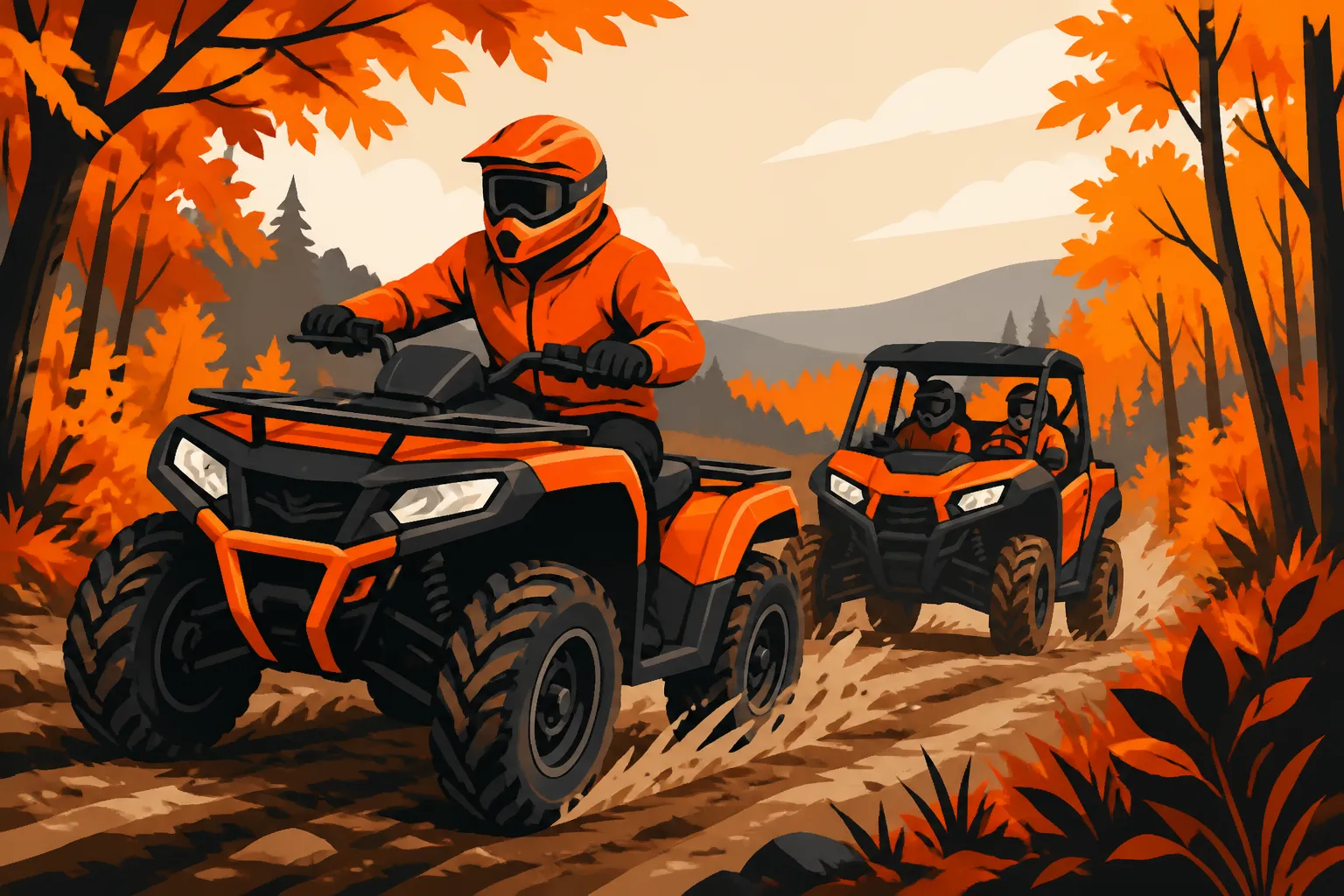
Trail visibility can change dramatically in a short distance. A rider may leave a sunny staging area and enter a shaded section where dark jackets blend into tree trunks, brush, and wet leaves. In fall, the colors of the landscape can make it especially hard to pick out a person who steps away from a parked machine or walks beside a trail.
Orange gives other riders and people nearby a clearer visual cue. It can help a driver notice someone who is stopped around a bend, checking a strap, or standing beside a machine after a minor mechanical problem. A vest or outer layer is often more useful than a small orange accessory because it creates a larger visible area. If you ride with a group, consider orange for passengers and anyone who may be walking around the staging area too.
Visibility matters even when everyone is moving slowly. A rider coming from the opposite direction may be focused on ruts, rocks, or a hill climb rather than searching the edges for someone on foot. A bright outer layer can make a person easier to notice early enough for both parties to slow down and give each other room.
Orange is one layer of a broader safety plan
Blaze orange does not make a rider visible from every angle or in every condition. A UTV’s cab, a machine’s bodywork, dust, rain, and vegetation can all block the view of a person. Keep lights in good working order where required, stay on designated routes, and avoid stopping in a blind spot if there is a safer place to pull over.
It also helps to agree on simple group habits before you ride. Decide where the group will stop if someone falls behind, how riders will signal a problem, and whether everyone knows the route back to the staging area. If someone leaves a machine to inspect it, have them step well clear of active traffic and make sure the rest of the group knows they are on foot.
A route-planning tool such as onX Offroad can help a group discuss intended roads and trail segments before leaving the lot. Use it as a planning aid, not as proof that a trail is open or that riding is allowed. Check the park’s own notices and any land-manager information for closures and current access conditions. Orange helps with visibility; it does not establish permission to ride.
How to prepare for a ride during hunting season
Check the location, not just the calendar
A hunting season date does not tell you whether a particular trail is open, whether hunting is occurring nearby, or whether a property has special restrictions. Before driving to the trail, identify the exact park or property and check its current rules. If the riding area has a phone number or official notice board, use those channels when information is unclear.
This is especially useful for rides that involve public land, private connections, or routes near a hunting area. A trail map may show a route, but it may not capture a temporary closure or a property-specific restriction. onX Offroad may help you review a route and understand the surrounding area, but confirm access with the land manager or park before relying on a mapped line. The same caution applies when planning around Indiana Trail Closures to Check First.
If you are riding on private land, ask the owner directly whether hunting is planned and whether they want riders to use a particular route or avoid certain hours. Permission to ride does not necessarily mean permission to cross every field, use every access road, or continue riding during a hunt. A quick conversation can prevent a misunderstanding that is frustrating for both riders and the landowner.
Choose clothing that works for the whole day
Wear orange where it can be seen, rather than hiding it under a jacket or behind a backpack. A visible vest or outer layer is convenient because you can add or remove it as conditions change. If the weather is cold, layer underneath it; if it is wet, choose gear that remains visible when damp and muddy.
Think about the people who are not seated on a machine. A rider walking back to a trailer, helping someone with a stuck ATV, or standing at a trail junction may be more exposed than a rider inside a UTV. Put orange on those people too, particularly if your group is spread out or if the staging area is crowded.
Do not let bright clothing create a false sense of security. Keep a safe following distance, slow down where sightlines are short, and expect to encounter pedestrians or other riders around corners. For additional riding preparation, review Indiana Helmet Rules at a State ORV Area and [Indiana Rules for Riding Off the Trail]. These are separate from orange clothing, but they are part of the same habit: understand the setting before you ride.
A simple pre-ride checklist
Before you leave home
Start with the exact destination and route. Check that the riding area is open, that your planned trails are permitted for your machine, and that no hunting-related notice or temporary closure affects access. If your group is using a navigation app such as onX Offroad, compare its route information with current park or land-manager guidance.
Pack a visible orange layer even if you do not expect it to be mandatory. It takes little space and may be useful if someone needs to walk along a trail or help with a breakdown. Bring the usual essentials for the machine and the weather, and make sure everyone knows where the group will meet if riders become separated.
A quick pre-trip conversation is better than trying to settle rules at the trailhead. Tell the group whether orange is recommended or required by the destination, identify any no-ride areas, and agree not to cross onto neighboring land without permission. For other seasonal planning, see Indiana Trails Closed After Rain and Indiana Trail Conditions Before You Ride.
At the trailhead and on the route
Read posted signs before unloading. Check for closures, changed access instructions, and any park-specific rules about clothing or equipment. If the sign conflicts with what you expected from an online map or an older trip report, follow the current posted direction and ask staff if you need clarification.
Once riding, keep orange visible and make deliberate choices around blind corners, trail junctions, and stopped machines. If you encounter hunters or people on foot, slow down, give them space, and avoid assuming they have seen you. If a route appears closed or access is uncertain, turn around and confirm rather than treating the map as permission.
A little preparation helps a fall ride feel less stressful. Check the rules for the actual property, use clothing that makes people easier to see, and keep trail access separate from the question of what you are wearing. Those steps make it easier to enjoy Indiana’s riding areas while sharing the landscape responsibly.
Disclaimer
This article is for general informational purposes only and does not constitute professional advice. Laws, prices and regulations vary by location and change over time. Consult a qualified professional for guidance on your specific situation.