Spoil Piles and Climbs at Interlake
Interlake’s reclaimed-mine terrain can turn a short ride into a demanding one: spoil piles bring loose surfaces, uneven approaches, and climbs that may look easier from the bottom than they feel on a machine. This guide explains how to read the terrain, choose a sensible route, prepare your ATV or UTV, and make safer decisions as conditions change.
What makes Interlake’s spoil piles and climbs different
How reclaimed-mine ground shapes the ride
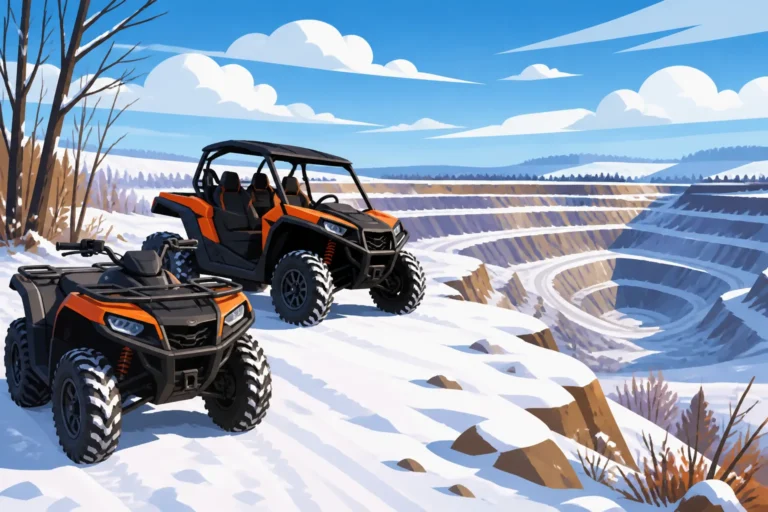
Interlake Off-Road State Recreation Area, near Lynnville and spanning parts of Pike and Warrick counties, is known for terrain shaped by former mining. The spoil piles are mounds and slopes of displaced earth, and they create a very different ride from a flat forest road or a groomed trail. A route can shift from a relatively easy approach to a steep, rutted incline in a short distance.
The ground can vary from firm and packed to loose, rocky, or slick. A slope that feels manageable when dry may become difficult after rain, while a dry surface can still have loose material that reduces tire grip. The terrain can also hide dips and irregularities, so it is worth approaching unfamiliar ground slowly rather than assuming it will ride like a smooth hill.
Interlake’s scale and variety are part of its appeal, but they make it important to choose terrain that suits your experience. Before setting out, review Indiana’s 3,550-Acre Interlake and Nearly 100 Miles at Interlake to get a better sense of the area’s size and riding possibilities. A broad trail network does not mean every climb is appropriate for every machine or rider.
Why a climb can be harder than it looks
A climb is not just about how steep it appears. Its length, surface, ruts, approach angle, and available room to turn around all matter. A short incline with loose material may be more challenging than a longer, gradual hill with firm footing. You also need to consider what is beyond the crest. The top could level out, drop away, or lead into a tight turn or another uneven section.
The approach can change the difficulty, too. Hitting a slope at an awkward angle may affect traction and stability, while entering too quickly can leave little room to respond to a rut or a change in grade. On a UTV, the vehicle’s width and turning room deserve extra attention. A line that looks open from a distance may narrow between trees, ruts, or other terrain features.
It helps to assess a climb from a safe place before committing. Look for a clear route, check for loose material and deep ruts, and consider whether you could stop or turn around without creating a hazard. If the slope looks beyond your comfort level, taking another route is a sound riding decision, not a failure. The aim is to enjoy the ride and return with your machine intact.
Choosing a route and reading the terrain
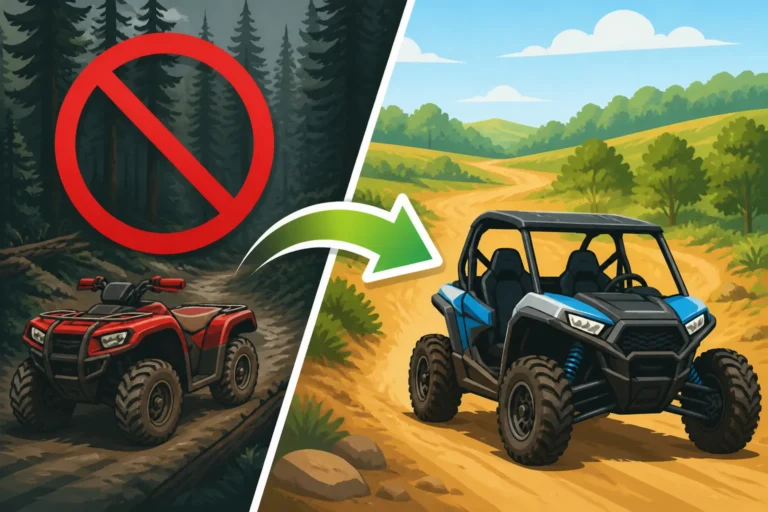
Match the route to your experience and machine
Before you ride, think about both your own comfort and your machine’s capabilities. A first-time visitor may be better served by exploring easier terrain before attempting steep or irregular climbs. An experienced rider can still benefit from a cautious first pass: conditions at a familiar park can change from one visit to the next, and a climb may feel different when it is wet, rutted, or crowded.
Machine size and setup also influence which routes feel manageable. A wide side-by-side needs enough room to maneuver, while an ATV may be easier to position on a narrow approach but still requires careful balance and traction. Added cargo, passengers, tires, and machine weight can all affect handling. Choose routes with those factors in mind rather than relying on a label or a friend’s account of how a hill rode last weekend.
Difficulty descriptions are useful as a starting point, not a promise that every section will match your expectations. Review Indiana Trail Difficulty Ratings alongside the current park information, and be honest about your group’s experience. If you are riding with a mixed-skill group, plan around the least experienced rider so nobody feels pressured to attempt a climb simply to keep up.
Use maps as planning tools, not guarantees
A park map can help you understand the layout, locate access points, and plan a route that avoids unnecessary backtracking. Apps such as onX Offroad can also help riders review mapped routes and organize a ride before arriving. If you use a mapping app, check that the information you rely on applies to the park and to your intended ride, and compare it with official park notices.
A digital line on a screen cannot tell you whether a particular hill is muddy today, whether a trail has been closed, or whether a climb is suitable for your machine. It may also be difficult to judge the steepness and surface of a slope from a map alone. Treat onX Offroad as a navigation aid rather than a substitute for posted signs, current trail information, and on-the-ground judgment.
Cell service and device battery life can be unreliable in some riding areas, so do not make your whole plan depend on a live connection. Save useful information before you leave, carry a backup way to navigate, and make sure your group understands the route. For park-specific planning, review Interlake at Lynnville and Interlake Across Pike and Warrick Counties, then check Indiana Trail Conditions Before You Ride before loading up.
| What to assess | Why it matters | A practical response |
|---|---|---|
| Slope and length | A steep or extended climb can demand more control and traction | Look over the route from a safe position before starting |
| Surface and ruts | Loose earth, mud, or deep ruts can reduce grip and change the line | Slow down and avoid committing if the surface looks beyond your ability |
| Room at the top | A narrow landing or sharp turn can make the crest difficult to manage | Check what lies beyond the crest when it is safe to do so |
| Machine width and load | A wider or heavily loaded machine may need more space and behave differently | Choose a route that gives your vehicle room to maneuver |
| Weather and recent rain | Wet conditions can make reclaimed ground slick or unstable | Recheck conditions and be willing to change plans |
| Group experience | Riders may have different abilities and comfort levels | Agree on a conservative route and regroup at safe stopping points |
Riding climbs with care
Approach, climb, and crest deliberately
Before starting up a hill, pause where you can observe the route without blocking other riders. Check the surface, look for ruts or obstacles, and identify a place to stop or turn around if the climb becomes uncomfortable. Avoid following another machine onto a slope simply because it made the climb; its tires, weight, line, and rider skill may differ from yours.
Once you decide to proceed, ride at a controlled pace and keep your attention on the terrain ahead. Sudden acceleration, abrupt braking, or sharp steering can make it harder to maintain control on uneven ground. Follow the route that appears safest for your machine, and leave enough space between riders to reduce the chance of a collision or one machine being forced to stop on a steep section.
The crest deserves special care. Do not assume the ground levels out immediately on the other side. Approach in a way that lets you see what is ahead before moving over the top, and avoid crowding another rider who is still negotiating the slope. If you cannot see a safe landing or route beyond the crest, wait for a better view or choose another way through.
Know when to stop or turn back
Turning around is often the best choice when a climb is steeper, looser, or more rutted than expected. It is also sensible if your machine is losing traction, you are unsure of the line, or the route ahead is blocked. Do not let group pressure or the desire to “make it up” override what you are seeing. A difficult climb can become more hazardous when a rider continues after becoming uncertain.
If you stop on uneven ground, think about where the machine is positioned and whether it can remain stable. Avoid making sudden movements or trying an improvised maneuver if you do not have a clear, safe plan. If another rider is nearby, communicate before either machine moves. A calm pause to assess the situation is better than rushing into a second problem.
Set expectations with your group before riding. Agree that anyone can call for a pause or route change without being teased or hurried. This is especially helpful when a group includes children, newer riders, or people on different kinds of machines. For additional context on riding responsibly in a shared recreation area, see Indiana Trail Etiquette on Shared Ground.
Preparing for changing conditions and a full day at Interlake
Rain, mud, and changing trail conditions
Recent rain can change reclaimed terrain quickly. Soil that was firm on a previous visit may become slick, while existing ruts can deepen or hold water. The exact effect depends on the location and conditions, so don’t assume every trail will be equally muddy—or equally safe. Check official information before leaving, and reassess after arriving rather than relying only on a past trip report.
If the ground is wet, consider choosing a shorter or less challenging route. Riding into a climb and discovering that the surface is too slippery can leave you with limited options. Be especially cautious when a rut, slope, or waterlogged section makes it difficult to see the ground beneath your tires. For more on how weather affects riding decisions, read Indiana Trails Closed After Rain.
Avoid riding around a closure or creating a new route to bypass a difficult section. Closures and posted directions are there to guide riders and protect the area. Follow signs, stay on permitted routes, and check for changes before each visit. A route that was open last time is not automatically open today.
Gear, communication, and group planning
Bring the basic equipment that helps you manage a long day away from your vehicle: water, suitable protective gear, a charged phone, and a way to communicate with the group. Carry any necessary machine-specific items, such as tools or recovery equipment, only if you know how to use them safely. Keep belongings secured so they do not shift when you travel over uneven ground.
Before the ride, make sure everyone knows where to regroup and what to do if the group becomes separated. Riders should avoid leaving a person behind on an unfamiliar trail, especially if that rider is dealing with a machine issue or is unsure of the route. A simple plan—who leads, who follows, and where the group pauses—can reduce confusion when the terrain splits or someone needs a break.
Finally, remember that a mapping app is only one part of preparation. onX Offroad may be useful for reviewing a planned route, but park notices, signs, and current conditions should guide your choices once you are there. Take a moment to read posted information at the entrance and check with park staff when you have a question about access or conditions. Interlake is more enjoyable when the day’s plan leaves room to adjust rather than forcing the group to finish a route that no longer feels right.
Disclaimer
This article is for general informational purposes only and does not constitute professional advice. Laws, prices and regulations vary by location and change over time. Consult a qualified professional for guidance on your specific situation.