Riding With Children at an Indiana Park
Taking children to an Indiana off-road park can feel like a lot to coordinate: choosing a suitable machine, keeping everyone within sight, checking helmet and seat-belt rules, and finding trails that won’t overwhelm a new rider. This guide walks through how to prepare for a safer family visit, what to check before you unload, and how to make the ride enjoyable for kids and adults alike.
Choose a park and trail plan that fit your family
Know what kind of riding area you’re visiting
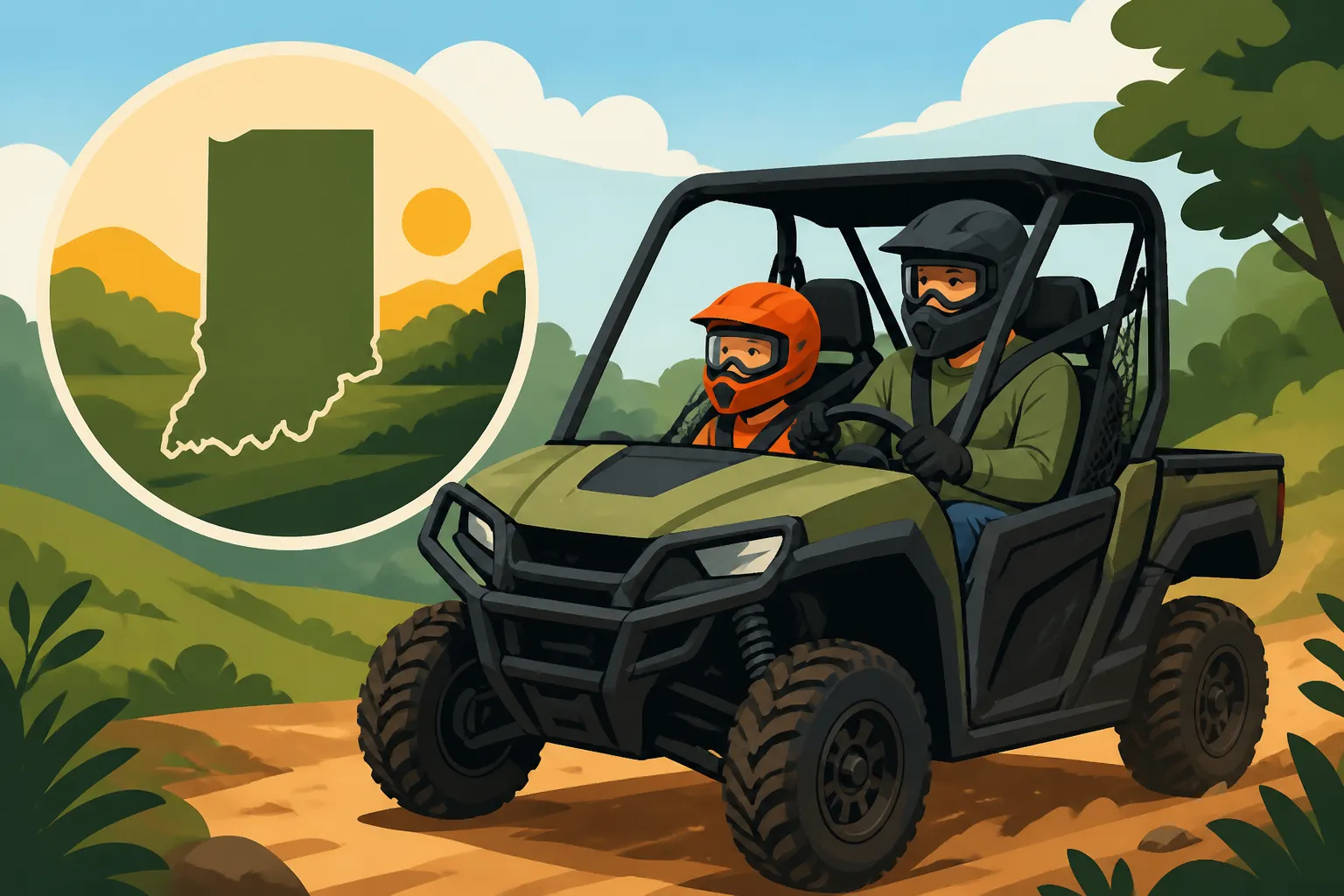
Indiana has public riding areas such as Redbird Off-Road State Recreation Area near Dugger and Interlake Off-Road State Recreation Area near Lynnville. They’re not interchangeable with every Indiana state park or every public-land trail. Before setting out, confirm that your destination allows the type of machine you plan to bring and that the trails are open to it.
If you’re choosing between the two major state off-road areas, compare their locations, trail layouts, and conditions before deciding. Indiana’s Two State ORV Areas Compared can help you think through that choice. For a family outing, the closest park is not automatically the easiest: travel time matters, but so do the terrain, available facilities, and whether your group can find a comfortable route.
Private parks and public riding areas can have different admission processes, waivers, machine rules, and operating procedures. Don’t assume that a rule you followed at one park applies at another. Check the destination’s official information before loading up, then read posted notices and ask staff or park personnel if anything is unclear.
Pick a route around the least experienced rider
A child who is confident in the driveway may feel very different when faced with unfamiliar traffic, ruts, steep grades, mud, or the sound of larger machines nearby. Start with a modest plan. Choose terrain that matches the least experienced person in your group, not the most capable adult rider.
Trail labels can help, but they don’t guarantee that every section will feel easy to your child. A trail marked as beginner-friendly can still include uneven ground, loose material, narrow turns, or a hill that feels intimidating from the seat. Review Indiana Trail Difficulty Ratings and Indiana Trails Good for Kids as part of your planning, while remembering that trail conditions can change after rain or heavy use.
Use a park map to identify a short first loop and a sensible place to turn back. onX Offroad can help you review and mark a planned route before you leave, but treat it as a navigation aid rather than an authority on closures or park rules. Compare any app map with the park’s official map and posted trail information. If a child is tiring or getting anxious, having an easy exit plan can keep a small problem from turning into a stressful afternoon.
Prepare children, machines, and safety gear
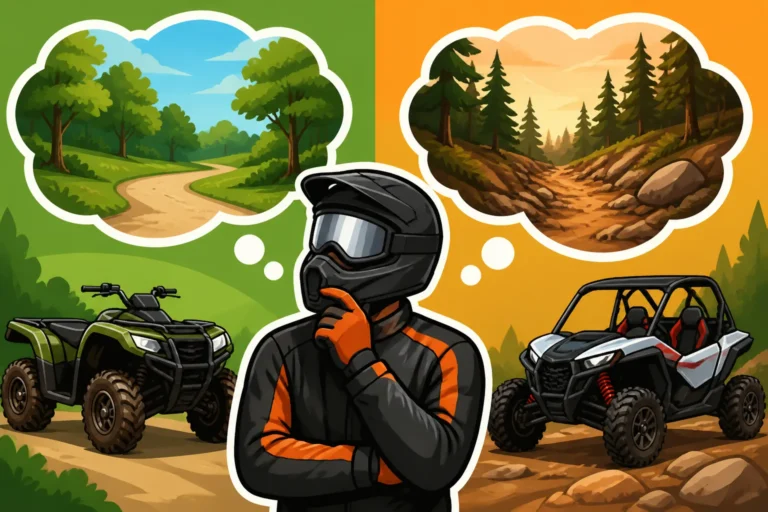
Match the machine to the child and the conditions
The machine should fit the rider’s size, strength, experience, and ability to reach and operate its controls. A youth ATV that is too large or powerful can be difficult for a child to manage, while a machine that is too small may not be suitable for the terrain or intended use. Don’t let a child ride a machine simply because an adult is comfortable operating it.
Before the trip, make sure the child knows how to use the controls and understands what to do if the machine stalls, tips, or becomes stuck. Practice in a controlled, permitted area before tackling a trail. Explain that stopping is always allowed: a child doesn’t have to keep moving just because the rest of the group is ready.
For a side-by-side, check that each intended passenger has an appropriate seat and restraint. Never treat a passenger space as a place for a child to perch or ride unsecured. Review Indiana Seat Belt Rules at an ORV Park and the machine manufacturer’s instructions, and confirm the park’s rules for the vehicle you’re bringing.
Get helmets and protective equipment sorted before the ride
A correctly fitted helmet is one of the most important pieces of a child’s riding gear. It should sit securely, stay in place when fastened, and be appropriate for off-road riding. A loose helmet or one that shifts around can become a distraction as well as a safety concern. Have the child try it on before the park trip, rather than discovering at the trailhead that it pinches or won’t stay put.
Indiana has rules for young riders, and parks may have additional requirements. Check Indiana Helmets at Redbird and Interlake and Indiana Rules for Riders Under 14 before you go. Don’t assume that a helmet rule is waived because a child is riding with an adult or because a vehicle has a roll cage. Confirm how the rule applies to the specific machine and riding area.
Dress for the ride, not just the weather at home. Long sleeves, long pants, gloves, sturdy footwear, and eye protection can help reduce exposure to brush, dust, debris, and contact with hot or moving parts. Bring clothing layers, drinking water, and a change of clothes; kids can become cold, sweaty, or uncomfortable faster than adults expect, especially during stops or after a muddy stretch.
Set expectations before the first engine starts
A short family conversation can prevent a surprising amount of confusion. Tell children where they should ride in the group, what signal means “stop,” and what they should do if they lose sight of the lead adult. Agree on a speed that allows everyone to stay together, and make it clear that passing or racing is not part of the plan.
For a young rider, direct supervision means more than being somewhere in the park. Keep close enough to observe the child and respond promptly. Review [Indiana Supervision Rules for Young Riders] and Indiana Safety Training for Riders before the visit, especially if your child is new to off-road riding. The exact requirements can depend on the rider’s age, vehicle, and location, so verify the rules that apply to your trip.
| Before the trip | What to check | Why it matters |
|---|---|---|
| Rider and machine | Size, controls, passenger seating, and restraints | A child needs to be able to manage the machine or ride securely as a passenger |
| Protective gear | Helmet fit, eye protection, gloves, clothing, and footwear | Gear is more useful when it fits and is ready before the ride |
| Park access | Permit, admission process, waiver, and vehicle eligibility | Park procedures and rules can differ by location |
| Route | Official map, trail difficulty, closures, and turnaround points | A manageable route helps the group stay comfortable and together |
| Emergency plan | Stop signal, regrouping place, water, and basic first-aid supplies | Children need a simple plan if the group separates or someone needs a break |
Ride together without making the day feel like a test
Use a simple group routine
Choose a lead adult and a sweep rider when the group has enough adults to do so. The lead sets a pace suitable for the child, while the sweep stays behind the last rider. If only one adult is available, keep the group compact and choose a route that makes it easy to see everyone.
Before moving, tell children how the group will handle stops. For example, the lead can stop at a wide, safe place where everyone can pull off without blocking other riders. Make sure the child knows not to follow a new group if they lose sight of you. Their instruction should be simple: stop somewhere safe, stay with the machine, and wait for the agreed adult.
A phone map can be useful for planning, but cell service may be unreliable in some riding areas. If you use onX Offroad, consider preparing the route before leaving home and saving the information you’ll need for offline reference. Also carry or consult the park’s official map; an app should not override a closure sign, trail marker, or ranger’s direction.
Keep early rides short and flexible
A child may be enthusiastic at the staging area and ready for a break much sooner than expected. Plan a short first loop, then ask how the child feels before adding more riding. Fatigue can show up as slower reactions, frustration, silence, or a sudden reluctance to continue—not just an obvious complaint.
Avoid turning the outing into a goal to cover the whole park. A successful first trip might mean one comfortable loop, a snack, and a child who wants to come back. If the child feels uneasy on a hill or in deep ruts, don’t pressure them to push through. Turn around where it is safe, or choose another route if park rules and trail layout allow.
Conditions can change quickly, particularly after rain. Mud that looks manageable from the staging area may be difficult for a smaller machine or a new rider. Check Indiana Trail Conditions Before You Ride before departing, and use posted information at the park when you arrive. If the trail surface looks beyond your child’s comfort or ability, choose another route or call it a day.
Make stopping part of the plan
Build breaks into the outing instead of waiting for a child to become exhausted. A drink, snack, bathroom visit, or quiet pause can reset the mood. Kids may also need time to adjust to noise, vibration, dust, or the intensity of riding around unfamiliar machines.
Agree on a signal your child can use to ask for a stop. Make sure they understand that stopping is not a failure and that they should never try to keep up by riding beyond their comfort. If you’re navigating with onX Offroad, mark a few potential regrouping points ahead of time, but choose actual stopping places that are safe and permitted under the park’s rules.
Keep an eye on the child and the machine after each stop. Check that the helmet is still secure, clothing hasn’t caught or shifted, and everyone is drinking enough. A quick check-in can reveal that a rider is frightened, overheated, or simply ready to head back before the issue becomes more serious.
Check park requirements and make the visit easier
Verify permits, entry procedures, and current restrictions
Before leaving, confirm what your park requires for both the machine and the people riding it. A trail-use permit may be separate from an entrance fee, and requirements can vary by location and vehicle. Don’t assume one permit covers every machine in a trailer or that a reservation or waiver completed for one adult automatically covers the whole family.
Review Indiana’s Daily and Annual Trail Permits and Where to Buy an Indiana ORV Permit when planning a visit to a state off-road area. Check the official park information for the steps that apply to your chosen destination, including whether permits should be obtained before arrival. Keep the required documentation accessible so you are not searching through bags at the gate.
Before unloading, check for trail closures, weather-related notices, and any restrictions that apply to your machine or group. An onX Offroad route can help you stay oriented, but always follow the park’s signs and directions. If a mapped route appears to lead through a closed or restricted area, follow the posted restriction rather than the map.
Pack for children, not just for the machine
A family riding kit should include more than tools and fuel. Pack drinking water, snacks, sunscreen, weather-appropriate layers, and a basic first-aid kit. Bring a way to clean glasses or goggles, and consider a spare pair of gloves or dry clothing if the child is likely to get wet or muddy.
Plan for delays. A short ride can take longer than expected if a child needs a break, a machine needs attention, or the group has to wait for trail traffic to clear. Keep your phone charged, but don’t make it the only way you can navigate or contact someone. Tell another person where you’re going and when you expect to return.
Have a clear turnaround time and let the child know what it is. Children often enjoy the ride more when they can see that the plan includes breaks and that adults will listen if they’re uncomfortable. When you reach the staging area, take a moment to check everyone’s condition before loading. Dusty, tired riders may need water, a snack, and a little time before the drive home.
Disclaimer
This article is for general informational purposes only and does not constitute professional advice. Laws, prices and regulations vary by location and change over time. Consult a qualified professional for guidance on your specific situation.