Indiana Rules for Riding in Deer Season
Trying to figure out where you can and can't ride your ATV or UTV during Indiana's deer season can feel like navigating a dense forest blindfolded. It's not always straightforward, and the rules vary wildly depending on whether you're on private land, state property, or even federal ground. This guide is here to shed some light on those often-confusing regulations, helping you understand how to use your off-road vehicle responsibly and legally when you're out chasing whitetails in the Hoosier State.
The Complexities of Off-Road Vehicle Use During Hunting Season in Indiana
For many hunters, an ATV or UTV isn't just a recreational toy; it's a vital tool. Hauling treestands, bait, cameras, and especially harvested game can be back-breaking work without one. Yet, Indiana's regulations for off-road vehicles (ORVs) during hunting season aren't a simple "yes" or "no." Instead, they're a patchwork of rules that change depending on where you are and what you're doing. This can be incredibly frustrating when all you want to do is make your hunt a little easier and more efficient.
Why Rules Differ Across Land Types
One of the biggest sources of confusion stems from the fact that different types of land have different governing bodies and, therefore, different rules. What's perfectly acceptable on your own private hundred acres might be strictly forbidden in a state forest or completely off-limits in a national forest. This isn't just about preventing damage to trails; it's also about managing wildlife, ensuring public safety, and maintaining the natural integrity of diverse ecosystems. Without understanding these distinctions, you could easily find yourself facing a fine or losing access to prime hunting spots. It's not enough to simply have an ORV; you need to know the specific playbook for the ground you're on.
General Principles for ORV Use While Hunting
While the specifics vary, there are some overarching principles that generally apply when using an ORV during hunting season in Indiana. First and foremost, ORVs are typically intended for transportation to and from hunting areas, or for the retrieval of legally harvested game. They are almost universally not permitted for actively pursuing, harassing, or driving game. Imagine trying to chase a deer through the woods on your side-by-side—that's generally a big no-no and goes against the spirit of fair chase, not to mention being illegal. The intent is to use the machine as a utility vehicle, not as a hunting weapon or a means to gain an unfair advantage. Always remember that conservation officers are looking for responsible use, and anything that looks like it's giving you an edge over the animal itself or disrupting other hunters will likely raise eyebrows.
Navigating Indiana's Public Lands with Your ORV During Deer Season
Indiana offers a variety of public lands, and each comes with its own set of rules for ORV use, especially during hunting season. It’s crucial to understand these distinctions because assuming all public land is the same can lead to tickets, environmental damage, or even losing your hunting privileges. For many hunters, public land is the only option, so knowing the specific limitations is paramount.
State Off-Road Recreation Areas (Redbird, Interlake)
Indiana has two fantastic State Off-Road Recreation Areas: Redbird SRA and Interlake SRA. These areas are specifically designed and managed for recreational ORV riding. They boast miles of trails, ranging from beginner-friendly paths to challenging climbs. However, it's important to clarify their primary purpose: these are riding parks, not hunting grounds. While you might be able to find hunting opportunities on adjacent private lands, or perhaps in very specific, designated sections if the park borders other DNR-managed property (which is rare), you generally cannot hunt within Redbird or Interlake SRAs themselves, nor can you use your ORV within them as part of a hunting trip. Their focus is solely on off-road recreation. If you plan to ride recreationally at Redbird or Interlake, make sure your machine is properly registered and you have the necessary [Indiana ORV Permits Explained] for trail use.
State Forests and Fish & Wildlife Areas
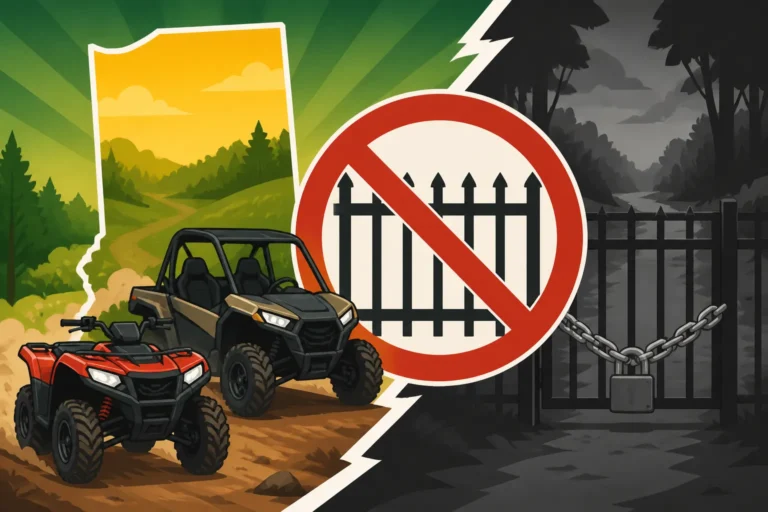
This is where things get a bit more nuanced and often more restrictive for hunters. Indiana State Forests and Fish & Wildlife Areas (FWAs) are prime destinations for deer hunting. However, the use of ATVs and UTVs on these properties is highly restricted, and in many cases, completely prohibited for general travel or game retrieval.
Most State Forests and FWAs explicitly state that ORVs are not allowed on trails, fire lanes, or off-road, except for designated administrative roads, and then only for specific purposes, like accessing private inholdings or for management activities by DNR staff. You absolutely cannot ride an ORV off-trail to retrieve a deer you've harvested, nor can you use it to cruise access roads not explicitly designated for such use. The idea here is to preserve the integrity of the habitat, prevent erosion, and ensure a quiet hunting experience for everyone. Always check the specific property regulations before you go, as rules can occasionally vary slightly from one FWA or State Forest to another. For more detailed information, you can research [Indiana Rules for Riding a State Forest] or [Indiana Rules for Riding a Fish and Wildlife Area].
Hoosier National Forest
Federal lands, like the Hoosier National Forest, typically have even stricter regulations regarding ORV use. The Hoosier National Forest, for example, is generally closed to ATV and UTV riding on its trails and off-road, with very few exceptions for designated routes that are typically not within hunting areas. While you can hunt in the Hoosier National Forest, you should plan to do so entirely on foot. Using your ORV to access hunting spots or retrieve game within the national forest is almost universally forbidden. This is a common point of confusion for hunters who are used to more lenient rules on private land, but federal regulations often prioritize wilderness preservation and non-motorized recreation. If you're planning a trip to this beautiful area, remember that it's a "boots on the ground" experience when it comes to ORV use. To understand more about these restrictions, check out [Why Hoosier National Forest Bans ATV Riding].
Table: ORV Use During Hunting Season on Indiana Public Lands
| Land Type | Primary Purpose | ORV Use for Hunting | Notes |
|---|---|---|---|
| State ORV Recreation Areas | Recreational Riding | Generally Prohibited | Not hunting grounds; focus on off-road recreation. |
| State Forests & F&WA | Hunting, Conservation | Highly Restricted | No off-trail or general use; check property maps. |
| Hoosier National Forest | Conservation, Recreation | Generally Prohibited | No ATV/UTV trails; hunting is foot-access only. |
Using Your ORV on Private Property for Deer Season Activities
When it comes to using your ATV or UTV during deer season, private property is where you'll find the most flexibility and utility. This is where your machine truly shines as a hunting tool, helping you tackle the tough physical demands of the season. The key difference here is the direct consent and control of the landowner.
The Cornerstone of Landowner Permission
On private land, the rules for ORV use during hunting season are primarily dictated by the landowner. This means that if you own the land, you set the rules for yourself and anyone you grant permission to. If you're hunting on land owned by someone else, written permission is not just a good idea, it's often legally required and absolutely crucial for using an ORV. This permission should explicitly state that you're allowed to use an ATV or UTV on their property for hunting-related activities, including game retrieval. Without clear permission, even if you have permission to hunt, using an ORV could be considered trespassing or an unauthorized activity. Always communicate clearly with the landowner about your intentions to use a machine. For more on this, look into [Indiana Landowner Permission Rules].
A simple conversation can prevent a lot of headaches, both for you and the landowner. They might have specific areas they don't want you driving through, or particular times they prefer you use your machine. Respecting these wishes builds trust and ensures you'll have access for years to come.
Retrieval, Hauling, and Blind Access
This is where your ATV or UTV becomes an invaluable asset. On private land, you can use your machine to:
- Haul gear: Transporting heavy treestands, ground blinds, cameras, scent control bins, and other equipment deep into the woods is a breeze compared to humping it on your back. This saves energy for the hunt itself.
- Access blinds and stands: Drive closer to your hunting location, minimizing the scent you leave on the ground and making those pre-dawn walks much shorter. Just remember to park a reasonable distance away to avoid spooking game.
- Retrieve harvested game: This is arguably the biggest benefit. Dragging a mature whitetail buck out of a ravine or across a large field is incredibly difficult. Your ORV, especially a powerful UTV, can make this task significantly easier and quicker, reducing spoilage and physical strain. Accessories like winches, often found on models by brands like SuperATV, can be a lifesaver for pulling heavy loads out of tough spots. Having a good cargo rack or a small trailer behind your ATV can also turn a grueling task into a manageable one.
- Manage food plots: If you're involved in wildlife management, your ORV can be used for planting, spraying, and maintaining food plots, making the entire process more efficient.
The ability to perform these tasks on private land transforms your hunting experience, making it more enjoyable and less physically demanding. Just be mindful of the terrain and weather conditions; tearing up fields or creating deep ruts can upset a landowner and damage the land you hunt.
Key Regulations and Best Practices for Hunters with ORVs
Even on private property where rules are more relaxed, and certainly if you find a rare public land scenario where ORV use is permitted, there are overarching safety, ethical, and legal considerations that all hunters must adhere to. These aren't just good ideas; they are often backed by Indiana law or are essential for responsible hunting.
Carrying Firearms and Harvested Game
Transporting firearms on an ORV requires careful attention to safety and legality. While Indiana law permits the carrying of firearms on ORVs, they must be unloaded and securely cased, or otherwise carried in a manner that prevents accidental discharge. This means no uncased, loaded firearms resting on your lap or carelessly tossed into the cargo bed. Many hunters opt for specialized ATV/UTV gun scabbards or hard cases that securely mount to the vehicle, protecting the firearm from dirt, moisture, and impact, while keeping it out of immediate reach and unloaded. [Indiana Rules for Carrying a Firearm on an ORV] provides further specifics you should always review.
When it comes to transporting harvested game, especially deer, ensure it's done respectfully and securely. While on private land, you might have more leeway, if you ever need to transport a deer via public roads (even briefly, to get from one section of private land to another, or to a processor), it must be properly tagged, visible, and not cause a public nuisance. Most importantly, avoid letting any part of the deer drag on the ground. A UTV's cargo bed or a small trailer on an ATV makes this much easier than trying to strap a deer across a quad rack.
Blaze Orange and Visibility
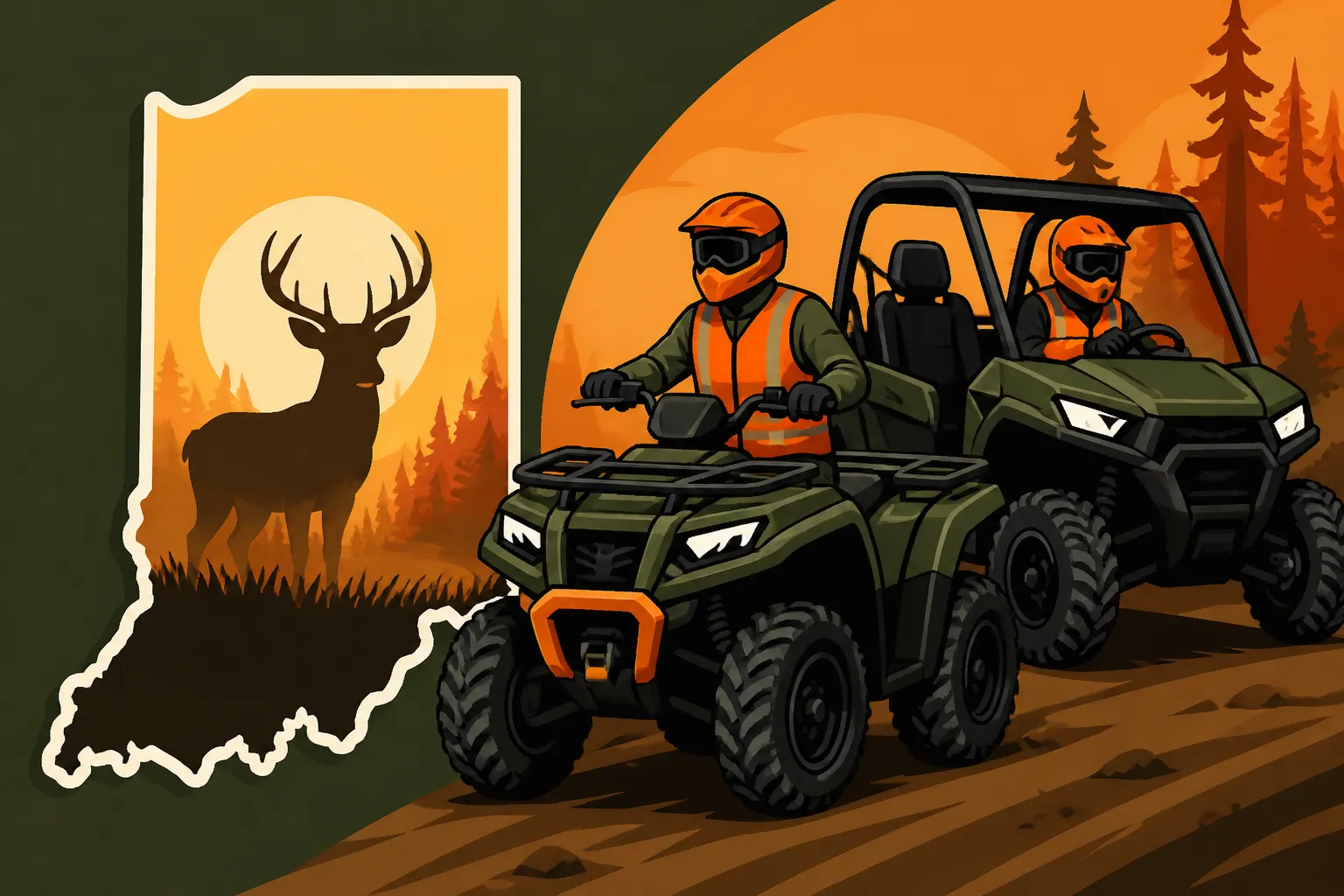
The same blaze orange requirements that apply to hunters on foot also apply to hunters using ORVs during specific hunting seasons in Indiana. During firearms deer season, and certain other seasons where firearms are permitted, a hunter must wear hunter orange outer garments (hat, vest, jacket, etc.) that are clearly visible from all sides. This is a critical safety measure, ensuring you are seen by other hunters whether you're walking to your stand, sitting in a blind, or moving your ORV. Don't assume that just because you're on a machine, you're more visible. Always err on the side of caution and wear your blaze orange proudly and conspicuously. This rule applies even on private land, reinforcing the universal safety standard during hunting season.
Ethical Hunting and Environmental Impact
Responsible hunters understand that an ORV is a tool, not a license to be reckless. Always strive to minimize your environmental impact. Stick to established trails, access roads, or paths on private property, and avoid creating new ruts or damaging vegetation. Driving through wet or muddy areas can quickly lead to deep ruts and erosion, which can harm the land and make it less appealing for wildlife.
Furthermore, never use your ORV to harass, pursue, or drive game. This is illegal, unethical, and goes against the principles of fair chase. The sound and presence of an ORV can easily spook deer and disrupt their natural patterns, negatively impacting your own hunt and that of others. Use your machine to get to your hunting area, and to retrieve your harvest, not to actively hunt.
Registration and Permits
Just because you're using your ORV for hunting doesn't exempt it from Indiana's registration and titling laws. Any ATV or UTV operated on public lands or public roads (even if just crossing a county road to get to another section of private property) must be properly registered with the Indiana Bureau of Motor Vehicles (BMV) and display a valid [Indiana ORV Decal Explained]. This three-year registration ensures your machine is recognized by the state and contributes to the funding of ORV programs.
Even if you plan to keep your ORV exclusively on private property, it still requires proper titling if it was purchased after 2009. While you might not need the physical registration decal if you never leave private land, having the title is essential for proving ownership and for any future sale. Always ensure your paperwork is in order before deer season begins. For details on getting your machine registered, consult [Registering an ORV in Indiana].
Disclaimer
This article is for general informational purposes only and does not constitute professional advice. Laws, prices and regulations vary by location and change over time. Consult a qualified professional for guidance on your specific situation.