Why Your County Cannot Ban a Heavier Machine
It can be incredibly frustrating to hear whispers or even firm pronouncements from local officials that seem to contradict what you understand about your off-road vehicle (ORV) rights. Many Indiana riders worry that their county might suddenly impose a ban on heavier machines, effectively sidelining their side-by-side or a beefier ATV. This guide will cut through the confusion, explaining why Indiana law places clear limits on a county's ability to arbitrarily ban machines based solely on their weight, especially when they fall within the state's definition of an ORV.
The Complex Landscape of Indiana ORV Road Use
Navigating where and how you can legally ride your ATV or UTV in Indiana can feel like trying to untangle a bowl of spaghetti. You've got state laws, local ordinances, and sometimes even conflicting interpretations that make it hard to just hit the trails or ride responsibly on approved county roads. It’s no wonder so many riders feel a mix of excitement and apprehension when considering road use.
The Default Rule: Roads Are Closed
First, let's establish the baseline. In Indiana, the default rule is that public roads are not open to ORVs. This means you can't just hop on your quad and ride down Main Street or take your UTV on a state highway. The state's primary concern is safety and maintaining traffic flow, treating ORVs differently than street-legal vehicles. This might feel restrictive, especially if you live in a rural area and just want to get to a gas station or a friend's house. It means that any road riding needs to be explicitly permitted, either by a specific state exception (like crossing a road) or through local county action. You might hear people talking about [Why Indiana Roads Are Closed by Default], and this is exactly what they mean – it takes a deliberate act to open them up.
This blanket closure is why the burden falls on local jurisdictions to decide if, and under what conditions, they'll allow ORVs on their roads. Without a specific ordinance from your county, those roads remain closed to your machine, regardless of its size or power. It’s a common point of confusion, and many riders assume that if they aren’t seeing signs, it means they can ride. Unfortunately, it’s usually the opposite. This is precisely why it's so important to be proactive and informed about the laws in your specific area before you ever turn the key.
How Counties Can Open Their Roads
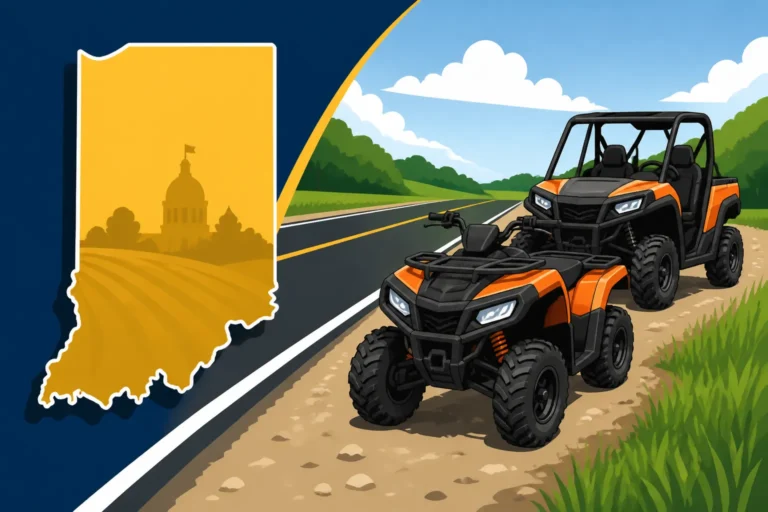
While the state generally keeps ORVs off public roads, it does provide a pathway for counties to open their local roads to these vehicles. This is where things get interesting, and also where the frustrations often begin. A county's commissioners, or sometimes the county council, have the authority to pass an ordinance designating specific county roads or even all county roads (outside of incorporated city or town limits) as open for ORV use. This isn't a simple handshake agreement; it's a formal legal process.
Typically, this involves careful consideration of public safety, road conditions, and community input. You'll often find that counties opting to open their roads will also establish specific rules for ORV operators – things like speed limits, daylight-only riding, or helmet requirements for minors. For instance, [How an Indiana County Opens Its Roads] often involves public hearings and official votes. These ordinances are usually detailed, outlining not just which roads are open, but also the expectations for riders. They might specify routes to trailheads, access points to certain areas, or even define a "road" in their context to avoid confusion with state highways. When a county does this, it's a big step forward for local riders, but it's crucial to remember that these local rules must still operate within the framework of state law. They can't, for example, contradict a state-level requirement for what constitutes an ORV or impose restrictions that the state explicitly forbids.
Understanding State-Level ORV Definitions and County Limits
The core of understanding why your county cannot simply ban a heavier machine lies in how Indiana defines an Off-Road Vehicle at the state level, and the limitations placed on local government powers. It’s a principle known as "preemption," where state law overrides local ordinances if there’s a conflict. This is a crucial legal concept that often gets overlooked, leading to local rules that might seem valid but actually exceed the county's authority.
Indiana's Definition of an Off-Road Vehicle
Indiana law provides a clear, foundational definition for what constitutes an "off-road vehicle" or ORV. This definition is critical because it establishes the parameters within which any local ordinance must operate. According to Indiana code, an ORV is generally defined as a motorized vehicle that is:
- Designed for off-road use.
- Travels on two, three, or four wheels.
- Has a seat or saddle for the operator.
- Does not exceed 2,000 pounds in dry weight.
- Is not more than 50 inches wide.
- Is not registered as a motor vehicle.
This definition covers the vast majority of ATVs, dirt bikes, and many side-by-sides. If your machine fits these criteria, it is, by state law, an ORV. This is why discussions around [How Indiana Defines an Off-Road Vehicle] are so important. This 2,000-pound weight limit is particularly relevant here because it serves as the state's upper threshold for what it considers an ORV. If a machine exceeds this weight, it might not be classified as an ORV under state law, which then opens up a completely different set of rules, or often, no provisions for road use at all. But for machines under this 2,000-pound limit, the state has already provided a classification. Brands like SuperATV produce many vehicles and accessories that fit comfortably within these state definitions, and understanding these boundaries is key to legal riding.
The State's Cap on Local Ordinances
Here's the critical point: Indiana state law explicitly limits what counties can demand or ban concerning ORV use on designated county roads. While counties can pass ordinances to open roads and set reasonable safety regulations, they cannot impose rules that directly conflict with or undermine the state's definitions and framework for ORVs. This means a county cannot arbitrarily redefine what an ORV is or impose a lower weight limit for machines already defined as ORVs by the state for the purpose of road access.
Specifically, if your machine is under the state's 2,000-pound ORV weight limit, a county cannot ban it on the basis of being "too heavy" if they have opened their roads to ORVs. The state's definition provides the ceiling; a county cannot then apply a floor below that for their designated ORV roads. [Why an Indiana County Cannot Cap Weight Below 2,000 Pounds] is rooted in this principle. The general assembly has already considered and codified the characteristics of an ORV. A county ordinance cannot, for instance, say, "All ORVs over 1,000 pounds are banned from county roads," if the state says an ORV can weigh up to 2,000 pounds. That would be an unlawful attempt to reclassify vehicles that the state already defines as eligible ORVs, effectively stripping riders of rights granted by state statute. Counties can regulate things like speed, time of day, or specific safety gear, but they cannot redefine the fundamental nature of the vehicle itself as categorized by state law.
What to Do If You Encounter Restrictive County Rules
It's one thing to understand the law in theory, and quite another to put it into practice, especially when you're facing a local rule that seems unfair or incorrect. Many riders feel intimidated by the idea of challenging or even questioning local authorities. However, being informed and knowing the proper steps can make a significant difference. You don't have to be a lawyer to advocate for your rights, just well-prepared and persistent.
Verifying the Local Ordinance
The first and most crucial step is to get your hands on the actual written ordinance from the county. Rumors, word-of-mouth, or even informal statements from officials can be misleading. You need to see the precise language that has been formally adopted. Start by visiting your county commissioner's office, the county clerk's office, or the county highway department. Most counties also post their ordinances online through their official government websites. Look specifically for terms like "Off-Road Vehicle Ordinance" or "ATV/UTV Road Use." [Indiana Local Ordinances on ORV Riding] are public documents and you have a right to access them.
Once you have the ordinance, read it carefully. Does it specifically mention a weight limit lower than 2,000 pounds for machines that fit the state's definition of an ORV? Does it try to impose restrictions that seem to contradict state law? Sometimes, ordinances might be poorly worded or contain outdated information. If you find a conflict, highlight it. Having the official document in hand allows you to have a fact-based discussion, rather than just relying on assumptions. If the ordinance does indeed try to impose a weight limit below 2,000 pounds for state-defined ORVs, that's your key piece of evidence.
Advocating for Your Riding Rights
If you find that a county ordinance seems to exceed its authority by imposing an unlawful weight restriction on ORVs (those under 2,000 lbs), you have options for advocacy. Don't go in hot-headed; approach the situation calmly and with all your research.
- Educate Local Officials: Schedule a meeting with your county commissioners, council members, or even the county attorney. Present your findings, clearly explaining how the local ordinance conflicts with Indiana's state definition of an ORV and the limitations on county authority. Bring a copy of the state code defining an ORV and the specific local ordinance in question. Frame it as ensuring compliance with state law, not as an attack on local control.
- Form a Local Riding Group: There's strength in numbers. Connect with other local riders who share your concerns. A collective voice carries more weight than an individual complaint. These groups can effectively lobby local government, present petitions, and show the economic and recreational benefits of responsible ORV use.
- Contact State-Level Organizations: Organizations dedicated to off-road recreation often have legal resources or can offer guidance on how to address local issues. They understand the intricacies of state laws and how they apply to local jurisdictions. They might have template letters or strategies for engagement.
- Consult Legal Counsel: As a last resort, if local dialogue proves unproductive and the county insists on enforcing an unlawful restriction, consulting an attorney specializing in administrative law or property rights might be necessary. They can advise on the legal avenues available, though this is often the most costly and time-consuming option.
- Utilize Industry Resources: Companies like SuperATV, which serve the ORV community, often follow legislative developments closely and may offer resources or insights into how these regulations impact riders. While they can't offer legal advice, their understanding of the landscape can be valuable.
Remember, the goal is to work collaboratively to ensure that local rules are fair, legal, and support responsible off-road recreation for everyone. By understanding the state's framework, you're better equipped to participate in that conversation.
Disclaimer
This article is for general informational purposes only and does not constitute professional advice. Laws, prices and regulations vary by location and change over time. Consult a qualified professional for guidance on your specific situation.