Indiana Rules for Riders Under 14
For parents in Indiana, navigating the world of off-road vehicles (ORVs) with young children can feel like deciphering a complex legal code. You want your kids to experience the excitement and freedom of riding an ATV or UTV, fostering a love for the outdoors, but ensuring their safety and adherence to the law is paramount. The conflicting information and the sheer volume of regulations can be incredibly frustrating, leaving you wondering if you're doing everything right. This guide aims to demystify Indiana's rules for riders under 14, offering clear, actionable insights so your family can enjoy the trails with confidence and peace of mind.
The Foundation: Indiana's General Approach to Youth ORV Riders
Indiana takes a serious, but generally reasonable, approach to regulating off-road vehicle use, especially when it comes to younger riders. The state's primary goal is safety, aiming to prevent accidents and injuries by setting clear guidelines for who can ride, where, and under what conditions. For parents, this means understanding that while the spirit of off-roading is adventure, the letter of the law emphasizes protection for those who are still developing their riding skills and judgment. It’s not about stifling fun, but ensuring it happens responsibly.
Why Age Matters: The State's Perspective on Development
The various age restrictions aren't arbitrary; they reflect a recognition of the different developmental stages children go through. Riders under 14 are typically still mastering coordination, judgment, and risk assessment. Their physical size might also limit their ability to safely control larger, more powerful machines. Indiana's rules are designed to account for these factors, providing a framework that allows for supervised introduction to the sport while slowly increasing independence as riders mature. This staged approach is crucial for building competent and safe riders for the future.
Public Safety Versus Private Property Freedoms
One of the biggest areas of confusion for many parents is the distinction between riding on public land and riding on private property. Generally speaking, state laws tend to be stricter on public trails, state parks, or any land managed by the Department of Natural Resources (DNR), where the state has a direct interest in public safety and environmental protection. On private land, the rules can be less restrictive, but the owner still bears significant responsibility, and certain statewide safety mandates, like helmet use for minors, still apply universally. This nuanced approach acknowledges that a controlled, private environment can offer different learning opportunities than a shared public trail.
Age-Specific Restrictions: Public vs. Private Land Riding for Under 14s
The fundamental difference in rules for young riders often boils down to where they are riding. Indiana makes a clear distinction between public lands, such as state recreation areas, and private property. Understanding these differences is key to staying compliant and ensuring a safe experience for your child. It’s not just about avoiding a ticket; it’s about providing the right environment for their skill level and protecting them from potential hazards.
Riding on Designated Public Trails and State Recreation Areas
When your child wants to hit the trails at a place like Redbird Off-Road State Recreation Area or Interlake Off-Road State Recreation Area, Indiana's rules are quite specific. For riders under 14, the law states that they are generally allowed to operate an ORV on public land, but only under direct adult supervision. This isn't just a suggestion; it's a legal requirement designed to ensure an experienced rider is always nearby to guide, instruct, and intervene if necessary. The designated trails at these state parks are maintained and managed, but they can still present challenges that require a minor to have an adult constantly watching out for their safety. Remember, these public areas often have a mix of riders and vehicle types, making active supervision even more crucial. You'll also need to consider the specific [Indiana Rules for a Rider Under 14] when planning your trip to these popular spots.
Operating an ORV on Private Property and Farmland
The rules relax somewhat when riding on private land, but they don't disappear entirely. If your child is riding an ORV on your own property, or on land where you have explicit permission from the landowner, the direct supervision requirement for those under 14 is still in effect for certain situations. While the state doesn't typically regulate the specific age a child can start riding on private property, the general safety principles remain. The landowner (which might be you) is still responsible for ensuring the environment is safe and that the rider is operating the machine responsibly. Even on private land, there are still universal safety mandates like the helmet law for minors, which we'll discuss in more detail shortly. So, while you might not need a trail permit or registration decal for private land, the common-sense safety rules, often reinforced by law, still apply. For those operating machines for specific purposes like farming, there might be slight nuances, but general safety for youth is always paramount. You can explore more about [Indiana Rules for Riding Private Land].
The Critical Role of Supervision for Young Riders
If there's one overarching theme when it comes to Indiana's rules for riders under 14, it's supervision. The state strongly emphasizes that these young enthusiasts must have a responsible adult looking out for them, providing guidance, and being ready to act. This isn't just about being in the same general area; it's about being actively involved in their riding experience.
Defining "Direct Parental Supervision" in Practice
What exactly does "direct parental supervision" mean in the eyes of Indiana law? It means that the supervising adult must be capable of immediately reaching and taking control of the ORV if needed. This typically translates to being within visual and audible contact of the child, and often riding in close proximity. You shouldn't be hundreds of yards away, or distracted by your own ride, while your child navigates a challenging trail. The supervising adult is responsible for ensuring the child is riding an appropriate machine, is wearing the correct safety gear, and is operating the ORV in a safe and controlled manner. It’s about being a constant, vigilant presence, not just a distant observer. This level of engagement is crucial, especially in situations where trail conditions can change rapidly or unexpected obstacles appear. For more detailed information, look into [Indiana Supervision Rules for Minors].
Why Active Supervision Prevents Accidents and Ensures Learning
Active supervision is more than just a legal requirement; it's a fundamental safety practice. Young riders, especially those under 14, are still developing their judgment. They might not anticipate hazards, understand the limits of their machine, or react appropriately in an emergency. A supervising adult can point out potential dangers, teach proper riding techniques, and help the child learn to assess risks. For instance, an adult can explain why taking a specific line through a muddy patch is safer, or how to properly use the throttle and brakes on a steep incline. This hands-on teaching not only makes the immediate ride safer but also instills good habits that will serve them well as they become more experienced riders. Moreover, having an adult present means immediate assistance is available in case of a minor spill or a mechanical issue, turning potential frustrations into valuable learning moments.
Mandatory Safety Gear and Machine Requirements for Minors
Safety gear isn't optional; it's a non-negotiable part of riding an ORV, especially for children. Indiana has specific laws outlining what protective equipment minors must wear, recognizing that proper gear can significantly reduce the risk and severity of injuries. Just like you wouldn't send a child cycling without a helmet, off-roading demands an even higher standard of protection.
The Helmet Law for Riders Under 18
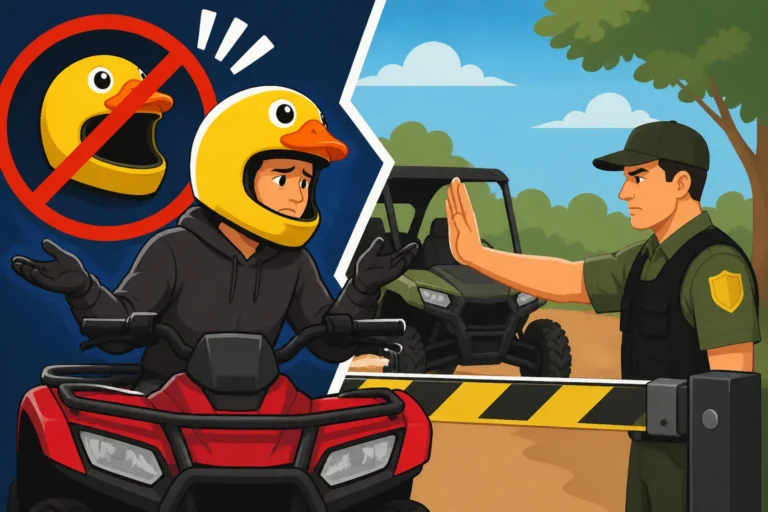
Perhaps the most critical piece of safety equipment, and a statewide legal requirement, is a helmet. In Indiana, any person under the age of 18 operating or riding as a passenger on an ORV must wear a properly fastened, Department of Transportation (DOT) approved helmet. This rule applies whether they are on public land or private property. A novelty helmet or a bicycle helmet simply won't cut it. The helmet needs to be specifically designed for motorized vehicle use and fit snugly. This law is in place because head injuries are among the most serious and preventable types of injuries in ORV accidents. Ensuring your child has a well-fitting, DOT-approved helmet is step one for every ride. You can find more information about this at [Indiana Helmet Law for Riders Under 18]. When selecting a helmet, consider reputable brands and always ensure the DOT sticker is clearly visible. Many riders also look to accessory providers like SuperATV for aftermarket gear that complements their safety setup, though the helmet itself must meet specific safety standards.
Additional Essential Protective Gear
While the helmet is legally mandated for minors, a full complement of protective gear is highly recommended by every safety organization and experienced rider. This includes:
- Eye Protection: Goggles or a helmet with a face shield are crucial to protect eyes from dust, debris, branches, and insects.
- Over-the-Ankle Boots: Sturdy boots provide ankle support and protect feet from impacts and the hot engine. Flip-flops or sneakers offer no meaningful protection.
- Gloves: Gloves improve grip, reduce blisters, and protect hands from abrasions and impacts.
- Long Pants and Long-Sleeved Shirt/Jacket: These protect skin from scrapes, sun exposure, and minor impacts. Armored riding jackets and pants offer superior protection.
Think of it as a complete safety suit. Each piece plays a role in minimizing the risk of injury. Investing in good quality gear is investing in your child's safety and comfort, allowing them to ride confidently without unnecessary exposure to harm.
Considering Safety Training and Rider Education
While Indiana doesn't mandate a safety training course for ORV operators (unlike some other states), it strongly encourages it, especially for young riders. Education is a powerful tool in accident prevention, teaching not just how to operate the machine, but how to think like a safe rider.
The Benefits of a Voluntary ORV Safety Course
Enrolling your child in a voluntary ORV safety course, such as those offered by the ATV Safety Institute (ASI), is an invaluable step. These courses are typically hands-on and cover essential topics like:
- Basic Riding Techniques: Proper starting, stopping, turning, and shifting.
- Safe Operating Procedures: How to ride on various terrains, handle hills, and navigate obstacles.
- Machine Maintenance: Understanding basic checks before a ride.
- Riding Responsibility: Trail etiquette, environmental awareness, and risk management.
For a young rider, learning these skills in a controlled environment with certified instructors can build confidence and competence far more effectively than trial and error. It also provides parents with peace of mind knowing their child has received professional instruction. While not legally required, the skills learned in such a course can be life-saving. You can explore options for [Indiana ATV Safety Course Options].
Teaching Good Habits: Beyond the Classroom
Even without a formal course, parents have a vital role in educating their young riders. This goes beyond just direct supervision during a ride. It involves:
- Pre-Ride Checks: Teaching children how to inspect their machine before each ride (tires, brakes, throttle, fuel, etc.).
- Understanding Machine Limits: Explaining what their particular ORV can and cannot do safely. For instance, a youth model from manufacturers that also make SuperATV accessories may be durable, but it still has limits on speed and terrain.
- Trail Etiquette: Instilling respect for other riders, wildlife, and the environment. This includes staying on marked trails and respecting private property boundaries.
- Decision-Making: Encouraging them to think about potential risks and make safe choices, even when an adult isn't right beside them (though for under 14s, direct supervision is key).
These foundational habits, reinforced by consistent parental guidance, are just as important as the physical skills of riding. They foster a responsible approach to the sport that will last a lifetime.
Understanding the Consequences: Penalties for Non-Compliance
It's natural to focus on the fun aspect of ORV riding, but ignoring the rules, especially those concerning youth riders, can lead to serious consequences. Indiana law carries penalties for violations, which can impact both the rider and the adult responsible for their supervision. These aren't just minor inconveniences; they can include fines and other legal repercussions.
Fines for Unsupervised or Improperly Equipped Minors
If a minor under 14 is found operating an ORV without the required direct adult supervision on public land, or without a helmet anywhere (public or private), the penalties can be significant. Violations of Indiana's ORV laws are typically classified as Class C infractions. A Class C infraction carries a monetary penalty, and these fines can add up quickly. While I cannot state specific figures, know that they are designed to be a deterrent, making it clear that compliance is expected. Furthermore, the adult supervisor or owner of the machine can also be held liable for these infractions. This liability extends to ensuring the child is using an appropriately sized machine and that all legal requirements are met. It truly underscores the importance of the adult's role. For a broader understanding of legal repercussions, refer to [What a Class C ORV Infraction Costs in Indiana].
The Owner's Liability: Beyond the Rider
Indiana law also addresses owner liability. If an ORV owned by an adult is operated by a minor under circumstances that violate state law (e.g., unsupervised on public land, or without a helmet), the owner can face legal responsibility, even if they weren't physically present at the time of the infraction. This means lending your ORV to another adult who then allows a child to ride illegally can still lead to you, as the owner, facing a penalty. This provision is designed to encourage all ORV owners to be diligent about who operates their machines and under what conditions, especially when it involves young, inexperienced riders. It serves as a reminder that the responsibility for safe and legal operation ultimately rests with the machine's owner, emphasizing the importance of informed decisions about [Indiana Supervision for Riders Under 14].
Machine Choice: Matching the ORV to the Young Rider
Choosing the right machine for a young rider is perhaps one of the most critical decisions a parent will make. An ORV that is too large, too powerful, or simply doesn't fit the child's physical stature can be incredibly dangerous, regardless of supervision or gear. Indiana's safety guidelines, while not always dictating specific engine sizes, strongly imply that an appropriate machine is a safe machine.
Why Size and Power Matter for Young Riders
It might seem obvious, but a smaller rider needs a smaller machine. Kids simply don't have the strength, reach, or weight to effectively control a full-sized ATV or UTV. Too much power can lead to accidental acceleration, loss of control, and rollovers. Manufacturers, recognizing this, produce a range of youth model ATVs and UTVs with smaller engine displacements, lower top speeds, and lighter weights. These machines are designed with ergonomics in mind for younger bodies, making controls easier to reach and manipulate. Trying to "grow into" a larger machine is a recipe for disaster. It's far better to start small and upgrade as the child grows and gains experience. Many parents consult resources like [Youth Machine Sizes and Indiana Rules] to ensure they are making an informed decision.
Factors Beyond Engine Size: Fit and Features
While engine displacement is a primary consideration, a few other factors are equally important when choosing an ORV for a child:
- Physical Fit: Can the child comfortably reach the handlebars/steering wheel, footrests, and controls (brakes, throttle)? Are their feet firmly planted? Can they easily shift their weight for balance?
- Weight of the Machine: Can the child physically maneuver the machine, especially if it gets stuck or needs to be turned in a tight spot?
- Safety Features: Look for machines with speed limiters, remote engine shut-off switches, and clear, easy-to-use brakes. Some youth machines also come with flag mounts for visibility, and you can add further enhancements like safety lights or specialized tires from companies such as SuperATV to improve their overall safety profile.
- Manufacturer Recommendations: Always adhere to the manufacturer's age and weight recommendations for a specific model. They've designed the machine for a particular demographic for a reason.
Making the right choice here isn't just about fun; it's about minimizing the physical challenges of riding so the child can focus on developing skills safely. For a comprehensive look at how to pair your child with the right ORV, consider [Matching a Machine to a Child in Indiana].
Finding the Right Place: Permissible Riding Areas for Youth
Once you have the right machine and all the safety gear, the next question is, "Where can my child ride?" Indiana offers several options, but each comes with its own set of rules and considerations, particularly for those under 14. Knowing where it's permissible and safe to ride is just as important as knowing how to ride.
Designated State ORV Parks and Youth Areas
Indiana's state-managed ORV parks, like Redbird and Interlake, are fantastic resources for families. These parks are specifically designed for off-road recreation, featuring marked trails, varied terrain, and typically more controlled environments. Many of these parks also have designated "youth areas" or trails specifically designed for less experienced or younger riders. These areas are often flatter, less technical, and provide a safer space for children to practice their skills under supervision. When planning a trip to one of these parks, always check their specific rules for youth riders beforehand, as they can sometimes have additional requirements beyond statewide laws. Utilizing these parks is often the best way to introduce children to structured off-road riding, as they often have facilities and staff geared towards safety. Before heading out, consider [Riding With Children at an Indiana Park] for helpful tips.
Private Riding Parks and Landowner Permissions
Beyond state parks, Indiana also has a number of private riding parks that cater to off-road enthusiasts. These parks often have their own specific rules regarding age, supervision, and machine types. It's crucial to contact them directly before visiting to ensure they accommodate riders under 14 and understand their specific safety policies, waiver requirements, and any additional fees.
Riding on private land with landowner permission is another option, as discussed earlier. While this offers the most flexibility, it also places the greatest responsibility on the parent and landowner to ensure a safe riding environment. This includes assessing the terrain for hazards, ensuring no one is trespassing, and, of course, strictly adhering to helmet laws for minors and supervision requirements. Always get written permission from the landowner to avoid any misunderstandings or legal issues.
| Riding Location | Age 14+ (Unsupervised) | Under 14 (Supervised) | Helmet Required (Under 18) | ORV Registration Required (for ORV) |
|---|---|---|---|---|
| Designated State ORV Parks | Yes | Yes (Direct Supervision) | Yes | Yes |
| Public Roads (if allowed) | Yes (with specific local ordinances and age 18+ operator) | No (typically, with few exceptions) | Yes | Yes (and local permits may apply) |
| Private Property | Yes | Yes (Recommended/often assumed, specific legal supervision depends on context) | Yes | No |
| Farm Operations | Yes | Yes (Often falls under private property rules, but specific agricultural exemptions may exist) | Yes | No (if solely for farming use) |
Ensuring a Smooth Riding Experience: Tips for Parents
Beyond the legalities, there are practical steps you can take to make sure your child's off-road experience is not only safe but also enjoyable and enriching. It’s about creating an environment where they can learn, grow, and build lasting memories, all while minimizing stress for you.
Pre-Ride Planning and Preparation
A successful ride starts long before you even load the ORV onto the trailer. For youth riders, thorough planning is paramount. Always check the weather forecast – a sudden downpour can turn a fun trail into a dangerous quagmire, especially for less experienced riders. Pack essentials: water, snacks, a basic first-aid kit, and appropriate tools for minor repairs. Ensure your child is well-rested and hydrated. Discuss the day's plan, including the expected terrain and any specific rules for the riding area. This preparation helps set expectations and ensures everyone is on the same page, contributing to a smoother and safer outing.
Communication and Setting Expectations
Open and continuous communication with your child is key. Before each ride, discuss safety rules, such as maintaining a safe speed, staying on marked trails, and never riding beyond their skill level. Talk about potential hazards they might encounter and how to react. During the ride, use hand signals or a communication system if riding in a group to maintain contact and convey important messages. After the ride, take time to debrief. Discuss what went well, what challenges they faced, and what they learned. This reinforces good habits and provides opportunities for positive reinforcement and constructive feedback. Companies like SuperATV offer communication systems and accessories that can aid in maintaining contact on the trail, which is particularly beneficial when supervising younger riders. By making safety a consistent conversation, you empower your child to become a more responsible and self-aware rider.
Disclaimer
This article is for general informational purposes only and does not constitute professional advice. Laws, prices and regulations vary by location and change over time. Consult a qualified professional for guidance on your specific situation.