Why Evansville and Darmstadt Stay Closed
It can be incredibly confusing when you hear that a county like Vanderburgh has an ordinance allowing off-road vehicles (ORVs) on some of its roads, only to discover that you still can't ride your ATV or UTV through cities like Evansville or towns like Darmstadt. It feels like a patchwork of rules, and you're left wondering why a county-wide decision doesn't cover everything. This guide will clarify precisely why Evansville and Darmstadt remain closed to ORV traffic, even with a county ordinance in place, and help you understand the layers of local authority at play.
The Local Control Landscape: How Indiana Counties and Cities Interact with ORVs
Understanding why certain areas remain off-limits to off-road vehicles (ORVs) in Indiana requires a dive into the intricacies of local governance. It's not as simple as one broad rule covering an entire county; rather, it's a careful balance of state law, county ordinances, and the distinct authority of incorporated cities and towns. Many riders, especially those new to the area or even long-time residents, get tripped up by these often-invisible lines of jurisdiction. They might assume that if the county has opened its roads, then all roads within that county are fair game, leading to frustrating misunderstandings or, worse, unintended legal trouble.
The Power of Local Ordinances in Indiana
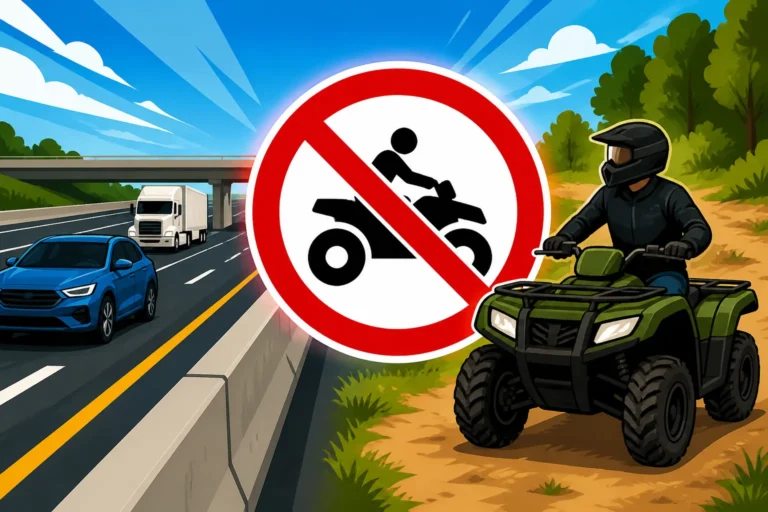
At its core, Indiana law generally defaults to closing public roads to ORVs, designating them primarily for registered, street-legal vehicles. This is a crucial starting point to grasp: you can't just assume you can ride your ATV or UTV on any public road. However, the state also empowers local governments—specifically county boards of commissioners—to pass ordinances that can modify this default. This means a county can, through a formal legislative process, choose to open certain roads or categories of roads within its jurisdiction to ORV traffic. This power is not without its limits, but it does grant significant control over how ORVs can be used locally.
These county ordinances are often crafted with specific conditions in mind. They might designate certain times of day for ORV use, impose speed limits, require specific safety equipment beyond state minimums, or even limit the types of ORVs allowed. For instance, a county might open gravel roads but keep paved roads closed, or it might restrict ORV access to roads within certain rural townships. The intention behind such ordinances is typically to balance recreational opportunities for ORV owners with the safety and quality of life for all residents. It's a localized attempt to manage the unique challenges and benefits that come with allowing these machines on shared public thoroughfares.
The City Limits Exception: Where County Ordinances Stop
Here's where the crucial distinction lies for places like Evansville and Darmstadt: a county ordinance, no matter how comprehensive, generally does not extend into the boundaries of incorporated cities and towns. Think of it this way: when a city or town is "incorporated," it becomes its own distinct legal entity with the authority to govern its own municipal affairs, including its streets and traffic laws. This means that a county's decision to open its roads to ORVs doesn't automatically mean the streets within Evansville or Darmstadt are open too. It’s a very common point of confusion, especially when the geographic lines aren't always clear to the casual observer.
The reason for this separation of powers is rooted in Indiana's legal framework for local government. Cities and towns have their own legislative bodies (city councils, town councils) that are responsible for adopting their own ordinances. If a city or town wants to allow ORV use on its streets, it must pass its own specific ordinance to do so. Without such an ordinance, the default state law—which restricts ORVs from public roads—remains in effect within those municipal boundaries. So, while you might be able to ride legally on a county road right up to the city limits, you'd then need to trailer your machine or find an alternative route if the city itself hasn't enacted its own ORV-friendly rules. This is why it's so important for riders to know exactly where they are on the map and to check [Indiana Local Ordinances on ORV Riding] for both county and municipal rules.
Vanderburgh County's ORV Ordinance: A Closer Look
Vanderburgh County is one of several counties in Indiana that has taken the initiative to establish its own ordinance regarding off-road vehicle use on public roads. This shows a proactive approach to addressing the growing popularity of ATVs and UTVs for recreation and utility, while also attempting to regulate their presence to ensure public safety. However, the very nature of these ordinances, while progressive in some aspects, often comes with specific limitations and carve-outs that are essential for riders to understand.
The Scope of Vanderburgh County's Open Roads
Vanderburgh County's ordinance is designed to allow ORV access on certain designated county roads, particularly those that are more rural in nature. This isn't a blanket permission for every single road within the county's geographic borders. Instead, the county likely uses criteria such as traffic volume, road type (gravel vs. paved), and safety considerations to determine which roads are suitable for ORV use. Riders accustomed to hitting the trails with their beefed-up machines from SuperATV might appreciate the opportunity to legally connect trails or access certain areas via roads, but they must be vigilant about where those allowances begin and end.
To help riders navigate these designated routes, Vanderburgh County has notably implemented a system that uses maps to visually represent where ORVs are permitted. This is where [Vanderburgh County's Marked Road Map] becomes an invaluable resource. Such maps often use color-coding or specific markings to indicate which roads are open, which are closed, and where city or town limits impact accessibility. It's a practical approach to communication, acknowledging that clear guidance is necessary for ORV enthusiasts. These maps are a critical tool, ensuring that riders can plan their routes without inadvertently venturing into restricted zones. The ordinance typically includes specific requirements too, such as mandatory helmets for riders under 18 [Indiana Helmet Law for Riders Under 18], specific lighting requirements for riding after dark [Indiana Rules for Riding After Dark], and proof of insurance [Indiana ORV Insurance Requirement].
The Specific Carve-Outs for Cities and Towns
Despite Vanderburgh County's efforts to open certain roads, its ordinance, like most county ordinances of this type, contains specific carve-outs or inherent limitations that prevent it from applying to incorporated cities and towns within the county. This means that while a county-designated road might lead right up to the boundary of Evansville or Darmstadt, the moment you cross that invisible line, the county ordinance no longer applies. This distinction is paramount and often the source of confusion for riders who might see a contiguous stretch of road on a map, unaware that a jurisdictional shift has occurred.
The reason for these carve-outs is a matter of legal sovereignty. Cities and towns in Indiana have their own charters and municipal codes, granting them the authority to govern their internal affairs, including traffic regulations and the use of public infrastructure. A county cannot unilaterally dictate how the streets within an incorporated municipality are used. Therefore, for ORVs to be legal on the streets of Evansville or Darmstadt, those specific municipal governments would need to pass their own, separate ordinances granting such permission. Without such local legislation, the default state prohibition on ORVs on public roads remains firmly in place within those city and town limits. This is a fundamental aspect of [Indiana Local Ordinances on ORV Riding] and why riders cannot assume broad permission across an entire county.
Why Evansville Stays Closed: An Incorporated City's Autonomy
Evansville, as a major city in Indiana, operates under its own distinct legal framework when it comes to regulating its streets and public spaces. The reasons for its continued closure to off-road vehicles (ORVs) are multifaceted, stemming from both legal authority and practical considerations related to urban living. It's a decision rooted in the responsibilities of municipal governance and the unique challenges presented by a densely populated area.
Evansville's Municipal Authority Over Its Streets
As an incorporated city, Evansville possesses its own municipal authority, which is separate and distinct from that of Vanderburgh County. This means the City of Evansville has the power to enact its own ordinances and regulations regarding the use of its public streets, sidewalks, and rights-of-way. This authority is not merely a formality; it is the backbone of urban planning, traffic management, and public safety within the city limits. Any ORV ordinance passed by Vanderburgh County, therefore, simply does not override or apply to the streets that fall under Evansville's jurisdiction.
The city's municipal code, which governs everything from parking to vehicle types, is the primary legal document dictating what is and isn't allowed on Evansville's roads. In the absence of a specific ordinance from the Evansville City Council to open its streets to ORVs, the default state law that restricts ORV use on public roads remains the prevailing rule. This means that if you're riding your ORV on a legal county road and cross into Evansville, you're immediately subject to the city's regulations, which currently keep ORVs off its streets. This legal independence is a key reason [Why Evansville and Darmstadt Stay Closed], reinforcing the concept that [Riding Outside Evansville's Limits] requires adherence to different rules.
Safety and Traffic Density Concerns in Urban Areas
Beyond the legal framework, there are compelling practical reasons why a large, densely populated city like Evansville typically chooses to keep its streets closed to ORVs. Urban environments present a unique set of challenges that are often incompatible with the characteristics and uses of off-road vehicles. These concerns center primarily on public safety, traffic flow, and the overall quality of life for city residents.
Consider the sheer volume and diversity of traffic in Evansville. City streets are bustling with cars, trucks, buses, cyclists, and pedestrians. Introducing ORVs, which often have different handling characteristics, visibility profiles, and noise levels than conventional vehicles, adds a layer of complexity and potential danger. There's a heightened risk of accidents involving ORVs and other vehicles or, more critically, pedestrians, especially in busy commercial districts or residential neighborhoods. Even with robust safety features and high-performance parts from companies like SuperATV, which enhance an ORV's capability for various terrains, the urban street environment is not designed for them.
Furthermore, noise pollution from ORVs can be a significant concern for city residents. Many ORVs, particularly those with aftermarket exhaust systems, can be considerably louder than typical street vehicles, leading to complaints about disturbances and a decrease in urban tranquility. Parking challenges, dust, and potential damage to paved infrastructure are also factors that city planners weigh. Given these considerations, it's often seen as a prudent decision for cities like Evansville to maintain a clear stance against ORV use on their public roads, prioritizing the safety and well-being of their citizens and the smooth operation of urban traffic flow.
Darmstadt's Situation: A Smaller Town's Similar Principles
Darmstadt, while significantly smaller than Evansville, finds itself in a very similar legal and practical situation regarding off-road vehicle (ORV) access to its public roads. The principles of municipal autonomy and local decision-making apply equally, regardless of a town's size or population density. This often surprises riders who might assume that a smaller, perhaps more rural-feeling town would naturally be more accommodating to ORV use.
Darmstadt's Incorporated Status and Road Control
Like Evansville, Darmstadt is an incorporated town within Vanderburgh County. This crucial legal status grants its town council the exclusive authority to manage and regulate its own municipal streets and public rights-of-way. Just as the county cannot dictate the rules for Evansville's streets, it cannot dictate the rules for Darmstadt's streets either. This means that any ordinance passed by Vanderburgh County regarding ORV use on county roads stops precisely at Darmstadt's municipal boundaries.
Without a specific ordinance passed by the Darmstadt Town Council to open its streets to ORVs, the default state law prohibiting such use on public roads remains fully in effect. This is not an oversight or a lack of communication; it's a fundamental aspect of how local government functions in Indiana. Each incorporated municipality has the sovereign right to determine what types of vehicles are permitted on its roads, how they operate, and under what conditions. Therefore, if you're riding a legal ORV on a county road that borders Darmstadt, you must cease ORV operation or trailer your machine before entering the town limits, adhering to the principle of [Riding Outside a Town's Corporate Limits].
Community Character and Local Decision-Making
For smaller towns like Darmstadt, the decision to keep roads closed to ORVs is often deeply tied to preserving community character, ensuring quiet enjoyment for residents, and maintaining a specific quality of life. While these towns might feel more rural than a bustling city, they still possess distinct residential areas, local businesses, and a desire to control their immediate environment.
Local residents and town officials in Darmstadt might prioritize pedestrian safety on sidewalks and smaller streets, minimize noise pollution that could disrupt the peaceful atmosphere, and prevent potential wear and tear on local infrastructure not designed for frequent ORV traffic. The town's unique character, often valued for its tranquility and tightly knit community, can heavily influence such decisions. Even if ORV enthusiasts rely on robust components from SuperATV for their machines, the community's preference for quiet enjoyment might outweigh the desire to open roads to these vehicles.
These decisions are a reflection of local priorities and the democratic process within the town. The town council, responsive to its constituents, weighs various factors when considering changes to its traffic laws. In many cases, without a strong local push and a clear plan to address potential issues like safety, noise, and environmental impact, the default position of keeping ORVs off public streets remains the most straightforward and least disruptive path for a smaller incorporated community.
What This Means for Riders in Vanderburgh County
For off-road vehicle (ORV) enthusiasts in and around Vanderburgh County, understanding these jurisdictional nuances is not just a matter of convenience—it's essential for legal and responsible riding. The difference between enjoying a legal ride and facing a citation often comes down to knowing exactly where you are and what the local rules are for that specific spot. It can be a steep learning curve, especially when you're just looking to get out and enjoy your machine.
Navigating Designated ORV Routes
The key to legal ORV riding in Vanderburgh County (outside of Evansville and Darmstadt) is to meticulously stick to the designated routes. This means consulting resources like [Vanderburgh County's Marked Road Map] religiously. These maps are designed to be your guide, outlining which county roads are open and which are not. You can't rely on guesswork or assumptions, especially when roads can change status or jurisdiction within a short distance. It’s also important to pay attention to any signage you encounter on the roads, as these will provide real-time information about permissible use.
Before you even load up your machine, whether it's an ATV, UTV, or dirt bike, take the time to plan your route using these official resources. Look for clear indications of where the ORV-friendly county roads begin and where they end, particularly as they approach the boundaries of incorporated areas. Even if you've outfitted your machine with top-of-the-line accessories from SuperATV, ensuring it's ready for any off-road challenge, those upgrades won't protect you from a ticket if you're riding on a closed road. Always err on the side of caution. If a road isn't explicitly marked or listed as open for ORVs, assume it's closed. This proactive approach helps prevent accidental trespass or violations, ensuring your ride is enjoyable and stress-free.
Consequences of Riding in Closed Areas
The repercussions of ignoring local ordinances and riding your ORV in closed areas, such as the streets of Evansville or Darmstadt, can be significant and costly. This isn't just a minor infraction; local law enforcement, including Indiana Conservation Officers, are well aware of these rules and are authorized to enforce them strictly. It's a risk that no responsible rider wants to take, especially when there are legal alternatives available.
Potential consequences can include substantial fines, which can quickly add up, especially for repeat offenses. [What a Class C ORV Infraction Costs in Indiana] can be quite a shock, and those penalties can escalate. Beyond financial penalties, your ORV could be impounded, leading to additional towing and storage fees that will far outweigh any perceived convenience of riding on a closed street. In more serious instances, especially if property damage or injury occurs, riders could face criminal charges, not just civil penalties. Your insurance policy might not cover incidents that occur while riding illegally, leaving you personally liable for damages.
Therefore, understanding and adhering to the rules, as laid out in the county ordinance and by the respective municipalities, is paramount. Companies like SuperATV produce fantastic products to enhance the ORV experience, but the responsibility for legal and safe riding ultimately rests with the operator. Always carry your registration and any other required paperwork, like proof of insurance, and be prepared to present it if stopped. Knowing [What an Indiana Officer Checks Roadside] can save you a lot of hassle. Ignorance of the law is never an excuse, and riding where you're not allowed can quickly turn a fun outing into a very expensive headache.
Here's a table summarizing the different levels of authority concerning ORV use on roads in Indiana:
| Authority Level | Scope of Control | Default Stance on ORVs on Public Roads | How Roads Can Be Opened for ORVs | Applies to Evansville/Darmstadt? |
|---|---|---|---|---|
| Indiana State Law | All public roads statewide | Closed (unless street-legal) | N/A (sets baseline, allows local variation) | Yes (as underlying default) |
| Vanderburgh County | Unincorporated areas within Vanderburgh County | Closed | County Ordinance (designates specific roads) | No (ordinance stops at city/town limits) |
| City of Evansville | All streets within Evansville's incorporated limits | Closed | City Ordinance (explicitly opening roads) | Yes (direct municipal authority) |
| Town of Darmstadt | All streets within Darmstadt's incorporated limits | Closed | Town Ordinance (explicitly opening roads) | Yes (direct municipal authority) |
Disclaimer
This article is for general informational purposes only and does not constitute professional advice. Laws, prices and regulations vary by location and change over time. Consult a qualified professional for guidance on your specific situation.