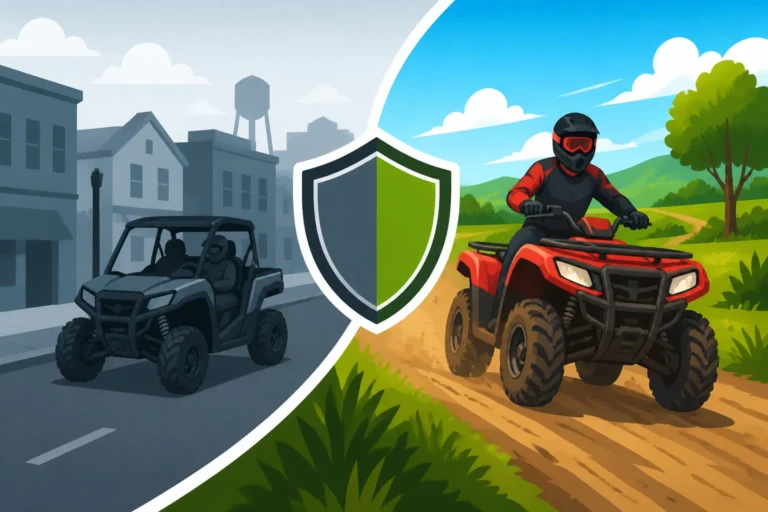
Why the Rule Follows a Rider Everywhere
It’s a common misconception among off-road vehicle enthusiasts here in Indiana: many folks believe that the rules and regulations for ATVs and UTVs only apply when you're out on public trails or designated riding parks. The truth is, that's often not the case at all. This guide will dive deep into why many critical Indiana ORV rules follow you wherever you ride, even on your own property, helping you stay safe and compliant.
Understanding Indiana's Broad Reach for ORV Rules
When you think about laws governing off-road vehicles, it's easy to assume they're primarily designed for controlling public land use or road interactions. After all, that's where you typically encounter wardens or law enforcement. However, Indiana's approach to ORV regulation is far more comprehensive, rooted in a fundamental commitment to safety that transcends property lines. Many core statutes are written with the intent that they apply universally, ensuring a baseline of safety regardless of where the wheels hit the dirt.
This broad application means that simply owning private land or having exclusive access to a field doesn't automatically exempt you from certain state-mandated safety precautions. The state has an interest in protecting its citizens from injury, and this protective stance extends to activities that carry inherent risks, like off-road riding, even when conducted away from public scrutiny. It's not about dictating how you use your land, but rather ensuring that certain safety standards are met by operators and passengers, especially those most vulnerable.
The "Wherever Operated" Clause
One of the key phrases you'll find woven into Indiana's ORV statutes, and indeed many other safety-focused laws, is language that translates to "wherever operated." This simple yet powerful phrasing is what extends the reach of many regulations beyond just public recreation areas. It means that if a rule states it applies "to an off-road vehicle wherever operated," it doesn't matter if you're on a DNR-managed trail, a county road opened for ORVs, or the back forty of your own farm—the rule is still in effect.
For instance, consider the laws around helmets for young riders or the age restrictions for operators. These aren't just suggestions for when you're at Redbird or Interlake. They are often mandated by law to apply generally. This is a crucial distinction, as many riders, particularly those new to the sport or those who stick to private property, can easily overlook this pervasive nature of the law. Ignoring it, even on what you consider your private domain, can lead to fines, citations, or worse, serious injuries that could have been prevented. It's about recognizing that the vehicle itself, and the act of operating it, triggers these safety requirements, not merely the location.
Protecting Riders, Not Just Property
The legislative intent behind these "wherever operated" rules is clear: it's about rider safety first and foremost, particularly for those who are considered minors. The state isn't just trying to manage traffic flow or preserve environmental resources on public lands; it's actively working to minimize accidents, reduce severe injuries, and ensure that anyone operating or riding an ORV is doing so under reasonable safety conditions. This focus shifts the legal perspective from "where are you riding?" to "how are you riding, and are you meeting basic safety requirements?"
This is especially true when it comes to the safety of children. Indiana law places a high priority on protecting minors, and that protection doesn't magically disappear when a child rides off public land. The state considers the inherent risks of ORV operation and sets minimum safety standards to mitigate those risks for young individuals. Furthermore, this protective stance extends to liability. As an ORV owner or the adult supervising a minor, you can be held responsible for injuries or damages if these universally applied safety rules are disregarded, even on private property. For more on this, you can look into [Why an Indiana Owner Is Liable]. Understanding this underlying principle helps explain why certain rules seem to "follow" you everywhere.
Key Rules That Travel With You
Indiana has several core ORV regulations that aren't tied to specific locations but rather to the operation of the machine itself, or to the age and safety of the rider. These are the rules that truly "follow you everywhere" and are essential for every ORV owner and operator in the state to understand and adhere to, regardless of their intended riding spot.
Helmet Requirements for Minors
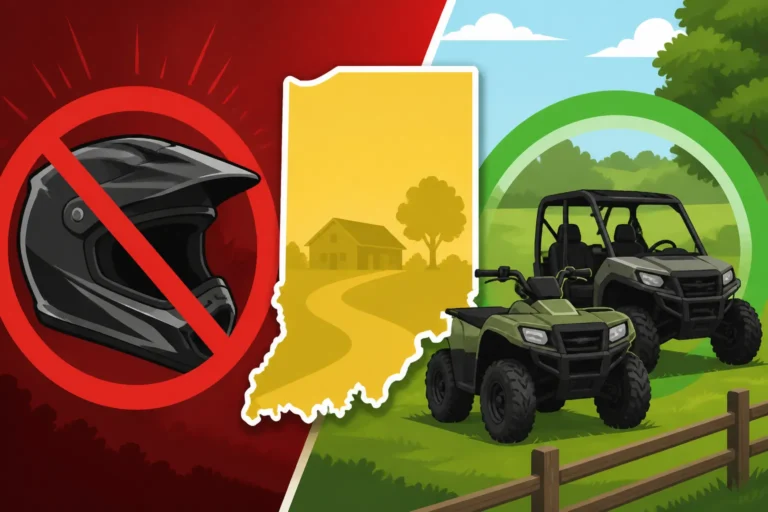
Perhaps one of the most widely misunderstood, yet consistently applied, rules is the helmet requirement for younger riders. In Indiana, anyone operating or riding as a passenger on an ORV who is under the age of 18 is legally required to wear a protective helmet. This isn't just for designated trails or when you're crossing a road; this rule applies "wherever operated." So, if your 16-year-old is tearing up the dirt track you built in your backyard, or your 12-year-old is learning to ride a youth ATV in the back forty, they must wear a helmet.
The law is firm on this point because head injuries are among the most serious and preventable outcomes of ORV accidents. The type of helmet matters, too. It needs to be a protective helmet designed for motorcycle or ORV use, meeting Department of Transportation (DOT) standards. A bicycle helmet or a novelty helmet simply won't cut it and won't provide the necessary protection. If you're curious about the specifics, check out [Indiana Helmet Law for Riders Under 18] and [Why a Novelty Helmet Fails at the Interlake Gate]. Always ensure your helmet fits properly and is in good condition.
Age and Supervision Requirements
Another set of critical rules that apply universally are those pertaining to age restrictions and required supervision for young riders. Indiana law is very specific about who can operate an ORV and under what conditions, especially for those under 16 years of age. Generally speaking, a child under 14 years old must be under the direct supervision of an adult who is at least 18 years old. This isn't supervision from the porch while they're out in the field; it means direct, immediate supervision, often within sight and earshot.
For riders aged 14 and 15, while they might have a bit more freedom, they still often require adult supervision or specific certifications, depending on the exact scenario and location. These age and supervision mandates are in place for the safety of the minor, regardless of whether they are on public land, a friend's property, or your own farm. The intent is to ensure that young, inexperienced riders have guidance and immediate assistance should they encounter difficulties. For detailed information, consult [Indiana Rules for a Rider Under 14] and [Indiana Supervision Rules for Minors]. It’s a crucial aspect of responsible ORV ownership.
General Safe Operation Principles
Beyond specific age and helmet rules, a broader set of general safe operation principles also travels with you everywhere. These include fundamental laws against reckless operation, operating under the influence of alcohol or drugs, and causing damage to property or the environment. Just as you can receive a DUI in a car on private property if it's accessible to the public (like a parking lot), the rules regarding operating an ORV while impaired apply widely. The safety of yourself and those around you is paramount, regardless of the setting.
Operating an ORV in a careless or dangerous manner, whether that's performing stunts in a crowded area of your property where others might be present, or driving at excessive speeds without regard for terrain or visibility, can also lead to legal repercussions. These principles are part of a larger framework designed to ensure that ORVs are operated responsibly and safely. Understanding [Indiana DUI Rules for ORV Riders] can further clarify these pervasive safety expectations.
Practical Implications for Indiana ORV Owners
Recognizing that many ORV rules apply universally has significant practical implications for every owner in Indiana. It's not just about avoiding fines; it's about fostering a culture of safety and responsibility that protects everyone involved.
Equipping for Compliance
Since safety rules apply everywhere, properly equipping your ORV and its riders becomes non-negotiable, not just when you're heading to a state park. This means investing in and consistently using the correct safety gear for every rider, especially minors. Helmets (DOT-compliant, remember!), eye protection, gloves, sturdy footwear, and long pants are all essential. Think of it as standard operating procedure, whether you're at Redbird SRA or just running errands around your property on your side-by-side.
Beyond personal gear, consider your machine itself. Are your lights fully functional for those dusk rides on the back forty? Is your horn working? What about a good set of side mirrors for better situational awareness, or a durable windshield to protect against debris? Companies like SuperATV offer a wide array of aftermarket accessories that not only enhance the performance of your machine but also significantly boost safety and compliance. Upgrading your ORV with items like reinforced A-arms, robust skid plates, or even brighter LED lighting can make your machine safer and more enjoyable to ride, regardless of the terrain.
Educating Young Riders and Supervisors
The onus of understanding and enforcing these "everywhere" rules largely falls on parents, guardians, and any adult supervising minor riders. It's not enough to simply hand a child a helmet and tell them to "be careful." You need to actively educate them about Indiana's specific age, helmet, and supervision laws. This ongoing education should happen before they even climb aboard and continue with every ride.
Consider taking a formal safety course. While Indiana doesn't always mandate an ATV safety course for all riders, it's highly recommended, especially for beginners and younger operators. These courses teach critical riding techniques, hazard awareness, and responsible operating practices that can literally save lives. You can find more information about available options at [Indiana ATV Safety Course Options]. Moreover, if you're supervising a young rider, make sure you understand the nuances of "direct supervision" and are always prepared to intervene.
The Importance of Registration and Titling
While riding strictly on private property that you own and control may, in some very specific circumstances, not require ORV registration, the moment your machine interacts with any public land—be it crossing a road, utilizing a public access point, or trailering it down a highway—registration and titling become absolutely essential. Think of registration as your machine's ID card and title as its birth certificate. They prove ownership and demonstrate that your ORV meets state requirements.
For any kind of trail riding on state property or even many private parks that are open to the public, an Indiana ORV registration decal is required. Without it, you could face penalties, as detailed in [Indiana Fines for an Unregistered ORV]. It’s a foundational requirement that, while not strictly tied to "wherever operated" in every single instance of private land use, becomes critical for nearly all other riding scenarios. Make sure you understand [Registering an ORV in Indiana] and [Titling an ORV in Indiana] to ensure your machine is fully legal for Indiana's trails and roads.
Navigating Local Ordinances and Property-Specific Rules
While state law provides a foundational layer of rules that "follow a rider everywhere," it's crucial to remember that this isn't the only layer of regulation. Local governments and private property owners often have the authority to implement additional rules, though they generally cannot make rules that are less restrictive than state law.
County and City Ordinances
Many Indiana counties and cities have their own ordinances regarding ORV use, especially concerning riding on public roads within their jurisdiction. These local rules can specify things like:
- Which roads are open or closed to ORVs.
- Specific operating hours.
- Additional lighting or safety equipment requirements.
- Insurance mandates.
- Age restrictions that might be stricter than state law (e.g., some counties require operators to be 18 to ride on designated county roads, even if state law allows a 16-year-old with a license).
It's absolutely essential to research the specific ordinances for any county or city where you plan to ride. What's allowed in one county might be strictly prohibited just across the line. These local rules act as an overlay to state law. For guidance on how to find this information, refer to [How to Find an Indiana County ORV Ordinance]. Don't assume that because your machine is state-legal, it's automatically legal on local roads.
Private Property & Landowner Permissions
When riding on private property that isn't your own, the rules are again layered. The state's "wherever operated" safety rules (helmets for minors, supervision, DUI laws, etc.) still apply. However, the landowner has the absolute right to impose additional rules or restrictions. For example:
- They can forbid riding after dark, even if your lights are legal.
- They can require specific safety gear beyond state minimums.
- They can designate specific trails or areas where riding is allowed or prohibited.
- They can restrict certain types of machines (e.g., no full-size UTVs).
Crucially, a landowner cannot grant you permission to violate state law. They can't tell you it's okay for your 10-year-old to ride without a helmet on their land if state law requires one. Always obtain explicit permission before riding on someone else's property, and make sure you understand and agree to their specific rules in addition to all applicable state and local laws. Learning more about [Indiana Landowner Permission Rules] can help clarify this important aspect of private land riding.
Understanding these layers—state, local, and private landowner—is key to being a responsible and compliant ORV enthusiast in Indiana.
| Rule Category | Applies Universally (Wherever Operated) | Specific to Public Land/Road Use | Potential Local Overlays (Stricter) |
|---|---|---|---|
| Helmet Requirement | Riders under 18 | No change | No (state law is firm) |
| Age/Supervision | Minors (under 14, 14-15) | No change | Yes (e.g., 18+ for county roads) |
| DUI/Reckless Op. | Yes | No change | No (state law is firm) |
| Registration Decal | Not strictly on private land only | Yes, for public trails/roads | No change |
| Titling | Proof of ownership | Often required for registration | No change |
| Spark Arrestor | Recommended always | Often required for public trails | No change |
| Insurance | No state-wide requirement | Yes, if county ordinance requires | Yes (e.g., Vanderburgh County) |
| Road Crossing Rules | N/A | Yes, specific rules apply | Yes (e.g., specific intersections) |
| Trail Permit | N/A | Yes, for state ORV parks | N/A (park-specific) |
Disclaimer
This article is for general informational purposes only and does not constitute professional advice. Laws, prices and regulations vary by location and change over time. Consult a qualified professional for guidance on your specific situation.