Hancock County’s Open County Roads
Navigating the rules for riding your ATV or UTV on public roads in Indiana can feel like trying to solve a puzzle with missing pieces. One moment you're dreaming of a scenic drive, the next you're bogged down in conflicting information about which county allows what. It's truly frustrating to just want to enjoy your machine only to face a maze of ordinances. This comprehensive guide is here to untangle that confusion, specifically focusing on the ins and outs of riding your off-road vehicle on Hancock County's open county roads, offering clear, actionable insights so you can ride with confidence and stay on the right side of the law.
The Frustration of Indiana's Patchwork ORV Road Rules
Let's be real, the world of off-road vehicle (ORV) regulations in Indiana can be incredibly perplexing. You bought your quad or side-by-side for adventure, for the thrill of the trail, or perhaps for practical work around your property. The idea of being able to legally drive it down a quiet county road to a friend's house or a local store, even just occasionally, is incredibly appealing. However, the reality often hits hard when you start digging into the rules. The state has one set of guidelines, but then counties have their own, and navigating this patchwork can feel like a full-time job. It’s enough to make anyone throw their hands up in exasperation.
Why County-Specific Rules Are So Confusing
The primary source of this confusion stems from Indiana's approach to ORV road use. Unlike some states where a blanket law covers everything, Indiana gives individual counties the power to decide whether to open their roads to ORVs. This means that driving your UTV down a road that's perfectly legal in, say, Hancock County, could land you a hefty ticket just across the county line in a place with different rules. Imagine living near a county border and constantly having to second-guess if the road ahead is permissible. It's a mental burden that takes away from the pure enjoyment of riding. Many riders wish for a more uniform approach, but for now, knowing your specific county's stance is paramount.
The Default: Roads Are Closed (Unless Declared Otherwise)
It’s crucial to understand that, by default, most public roads in Indiana are closed to ORVs. This isn't a suggestion; it's the law. Indiana Code states that an ORV generally cannot be operated on a public highway unless it's specifically designated for such use by a local ordinance. This means if you don't see an explicit declaration from a county or municipality allowing ORVs on their roads, you should assume it's off-limits. This default closure is often the source of initial disappointment for new ORV owners, who might assume they can just jump on any road like a regular car. The burden of proof, so to speak, is on the rider to know which roads are open. This is why knowing about specific exceptions, like Hancock County's Open County Roads, is so valuable.
Your Drive to Understand Local Ordinances
Because of this "closed by default" principle, the responsibility falls squarely on you, the ORV owner, to research and understand the specific ordinances of any county you plan to ride in. This isn't always easy. County websites can be difficult to navigate, and sometimes the language of the ordinances themselves can be a bit dry and legalistic, not exactly light reading after a long day. You might find yourself scouring county commissioner meeting minutes or planning department documents, just hoping to stumble upon the relevant section. This effort, however, is non-negotiable if you want to avoid fines or legal trouble. It's a small price to pay for the freedom to ride, but it's a frustration many ORV enthusiasts share.
Hancock County's Approach to ORV Road Use
Now, for some good news for those of you in or around Hancock County! Unlike many areas where the struggle is real to find any open roads, Hancock County has taken a more welcoming stance towards off-road vehicles. This doesn't mean it's a free-for-all, but it certainly offers more opportunities for riders to connect trails, access services, or simply enjoy a scenic cruise without the constant worry of breaking the law. Understanding the specifics of their ordinance is key to utilizing this freedom responsibly.
Hancock County's Open Road Stance
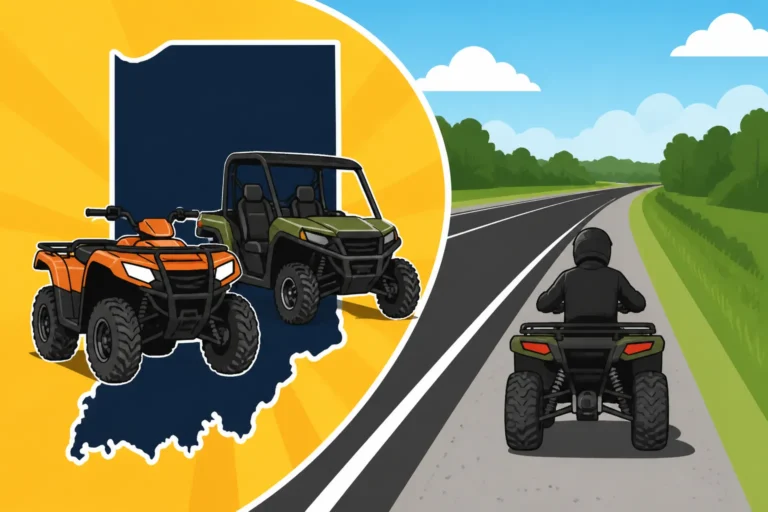
Hancock County stands out as one of the Indiana counties that has adopted an ordinance to open many of its county roads to ORVs. This is a significant distinction and a real boon for local riders. What this essentially means is that within the designated network of county roads, you can operate your ATV or UTV, provided you meet all the state-level requirements for registration, equipment, and operator age. This forward-thinking approach from the county commissioners recognizes the growing popularity of ORVs and the desire of residents to use their machines for recreation and transportation within appropriate boundaries. It provides a much-needed outlet for riders who might otherwise feel confined to private property or dedicated trail parks.
What Roads Are Included in Hancock County
When we talk about "Hancock County's open county roads," it's vital to clarify what falls under that umbrella. Generally, this refers to roads maintained by the Hancock County Highway Department. It's important to understand that this typically excludes state highways (like US-40, SR-9, or I-70 which cuts through the county) and roads within incorporated city or town limits (such as Greenfield, Fortville, New Palestine, or McCordsville). These specific exclusions are common even in counties with open road policies, as state highways fall under state jurisdiction and city streets under municipal control. Therefore, while you might be able to ride a county road right up to the boundary of a town, you'll likely need to know where to stop or transition. Always assume that high-traffic arterial roads and busy downtown areas are off-limits, focusing instead on the quieter, less-trafficked rural county roads that truly form the backbone of the county's open ORV network.
Checking for Updates and Specific Designations
Even with a generally open policy, the legal landscape for ORV use can sometimes shift, and it’s always wise to stay informed. County ordinances, while usually stable, can be amended, or specific roads might be temporarily closed or have restrictions placed on them due to construction, special events, or safety concerns. Therefore, before you head out, especially if it’s been a while since your last ride or if you're new to the area, it's a good practice to check the official Hancock County website or contact the County Highway Department. They can provide the most current information regarding their ORV ordinance and any specific road designations or temporary closures. This proactive step ensures you're riding safely and legally, avoiding any unexpected surprises that could put a damper on your adventure. It's your responsibility as a rider to be up-to-date.
Essential Requirements for Riding ORVs on Hancock County Roads
Even with Hancock County’s open road policy, operating your ATV or UTV on public roads isn't just a matter of hopping on and going. You still need to adhere to a crucial set of state-mandated requirements that ensure your machine is safe, properly registered, and your operating skills meet basic standards. Overlooking any of these steps could lead to fines, inconvenience, or even serious safety issues, negating the very freedom that the county's ordinance provides.
Indiana State Registration and Decal
The first and most fundamental requirement for riding your ORV on any public road in Indiana, including those in Hancock County, is proper state registration. This isn't optional; it's the law. Your ATV or UTV must be registered with the Indiana Bureau of Motor Vehicles (BMV), and you'll receive an official [Indiana ORV Decal Explained] that needs to be prominently displayed on your machine. This decal serves as proof that your vehicle is legally recognized by the state. The registration process itself involves submitting paperwork and paying a fee, and it's something many dealers can help facilitate when you purchase a new machine. For used machines, you’ll typically handle this at a local license branch. Without that valid registration and decal, even on an open county road, you're looking at a potential citation. Remember, [Registering an ORV in Indiana] is a critical first step for any public land or road use.
Operator Age and Supervision Rules
Indiana has specific age requirements and supervision rules that apply to ORV operators, particularly minors. Generally, you need to be at least 14 years old to operate an ORV. However, for those under 18, there are stricter guidelines, including the mandatory wearing of a helmet (which we'll cover next). For very young riders, often under 14, direct supervision by an adult is usually required, and in some contexts, specific safety training might be recommended or even mandatory. It’s important to familiarize yourself with these nuances to ensure everyone riding your machine, especially younger family members, is doing so legally and safely. For instance, [Indiana Minimum Age to Ride an ORV] outlines these rules in detail, and understanding [Indiana Supervision Rules for Minors] is crucial if you have children who ride.
Helmet and Safety Gear Mandates
Safety is paramount when operating an ORV, especially on roads shared with other vehicles. In Indiana, there's a strict [Indiana Helmet Law for ORV Riders] that mandates helmets for all operators and passengers under the age of 18. This isn't just a suggestion; it's a legal requirement designed to protect young riders. Even for adults aged 18 and over, while a helmet might not be legally mandated on every single type of ORV on public roads (for example, some enclosed UTVs have exceptions), it is always, always recommended. Beyond helmets, wearing appropriate safety gear like eye protection, gloves, long pants, and sturdy footwear can significantly reduce the risk of injury in the event of an accident. Think of it as investing in your safety and comfort; you wouldn't ride a motorcycle without a helmet, so why an ORV on a public road?
Machine Equipment Requirements
To be considered road-ready for Hancock County's open roads, your ORV needs to be equipped with certain functional components that ensure visibility and safe operation. This typically includes:
- Headlights and Taillights: These must be operational, especially if riding at dusk, dawn, or night. Many ORVs come standard with these, but it’s crucial to ensure they’re working correctly.
- Brakes: Your braking system must be in good working order, capable of stopping the machine safely and effectively.
- Muffler and Spark Arrester: Your ORV must have a functional muffler to keep noise levels reasonable and a spark arrester to prevent forest fires, particularly important in dry conditions or near vegetated areas.
- Reflectors: Additional reflectors may be required to enhance visibility from all angles.
- Mirrors: Side mirrors are often a requirement for any vehicle operating on public roads, allowing the operator to see traffic behind them.
- Turn Signals and Horn: While not standard on all ORVs, these are often necessary for road legality. Aftermarket kits from companies like SuperATV can provide robust, easy-to-install turn signals and horns, transforming your trail machine into a more road-appropriate vehicle. Investing in these essential safety upgrades is not only about compliance but also about making your presence known to other motorists and signaling your intentions clearly.
Ensuring your machine is properly equipped for road use is as important as its registration. Don't leave it to chance.
General Indiana ORV Road Riding Rules (Applicable in Hancock County)
While Hancock County has generously opened its roads to ORVs, remember that this freedom comes with responsibility. You're not just riding on a private trail anymore; you're sharing the space with cars, trucks, and possibly pedestrians and cyclists. This means that beyond the specific county ordinance, a host of general Indiana traffic laws and safety principles still apply. These rules are designed to keep everyone safe and ensure a smooth flow of traffic, so understanding and adhering to them is absolutely critical.
Speed Limits and Safe Operation
When you're out on a Hancock County road, your ORV is subject to the same posted speed limits as any other vehicle. Just because your side-by-side can handle rough terrain at speed doesn't mean it should be pushed to its limits on pavement or gravel roads. In fact, many ORVs are not designed for high-speed road travel, and their handling characteristics can be significantly different and less stable than a conventional car or truck at higher speeds. Always drive at a safe and appropriate speed for the conditions, whether that's the posted limit, or slower if visibility is poor, the road is unpaved, or traffic is heavy. The goal is responsible, predictable driving that minimizes risk for yourself and others.
Yielding and Right-of-Way
All standard traffic laws regarding yielding and right-of-way apply to ORV operators on Hancock County roads. This means stopping at stop signs, obeying traffic signals, yielding to pedestrians, and giving way to oncoming traffic when making left turns. You are expected to operate your ORV as a conventional vehicle in traffic. This might seem obvious, but sometimes, after a day on the trails, it's easy to forget the structured rules of the road. Be predictable, use your signals (if equipped), and always assume other drivers might not be expecting an ORV. Courtesy and defensive driving are your best friends on public roads.
Prohibited Areas: State Highways and Limited Access Roads
Even in a county with an open road policy like Hancock, there are strict limitations on where you can and cannot ride. State highways, US routes, and especially limited-access highways like interstates (I-70, for instance) are almost universally off-limits to ORVs. These roads are designed for high-speed, multi-lane traffic, and ORVs simply aren't suited for them, both in terms of speed capability and safety. Attempting to ride your ORV on a state highway, even for a short distance, can result in severe penalties and put you in an extremely dangerous situation. Always plan your routes to avoid these major thoroughfares. It's a key distinction, and understanding [Why Limited-Access Highways Stay Closed] to ORVs is vital for safe and legal riding.
The Shoulder and Ditch Exception in Indiana
It's worth noting that even in counties where roads are not generally open to ORVs, Indiana law does allow for some limited use of shoulders and ditches under very specific circumstances. This is often misunderstood, so let's clarify. If a county has not opened its roads, you might be permitted to ride an ORV on the far right of the paved portion of a public highway, or on the shoulder, or in the ditch. However, this is usually only allowed if there's sufficient width (typically at least five feet) to ride away from traffic, and it's primarily for purposes like reaching private property or accessing specific trails. It's a narrow exception, not a blanket permission, and it's always secondary to a county's explicit "open road" ordinance. In Hancock County, where county roads are open, you can generally ride in the traffic lane, but knowing the nuances of [The Shoulder and Ditch Exception in Indiana] and specifically [Riding a Ditch Beside a Hancock County Road] can be helpful context for understanding the broader ORV landscape in the state. Always prioritize riding on the designated open roads within the county's ordinance.
What to Expect When Riding in Hancock County
Riding your ORV on public roads in Hancock County can be a fantastic experience, but it’s important to be prepared for the realities of interacting with the public and local authorities. This isn't just about knowing the rules; it's about understanding how those rules are enforced and how you, as a responsible rider, should conduct yourself. A little preparation and awareness can go a long way in ensuring your rides are enjoyable and free of unexpected hassles.
Interaction with Law Enforcement
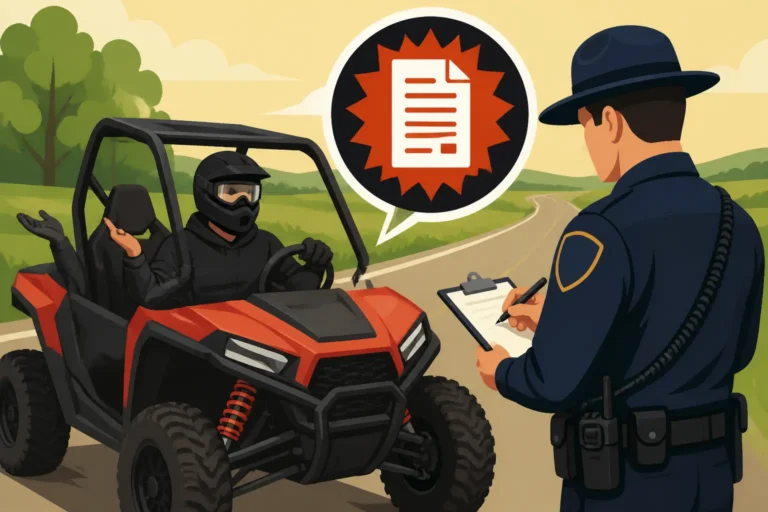
If you’re riding your ORV on Hancock County roads, there’s always a possibility you might be stopped by a local sheriff’s deputy, state police officer, or a conservation officer. This isn't necessarily a sign you've done something wrong; officers often conduct routine checks to ensure compliance with ORV laws, especially in areas where road use is permitted. When stopped, remain calm and cooperative. Have your required documents readily accessible, including your ORV registration certificate, proof of insurance (if you carry it, which is highly recommended), and your driver's license if you have one (not always required for ORV operation but good to have). Be polite, answer questions truthfully, and avoid arguing. A positive interaction can often resolve any initial concerns quickly. Understanding [What an Indiana Officer Checks Roadside] can help you feel more prepared for such an encounter.
Sharing the Road with Other Vehicles
One of the biggest adjustments when taking your ORV from the trail to the road is sharing the space with other types of vehicles. Cars and trucks are often faster, heavier, and less maneuverable than your ORV, and their drivers might not always be expecting to see an ATV or UTV. Therefore, defensive driving is key. Stay to the right, allow faster vehicles to pass, use your signals early and clearly, and maintain a safe following distance. Be particularly cautious on curves, hills, and at intersections. Eye contact with other drivers can help ensure they see you. Remember, while you have the right to be on designated county roads, you also have the responsibility to do so safely and courteously, minimizing any potential for conflict or accidents.
Potential Fines and Penalties
Operating an ORV illegally on public roads in Indiana, even unintentionally, can lead to significant consequences. [Indiana Fines for Illegal ORV Road Use] can range from moderate to substantial, depending on the severity of the offense. For instance, operating an unregistered machine or riding on a prohibited road could result in a significant citation. Repeat offenses often lead to escalated fines and could even involve impoundment of your vehicle in extreme cases. Beyond the financial impact, there's the inconvenience of court appearances, potential points on your driving record (if applicable), and the stress of dealing with legal matters. The best way to avoid these penalties is to thoroughly understand and strictly follow all state and local ORV laws, especially in Hancock County where the privilege of road riding is extended to you.
Preparing Your Machine for Hancock County Roads
Getting your ATV or UTV ready for road riding in Hancock County involves more than just having the correct paperwork. It's about ensuring your machine is physically prepared for the demands of paved or gravel surfaces and the increased safety considerations that come with sharing roads with other vehicles. A little bit of proactive maintenance and thoughtful accessorizing can make a huge difference in your safety, compliance, and overall enjoyment.
Pre-Ride Checks and Maintenance
Before every ride, and especially before taking your ORV on public roads, a thorough pre-ride inspection is non-negotiable. Think of it like a pilot's checklist. Check your tire pressure: road riding often benefits from slightly higher pressure than trail riding for better handling and wear. Inspect your brakes for proper function and wear, ensuring they can stop your machine effectively on harder surfaces. Verify that all your lights – headlights, taillights, brake lights, and any aftermarket turn signals – are operational and clean. Check fluid levels, battery terminals, and the overall condition of your steering and suspension components. A well-maintained machine is a safe machine, and mechanical failures on a public road can be far more hazardous than on a private trail.
Essential Accessories for Road Riding
While many ORVs come trail-ready, they might lack some critical components for legal and safe road use. This is where strategic accessorizing comes into play. As mentioned before, if your ORV doesn't have them built-in, you'll likely need:
- Side Mirrors: Crucial for situational awareness, allowing you to see traffic behind you without constantly turning your head. Many aftermarket options are available, designed to withstand the rigors of off-road use while providing road visibility.
- Turn Signals: Essential for clearly communicating your intentions to other drivers. Kits are available that integrate seamlessly with your ORV's electrical system, often from brands like SuperATV, which offers a wide range of durable and effective SuperATV accessories to make your ORV road-legal and safe.
- Horn: A loud and clear horn is vital for alerting other drivers or pedestrians to your presence.
- Windshield: While not always legally mandated, a full or half windshield can greatly enhance rider comfort by deflecting wind, dust, and road debris, making for a much more pleasant road experience.
- DOT-Approved Tires: Some jurisdictions may require tires that are DOT (Department of Transportation) approved for road use. While many ORV tires are excellent off-road, their specific tread patterns and construction might not be ideal or legal for prolonged paved road use. Always check your tire ratings.
These accessories aren't just about compliance; they significantly improve your safety and the safety of those around you when sharing Hancock County's roads.
Insurance Considerations for Road Use
While Indiana state law doesn't always mandate liability insurance specifically for ORVs, riding your machine on public roads significantly changes your risk profile. Many counties, even those with open road policies, may require proof of insurance as part of their local ordinance to operate an ORV on public thoroughfares. Even if not explicitly required by Hancock County, having robust ORV insurance is a tremendously smart decision. A simple fender-bender with a car on a county road could lead to substantial financial liability if you're uninsured. Your existing auto policy likely doesn't cover your ORV, so check with your insurance provider about dedicated [Indiana ORV Insurance Requirements] that specifically cover road use. Protecting yourself, your machine, and others on the road is always worth the investment.
ORV Road Riding Requirements in Hancock County
Here’s a quick overview of the key requirements and considerations for riding your ORV on designated county roads in Hancock County, Indiana.
| Requirement | Indiana State Law (General) | Hancock County (Specific) | Notes |
|---|---|---|---|
| Registration & Decal | Required (BMV) | Required | State-issued registration and decal must be displayed. |
| Roads Allowed | Closed by default | Open (County Roads) | Excludes state highways, city/town streets. Always verify the latest county ordinance. |
| Operator Age | 14+ (general), 18+ (unsupervised) | Adheres to State Law | Riders under 18 have specific supervision and helmet rules. |
| Helmet | Required for under 18 | Required for under 18 | Highly recommended for all riders, regardless of age, when on public roads. |
| Lights | Headlight, taillight, brake light | Required (functional) | Essential for visibility, especially during low-light conditions. |
| Brakes | Functional | Required | Must be in good working order for safe stopping on various surfaces. |
| Muffler/Spark Arrester | Required | Required | For noise reduction and fire prevention. |
| Mirrors | Varies (often required for road use) | Recommended / Often Required | Essential for seeing traffic behind you. Aftermarket options (e.g., SuperATV) can be added. |
| Turn Signals | Varies (often required for road use) | Recommended / Often Required | Critical for communicating intentions to other drivers. Aftermarket kits are common. |
| Horn | Varies (often required for road use) | Recommended / Often Required | For alerting others to your presence. |
| Speed Limits | Same as other vehicles | Adheres to Posted Limits | Drive safely and appropriately for conditions, ORV capabilities, and traffic. |
| Insurance | Not always state-mandated | Recommended / May be Required | While not always required by state law, county ordinances may mandate it. Always a good idea for liability protection. Check your policy! |
| DOT-Approved Tires | Varies by local enforcement | Recommended | While specific state law may not require them, some jurisdictions prefer them for road use. Check tire ratings. |
Disclaimer
This article is for general informational purposes only and does not constitute professional advice. Laws, prices and regulations vary by location and change over time. Consult a qualified professional for guidance on your specific situation.