What Riding Without a BMV Decal Costs You
It's easy to get excited when you finally get your hands on a new-to-you ATV or UTV, especially if you snagged it in a private sale. The first thing you want to do is hit the trails or explore your own property. But before you do, forgetting or postponing that all-important Indiana BMV decal can quickly turn a fun outing into a frustrating, and expensive, encounter with the law. This guide will walk you through the various costs and complications you could face if you're caught riding an unregistered off-road vehicle in the Hoosier State.
The Immediate Consequences of Riding Without a Decal
Let's face it, nobody wants to be pulled over, especially when you're just trying to enjoy your machine. But if you're riding your ORV anywhere other than your own private property without a valid, visible BMV decal, you're opening yourself up to some immediate and often unwelcome consequences. This isn't just a minor oversight; Indiana views it as a serious infraction.
The Initial Fine You'll Face
The most direct and immediate cost you'll likely incur is a monetary fine. Imagine you're out enjoying a beautiful Saturday at Redbird Off-Road State Recreation Area or even just riding a designated county road, and a conservation officer or local law enforcement pulls you over. One of the first things they'll look for is that official Indiana BMV decal clearly displayed on your machine. If it's missing, expired, or improperly placed, you're looking at a ticket. This isn't a friendly warning in most cases; it's a formal citation that comes with a specific dollar amount attached. The exact figure can vary, but it's never a trivial sum. It's designed to be a deterrent, making the cost of not registering far greater than the actual [Indiana ORV Registration Cost]. This is why knowing [What Riding Without a BMV Decal Costs You] is so important.
Understanding the Class C Infraction
In Indiana, riding an unregistered ORV is typically classified as a Class C infraction. Now, what does that mean for you? An infraction isn't a criminal charge, but it's not something to brush off either. It's similar to a serious traffic ticket. You'll receive a citation, and you'll be required to pay the fine. If you dispute it, you might have to appear in court. Unlike a parking ticket, a Class C infraction carries more weight and can lead to escalating penalties if ignored or if it becomes a repeat offense. This classification highlights that the state takes ORV registration seriously, viewing it as a matter of public safety and proper identification. It's not just about the money; it's about adhering to the regulations designed to keep everyone safe and trails maintained. This is where you might find yourself needing to gather various documents, and services like LawDepot could potentially assist with preparing affidavits or other legal forms if your case required further documentation, though for a simple infraction, usually a fine is the primary outcome.
Potential Impoundment of Your Machine
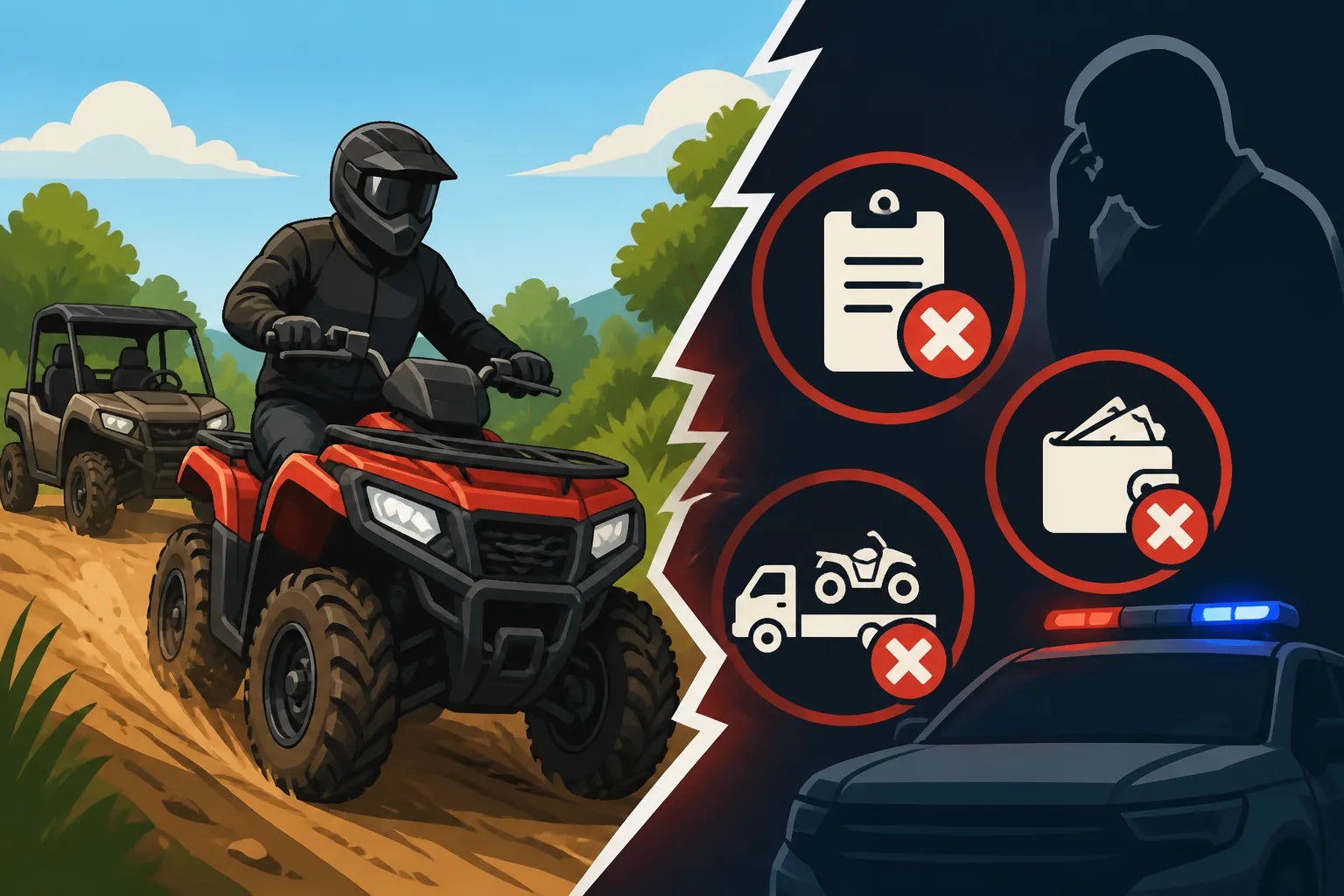
Here's where things can get really inconvenient and expensive. Depending on the circumstances, the officer who pulls you over has the discretion to impound your off-road vehicle. Think about that for a moment: your cherished quad or side-by-side, which you invested your hard-earned money in, could be towed away right there on the spot. This isn't just a possibility; it happens. An impoundment means you're not only facing the initial fine, but you'll also be responsible for towing fees, daily storage fees at the impound lot, and possibly administrative fees from the law enforcement agency. These costs can quickly add up, easily surpassing the initial fine and making the registration fee look like pocket change. Imagine trying to explain that to your family after a weekend trip goes awry because your machine wasn't properly registered. It's a massive headache and an entirely avoidable situation. This is why knowing [What an Indiana Officer Checks Roadside] can help you be prepared.
Beyond the Fine: Escalating Penalties and Legal Headaches
The immediate impact of a fine and potential impoundment is significant, but the repercussions of riding without a BMV decal in Indiana can extend far beyond that initial encounter. Ignoring the rules or making repeat mistakes can lead to more severe penalties and a deeper dive into legal complexities that nobody wants to navigate.
Repeat Offenses and Higher Stakes
If you're caught riding an unregistered ORV more than once, the state isn't going to be as lenient. Repeat offenses typically come with significantly higher fines. That initial Class C infraction can escalate, and while Indiana laws can change, subsequent violations often mean a heavier financial burden. It’s not uncommon for second or third offenses to carry fines several times greater than the first. Furthermore, some laws can even specify court appearances becoming mandatory, potentially leading to court costs and other legal fees on top of the increased fine. It's a clear signal from the state that they expect compliance, and they're willing to make non-compliance increasingly costly. It's a stark reminder that staying compliant with [Indiana's Three-Year ORV Registration] is always the better path.
Owner Liability and Lending Your Machine
This is a crucial point that many ORV owners overlook. If you lend your machine to a friend or family member, and they get caught riding it without a proper BMV decal, guess who ultimately bears the responsibility? You, the owner, do. Indiana law holds the owner liable for ensuring their machine is properly registered and equipped before it's operated. This means even if you're not the one riding, you could be on the hook for the fines and any other penalties associated with the unregistered vehicle. Imagine the awkward conversation: "Hey, thanks for letting me borrow your quad, but I got a huge ticket and they towed it, and now you have to pay for it." It's a scenario that highlights the importance of always ensuring your machine is compliant before anyone, including yourself, takes it out. Make sure you understand [Indiana Fines for an Unregistered ORV] and [Why an Indiana Owner Is Liable].
Court Costs and Administrative Fees
Even if your machine isn't impounded, or if it's your first offense, a Class C infraction can still lead to additional financial drains beyond the base fine. If you choose to contest the ticket in court, you'll incur court costs, which can include filing fees, service fees, and potentially even attorney fees if you decide to hire legal representation. Even if you don't contest it, some jurisdictions might add administrative fees to the overall cost of the infraction. These are the hidden "gotchas" that can turn a seemingly straightforward fine into a much larger bill. It's a reminder that dealing with legal systems, even for infractions, is rarely simple or cheap. Paying the registration fee upfront, and dealing with any necessary paperwork such as what [Indiana ORV Registration Paperwork] requires, is almost always the most cost-effective approach.
Why Indiana Requires the BMV Decal in the First Place
It's easy to see vehicle registration as just another tax or bureaucratic hurdle. But when it comes to off-road vehicles in Indiana, that little BMV decal represents more than just a formality. It's part of a larger system designed to benefit all riders and ensure the sustainability of the sport. Understanding the "why" behind the requirement can sometimes make the "what" of compliance feel a bit less burdensome.
Funding Trail Maintenance and Safety Initiatives
One of the most compelling reasons for Indiana's ORV registration requirement is how the funds are utilized. A significant portion of the fees collected from ORV registrations goes directly into dedicated funds for off-road vehicle programs. What does that mean for you? It means your registration fee helps pay for the very trails you ride! These funds are used for crucial purposes like maintaining existing trails, developing new riding areas, improving signage, and implementing safety programs. Without these registrations, the resources for these vital services would dwindle, leading to degraded trails, fewer riding opportunities, and potentially less safe environments. So, that decal isn't just a permit; it's an investment in the future of ORV riding in Indiana. Knowing [Where Indiana ORV Fees Go] can make the cost feel more justified.
Identifying Ownership and Deterring Theft
Beyond funding, the BMV decal serves a practical law enforcement purpose: identification and theft deterrence. Each decal has a unique number that is linked to your machine's registration record, which includes information about the owner. If an ORV is stolen, this decal, combined with the [Indiana ORV Serial Number Requirements], becomes a vital piece of information for law enforcement to track and recover the vehicle. It provides a clear, visible indicator of legitimate ownership. Without this system, it would be much harder to differentiate between a legally owned machine and a stolen one, making it easier for thieves to operate and harder for rightful owners to reclaim their property. It's a small but powerful tool in protecting your investment and the community's assets. [Checking a VIN Before an Indiana Purchase] is a critical step for this reason.
The Simplicity of Getting Compliant
While the potential consequences of non-compliance can be daunting, the process of actually getting your ORV registered and obtaining your BMV decal is surprisingly straightforward. It's designed to be accessible to everyone, ensuring that there are no major hurdles to becoming a legal rider. You can usually take care of the registration at any Indiana BMV branch, much like you would register a car. The necessary paperwork is minimal, often just proof of ownership (like a title or [An Indiana Bill of Sale for an ORV]) and your ID. The fees are fixed, and once processed, you'll receive your decal to affix to your machine. Compared to the fines and hassles of being caught without one, the registration process is a minor inconvenience that pays major dividends in peace of mind. It's a small task that saves you a world of trouble down the line. You can find more details on [How Indiana ORV Registration Works].
Avoiding the Hassle: Getting Your ORV Registered
Nobody wants to deal with fines, impoundments, or court dates, especially when the solution is relatively simple. Getting your ORV properly registered and ensuring your BMV decal is current and visible is the best way to avoid all these headaches. It’s an easy process that guarantees peace of mind every time you hit the trails or ride on designated public lands.
Steps to a Smooth Registration Process
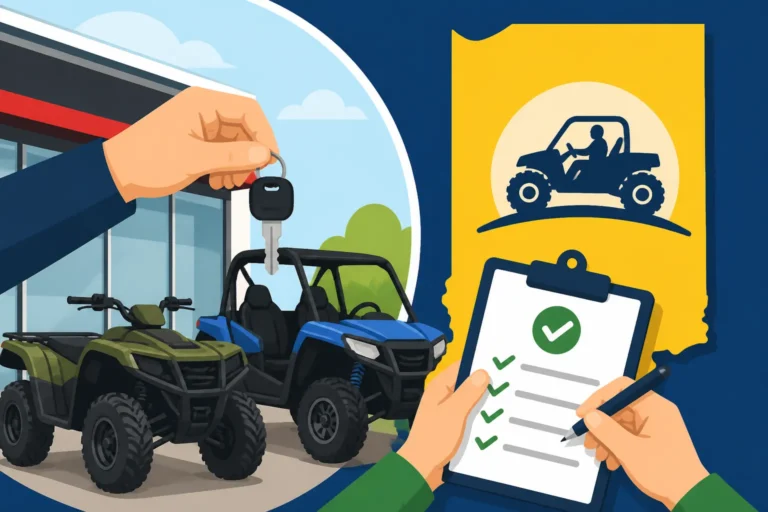
The process of [Registering an ORV in Indiana] is designed to be user-friendly. First, gather your essential documents. You'll typically need proof of ownership, which could be a manufacturer's certificate of origin (MCO), a previous title, or a bill of sale. If you're buying a used machine, make sure you get a properly filled out [An Indiana Bill of Sale for an ORV] from the seller. You'll also need personal identification. Head to your local Indiana Bureau of Motor Vehicles (BMV) branch. The staff there are accustomed to these transactions and can guide you through any specific requirements. You'll fill out a simple application form, pay the registration fee, and within a short time, you'll walk away with your temporary registration and usually receive your permanent decal in the mail. Many dealers will even handle the initial registration paperwork for you if you buy a new machine, making it even easier. It's a small time investment for years of legal riding.
Keeping Your Decal Visible and Current
Once you have your BMV decal, don't just toss it in a glove box! Indiana law specifies [Where the Indiana Decal Mounts] on your machine. It needs to be securely affixed to the forward half of your ORV, in a clearly visible location, usually on the front fender or frame. The numbers and year must be readable. If your decal gets damaged, covered in mud, or starts peeling, it's your responsibility to replace it. A faded or unreadable decal can still lead to questions from law enforcement. The [Indiana ORV Decal Explained] details these requirements. Also, remember that your Indiana ORV registration lasts for three years, so make a note of when it expires and be sure to [Renewing an Indiana ORV Registration] promptly. You don't want to get caught riding with an expired decal just because you forgot to renew. The process for renewal is even simpler than the initial registration, often doable online or by mail, ensuring you can keep riding legally with minimal fuss.
| Consequence Type | Description | Impact | Prevention |
|---|---|---|---|
| Initial Fine | Monetary penalty for an unregistered ORV (Class C infraction). | Direct financial hit, immediate, non-trivial. | Register your ORV promptly. |
| Impoundment | Vehicle towed and stored by law enforcement. | Significant cost (towing, storage), major inconvenience. | Ensure decal is valid and visible. |
| Repeat Offenses | Higher fines and potential legal escalation for subsequent violations. | Escalating financial burden, possible court mandates. | Always keep registration current. |
| Owner Liability | Owner responsible even if someone else is riding an unregistered machine. | Legal and financial burden on the owner, regardless of operator. | Verify registration status before lending. |
| Court Costs | Additional fees if cited person disputes the infraction or if it escalates. | Increased financial strain, time spent on legal matters. | Comply with registration laws from the start. |
| Lost Trail Access | Inability to legally ride on public trails and designated roads. | Missed recreational opportunities, forced to only ride private land. | Obtain and display your BMV decal. |
Disclaimer
This article is for general informational purposes only and does not constitute professional advice. Laws, prices and regulations vary by location and change over time. Consult a qualified professional for guidance on your specific situation.