Registering a Machine Bought at an Indiana Dealer
So, you've just found your dream ATV or UTV at an Indiana dealer, signed on the dotted line, and the excitement is absolutely buzzing! But then you drive off the lot, maybe with a temporary tag, and a tiny voice in the back of your head starts asking, "Okay, what now? Is it registered? What do I need to do to make it legal to hit the trails?" This guide is all about cutting through that confusion, walking you step-by-step through registering your brand-new, or even pre-owned, machine bought right here in the Hoosier State.
The Dealer's Role in Indiana ORV Registration
When you purchase an off-road vehicle (ORV) from an authorized dealer in Indiana, it often feels like they handle everything, which is mostly true for the sale itself. However, when it comes to the nitty-gritty of getting your machine officially registered with the state, there's usually a hand-off point where your responsibilities begin. Understanding what your dealer is typically accountable for and what lands in your lap is key to a smooth post-purchase process.
What Your Dealer Handles (and What They Don't)
Most reputable Indiana powersports dealers will take care of a few crucial initial steps for you. For starters, they're responsible for collecting the [Indiana's 7 Percent Sales Tax on a Machine] on your purchase. This flat rate applies statewide, with no extra county or local sales tax to worry about, making it straightforward from a tax perspective. They will also process the initial sales paperwork, which often includes completing a portion of the title application.
Many dealers will prepare the Manufacturer's Statement of Origin (MSO) or Certificate of Origin (MCO) if it's a new machine, endorsing it over to you. This is essentially the birth certificate for your ORV, proving its initial ownership straight from the factory. For used machines, they should provide you with the existing title, properly signed off by them as the seller, or an equivalent ownership document if it was an older, title-optional machine. They may even submit the title application on your behalf, especially if you financed the purchase through them, as the lienholder will need to be listed on the title.
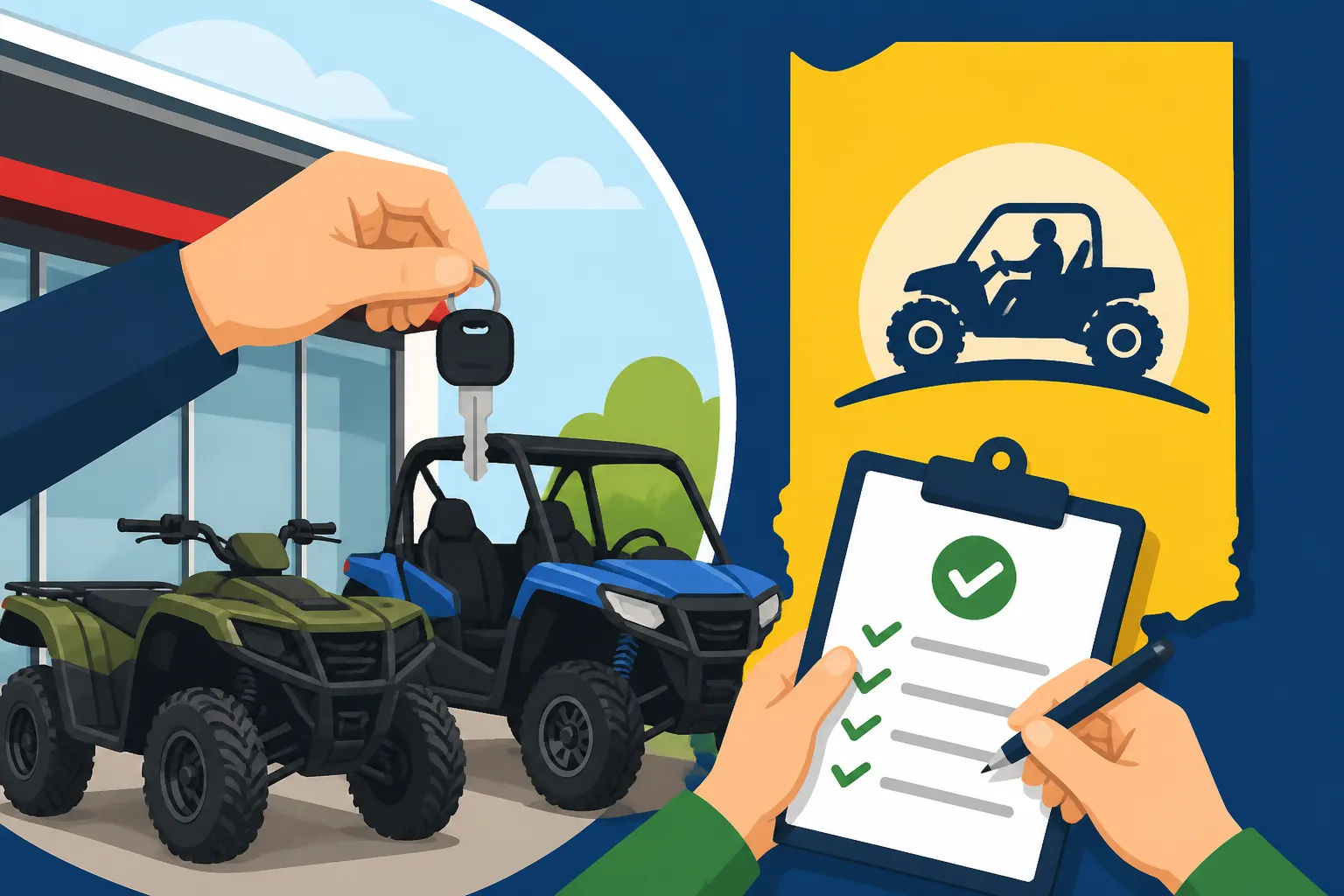
However, don't assume the dealer handles the entire registration process from start to finish. While they might help with the title application, actually getting the ORV decal for your machine often falls to you. This means you'll need to visit the Indiana Bureau of Motor Vehicles (BMV) – or a local license branch – to complete the final steps. Some dealers might offer a "full service" package that includes this, but it's essential to clarify exactly what is included in your purchase agreement before you leave the lot. Ask explicitly: "Will you be sending me my ORV decal, or do I need to go to the BMV myself?"
Paperwork You'll Get From the Dealer
When you leave the dealer, you should have a critical packet of documents in hand. Losing or misplacing these can turn your registration process into a real headache, so treat them like gold.
First and foremost, you'll receive a detailed Bill of Sale. This document confirms your purchase, lists the buyer and seller, the machine's make, model, VIN, and the purchase price. Even though dealers provide their own official versions, it’s always good practice to review it carefully. If you ever need to create a bill of sale for a private transaction down the road, knowing what a comprehensive one looks like can be helpful, and resources like LawDepot offer templates that highlight all the necessary legal components. A thorough [An Indiana Bill of Sale for an ORV] is your proof that you bought the machine.
For new machines, the Manufacturer's Statement of Origin (MSO) or Certificate of Origin (MCO) is paramount. This document transfers ownership from the manufacturer to the dealer, and then from the dealer to you. It's the first official transfer of ownership and is absolutely necessary to obtain your initial title in Indiana. Without it, you’ll be stuck.
If you bought a used ORV, the dealer will provide you with the previous owner's Indiana Certificate of Title, properly assigned to you. Make sure the dealer has signed it correctly, indicating the sale to you and recording the odometer reading if applicable. For older machines that might have been [Title-Optional Machines in Indiana] (meaning they were purchased before January 1, 2010), the dealer should provide robust proof of ownership, such as a prior registration certificate or a bill of sale that traces back through previous owners.
Finally, some dealers might provide you with a temporary operating permit or tag. This is usually only valid for a very short period—sometimes just a few days—to allow you to transport the machine home or to its storage location before you complete the full registration process. Do not rely on this temporary tag for extended riding.
Taking the Reins: Your Steps After Dealer Purchase
Once you've left the dealership with your new ORV and the essential paperwork, the ball is now in your court to ensure everything is properly titled and registered with the state of Indiana. This is where many new owners can get a little overwhelmed, but breaking it down into manageable steps makes it much easier.
The Indiana BMV and Your New Machine
Unlike some states where off-road vehicle registration might fall under a Department of Natural Resources, in Indiana, all ORV titling and registration matters are handled by the [The Indiana BMV and Off-Road Vehicles]. This is a key distinction that can sometimes trip up new residents or those familiar with other state's systems.
Indiana has specific rules regarding ORV titles. If your machine was bought new or used from a dealer after December 31, 2009, it absolutely requires a title. This is a crucial date that [Why Indiana Titles Machines Bought After 2009] explains in detail. If your machine falls into this category, obtaining a title is the first step before you can get your registration decal. Without a title, you cannot register your ORV.
There's also a strict deadline to keep in mind: you generally have [Indiana's Forty-Five Day Titling Deadline] from the date of purchase to apply for your title. Missing this window can result in an [Indiana's Administrative Penalty After 45 Days], adding an extra cost that no one wants to pay. So, as soon as you have your paperwork from the dealer, start planning your visit to a BMV license branch.
Gathering Your Documents for the BMV
Before you head to a local license branch, make sure you have all your ducks in a row. Nothing is more frustrating than waiting in line only to find you're missing a critical piece of paper and have to start over.
Here’s a checklist of what you'll typically need to bring:
- Proof of Ownership:
- For new ORVs: The Manufacturer's Statement of Origin (MSO) or Certificate of Origin (MCO) that the dealer endorsed to you.
- For used ORVs: The existing Indiana Certificate of Title, properly assigned to you by the dealer. If it was an older, non-titled machine, you'll need the robust bill of sale and possibly other ownership documents the dealer provided.
- Proof of Identity: Your valid Indiana driver's license or state-issued ID card.
- Proof of Residency: Documents like a utility bill or lease agreement if your address isn't current on your ID.
- Social Security Number: You'll need to provide this.
- Sales Tax Payment: While the dealer collected this, you might need proof of payment, or the BMV system will confirm it. Be prepared to pay any additional sales tax if the purchase was not reported correctly by the dealer (though this is rare with reputable dealers).
- Completed Application Forms: You can usually download and fill out the necessary forms from the BMV website before your visit, or you can pick them up at the branch. The main one will be the Application for Certificate of Title.
In some cases, especially if there's any ambiguity about the vehicle's history or if it's a homebuilt machine, you might need a VIN verification. However, for machines purchased from an Indiana dealer, this is usually not required as the dealer has already performed their due diligence. Still, it's wise to always be ready with the machine's VIN. Checking the VIN against available records, which can be done before you even pay at the dealer, is always a good practice, as discussed in [Checking a VIN Before an Indiana Purchase].
Here's a quick overview of common documents:
| Document Category | Description | Required For (General) | Notes |
|---|---|---|---|
| Proof of Ownership | Manufacturer's Statement of Origin (MSO) / Certificate of Origin (MCO) | New ORVs | Original document, endorsed by dealer. |
| Assigned Indiana Certificate of Title | Used ORVs | Original title, properly signed over by the dealer. | |
| Comprehensive Bill of Sale | All ORVs | Provided by dealer; crucial for tracking purchase, especially if other docs are delayed or for older machines. | |
| Personal ID | Valid Indiana Driver's License or State ID | All ORV Owners | Must be current and match applicant's name. |
| Payment for Fees | Cash, Check, or Credit/Debit Card | All ORV Owners | For title, registration, and any applicable late fees. |
| Application Forms | Application for Certificate of Title (State Form 205) | All ORV Owners | Can be filled out at the BMV or downloaded online beforehand. |
The Actual Registration Process at the BMV
With your documents in hand and a clear understanding of what's required, you're ready to complete the official titling and registration process for your ORV at the BMV. This final stage is all about submitting your paperwork, paying the necessary fees, and walking away with the proof that your machine is legally ready for Indiana's trails.
Submitting Your Application and Fees
Your journey to a fully registered ORV will typically conclude at any local BMV license branch. This is [Where to Register an ORV in Indiana], whether you're in a bustling city or a quiet rural town. When you arrive, you'll present your gathered documents to a customer service representative. They will review everything, ensure the forms are correctly filled out, and verify your identity and ownership.
Once your documents are approved, you'll pay the required fees. These include the [Indiana ORV Title Cost] and the [Indiana ORV Registration Cost]. Keep in mind that these are separate fees. The title fee is a one-time charge (unless you transfer the title again in the future), while the registration fee covers your decal for a specific period. If you missed the [Indiana's Forty-Five Day Titling Deadline], be prepared to pay the additional administrative penalty that applies. It really pays to get this done promptly!
The BMV will process your title application immediately, and you might receive a temporary registration printout on the spot. This temporary document, combined with your bill of sale and proof of title application, often serves as your temporary authorization to operate the ORV while you await your official decal.
What Happens Next: Decals and Certificates
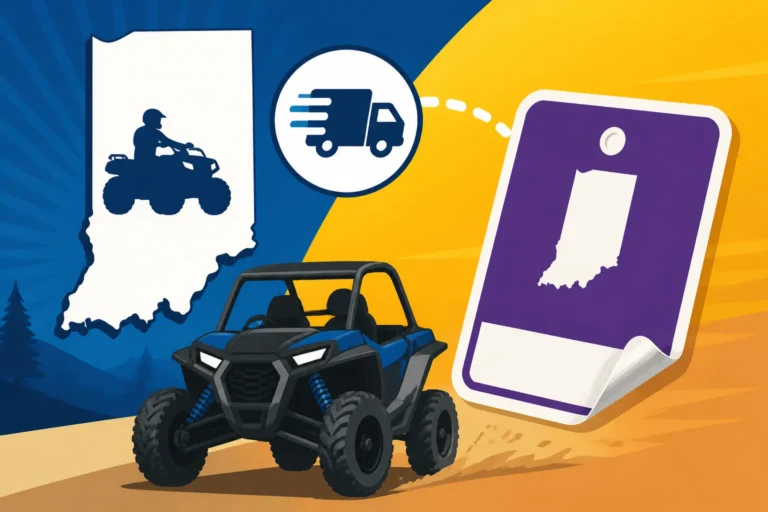
After submitting your application and paying the fees, the BMV will typically process your request for the physical ORV decal. You won't usually walk out of the license branch with the decal in hand. Instead, there's a processing period. Most riders report that it takes approximately [Indiana's Twenty-One Day Wait for a Decal] for the decal to arrive in the mail. Sometimes it's quicker, but always budget for this waiting time.
When it does arrive, this decal is your proof of current registration. It’s a small, square sticker with a unique number. You absolutely must affix this decal to your ORV. The specific placement is critical: it needs to be mounted on the "forward half of the machine, on the left side, clearly visible from the ground." This ensures that conservation officers or other law enforcement can easily verify your registration while you're out riding. For more details on this, check out [Where the Indiana Decal Mounts].
Your Indiana ORV registration is valid for three years from the date of issuance, which is a nice long period compared to annual registrations for other vehicles. This aligns with [How Long an Indiana ORV Registration Lasts]. You'll receive a renewal notice in the mail before it expires, reminding you to get your [Renewing an Indiana ORV Registration] handled before your decal loses its validity.
Remember, riding an unregistered ORV on public trails or designated riding areas in Indiana can lead to fines and other penalties. So, even though it requires a few extra steps after leaving the dealership, ensuring your machine is properly titled and registered means you can hit the trails with peace of mind, knowing you're fully compliant with Indiana law.
Disclaimer
This article is for general informational purposes only and does not constitute professional advice. Laws, prices and regulations vary by location and change over time. Consult a qualified professional for guidance on your specific situation.