Keeping Paperwork in a Dry Box
Riding Indiana's incredible network of trails on your ATV or UTV is pure joy, but nothing kills that adventurous spirit faster than realizing your essential registration or title documents are soaked, mud-splattered, or completely missing when a conservation officer asks to see them. This guide is here to walk you through why protecting your Indiana off-road vehicle paperwork is crucial, what documents you absolutely need to keep safe, and the best practical strategies for keeping them dry, secure, and readily accessible, no matter where your Hoosier adventures take you.
Why Your Indiana ORV Paperwork is Non-Negotiable
It might seem like a small detail when you're geared up and ready to hit the dirt, but carrying the correct and undamaged paperwork for your off-road vehicle in Indiana is absolutely vital. This isn't just about avoiding a minor inconvenience; it's about staying legal, proving ownership, and navigating potential roadside stops with ease. Imagine the frustration: you’ve driven hours, unloaded your machine, and are just about to start your ride at Redbird, only for an officer to stop you and discover your registration certificate is a pulpy mess. That's a quick trip to a Class C ORV infraction, which can come with a hefty fine. [What an Indiana Officer Checks Roadside] covers this in more detail, but the bottom line is, they're looking for proof that your machine is properly registered and that you are authorized to operate it.
Beyond the immediate legal ramifications, having your paperwork in order is about protecting your investment. Your off-road vehicle, whether it’s a rugged ATV or a family-friendly side-by-side, is a significant asset. In the unfortunate event of theft or an accident, clear and legible documentation is your first line of defense. It proves you are the rightful owner, aiding law enforcement in recovery efforts and streamlining any insurance claims. Without proper identification, your machine could become untraceable, leaving you in a difficult situation.
Furthermore, consider the various scenarios where you might need quick access to your documents. Perhaps you're crossing a county road that has been designated for ORV use, and a local law enforcement officer wants to verify your compliance with local ordinances, which might include specific insurance requirements. Or maybe you're at a private park that demands to see proof of ownership or registration before you enter. Having your documents secure and easy to present means less hassle and more time enjoying your ride. Taking the extra step to protect these papers upfront saves you headaches and potential fines down the line. [Indiana Fines for an Unregistered ORV] can be quite substantial, so it really pays to be prepared.
The Essential Documents Every Indiana ORV Owner Needs to Protect
When we talk about "paperwork," it's not just one single document. There's a collection of vital papers that every Indiana off-road vehicle owner should be diligent about protecting. Each serves a specific legal or practical purpose, and losing or damaging any one of them can create significant hurdles.
First and foremost is your ORV Registration Certificate. This small piece of paper is your proof that your machine is legally registered with the Indiana Bureau of Motor Vehicles (BMV) and that you've paid your [Indiana ORV Registration Cost]. It includes key information about your ORV and its registration status. This certificate usually accompanies your physical ORV decal, which needs to be prominently displayed on your machine.
Next up, and equally crucial, is your Certificate of Title. For any ORV purchased new after December 31, 2009, or brought into Indiana from a state that titles ORVs, a title is mandatory. This document officially establishes you as the legal owner. It's often where liens are recorded if you financed your purchase. Unlike registration, which needs renewal, your title is generally a one-time document that proves ownership until the machine is sold. If you've recently purchased a machine, you'll want to review [Indiana ORV Title Requirements] to ensure you're on the right track.
Then there's the Bill of Sale. While not a registration or title itself, a properly executed bill of sale is incredibly important, especially for machines bought in private sales. It serves as temporary proof of ownership and is often required for titling or registering your ORV. If you're buying or selling privately, a clear, concise bill of sale is critical. Many owners find templates for these documents through services like LawDepot, ensuring all necessary legal information is included. This protects both the buyer and the seller. [An Indiana Bill of Sale for an ORV] offers more details on what should be included.
Finally, depending on where and who is riding, you might also need proof of insurance and youth rider safety certificates. While Indiana doesn't mandate statewide ORV insurance, some local ordinances (like those in Vanderburgh County) or private parks might require it. Having your insurance card handy can save you a lot of trouble. For riders under a certain age, Indiana law requires direct adult supervision, and completing a safety course is highly recommended, sometimes even necessary for specific riding areas. Keep those completion certificates safe! [Indiana Registration and Insurance Proof] and [Indiana ATV Safety Course Options] shed light on these requirements.
Here’s a quick overview of the key documents and why they matter:
| Document | Purpose | Key Information Included | Importance |
|---|---|---|---|
| ORV Registration Certificate | Proof of current registration with Indiana BMV. | VIN, make, model, owner info, expiration date, decal number. | Legal operation, avoiding fines. |
| Certificate of Title | Legal proof of ownership. | VIN, make, model, owner info, lienholder (if applicable). | Ownership transfer, theft recovery, insurance claims. |
| Bill of Sale | Proof of purchase and transfer of ownership. | Buyer/seller info, machine details, purchase price, date. | Registering/titling new purchase, temporary ownership proof. |
| Proof of Insurance | Verification of ORV liability coverage (if required). | Policy number, effective dates, coverage limits. | Compliance with local ordinances/park rules, financial protection. |
| Youth Safety Certificate | Proof of completing an ORV safety course (for youth riders). | Rider's name, course date, certifying body. | Compliance with age/supervision rules, enhanced safety. |
Practical Strategies for Keeping Your ORV Paperwork Safe and Dry
Now that we know what needs protecting, let's talk about how to do it effectively. There are different approaches for when you're out on the trail versus when your machine is parked at home or in storage.
On the Trail: Combatting the Elements
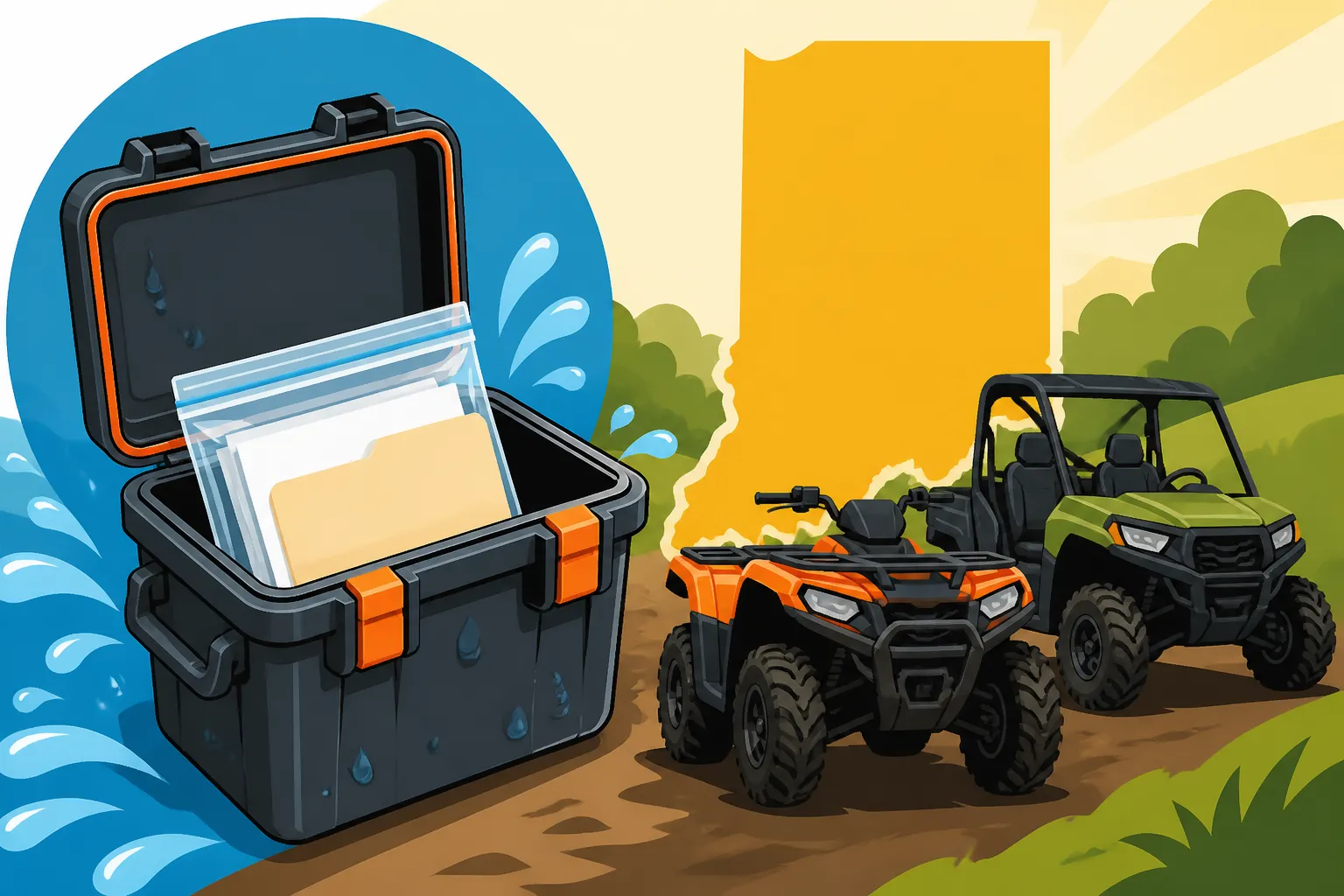
The trail is where your paperwork is most vulnerable. Dust, mud, water, and vibrations are all conspiring against those precious documents. The absolute gold standard for trail protection is a waterproof dry box or a heavy-duty waterproof bag. These aren't just for rafting; they're perfect for ORV enthusiasts. Look for options made from durable, impact-resistant materials with a strong seal, often using O-rings or robust clasps. Many riders prefer smaller, hard-sided Pelican-style cases or robust roll-top dry bags that can be easily tucked away.
When choosing a spot on your machine, think "out of the way, but accessible." Many UTVs have glove compartments or under-seat storage that can house a smaller dry box. For ATVs, consider a front or rear storage box that securely mounts to your rack. The goal is to keep it from bouncing around, getting squashed, or being submerged. I've seen folks use small, waterproof pouches attached to their handlebars or even inside their helmet bag, but always ensure it's truly sealed. Remember, just because it says "water resistant" doesn't mean "waterproof" when you hit that surprise mud pit or creek crossing.
While physical copies are essential, many riders also take photos of their registration certificate and title on their phone. This can be a fantastic backup, especially if your physical documents get utterly destroyed. However, be aware that a digital image on a phone might not always be accepted as official proof, especially in areas with no cell signal or if your phone battery dies. Always prioritize a physical, dry copy. Think of the digital copy as your emergency plan, not your primary solution. [Photos of a Registration on a Phone] has more on this.
Some riders opt to carry their essential registration and insurance proof on their person in a waterproof wallet or zippered pocket. This ensures it's always with you, even if you step away from your machine. However, if you take a tumble, this also puts the documents at risk of direct exposure or loss. The best strategy is often a combination: keep the absolute essentials (like a registration copy and insurance card) in a waterproof pouch on your person, and the originals or less frequently needed documents (like the title) secured in a dry box on the machine.
Off the Trail: Secure Home Storage
While the immediate risks are lower at home, proper storage is still critical for the long-term integrity of your documents. Your original Certificate of Title should ideally be stored in a secure, dry place, like a fireproof safe or a dedicated filing cabinet away from moisture, pests, and extreme temperatures. This is not a document you typically need to carry with you on every ride, so its primary home should be safe and sound.
For your registration certificates, a simple, organized file system in your home office works wonders. It helps you keep track of renewal dates and ensures you can easily find them when you need to make copies or prepare for a ride. Make a habit of creating physical and digital copies of all important documents. Scan your title, registration, and bill of sale (perhaps one you downloaded from LawDepot) and save them to a cloud service or an external hard drive. This way, if your physical originals are ever destroyed in a house fire or flood, you still have a record. This foresight makes the replacement process infinitely smoother.
When you purchase a new machine or renew your registration, make it a habit to immediately file the new document and replace the old one. Don't let stacks of paperwork accumulate, or you might find yourself scrambling when you need something specific. A little organization upfront saves a lot of headaches later.
When the Unthinkable Happens: Replacing Lost or Damaged Indiana ORV Documents
Despite your best efforts, sometimes things just happen. A dry box might fail, a bag could be ripped open by a branch, or documents might simply be misplaced. The good news is that replacing these critical documents in Indiana is possible, though it requires a bit of effort.
If your ORV registration certificate or decal is lost, stolen, or damaged beyond recognition, you'll need to apply for a replacement. This typically involves contacting the Indiana BMV or visiting a local license branch. You'll usually need to fill out a form, provide your vehicle information (VIN, make, model), and pay a small replacement fee. Having a clear record of your original registration number or even a digital copy can significantly speed up this process. Don't delay, as riding with a missing or unreadable decal can lead to a citation. [Replacing a Lost Indiana ORV Decal] and [Ordering a Replacement Indiana Decal] offer specific instructions on this.
Replacing a lost or damaged Certificate of Title is a more significant undertaking, as this document is the ultimate proof of ownership. You'll need to apply for a duplicate title through the Indiana BMV. This will require providing proof of identity, your vehicle's VIN, and often a signed affidavit stating that the original title was lost, stolen, or mutilated. There will be a fee involved, and the process can take some time, as the BMV verifies your ownership before issuing a new title. This is precisely why keeping an original title in a secure place at home, and having digital backups, is so crucial. If you need to create a new Bill of Sale or Ownership Affidavit because your originals were lost and never properly transferred, services like LawDepot can provide templates to help you draft accurate documents for these processes.
The key to navigating these replacement scenarios with minimal stress is preparation. By maintaining organized files at home, storing originals securely, making copies (both physical and digital), and immediately addressing any damage or loss, you can significantly reduce the impact of these unfortunate events. It's all about being proactive rather than reactive, ensuring your time on Indiana's trails is spent riding, not worrying about paperwork.
Disclaimer
This article is for general informational purposes only and does not constitute professional advice. Laws, prices and regulations vary by location and change over time. Consult a qualified professional for guidance on your specific situation.