Vanderburgh County’s Marked Road Map
Many off-road vehicle enthusiasts in Indiana dream of connecting trails or accessing amenities by riding county roads, but the patchwork of local laws can be incredibly confusing. For those in or around Vanderburgh County, understanding exactly where you can and cannot ride your ATV or UTV on public roadways is crucial to avoid fines and ensure safety. This comprehensive guide will break down Vanderburgh County's specific ordinance, focusing on its distinctive marked road map, and help you navigate the rules with confidence.
Understanding the Legal Landscape for ORVs in Indiana
It’s easy to feel lost when trying to figure out where you can legally ride your off-road vehicle in Indiana. Unlike some states with broader allowances, Indiana generally operates on a "closed by default" principle for public roads when it comes to ATVs, UTVs, and other ORVs. This means that unless a specific law or local ordinance explicitly states that a road is open to ORV traffic, it's considered off-limits. This general prohibition exists for a variety of reasons, primarily public safety due to the design differences between ORVs and on-road vehicles, as well as concerns about road damage and noise. For many riders, this can be incredibly frustrating, especially when a short road segment could connect two fantastic trail systems or provide access to fuel or food.
This default prohibition is why many riders find themselves trailering their machines much more often than they'd like. Imagine a situation where your favorite riding spot is just a mile down a county road, but because that road isn't explicitly designated for ORVs, you have to load up your machine, drive it that short distance, and then unload again. It adds extra time, effort, and wear and tear on your trailer and tow vehicle. It’s a common scenario that highlights the need for clear guidance on where exceptions might apply, and why local ordinances like Vanderburgh County's are so important.
Indiana's Default Stance on ORV Road Use
Indiana's approach to off-road vehicles on public roads is quite conservative compared to some other states. Generally, you cannot simply hop on your ATV or UTV and drive it down a public street or highway. The state views these machines primarily as off-highway vehicles, designed for terrain, not asphalt. This distinction is enshrined in state law, making it illegal to operate an ORV on a public highway, street, or even the right-of-way adjacent to it, unless a specific exception is made. This blanket rule means that many parts of Indiana remain completely closed to ORV road use, leading to significant challenges for riders trying to navigate between private properties or designated trail areas.
The core issue stems from the fundamental differences in how ORVs and street-legal vehicles are built and regulated. ORVs typically lack many of the safety features, signaling, and emission controls required for regular road use. Their tires are designed for traction on dirt, not grip on pavement, and their suspension systems are geared for absorbing bumps, not smooth highway travel. Because of these factors, the state prioritizes public safety, imposing a general ban to prevent accidents and ensure that only properly equipped and regulated vehicles share the public roadways.
This default closure often leaves riders feeling trapped, unable to easily access local businesses or connect to other riding opportunities without resorting to trailering. It’s a common source of confusion and frustration, making it absolutely vital for riders to understand the specific rules in any given area they plan to ride. Without this understanding, even a short trip down a seemingly quiet back road could lead to a costly citation and a negative interaction with local law enforcement.
The Power of Local Ordinances
While the state sets a general "no roads" rule, Indiana law does grant counties and municipalities the authority to create their own ordinances to allow ORV operation on certain public roads within their jurisdiction. This is where things get really interesting – and sometimes really complicated – for riders. It means that what's legal in one county might be strictly forbidden just a few miles down the road in another. Each county gets to decide if, how, and where ORVs can operate on their roads, leading to a patchwork of regulations across the state. This is why you can't assume that just because you rode your ATV down a county road in one part of Indiana, you can do the same in Vanderburgh or any other county.
These local ordinances are developed by county commissioners or city councils, often in response to community input, local needs, or the presence of significant off-road riding areas. They might specify permitted roads, operating hours, required safety equipment, age restrictions, and insurance mandates. The onus is entirely on the rider to know the specific rules of the county they are in. It’s not uncommon for neighboring counties to have completely different rules, leading to situations where a road that crosses a county line changes its legal status for ORVs mid-route. This decentralization makes it critical to do your homework before heading out, as getting caught on an unauthorized road can lead to fines and other penalties. You can often find a list of counties that have opened their roads, such as those detailed in [Indiana Counties That Allow ORVs on Roads].
For instance, some counties might open all their gravel roads, while others might only designate specific routes that connect to trail systems. This variation means a rider needs to check the local county's website, consult their local police department, or look for clearly posted signage to ensure compliance. Relying on word-of-mouth or outdated information can quickly lead to trouble. This is precisely why Vanderburgh County's specific and detailed map-based ordinance is such a crucial resource for riders in that area.
The Shoulder and Ditch Exception
Even with the general prohibition and the varying local ordinances, Indiana state law does offer a very specific and limited exception for ORV use: the shoulder and ditch exception. This rule allows riders to operate an ORV on the shoulder or within the ditch of a public highway, but only under very strict conditions and for specific purposes. It's not a free pass to cruise down the highway shoulder; rather, it’s designed for situations where an ORV might need to quickly move alongside a road to access private property or cross a road. It's a provision that acknowledges the reality of land access while maintaining significant safety boundaries.
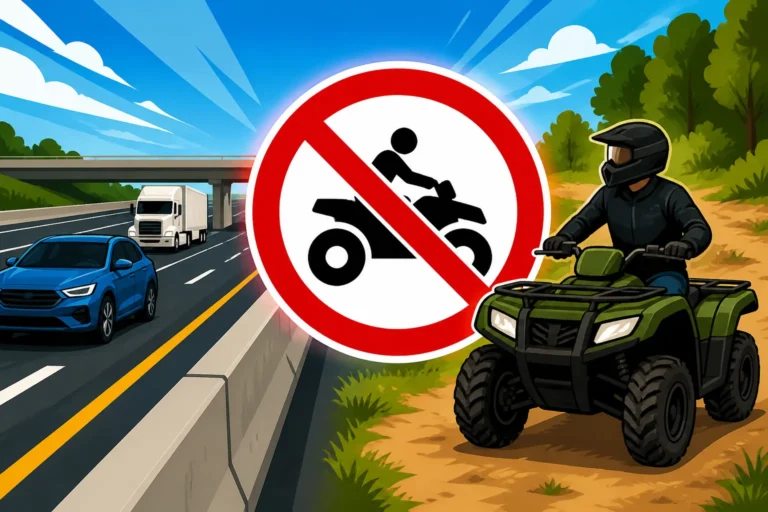
The key conditions for using the shoulder or ditch are: you must be traveling to or from a designated off-road riding area, private property, or a facility where ORVs are permitted. You also have to yield the right-of-way to all vehicular and pedestrian traffic, maintain a safe speed, and operate the ORV in a safe and responsible manner. Furthermore, this exception explicitly does not apply to limited-access highways, like interstates or major parkways, where the speeds are high and there's no safe shoulder or ditch for ORV operation. It’s a very narrow window of legal operation that requires constant vigilance and awareness of your surroundings.
For example, if you're riding on private property and need to get to another parcel owned by the same family just across a county road, the shoulder and ditch exception might allow you to traverse that short distance. However, you'd need to ensure there’s sufficient width to ride away from traffic and that you're not on a designated red road in Vanderburgh County (more on that later!). It's a provision meant for essential movement, not recreational travel along public roadways. Always remember to exercise extreme caution and prioritize safety whenever operating an ORV near or on any part of a public road, even when technically permitted by this exception.
Vanderburgh County's Unique Approach to ORV Road Riding
Vanderburgh County, home to Evansville and surrounding communities, has recognized the growing popularity of off-road vehicles and the desire of residents to use them in a regulated, safe manner beyond designated trails. Instead of a simple "yes" or "no" to ORV road use, the county has developed a much more nuanced and detailed approach. They understood that a blanket ban frustrated property owners and enthusiasts, while an unrestricted free-for-all would create significant safety concerns. Their solution was to craft a specific ordinance, complemented by a clearly defined map, that spells out exactly where ORVs are allowed and under what conditions. This forward-thinking strategy aims to balance recreational opportunities with public safety and quality of life for all residents.
This comprehensive approach reflects a commitment to providing clarity for ORV owners while still protecting areas deemed unsuitable for such traffic. It's a pragmatic solution to a complex issue, acknowledging that ORVs are a part of many people's lives for both recreation and utility, especially in rural areas. By creating a system of designated routes, Vanderburgh County provides a framework for legal and responsible riding, moving away from the ambiguity that often plagues ORV road laws in other parts of the state.
Why Vanderburgh Stands Out
Vanderburgh County truly stands out in Indiana for its pragmatic and detailed approach to ORV road use. Many counties either maintain a strict prohibition or offer very broad, sometimes vague, permissions that can still leave riders guessing. Vanderburgh, however, took the time to craft a specific ordinance that doesn't just say "yes" or "no," but rather "yes, here, and under these conditions." This level of detail, particularly the reliance on a geographically specific map, is what sets it apart. It’s a deliberate effort to provide clarity and reduce ambiguity for ORV owners, a move often applauded by the riding community tired of navigating unclear regulations.
The county's ordinance acknowledges that there are valid reasons for ORV operation on certain roads – whether for agricultural purposes, property access, or simply connecting to other recreational areas. Instead of forcing all ORV use onto private land or designated parks, Vanderburgh offers a legal avenue for limited road travel. This thoughtful consideration helps integrate ORV use into the community rather than alienating riders. It promotes responsible riding by providing clear boundaries, which is a significant step forward from the confusing "guesswork" often found elsewhere.
This distinct approach offers a model for other counties grappling with ORV road access. It demonstrates that with careful planning and specific designations, it's possible to allow ORVs on roads while still maintaining safety and order. For riders, it means that instead of having to interpret vague state laws or hope for the best, they have a tangible, visual guide in the form of the county's map to inform their decisions, making legal riding much more accessible and less stressful.
The Ordinance's Core Principles
At its heart, Vanderburgh County's ORV ordinance is built on principles of designated safety, clear communication, and rider responsibility. The county isn't just opening roads willy-nilly; they've identified specific routes where ORV traffic is deemed safe and manageable, taking into account traffic volume, road conditions, and the surrounding environment. This selective approach ensures that ORVs are routed away from high-density areas or roads that pose undue risk. It's about creating controlled access rather than open access, which is a key distinction for any successful ORV road program.
A significant aspect of these core principles is the emphasis on rider accountability. The ordinance doesn't just grant permission; it comes with a strict set of rules that riders must adhere to. This includes age restrictions, insurance requirements, equipment mandates (like proper lighting), and adherence to traffic laws. The county is essentially saying, "We trust you to ride responsibly on these designated roads, provided you meet these safety and legal requirements." This puts the onus squarely on the individual rider to ensure their machine is compliant and their operation is safe.
By establishing these clear guidelines, Vanderburgh County minimizes conflicts between ORV riders and other road users, while also protecting the environment and infrastructure. The ordinance is a tool for managing expectations and ensuring that ORV use enhances, rather than detracts from, the overall community experience. Riders who understand and respect these principles are more likely to enjoy a positive and uninterrupted riding experience within the county's designated areas.
The Necessity of a Designated Map
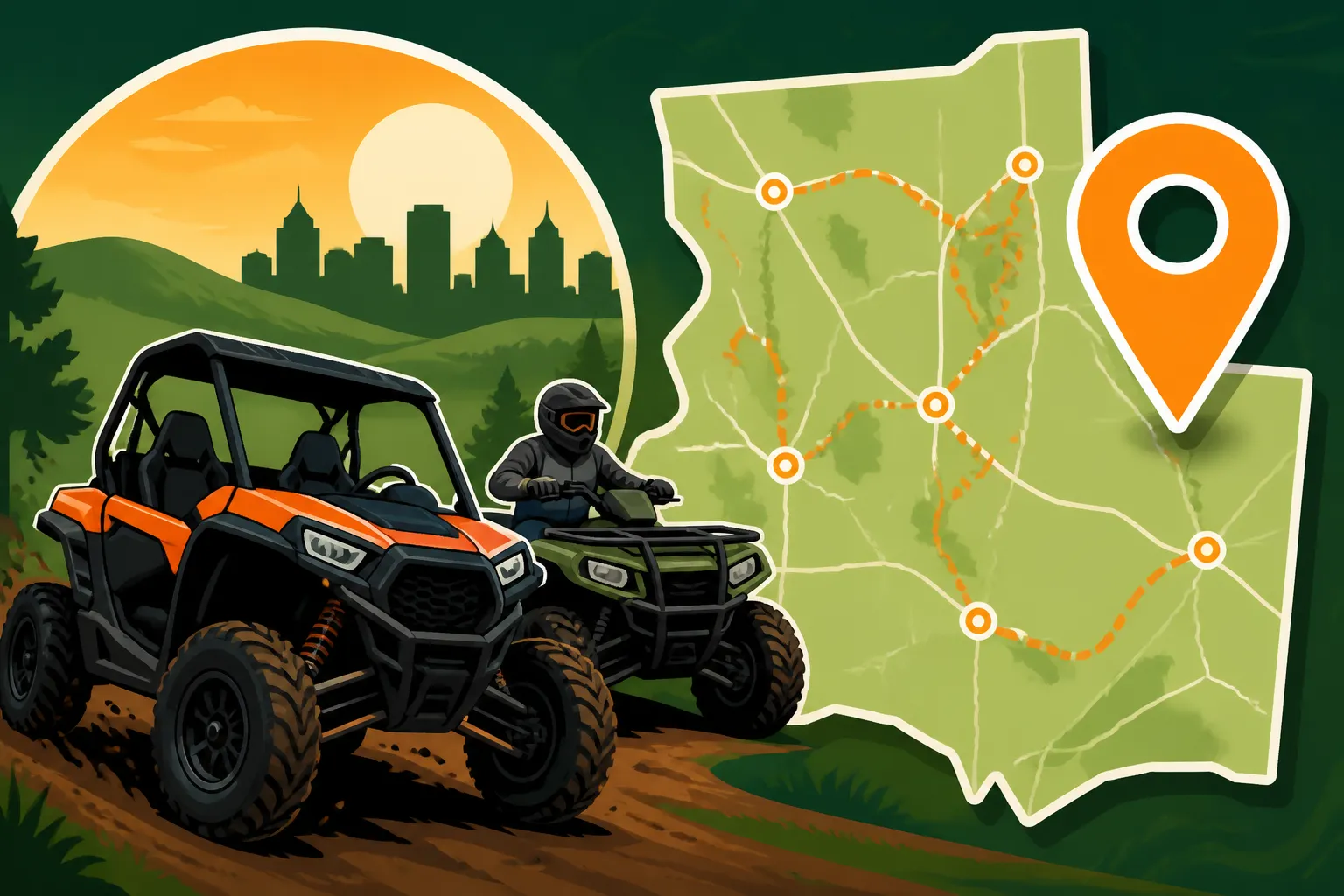
The cornerstone of Vanderburgh County's ORV ordinance is its designated road map, and its necessity cannot be overstated. Without such a visual and explicit guide, even the most well-intentioned ordinance would still leave riders in a state of confusion, unsure if the specific road they are on is permitted or prohibited. The map provides a clear, unmistakable visual representation of the county's decisions, removing ambiguity and making it far easier for riders to comply with the law. It’s a proactive measure that prevents guesswork and reduces the likelihood of accidental violations.
Imagine trying to navigate a complex set of written road names without a map; it would be incredibly difficult to tell where one designated section ends and another begins, or to discern the status of a connecting road. The map solves this by color-coding or otherwise marking roads, giving riders an immediate visual cue about their legal status. This clarity is not just for riders, but also for law enforcement, who can quickly and definitively determine if an ORV is being operated legally on a particular stretch of road. It streamlines enforcement and ensures consistent application of the rules.
Furthermore, a designated map makes it easier for the county to update or modify the allowed routes as conditions change, perhaps due to new developments, increased traffic, or changes in road suitability. Instead of rewriting lengthy legal descriptions, the map can be revised and re-published, maintaining transparency and accessibility for the public. This dynamic tool is essential for the practical implementation and long-term success of Vanderburgh County's ORV road access program, truly making it a model for others.
Decoding the Vanderburgh County ORV Map
When you look at Vanderburgh County's ORV map, you'll immediately notice different colors or markings on the roads. These aren't just decorative; they are the key to understanding where you can and cannot ride your off-road vehicle. Deciphering these markings is absolutely critical before you ever put a tire on a county road. It’s like reading a traffic light: red means stop, green means go, and in Vanderburgh, certain colors on the map have similarly unambiguous meanings for ORV operators. Taking the time to study and understand this map is the single most important step you can take to ensure a legal and enjoyable ride.
The map is designed to be user-friendly, translating complex legal definitions into a clear visual guide. It delineates between areas where ORV use is permissible and those where it is strictly prohibited, taking into account factors like population density, traffic volume, and road type. By breaking down the map's legend and specific designations, we can arm you with the knowledge to confidently navigate Vanderburgh County's road network, knowing you're staying within the bounds of the law.
What a Red Road Means on Vanderburgh's ORV Map
When you see a road marked in red on Vanderburgh County's ORV map, consider it a flashing red light for your off-road vehicle. A red designation unequivocally means that ORV riding is strictly prohibited on that particular stretch of roadway. There's no gray area, no "maybe if it's Sunday afternoon." If it's red, stay off it with your ATV or UTV. These roads are typically chosen for prohibition due to high traffic volume, proximity to dense residential areas, higher speed limits, or other safety concerns that make ORV operation incompatible with general road use.
Trying to use a red-marked road, even for a short hop, is a direct violation of the county ordinance. This isn't just a suggestion; it's a rule that law enforcement takes seriously. An officer pulling you over on a red road won't be checking if your lights are working or if you have insurance; they'll be addressing the core violation of operating where prohibited. The consequences for ignoring these red designations can include fines and other legal penalties, which we'll discuss in more detail later. This strong enforcement underscores the importance of respecting the red markings. You can learn more about these specific restrictions by checking [What a Red Road Means on Vanderburgh's ORV Map].
It's crucial for riders to understand the why behind the red roads. These aren't arbitrary bans; they are carefully considered decisions based on safety and community impact. For example, a red road might run through a school zone or a busy commercial district where the presence of ORVs could pose an unnecessary risk to pedestrians and other drivers. Always assume that a red road is designated as such for a very good reason, and plan your routes accordingly to avoid them entirely.
What a Blue Road Means on Vanderburgh's ORV Map
In contrast to the red roads, a blue designation on the Vanderburgh County ORV map is good news for riders: these are the roads where ORV riding is permitted, provided all other aspects of the county ordinance are strictly followed. Think of blue roads as your green light for off-road vehicle use within the county's framework. These routes are typically found in more rural or less-trafficked areas, chosen because they offer a safer environment for ORVs to share the road with traditional vehicles. They often connect residential areas to agricultural properties, local businesses, or even other trail systems, fulfilling the need for legitimate road access.
However, "permitted" doesn't mean "anything goes." Riding on a blue road still requires adherence to all the rules outlined in the ordinance, such as age requirements, valid registration, insurance, and proper lighting. These roads are designated to provide convenient and legal passage, not to become high-speed playgrounds. Riders are expected to operate their machines safely, courteously, and in full compliance with traffic laws, just as any other vehicle operator would. The blue lines represent a privilege that comes with significant responsibility. More details on these specific routes can be found by researching [What a Blue Road Means on Vanderburgh's ORV Map].
For example, a blue road might be a quiet, paved rural lane that provides access to several farms or connects to a designated riding park. On such a road, you can legally transport your ORV, provided it's properly registered, you have insurance, and you're following all traffic laws. This allows farmers to use their UTVs for work-related travel between fields or allows recreational riders to access trailheads without the hassle of constantly trailering. It's about practical, regulated access, and enjoying the ride responsibly.
Riding Outside Evansville's Limits
One crucial detail when interpreting the Vanderburgh County ORV map is to understand its jurisdictional boundaries, especially concerning incorporated cities and towns. While the map applies to much of Vanderburgh County, it is important to remember that cities like Evansville, even though they are within the county's geographical borders, typically operate under their own municipal ordinances. This means that the county's map and its blue-designated roads generally do not apply within the corporate limits of Evansville. If you’re riding through the county and approach an Evansville city limit sign, assume the county's ORV road permissions end there, and you are entering an area where ORVs on public roads are likely prohibited.
This distinction is vital for avoiding unexpected citations. City environments, with their higher traffic density, greater pedestrian activity, and more complex road networks, are typically deemed unsuitable for ORV operation on public streets. Evansville, like many urban centers, prioritizes the safety and flow of traditional vehicular and pedestrian traffic. Therefore, even if you are on a blue-designated county road that leads right up to the city limits, once you cross that invisible line, the rules change drastically. It's a common point of confusion for riders, particularly those who are not familiar with the local area.
Always consult city-specific ordinances if you plan to enter an incorporated area. Generally, it's safest to assume that [Riding Outside Evansville's Limits] means staying off city streets with your ORV. Your best bet is to plan your route carefully, ensuring your ride on designated county roads does not inadvertently take you into an area where ORVs are unwelcome. If your destination is within city limits, you'll almost certainly need to trailer your machine for that portion of the journey.
Why Darmstadt Stays Closed
Darmstadt, a specific community within Vanderburgh County, serves as a poignant example of the granular control and specific considerations that went into creating the county's ORV road map. Despite being part of the broader county, Darmstadt is an area where, as specified by the ordinance and reflected on the map, ORV road use remains prohibited. This means that even if neighboring sections of the map might show blue roads, Darmstadt itself largely consists of "red" or undesignated areas where ORVs are not allowed on public thoroughfares. This decision isn't arbitrary; it reflects specific local factors and community preferences that weigh against permitting ORV traffic on its roads.
The reasons for keeping areas like Darmstadt closed can be multifaceted. They might include higher residential density compared to other rural parts of the county, narrower roads that present greater safety challenges, specific community requests, or historical considerations that make ORV access undesirable. The county's ordinance demonstrates that while they are open to designating certain roads, they are equally committed to protecting areas where ORV traffic would be disruptive or unsafe. This highlights the importance of not just looking for blue lines, but also understanding the specific exceptions and nuances within the map. Researching [Why Darmstadt Stays Closed] provides specific context for this decision.
For riders, this reinforces the message that careful route planning is paramount. You cannot assume that all unincorporated areas of Vanderburgh County are open for ORV use. Darmstadt's designation is a clear reminder that you must always refer to the official map and respect its specific boundaries and prohibitions. Attempting to navigate through a closed area like Darmstadt, even if it seems like a convenient shortcut, will put you at risk of violating the ordinance and incurring penalties.
Navigating Vanderburgh County Roads Safely and Legally
Now that you understand the distinctions between red and blue roads on the Vanderburgh County map, the next crucial step is knowing how to legally and safely operate your ORV on those designated blue routes. It's not enough just to be on the right road; you also need to meet specific operator requirements, ensure your machine is properly equipped, and adhere to all traffic laws and specific ORV regulations outlined in the county ordinance. This section is all about transforming theoretical knowledge into practical, safe riding habits that will keep you compliant and protected.
Remember, the privilege of riding on designated county roads comes with significant responsibilities. Law enforcement in Vanderburgh County will be looking for full compliance, and ignorance of the rules is never a valid excuse. Taking the time to understand these operational requirements before you hit the road will save you headaches, potential fines, and ensure a positive experience for both you and other road users.
Who Can Operate an ORV on Vanderburgh Roads
Vanderburgh County's ORV ordinance is very specific about who is allowed to operate an off-road vehicle on its designated public roads. It's not a free-for-all for anyone with a machine. Typically, the ordinance requires operators to be at least 18 years of age and possess a valid driver's license. This is a common standard designed to ensure that operators have a certain level of maturity, experience with traffic laws, and accountability that comes with holding a state-issued driver's license. This rule is a critical component of public safety, as operating an ORV on a road demands judgment and adherence to complex traffic scenarios.
This age and license requirement means that while a younger rider might be able to operate an ORV on private property or within a designated off-road park with appropriate supervision, they are generally not allowed to operate one on public roads in Vanderburgh County. This distinction is crucial for parents and guardians. Lending your ORV to an underage or unlicensed rider for road use in the county could lead to serious legal consequences for both the rider and the owner. The county explicitly addresses this with [Vanderburgh's Eighteen-Year-Old Operator Rule].
Therefore, before embarking on any road section of your ride in Vanderburgh County, always confirm that every operator of your machines meets these minimum age and licensing criteria. It’s a foundational requirement that ensures only qualified individuals are sharing the public roadways with other vehicles, thereby minimizing risk for everyone.
Essential Equipment and Documentation
Beyond the operator requirements, your ORV itself must meet certain equipment standards, and you must carry specific documentation when riding on Vanderburgh County's designated roads. First and foremost, your ORV must be properly registered with the Indiana Bureau of Motor Vehicles (BMV), displaying a current and valid ORV decal. This decal signifies that your machine is recognized by the state and that you've paid the necessary registration fees. Operating an unregistered ORV on public roads is a quick way to get a ticket. You'll want to review how to get that done, for example in [Registering an ORV in Indiana].
Secondly, and critically, you must have proof of financial responsibility, meaning valid liability insurance for your ORV. Vanderburgh County, like many jurisdictions allowing road use, requires this to protect other road users in the event of an accident. You should carry a physical or digital copy of your insurance card or certificate at all times while riding on county roads. This is a direct requirement of [Vanderburgh's Insurance Certificate Requirement] and [Indiana ORV Registration and Insurance Proof]. Ensuring your insurance is up-to-date and accessible is non-negotiable.
Additionally, while not explicitly required by Indiana state law for ORVs, you'll want to consider having mirrors, a horn, and turn signals – features common on street-legal vehicles that enhance safety and communication on the road. For keeping all your essential documents safe and dry, especially when you're out on potentially dusty or damp routes, a durable, waterproof storage solution like a SuperATV cargo box or glove box insert can be incredibly helpful. This ensures your registration and insurance proof are always readily available if requested by law enforcement, preventing unnecessary delays or complications during a roadside stop.
Specific Rules for Crossing and Night Riding
Riding on designated blue roads in Vanderburgh County comes with specific rules for particular maneuvers, especially when it comes to crossing roads and operating after dark. When [Crossing a Road on an ORV in Indiana], the ordinance typically requires a complete stop before entering the roadway. You must yield to all oncoming traffic, proceed only when safe, and cross at a right angle to the lanes of traffic. This minimizes the time your ORV is exposed to traffic flow and reduces the risk of collisions. It’s a fundamental safety rule that applies universally to ORV road crossings.
For those planning to ride after sunset, Vanderburgh County has clear mandates for lighting. The ordinance generally requires your ORV to be equipped with at least two white headlights that are lit and visible from 500 feet, and at least two red taillights that are lit and visible from 500 feet. This [Vanderburgh's Dual Light Rule at Night] is essential for your visibility to other drivers, significantly enhancing safety during low-light conditions. Many stock ORVs might have adequate headlights for off-road trails, but for consistent visibility on public roads, especially if your stock lights aren't particularly bright, upgrading with a SuperATV light bar or additional LED pods can provide invaluable illumination and ensure you meet visibility requirements. You should also be familiar with the general [Indiana Rules for Riding After Dark].
Always check that all your lights are functional before you head out, particularly if you anticipate riding into the evening. Beyond simply having the lights, ensure they are clean and unobstructed for maximum effectiveness. These specific rules for crossing and night riding are not mere suggestions; they are critical safety measures designed to protect ORV operators and other motorists alike, making adherence to them non-negotiable for legal and responsible road use.
Preparing Your Machine for Vanderburgh County Road Riding
Just because your ATV or UTV is a beast on the trails doesn't automatically mean it's ready for county roads. The demands of pavement, other vehicles, and specific legal requirements mean you need to give your machine a thorough check-up and potentially a few upgrades before venturing onto Vanderburgh County's designated routes. This isn't just about avoiding a ticket; it's about ensuring your safety and the safety of everyone else on the road. A machine optimized for mud and rocks might not perform optimally on hard surfaces, and visibility becomes paramount when sharing space with cars and trucks.
Taking the time to properly inspect and prepare your ORV will not only ensure compliance with the county ordinance but will also make your road riding experience much more enjoyable and secure. Think about it as giving your machine a "road trip prep" before a long journey, even if it's just a short hop down a blue-marked road.
Inspecting Your ORV for Road-Readiness
Before you even think about putting your ORV on a blue-designated road in Vanderburgh County, a comprehensive inspection is in order. This goes beyond the typical pre-trail check. Focus on components critical for road safety and legality. First, inspect your tires: while knobby tires are great for mud, they wear quickly and handle differently on pavement. Check for proper inflation, excessive wear, or damage. Underinflated tires can lead to instability, while overly aggressive tread can reduce grip on hard surfaces.
Next, pay close attention to your brakes. Road use often requires more consistent and stronger braking than trail riding. Test both front and rear brakes for responsiveness, ensuring they are not spongy and that brake pads have sufficient material. Your steering and suspension systems are also critical; check for any excessive play in the steering wheel or handlebars, and ensure your suspension components aren't worn or damaged, as this can severely affect handling at higher speeds on pavement. Finally, check all essential fluids, battery charge, and ensure your exhaust system is not excessively loud, which could draw unwanted attention.
It's about making sure your machine is predictable, controllable, and won't suddenly fail in a traffic situation. A little preventative maintenance and inspection can prevent a roadside breakdown or, worse, an accident. This pre-ride check is a fundamental step in responsible ORV road use.
Considering Aftermarket Upgrades for Safety
Many stock ATVs and UTVs are designed primarily for off-road environments, meaning they might lack some features that are absolutely crucial for safe road operation. This is where aftermarket upgrades become incredibly valuable for riders utilizing Vanderburgh County's designated roads. Enhanced safety on public roads often means improving visibility, communication, and basic street-legal functionality. Investing in these upgrades isn't just about compliance; it's about protecting yourself and others.
For instance, installing mirrors (side and rearview) is paramount. They allow you to be aware of traffic approaching from behind, a necessity when sharing the road with faster-moving vehicles. A loud horn is another essential for communicating with other drivers and pedestrians, especially in unexpected situations. Turn signals are also highly recommended, allowing you to clearly indicate your intentions, which can prevent collisions. SuperATV offers a wide array of robust and high-quality aftermarket accessories, including complete street-legal kits that incorporate mirrors, horns, and turn signals, specifically designed to help transform your trail machine into one more suited for road use.
Additionally, a windshield can greatly improve rider comfort and safety by deflecting debris and wind, which is more noticeable at road speeds. Even a basic one can make a difference. Some riders also opt for DOT-approved tires if they plan extensive road travel, as these are designed for better grip and wear on pavement. These aftermarket enhancements are proactive steps to bridge the gap between an off-road beast and a vehicle capable of safely navigating shared roadways.
The Importance of Proper Lighting
When operating an ORV on Vanderburgh County roads, particularly at night or in low visibility conditions, proper lighting isn't just a recommendation—it's a legal requirement and a safety imperative. As noted previously, the county ordinance, specifically [Vanderburgh's Dual Light Rule at Night], mandates adequate headlights and taillights. This means your machine needs to be equipped with functioning lights that meet the visibility standards (typically visible from 500 feet). While your factory lights might be sufficient for basic trail riding, they may not offer the brightness or coverage needed for effective road use, especially when sharing the road with other vehicles.
Ensuring your headlights are aimed correctly and providing ample illumination of the road ahead is critical for seeing potential hazards and being seen by oncoming traffic. Similarly, bright taillights are essential for preventing rear-end collisions, particularly on less-lit rural roads. Consider adding auxiliary LED lighting if your stock lights are dim or if you want enhanced visibility. A SuperATV LED light bar or additional cube lights can dramatically improve your ability to see and be seen, offering a significant safety boost. Reflective tape on your machine can also add another layer of passive visibility.
Always make a habit of checking all your lights—headlights, taillights, brake lights, and any aftermarket turn signals—before every ride that might involve public roads, especially if there's any chance you'll be out after dark. A burnt-out bulb or a malfunctioning circuit can not only lead to a citation but, more importantly, can put you and others at serious risk. Reliable, bright lighting is a non-negotiable safety feature for any ORV venturing onto county roads.
Consequences of Non-Compliance in Vanderburgh County
Riding your ORV on Vanderburgh County's designated roads is a privilege, not a right, and it comes with the expectation of strict adherence to the county's ordinance. Failing to follow the rules, whether it's riding on a prohibited red road, operating without the necessary equipment, or lacking proper registration and insurance, can lead to immediate and sometimes costly consequences. Law enforcement in Vanderburgh County is prepared to enforce these rules, and ignorance of the ordinance is not an acceptable defense. Understanding these potential penalties is crucial for any rider hoping to enjoy the county's designated routes without incident.
The county's enforcement structure is designed to deter violations and ensure that ORV road use remains safe and orderly for everyone. Penalties often start with monetary fines but can escalate quickly for repeat offenders or more serious infractions. It’s a clear message: respect the rules, or face the repercussions.
Vanderburgh's $75 First Fine
For a first-time offense of violating Vanderburgh County's ORV ordinance, such as riding on a designated red road or failing to carry proof of insurance, you can expect to receive a fine. The initial penalty, often cited as Vanderburgh's $75 First Fine, serves as a clear warning. While $75 might not seem like an astronomical amount, it's just the beginning. This fine signifies a Class C ORV infraction, and it's intended to be a deterrent, a monetary reminder that the rules are serious and non-compliance will not be overlooked. This is a common starting point for minor infractions, similar to what you'd expect for many traffic violations.
However, it's important to understand that this fine is typically accompanied by the inconvenience of being stopped, potentially having your ride cut short, and a mark on your record that could lead to more severe penalties for future violations. It’s not just the money; it’s the time, the hassle, and the immediate end to your planned riding for the day. This first fine is meant to educate and redirect, emphasizing the importance of familiarizing yourself with the ordinance. You can read more about what happens after this initial fine by checking [What Happens After a First Vanderburgh ORV Ticket].
Consider the $75 fine a direct consequence of failing to do your homework or making an unsafe decision. It's a reminder that operating an ORV on public roads, even designated ones, is a regulated activity that demands vigilance and compliance. Avoiding this initial penalty is as simple as reviewing the map, ensuring your machine is compliant, and carrying all necessary documentation.
Escalating Penalties for Repeat Offenses
While the initial $75 fine for a first-time violation is a warning, Vanderburgh County's ordinance includes escalating penalties for repeat offenses, demonstrating a clear intent to ensure compliance. If you receive a second citation for an ORV violation, the fine will be significantly higher than the first. The county's enforcement mechanism is designed to progressively penalize those who disregard the rules, transforming a minor infraction into a more substantial legal and financial burden. This escalation reflects the county's commitment to maintaining safety and order on its roads.
Beyond increased fines, repeat offenses can lead to more serious consequences. For instance, a third or subsequent offense could result in fines as high as $750 for a third Indiana ORV offense, or even potential vehicle impoundment. Imagine having your ORV towed away, incurring impound fees on top of substantial fines, simply because you repeatedly failed to follow the county's clear rules. Such actions are not taken lightly but are a necessary measure to ensure the integrity of the ordinance and to protect other road users from persistent non-compliance. These penalties aim to strongly deter riders from habitually violating the ordinance, reinforcing the idea that designated road access is a privilege that must be respected.
Therefore, it's imperative to take any initial citation seriously. Use it as an opportunity to review the ordinance, understand where you went wrong, and adjust your riding practices. The county isn't interested in issuing endless warnings; they expect compliance. Repeated violations will not only hit your wallet hard but could also lead to the loss of your riding privileges on designated county roads, effectively shutting down your ability to legally operate your ORV in Vanderburgh County.
Owner Liability and Enforcement
A crucial aspect of Vanderburgh County's ORV ordinance, and indeed many ORV laws, is the concept of owner liability. This means that even if you are not the one operating the ORV at the time of a violation, you, as the registered owner, could still be held responsible for any infractions. For example, if you lend your ATV or UTV to a friend or family member who then operates it illegally on a red road or without proper insurance, you, as the owner, could face fines and penalties. This provision is designed to encourage owners to be diligent about who they allow to operate their machines and to ensure that anyone borrowing their ORV is fully aware of and compliant with all local laws. Lending your quad to a teenager who crashes it could result in the owner being held liable, as detailed in [Lending Your Quad to a Teenager Who Crashes It].
Local law enforcement, typically the Vanderburgh County Sheriff's Department, is responsible for enforcing the ORV ordinance. Deputies patrol the county roads and are specifically trained to identify ORV violations. They will check for proper registration (the BMV decal), proof of insurance, operator age and license, and ensure the machine is being operated on a designated blue road. Roadside stops for ORVs are common, and officers are thorough in their checks. This proactive enforcement ensures that the ordinance is effective and that only compliant riders are utilizing the designated routes.
The takeaway here is simple: if you own an ORV, you bear the ultimate responsibility for its legal operation. Educate anyone who uses your machine, ensure they understand the Vanderburgh County map, and confirm they meet all operator and equipment requirements. This proactive approach not only protects you from potential liability but also fosters a safer and more harmonious riding environment for everyone in Vanderburgh County.
Disclaimer
This article is for general informational purposes only and does not constitute professional advice. Laws, prices and regulations vary by location and change over time. Consult a qualified professional for guidance on your specific situation.