Vanderburgh’s Eighteen-Year-Old Operator Rule
If you’ve ever tried to figure out where you can legally ride your ATV or UTV in Indiana, you know it can feel like navigating a maze blindfolded. While state law generally keeps off-road vehicles off public roads, many counties have carved out their own rules, creating a patchwork quilt of regulations that can leave even seasoned riders scratching their heads. Today, we're diving deep into one such local rule that often trips up riders: Vanderburgh County's specific requirement that an ORV operator must be at least eighteen years old to ride on its designated public roads. This isn't just a minor detail; it's a critical age restriction that impacts families, young riders, and anyone planning to traverse Vanderburgh County roads.
Navigating Indiana's Patchwork of ORV Road Rules
Indiana's approach to off-road vehicles (ORVs) on public roads is, to put it mildly, complex. It’s not a simple blanket yes or no; instead, it’s a system built on a general prohibition with local exceptions, making it crucial for riders to understand the specific rules of any area they plan to ride. This often leads to frustration, as what's legal in one county might be a ticketable offense just across the county line.
The Default: Roads Are Generally Off-Limits
Let's start with the baseline: in Indiana, most public roads are not open to ORVs by default. The state legislature has, for the most part, deemed these machines unsuitable for general road use, citing concerns about safety, vehicle design, and traffic flow. This means that if you're riding your ATV or UTV on a paved or gravel county road that hasn't been specifically designated for ORV use, you're likely breaking the law. It’s a common misconception that if a road is remote enough or lightly trafficked, it must be okay. Unfortunately, that's rarely the case.
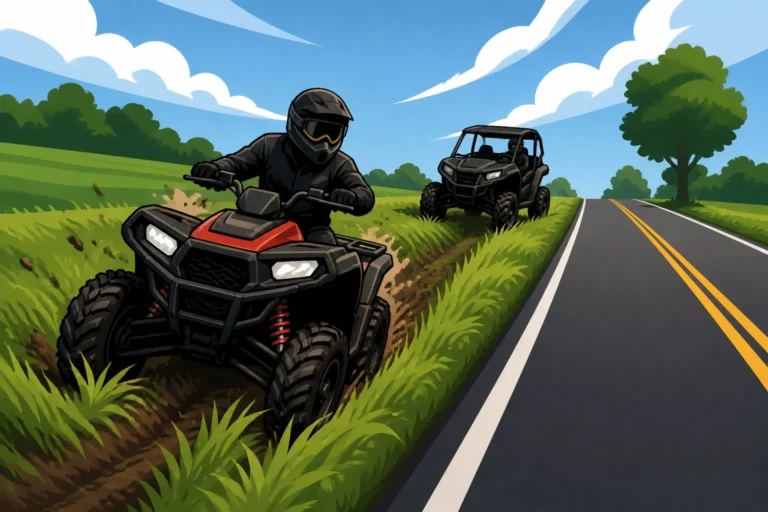
However, there are a few state-level exceptions that provide a glimmer of possibility. Riders may, under specific circumstances, use the shoulder or ditch of a public highway, but these are often limited to gaining access to private property or crossing a road. Even then, strict rules apply regarding speed, visibility, and yielding to other traffic. For example, riding in a ditch usually requires sufficient width to ensure you’re well clear of moving vehicles. This creates a delicate balance, where riders must be acutely aware of their surroundings and the precise letter of the law. You can read more about these nuances in [Indiana Rules for Riding a Highway Shoulder] and [Indiana Rules for Riding a Ditch].
How Counties Can Open Their Roads
The good news for ORV enthusiasts is that Indiana law allows individual counties to pass ordinances opening certain public roads to ATVs and UTVs. This decentralization gives local authorities the power to assess their unique terrain, population density, and existing trail systems to determine if and where ORV road access makes sense. However, this also means the burden is on the rider to research and understand these local rules. It's not uncommon for riders to plan a trip, only to discover that the county they intended to ride in has no open roads, or that the rules are far more restrictive than anticipated.
When a county decides to open its roads, it typically goes through a formal process to enact a local ordinance. This ordinance will usually specify which roads are open, what types of machines are allowed, operating hours, and any additional safety requirements like insurance or helmet use. It's a thoughtful process intended to balance recreational opportunities with public safety, but the result is a non-uniform riding experience across the state. Understanding [How an Indiana County Opens Its Roads] and reviewing [Indiana Local Ordinances on ORV Riding] is your first step before hitting any county road.
Understanding Vanderburgh County's ORV Ordinance
Vanderburgh County, home to Evansville, is one of those Indiana counties that has taken the initiative to establish its own ORV ordinance. This means that unlike some other areas where ORVs are strictly confined to private land or dedicated trail parks, Vanderburgh offers some designated routes for riders. However, simply knowing that some roads are open isn't enough; the details of their ordinance are crucial, especially when it comes to who can actually operate a machine on those roads.
Specifics of Vanderburgh's Local Rules
Vanderburgh County's approach to ORV road access is quite detailed, reflecting a deliberate effort to manage both recreation and safety within its borders. They've gone above and beyond a simple list of open roads, often providing visual aids to help riders understand where they can and cannot go. For instance, the county maintains a color-coded map that visually represents the authorized routes. These maps are invaluable tools, as they show at a glance which roads are open and which remain closed. It’s a smart way to communicate complex information, though it still requires riders to actively seek out and consult these resources.
Typically, roads designated as open might be indicated by specific colors or markings on a map, with accompanying legends explaining what each color signifies. For example, a "blue" road might indicate an open ORV route, while a "red" road might denote areas where ORV use is strictly prohibited, often in more densely populated areas or within city limits. This level of detail means riders can't just assume; they must check the official county maps before venturing out. For a comprehensive overview, it's worth studying [Vanderburgh County's Marked Road Map], and understanding [What a Red Road Means on Vanderburgh's ORV Map] versus [What a Blue Road Means on Vanderburgh's ORV Map]. This map approach helps riders plan their routes and avoid inadvertently trespassing or violating local laws, especially when transitioning between designated and non-designated roads.
The Eighteen-Year-Old Operator Rule Explained
Now, let's talk about the specific rule that often catches riders by surprise: Vanderburgh County explicitly states that only individuals eighteen years of age or older may operate an ORV on its designated county roads. This is a significant deviation from general Indiana state law for ORV operation in other contexts, which might allow younger riders with adult supervision on private land or state-managed trails. The county’s reasoning for this stricter age limit on public roads likely stems from a heightened concern for safety in a mixed-traffic environment, where ORVs interact with cars, trucks, and other vehicles.
This rule, formally known as [Vanderburgh's Eighteen-Year-Old Operator Rule], means that if you're 16 or 17, even if you have a driver's license for a car, you cannot legally operate an ATV or UTV on Vanderburgh County's open ORV roads. This contrasts sharply with some state park rules or private property guidelines, where a 16-year-old might ride a full-size machine with or without supervision depending on the specific location and safety course completion. In Vanderburgh County, on its roads, the line is drawn firmly at 18. This is a critical distinction for families with teenage riders who might be accustomed to more lenient age requirements elsewhere. It's not just about having a driver's license; it's about meeting the specific age requirement set forth by the county for ORV operation on its public thoroughfares.
Implications of the Age Rule for Riders
This 18-year-old operator rule isn't just a number; it has tangible consequences for who can enjoy the designated ORV routes in Vanderburgh County. Understanding these implications is key to avoiding disappointment, or worse, legal trouble, when planning a ride.
Who Can and Cannot Ride on Vanderburgh Roads
The direct impact of the rule is clear: if you are under 18, you simply cannot operate an ORV on Vanderburgh's public roads, regardless of your experience level, whether you have a driver's license, or if an adult is supervising you from the passenger seat or another machine. This means:
- For 16 and 17-year-olds: Even if you're a responsible rider with years of experience on trails, and even if you hold a valid Indiana driver's license, you're out of luck on Vanderburgh's county roads. You might be able to ride legally in other parts of Indiana or on private property, but these specific county roads are off-limits for you as an operator. This can be particularly frustrating for teenagers who feel capable and have invested in their own machines or accessories, perhaps from brands like SuperATV, only to find their road access restricted by age.
- For families and groups with younger riders: If you're planning a family outing or a group ride that includes teenagers, you'll need to adjust your plans significantly for Vanderburgh County. The younger members of your party will either need to ride as passengers in a UTV (if allowed and safely equipped), or their riding will be limited to private land or dedicated off-road parks outside of Vanderburgh's road system. This rule truly makes it an "adults-only" operation on the county's designated public routes.
This isn't about arbitrary gatekeeping; it's a safety measure. The county likely views the dynamics of ORVs on public roads, even designated ones, as requiring a higher level of maturity, judgment, and experience typically associated with adult operators.
What the Rule Means for Machine Ownership and Operation
It's important to distinguish between owning an ORV and operating it on Vanderburgh County roads. An individual under 18 can legally own an ATV or UTV in Indiana (often with a parent's signature on purchase documents), but that ownership does not grant them the right to operate it on these specific public roads.
This distinction has several implications:
- Lending or borrowing machines: If you lend your ORV to someone, you must ensure they meet Vanderburgh County's 18+ operator rule if they intend to ride it on the county's designated roads. As the owner, you could potentially face liability or penalties if your machine is operated illegally by a minor on these routes.
- Planning routes: If your route involves crossing or traversing Vanderburgh County's open ORV roads, you need to factor in the age of all operators. A group that typically rides together might have to split up, or take alternative routes if younger members are present.
- Other county rules: Beyond the age rule, Vanderburgh County's ordinance often includes other requirements that are tied to the operator, such as carrying proof of insurance. An 18-year-old operator would need to ensure they meet all these additional stipulations, including specific lighting requirements for night riding or having an [Indiana Driver's License Rules for ORVs].
Consider a scenario where a father and his 17-year-old son want to ride from their property to a gas station via a designated county road. In Vanderburgh, the son, despite being a licensed driver for a car, would not be permitted to operate his own ORV on that road. The father might be able to ride his, but the son would have to find an alternative way or be a passenger in a multi-passenger vehicle if allowed. This highlights how critical it is to check all local regulations, not just general state laws.
Beyond the Age Rule: Other Vanderburgh Requirements
While the 18-year-old operator rule is a major one, it's just one piece of the puzzle when riding in Vanderburgh County. To ensure a safe and legal experience, riders must also be aware of other specific requirements that often go hand-in-hand with opening roads to ORVs. These typically revolve around safety, visibility, and accountability.
Insurance and Safety Gear
Vanderburgh County, like many jurisdictions that open their roads to ORVs, places a strong emphasis on insurance. Operating an ORV on public roads inherently carries a higher risk due to interaction with other vehicles and pedestrians. To mitigate this risk, the county ordinance often mandates that operators carry proof of liability insurance. This isn't just a suggestion; it's a requirement to have an [Indiana ORV Insurance Requirement] document on hand. If you're stopped by law enforcement, showing proof of insurance will likely be one of the first things they ask for, alongside your operator age and identification. Without it, you could face penalties even if all other rules are followed.
Beyond insurance, safety gear is always a paramount concern. While Indiana's state helmet law typically applies to riders under 18, when riding on public roads in a county like Vanderburgh, riders should still prioritize helmets and other protective gear. UTVs, with their roll cages and seatbelts, offer a different level of protection, but an individual riding a traditional ATV is more exposed. It's always best practice to wear a DOT-approved helmet, sturdy boots, gloves, and eye protection, regardless of specific local mandates. Even if a specific ordinance doesn't explicitly state it for adults, a common-sense approach to safety on roads, especially when sharing with cars, dictates maximum protection. You can refer to [Indiana Helmet Law for ORV Riders] for the state-level perspective, but always consider additional protection for road riding.
Machine Specifications and Operating Hours
Local ordinances frequently include rules about the ORV itself, ensuring it is properly equipped for road use, even if only for designated routes. These machine specifications are designed to make ORVs more visible and safer in a public setting. For instance, Vanderburgh County's ordinance requires certain lighting on ORVs, particularly for operation after dark. You might need specific headlights and taillights that meet certain brightness and visibility standards. [Vanderburgh's Dual Light Rule at Night] specifies these requirements, ensuring your machine is adequately lit for other drivers to see.
Many riders, especially those who primarily ride off-trail, might find their stock lighting insufficient for road-specific requirements. This is where aftermarket solutions come into play. Companies like SuperATV offer a wide range of lighting upgrades, including brighter LED headlights, taillights, and even turn signal kits, which can be essential for meeting local road-use ordinances and significantly enhancing safety and visibility. Upgrading mirrors is another practical consideration, as better visibility to the rear is crucial on shared roads. Beyond lighting, some ordinances might specify maximum width restrictions for ORVs on certain roads, or even noise limits.
Operating hours are another common restriction. Counties may limit ORV road access to certain daylight hours or prohibit it entirely during late-night periods to minimize noise disturbances and enhance safety. These specifics will always be detailed within the county's official ordinance, so it’s not enough to just know which roads are open; you also need to know when they are open. Staying informed about these specifications and limitations helps ensure your ORV is compliant and ready for your ride.
Enforcement and Penalties in Vanderburgh County
Understanding the rules is one thing; understanding the consequences of breaking them is another. Vanderburgh County's ORV ordinance isn't just a set of guidelines; it's a legal framework with real enforcement and penalties for violations. Riders need to be acutely aware of what happens if they're caught non-compliant, especially concerning the 18-year-old operator rule.
What Happens During a Roadside Stop
If you're operating an ORV on a designated road in Vanderburgh County, you should be prepared for the possibility of a roadside stop by local law enforcement or a conservation officer. These stops are often initiated to ensure riders are complying with the county ordinance, including the operator age requirement. During such a stop, an officer will typically ask for several things:
- Operator Identification: They will check your driver's license or state ID to verify your age. This is where the 18-year-old rule comes into play directly. If you are under 18, you will be in violation, regardless of any other compliant aspects of your ride.
- Proof of Insurance: As mentioned earlier, Vanderburgh County requires liability insurance. The officer will ask to see your insurance certificate to ensure you meet this requirement.
- ORV Registration/Decal: You'll need to show your current Indiana ORV registration certificate and ensure your [Indiana ORV Decal Placement] is correct and visible.
- Machine Compliance: They may also visually inspect your machine for required safety equipment, such as proper lighting (especially if riding after dark), spark arrestors, and any other specifications outlined in the ordinance.
A common scenario might involve a group of riders on their way to a local restaurant. If one rider is 17 years old and operating their own quad, they would be in direct violation of the age rule, even if they're otherwise riding responsibly. For a deeper dive into what officers check, consult [What an Indiana Officer Checks Roadside].
Fines and Legal Ramifications
The consequences of violating Vanderburgh County's ORV ordinance, particularly the age rule, can range from a warning to significant fines and potential legal action. The ordinance typically classifies violations as infractions, similar to minor traffic offenses. While an officer might issue a warning for a minor, easily rectifiable issue, operating an ORV underage on a county road is a more serious offense that usually results in a citation.
Vanderburgh County's ordinance outlines specific penalties. For a first offense related to ORV violations, you could be facing [Vanderburgh's $75 First Fine]. This is a civil penalty, but it can escalate quickly for repeat offenders. Successive violations within a certain timeframe could lead to much higher fines, potentially hundreds of dollars, and even impoundment of the vehicle in severe or repeated cases. For example, a third offense can carry a fine up to $750, classified as a Class C ORV infraction. This shows how seriously the county takes these rules. Understanding [What a Class C ORV Infraction Costs in Indiana] emphasizes the importance of compliance.
Beyond monetary fines, there could be other implications:
- Insurance Impact: A citation for illegal ORV operation could potentially affect your insurance rates or even your ability to get ORV insurance in the future.
- Parental Responsibility: If a minor is operating the ORV, the owner of the machine (often a parent) could also face legal consequences, as Indiana law often holds owners liable for the actions of those they permit to operate their vehicles.
It's clear that respecting Vanderburgh County's 18-year-old operator rule, and all other local regulations, is not just about avoiding a minor inconvenience but about preventing substantial financial and legal headaches.
Planning Your Ride in Vanderburgh County
Preparing for an ORV ride in Vanderburgh County, especially if you plan to utilize its designated road system, requires more than just checking your fuel and tire pressure. It demands thorough research and a commitment to responsible riding. By taking the time to understand and comply with all local rules, you ensure a smoother, safer, and more enjoyable experience for everyone.
Checking the Latest Ordinances and Maps
The most crucial step before heading out to ride in Vanderburgh County is to consult the most current version of their ORV ordinance and official road maps. These are typically available on the county's official website, often through the county clerk's office or highway department. Local rules can change, so even if you've ridden there before, it's always wise to perform a quick check for updates. What was legal last year might have changed.
When reviewing the information, pay close attention to:
- Specific Road Designations: Are the roads you plan to ride still open? Have any new sections been added or closed?
- Operating Hours: Are there specific times when ORV use is prohibited on county roads?
- Age Requirements: Reconfirm the operator age limit to ensure everyone in your party is compliant.
- Equipment Requirements: Check for any changes in lighting, width, or other machine specifications.
- Insurance Mandates: Ensure you have the proper coverage and proof of it.
If you have any doubts, don't hesitate to contact the Vanderburgh County Highway Department or the Sheriff's Office for clarification. It's always better to ask beforehand than to receive a citation on the trail.
Riding Responsibly and Respecting Local Rules
Once you've done your homework and confirmed your compliance, the next step is to ride responsibly. Adhering to the spirit, not just the letter, of the law contributes to a positive public perception of ORV enthusiasts and helps ensure that these riding opportunities remain available.
Here are some key tips for responsible riding on Vanderburgh County's designated roads:
- Stay on Designated Paths: Do not venture off the marked roads onto private property or closed areas. Trespassing is illegal and can lead to property owners pushing for tighter restrictions.
- Obey Traffic Laws: Even though you're on an ORV, you are still sharing the road with other vehicles. Follow all traffic signs, signals, and speed limits. Yield to cars, bicycles, and pedestrians.
- Prioritize Safety: Always wear appropriate safety gear. This includes a DOT-approved helmet for all riders (especially those under 18 or in open UTVs), eye protection, gloves, and sturdy footwear. Ensure your machine is in good working order, with functional brakes and lights.
- Enhance Visibility: Since ORVs can be harder for other drivers to spot, consider using bright, reflective clothing and ensuring your headlights and taillights are always on. Many riders opt for aftermarket lights and mirrors, from trusted brands like SuperATV, to further enhance their visibility and awareness in a mixed-traffic environment. This includes brighter LED lights, turn signals, and robust side and rearview mirrors that improve your ability to see and be seen.
- Minimize Noise: Be mindful of your exhaust noise, especially in residential areas. Excessive noise can be a major source of community complaints.
- Leave No Trace: Pack out everything you pack in. Do not litter.
By following these guidelines, you not only protect yourself but also help maintain a good relationship with local residents and authorities, preserving the privilege of riding ORVs on Vanderburgh County's roads for years to come.
| Rule Category | General Indiana State ORV Rule (e.g., State Parks/Private Land) | Vanderburgh County ORV Road Ordinance |
|---|---|---|
| Minimum Operator Age | Varies (e.g., 16+ for full-size with supervision, 14+ with certification) | 18 years old and up for all operators on designated roads |
| Insurance Requirement | Generally not required by state law for private land/state trails | Required for operation on designated roads |
| Helmet Law | Required for riders under 18; recommended for all | Required for riders under 18 (and strongly recommended for all) |
| Designated Roads | Generally prohibited; exceptions for shoulders/ditches | Specific county roads are designated as open for ORV use |
| Lighting Requirements | Basic lighting for night riding | Specific requirements for headlights, taillights, and potentially turn signals for road use |
| Map/Ordinance Access | State DNR website for parks; landowner permission for private | Official county website/highway department for ordinance and color-coded maps |
| Penalties for Violation | State fines for unregistered ORV or illegal operation | County fines (e.g., $75 first fine) and escalating penalties |
Disclaimer
This article is for general informational purposes only and does not constitute professional advice. Laws, prices and regulations vary by location and change over time. Consult a qualified professional for guidance on your specific situation.