Stopping Dead Before You Cross
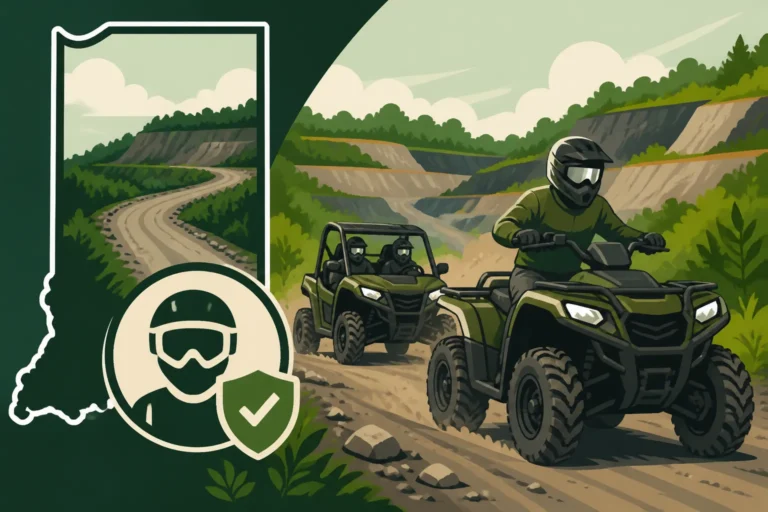
We've all been there: you're enjoying a fantastic ride through the Indiana countryside, maybe exploring some private property or heading between designated trail systems, and suddenly, you face the inevitable – a public road. That moment of hesitation before you try to cross can feel like a minefield of "what ifs" and unspoken rules. It's not just about getting to the other side; it's about doing it legally and, more importantly, safely. This guide is dedicated to untangling the specific requirements Indiana places on off-road vehicle (ORV) operators when crossing public roadways, ensuring you understand exactly why and how you need to come to a complete, dead stop before proceeding.
Understanding Indiana's Road Crossing Mandate
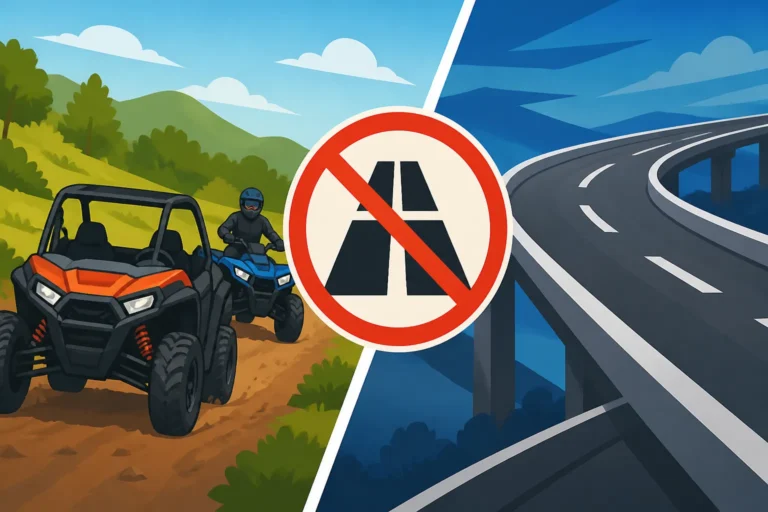
Indiana's approach to ORVs on public roads is generally conservative: by default, ORVs are not considered street-legal. However, the law does make provisions for crossing roads to access other legal riding areas or private property. But these crossings come with strict rules, and the "stopping dead" mandate is paramount.
Why a Full Stop Isn't Just a Suggestion
When you're riding an ATV or UTV, you're on a machine designed for rough terrain, not high-speed asphalt. Cars and trucks on public roads operate at much higher speeds, and their drivers simply aren't expecting an ORV to suddenly appear. This fundamental difference is why Indiana, like most states, imposes stringent rules for crossings. The requirement to stop dead isn't an arbitrary piece of bureaucracy; it's a critical safety measure designed to protect you, your passengers, and other motorists.
Imagine this scenario: you're approaching a rural county road, and you think you see clear for miles. You slow down, glance both ways, and start to roll across. But what if a vehicle crests a hill or comes around a bend faster than you anticipated? Your ORV accelerates differently than a car, and a split-second misjudgment can have catastrophic consequences. The law accounts for this human element and the inherent risks. It mandates a complete cessation of movement, giving you the absolute best chance to assess the situation thoroughly, eliminate any momentum that might carry you into harm's way, and ensure the path is truly clear before you commit to crossing. It also signals your intent clearly to any approaching traffic, even if they're still a distance away. This isn't just about avoiding a ticket; it's about preventing an accident that could change lives forever.
The "Complete Stop" Defined in Practice
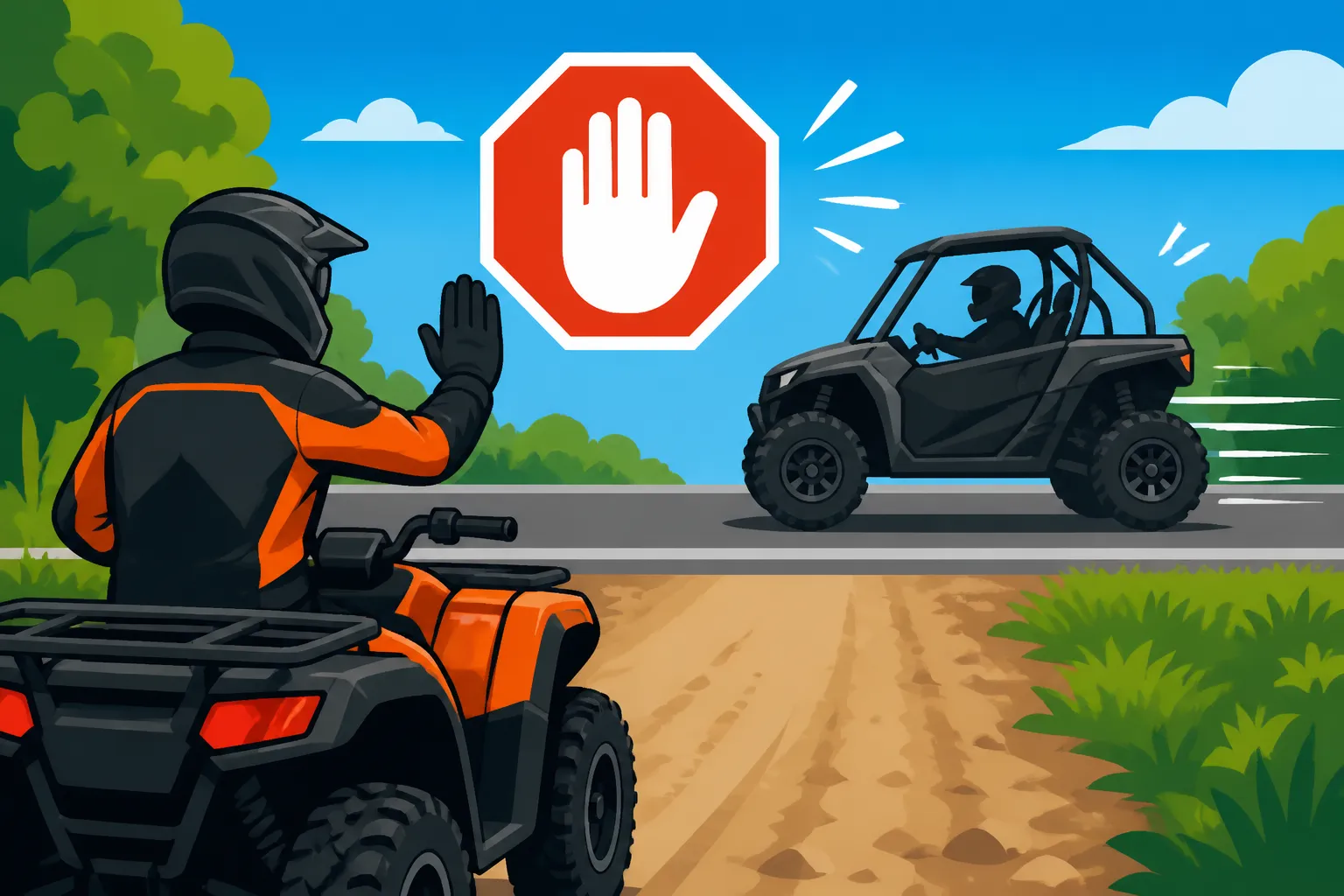
So, what exactly does "stopping dead" or a "complete stop" mean when you're on an ORV in Indiana? It's more than just slowing down to a crawl or a "rolling stop." In the eyes of Indiana law and law enforcement, a complete stop means that your ORV's wheels must cease rotation entirely, and the machine must be stationary. Just like at a stop sign in your car, there should be a discernible pause where your machine is not moving forward, backward, or sideways.
This isn't the time for guesswork or shortcuts. A common mistake riders make is slowing down just enough to peek down the road and then immediately accelerating across if they think it's clear. This is precisely what the law aims to prevent. A true "complete stop" requires you to halt your machine, take a moment, look left, right, and left again, and thoroughly confirm that no traffic is approaching from either direction that would pose a hazard. Think about it as resetting your mental clock. You need to gather all available information about the traffic situation before making the critical decision to cross. If you're on a private trail leading to a public road, make sure you stop at the very edge of the road or right-of-way, before any part of your machine enters the traffic lane or shoulder. This ensures you have the best possible view of oncoming traffic without obstructing it yourself.
The Broader Rules for Crossing Indiana Roads
While the "complete stop" is foundational, it's part of a larger set of rules governing how ORVs interact with public roads in Indiana. These rules are designed to ensure maximum safety and predictability for everyone involved.
Crossing at Right Angles: Keeping it Safe and Legal
Beyond stopping dead, Indiana law specifies how you must cross a public road. You must cross at a right angle (90 degrees) to the roadway. This means traveling straight across the lanes, not diagonally, not at a slight angle, and certainly not riding down the road for any distance, however short. The rationale here is purely safety and predictability. When you cross straight, you minimize the amount of time your ORV is in the traffic lane, and you present the most predictable path to other drivers.
Imagine a car approaching. If you're attempting a diagonal crossing, the driver has a harder time judging your speed, your intended path, and how long you'll be in their lane. A straight-on crossing makes your movement clear: you're going from one side to the exact opposite, as quickly and directly as possible. Even on county roads where ORVs might be permitted to ride the shoulder or ditch, the act of crossing an intersecting road still demands this right-angle approach. Whether it's a major highway or a quiet gravel lane, the rule is the same: point your machine straight, wait for the all-clear after your complete stop, and then proceed directly across. [Crossing Square to the Lanes] is not just good advice, it's the law.
Yielding to All Traffic: Your Responsibility on the Pavement
The absolute core principle of any ORV road crossing in Indiana is that the ORV operator always yields to all vehicular traffic on the public roadway. This isn't a suggestion; it's a strict legal mandate. This means that if there is any vehicle approaching, no matter how far away it appears, you must wait. You do not have the right of way. The responsibility rests entirely on you, the ORV operator, to ensure the crossing is completely safe and clear of all traffic.
This can sometimes feel frustrating, especially if you're on a rarely traveled road or during off-peak hours. You might find yourself waiting for what feels like a long time for a vehicle that seems miles away. However, it's crucial to remember that speed limits on rural roads can be high, and vehicles can cover ground much faster than you anticipate on your ORV. Taking that extra minute to ensure a truly clear crossing is a small price to pay for safety. Before you even think about engaging the throttle, make eye contact if possible, double-check your surroundings, and verify that there are no vehicles close enough to pose a hazard. This rule is non-negotiable and foundational to safe ORV operation near or on Indiana roads. [Yielding to All Traffic at a Crossing] is crucial, and failing to do so can have serious consequences.
| Action Point | Required (Indiana Law) | Recommended (Best Practice) |
|---|---|---|
| Stop | Complete, dead stop before entering roadway/shoulder. | Stop well clear of travel lanes, allowing full visibility. |
| Angle of Crossing | At a right angle (90 degrees) to the roadway. | Maintain 90 degrees throughout the crossing, minimize time in lane. |
| Yield | Yield to all vehicular traffic on the roadway. | Wait for a significant, clear gap; don't rush or assume right of way. |
| Visibility | Working headlights/taillights required if applicable. | Wear high-visibility clothing, use flags, consider aftermarket lighting. |
| Observation | Look left, right, left again for traffic. | Look multiple times, listen for approaching vehicles, use mirrors if equipped. |
| Acceleration | Cross directly and safely after yielding. | Accelerate smoothly but quickly to clear the road, without being reckless. |
Navigating Permitted Road Sections and Crossings
It's easy to get confused about when and where you can operate your ORV on public land. The critical distinction is between roads where ORVs are permitted to ride (rare, and only by specific county ordinance) and roads you are permitted to cross. The rules for stopping dead and yielding apply universally to all crossings, regardless of whether you're briefly riding a designated county road beforehand.
The Difference Between Riding and Crossing
This is a point of frequent misunderstanding for many riders. While a handful of Indiana counties have passed ordinances allowing ORVs to operate on certain county roads (like [Hancock County's Open County Roads] or [Dearborn County's Section 70.04]), these are the exceptions, not the rule. Even in those specific circumstances, the act of crossing an intersecting road (especially a state highway or a different county road not designated for ORV use) still triggers the strict "complete stop" and "right angle" rules.
Most of the time, when you encounter a road on your ORV in Indiana, it's not a road you're allowed to ride on, even for a short distance. It's a barrier you need to cross to get from one legal riding area to another. This means you approach the road, come to a complete stop, look for traffic, cross directly, and then immediately exit the public road onto private property or another trail system. You are not to use the road as a shortcut, even for a hundred feet. The moment you cross, your goal is to be off the paved or graveled public right-of-way as quickly and safely as possible. Confusing riding permission with crossing permission can lead to serious legal issues and dangerous situations. Remember, [Crossing a Road on an ORV in Indiana] is a privilege with strict boundaries.
Equipment and Preparedness for Indiana Crossings
Being prepared and highly visible is paramount when you're anticipating a road crossing in Indiana. Beyond the legal mandates, common sense and safety dictate that you do everything possible to make your presence known to other motorists. This often means ensuring your machine is properly equipped and you're dressed appropriately.
- Lighting: Your ORV should have functional headlights and taillights, especially if there's any chance you'll be riding near dusk, dawn, or in low-visibility conditions. These aren't just for seeing; they're for being seen. Consider aftermarket lighting for enhanced visibility. Many riders install brighter LED lights, light bars, or additional auxiliary lights on their machines. Companies like SuperATV offer a wide range of lighting solutions, from powerful LED light bars to rock lights, that can dramatically increase your visibility, making you much easier to spot by approaching traffic, even in broad daylight.
- Flags: A brightly colored, tall safety flag mounted on your ORV is another excellent way to increase visibility, especially in hilly terrain or when coming out of wooded areas where your machine might be obscured.
- High-Visibility Gear: As a rider, wearing brightly colored clothing, especially blaze orange or fluorescent yellow/green, significantly improves your visibility. A reflective vest can be a simple, effective addition to your gear.
- Mirrors: While not always required on ORVs, side mirrors can be incredibly helpful for checking for approaching traffic behind you, providing another crucial data point before you commit to a crossing.
Before you even leave your staging area, do a quick check of your lights, flag, and gear. A few extra seconds of preparation can make all the difference when you're facing a busy road crossing. Being proactive with your visibility tools helps mitigate the inherent risks of crossing public roads and shows you're taking your responsibility seriously.
Penalties and Owner Liability for Non-Compliance
Ignoring Indiana's rules for ORV road crossings isn't just a matter of inconvenience; it carries significant legal and financial consequences. Law enforcement officers are vigilant about ORV activity near public roads, and the penalties can range from fines to potential impoundment and even civil liability in the event of an accident.
What an Indiana Officer Checks Roadside
When an Indiana conservation officer or local law enforcement officer observes an ORV on or crossing a public road, their primary concern is safety and compliance. If they stop you, they'll be looking for several key things beyond just whether you made a complete stop or yielded. They'll verify:
- ORV Registration: Is your ORV properly registered with the Indiana Bureau of Motor Vehicles (BMV) and displaying a current decal? [Indiana ORV Registration and Insurance Proof] is essential.
- Operator's Age and Supervision: Is the operator of legal age for the machine they are riding, and if a minor, are they under direct adult supervision as required by law? [Indiana Minimum Age to Ride an ORV] and [Indiana Supervision Rules for Minors] are critical.
- Helmet Use: If the operator or any passenger is under 18, are they wearing a DOT-compliant helmet? [Indiana Helmet Law for ORV Riders] is strictly enforced.
- Proof of Insurance: While not always required for all ORV operation in Indiana, some local ordinances (like [Vanderburgh County's Insurance Certificate Requirement]) may mandate it for road riding or crossing. It's always a good idea to have it.
- Operator Impairment: Are there any signs of alcohol or drug impairment? Indiana's DUI laws apply to ORV operators just as they do to motor vehicle drivers.
Officers are trained to quickly assess these factors. A simple "rolling stop" infraction can quickly lead to a deeper look into your compliance with all ORV regulations, compounding potential penalties. [What an Indiana Officer Checks Roadside] can range from a quick visual scan to a full documentation check.
The Cost of a Rolling Stop or Failed Yield
Failing to make a complete stop, crossing improperly, or failing to yield to traffic when operating an ORV in Indiana typically falls under a Class C ORV Infraction. This isn't just a slap on the wrist. A single Class C infraction can carry a fine. While specific amounts can vary, it's not uncommon for these fines to be substantial, easily reaching hundreds of dollars. [What a Class C ORV Infraction Costs in Indiana] can put a real dent in your riding budget.
Beyond the initial fine, there are other potential costs:
- Court Fees: You'll likely incur court costs on top of the base fine.
- Impoundment: In some cases, especially for repeat offenses or egregious violations, an officer has the discretion to impound your ORV, adding towing and storage fees to your financial burden.
- Civil Liability: This is perhaps the most significant and often overlooked consequence. If your improper crossing or failure to yield results in an accident, you could be held civilly liable for damages, injuries, and medical costs incurred by other parties. This can amount to tens or hundreds of thousands of dollars, far exceeding any direct fine.
- Owner Liability: If you allow another person to operate your ORV and they commit an infraction or cause an accident, you, as the owner, could also be held liable. This means [Why an Indiana Owner Is Liable] for the actions of those they permit to use their machine.
The bottom line is that cutting corners on road crossing rules is a very risky gamble in Indiana. The small amount of time saved by not stopping completely or not yielding is absolutely not worth the potential financial, legal, and personal costs if something goes wrong. Always prioritize safety and strict compliance with the law.
Disclaimer
This article is for general informational purposes only and does not constitute professional advice. Laws, prices and regulations vary by location and change over time. Consult a qualified professional for guidance on your specific situation.