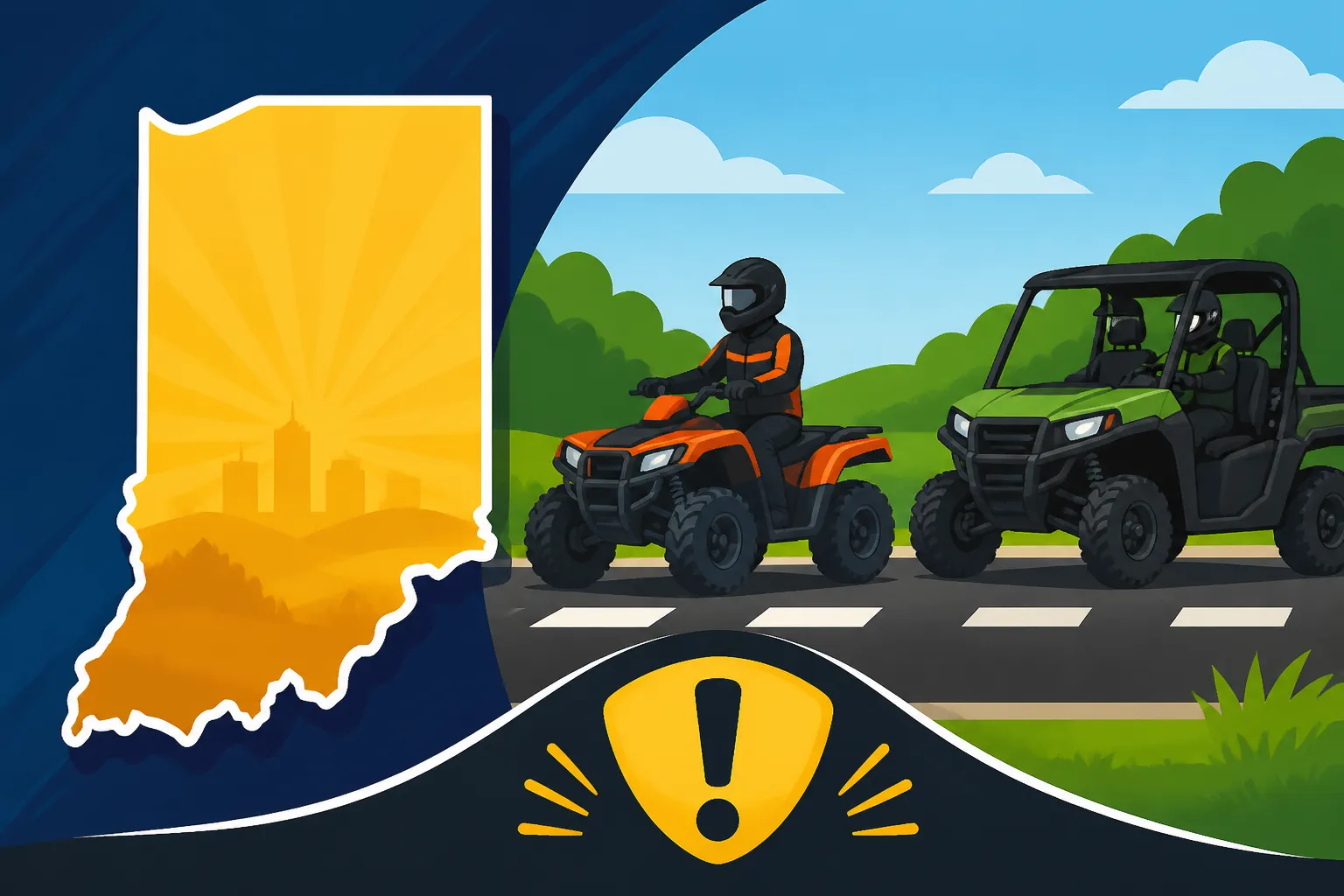
Indiana Rules for Crossing a Highway
Navigating the rules for off-road vehicles (ORVs) in Indiana can feel like trying to untangle a bowl of spaghetti – especially when you need to get your quad or side-by-side from one place to another. Many of us own these machines to enjoy the trails, hunt, or work on our land, but what happens when that land is divided by a paved road, or you need to access a legal riding area just across a state highway? It’s a common frustration, and the desire to simply hop across a road can be tempting, but the laws are quite specific, and misunderstanding them can lead to hefty fines or, worse, dangerous situations. This comprehensive guide will walk you through the precise Indiana rules for crossing a highway, explaining what's allowed, what's strictly forbidden, and how to do it safely and legally.
The Default Rule: Why Indiana Highways Are Generally Off-Limits for ORVs
Let's be real, most of us dream of hitting the open road on our ORV, but Indiana's laws are pretty clear: these machines are designed for off-road use, not for cruising down state highways. The default position in the Hoosier State is that your ATV or UTV is not street legal. This isn't just a suggestion; it's a fundamental legal distinction that underpins all other rules regarding ORVs and public roads. Trying to use a highway as a regular thoroughfare on your ORV is a recipe for trouble, putting both you and other motorists at significant risk.
Understanding Indiana's Default Road Closure
The core of Indiana's ORV legislation designates these vehicles for recreational or utility use off paved roads. This means that, unlike cars, trucks, or even some golf carts (under very specific local ordinances), ATVs and UTVs are generally prohibited from operating on highways, roads, or streets maintained by the state. This blanket prohibition exists for several very good reasons, primarily safety. ORVs lack many of the safety features of traditional road vehicles, such as turn signals, rearview mirrors, and protective enclosures, not to mention they often have different braking and handling characteristics that aren't suited for high-speed, multi-lane traffic.
The legal premise is simple: unless a specific exception is granted by state law or a local ordinance (which we'll get into for county roads later), your machine stays off the blacktop. Imagine the chaos and danger if every ORV owner decided to take their machine down US-41 or I-65. It's just not what these vehicles are built for, and the law reflects that reality. This default closure is something every Indiana ORV owner needs to understand from day one, before they even think about leaving the dirt.
The Exception: When a County Opens Its Roads
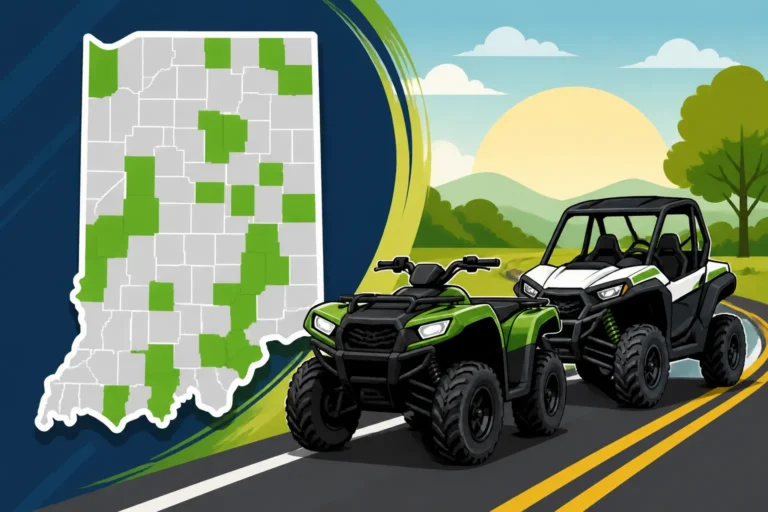
Now, you might have heard whispers or seen signs about certain counties opening their roads to ORVs. It's true! Some Indiana counties have taken the initiative to pass local ordinances that allow ORVs on certain county roads. This is fantastic news for riders in those areas, as it can connect trails, allow access to businesses, or simply provide more riding opportunities. However, and this is a huge "however," these local ordinances do not apply to state highways.
A county ordinance might open a gravel road or a two-lane blacktop within its jurisdiction, but it has no authority over a state highway that cuts through that county. State highways fall under the purview of the Indiana Department of Transportation (INDOT) and state law, which maintains the general prohibition on ORV use. So, while you might be able to ride your SuperATV equipped machine down a designated county road in, say, Hancock County, that privilege instantly vanishes the moment you approach a state highway. The only interaction you can legally have with a state highway is usually a very specific, carefully regulated crossing.
The Specific Rules for Crossing an Indiana Highway
So, you've got private land on both sides of a state highway, or you need to get from a legal county ORV road to another. You can't just ride along the shoulder, but Indiana law does provide a narrow exception for crossing certain highways. This isn't a free-for-all; it's a highly specific maneuver with strict requirements designed to ensure your safety and the safety of other motorists. Think of it less as "driving on a highway" and more like a carefully executed, swift passage across.
Stopping and Yielding: Your Absolute First Steps
Before your tires even touch the pavement of a state highway, you absolutely must follow two critical rules: come to a complete stop and yield to all traffic. This isn't like merging onto a highway in a car where you match speed. This is a dead stop. You need to pull up to the edge of the pavement, stop completely, and look in both directions, repeatedly. Think of it as if you're pulling out from a private driveway onto a busy road – but with even greater caution because you're on an ORV.
Every single time you prepare to cross a highway, no matter how remote it seems or how little traffic you observe, you must perform a full and complete stop. This gives you the crucial time to assess the traffic situation thoroughly. Once stopped, the law demands that you [Yielding to All Traffic at a Crossing]. This means you must wait until the highway is completely clear of oncoming traffic, or until there's such a significant gap that you can cross safely and quickly without impeding the flow of traffic in either direction. Err on the side of caution; a minor misjudgment can have catastrophic consequences. Patience is not just a virtue here; it's a legal requirement and a life-saving practice.
Crossing at Right Angles: The Direct Path
Once you've stopped and yielded, the actual crossing must be executed with precision. Indiana law specifies that you must cross the highway at a right angle to the paved surface. This means going straight across, perpendicular to the lanes of travel, taking the shortest possible path. You cannot angle down the road, travel diagonally, or ride along the pavement for any distance. The goal is to minimize the time your ORV spends on the highway itself, getting you from one side to the other as quickly and directly as possible.
Imagine drawing a perfectly straight line from where you stopped on one side to where you intend to exit on the other. That's your path. This requirement for [Crossing at Right Angles in Indiana] is a safety measure, reducing the unpredictable movements that could confuse other drivers and minimizing your exposure to high-speed traffic. It also ensures that your machine's handling characteristics are best suited for the short, direct sprint rather than a prolonged or angled maneuver that could be more difficult to control. Always aim for the clearest, straightest line across.
Crossing Locations: Where it's Permitted
The ability to cross a highway isn't universal; it's generally restricted to specific types of locations. Typically, you're allowed to cross at an intersection with another road, or at a point where a private drive or field access meets the highway. You cannot simply pick a random spot in the middle of a stretch of highway and attempt to cross. The intent of the law is to allow passage where there are already established breaks in the traffic flow or clear sight lines, not to create new impromptu crossing points.
This distinction is crucial. While a county might have opened certain roads for ORV use, those ordinances usually specify that state highways are for crossing only at appropriate locations. You might be connecting two sections of private land, or moving from a designated county ORV road to another, but the crossing itself must be done responsibly and in a logical location. Understanding [Where the Right-of-Way Ends] can help clarify permissible crossing points, often aligning with property lines or established access routes. Always choose a spot with excellent visibility for both you and approaching vehicles.
What to Avoid: Common Mistakes and Misconceptions
Despite the clear rules, many ORV owners sometimes misunderstand the nuances of highway interaction. These misconceptions can lead to dangerous situations and unwanted legal trouble. It's easy to assume a little bit of riding on the pavement "won't hurt," but even a short distance can be illegal and put you in harm's way. Let's clear up some of those common pitfalls.
Riding Along the Shoulder or Ditch to Cross
This is one of the most common mistakes I see. People often think, "Well, I just need to go a hundred feet down the shoulder to get to that driveway, then I'll cross." Absolutely not. The rule for crossing a highway is just that: crossing. It does not grant you permission to travel along the highway, even on the shoulder or in the ditch. While [The Shoulder and Ditch Exception in Indiana] exists for certain county roads (and is still subject to local ordinances), it generally does not apply to state highways for travel purposes.
Attempting to ride along the shoulder or in the ditch of a state highway, even for a short distance to line up a crossing, is illegal. It exposes you to fast-moving traffic for a longer period, and those areas are often designed differently than what an ORV can safely navigate at speed. The only part of the highway you should be on is the direct, perpendicular path across the paved lanes. Do not use the shoulder as an acceleration lane, a waiting area, or a short cut. This action is distinct from a legal crossing and carries its own set of risks and penalties.
Crossing Limited-Access Highways: A Strict No-Go
There are some highways that you simply cannot cross, under any circumstances. These are typically limited-access highways, such as interstates (like I-70, I-69, I-65), or multi-lane US routes where access is controlled and speeds are high. These roads are designed for continuous, high-speed traffic flow, and there are no provisions for ORV crossings. Attempting to cross a limited-access highway is incredibly dangerous and strictly prohibited.
The reasons are self-evident: vehicles travel at very high speeds, there are often multiple lanes, and there are no safe or designated crossing points. The risk of collision is astronomical. [Why You Cannot Cross a Limited-Access Highway] boils down to the fundamental design and purpose of these roadways – they are not compatible with slow-moving, un-signaled ORV traffic. If your property or intended destination requires you to interact with a limited-access highway, you must trailer your ORV to a safe, legal access point. There is no legal shortcut across an interstate.
Penalties for Improper Highway Use
Ignoring these rules isn't just a matter of "getting caught"; it comes with real legal and financial consequences. Operating an ORV illegally on an Indiana highway can result in fines, and in some cases, your machine could even be impounded. An officer observing improper highway use will likely issue a citation for a Class C ORV infraction.
While I can't give you exact figures, know that [What a Class C ORV Infraction Costs in Indiana] can be significant, potentially ranging from hundreds to thousands of dollars, depending on the specifics and whether it's a first offense or repeat violation. Beyond the immediate fine, you're looking at potential court costs, and if there's any damage or injury, the liability aspect becomes a nightmare. Remember, these laws are in place for safety, and enforcement officers take them seriously to prevent accidents. Don't risk your wallet or your safety by bending the rules.
Practical Considerations for Safe Highway Crossing
Knowing the rules is one thing; putting them into practice safely is another. A highway crossing, even a legal one, is inherently risky due to the speed and volume of vehicular traffic. Taking extra precautions and preparing your machine can significantly reduce those risks. Think ahead, be visible, and prioritize safety above all else.
Visibility and Machine Readiness
When you're crossing a highway, you become a very small, relatively slow-moving target in a world of much larger, faster vehicles. Maximizing your visibility is paramount. Always wear bright, reflective clothing, especially if you're crossing at dawn, dusk, or night. Headlights and taillights are crucial; make sure they are in perfect working order. Many riders upgrade their lighting systems with aftermarket options from brands like SuperATV to ensure they are seen from a distance.
Beyond personal visibility, ensure your machine itself is ready for the crossing. This means quick acceleration and responsive braking. A stalled engine mid-crossing is a terrifying scenario. Before even approaching the highway, do a quick check: are your tires properly inflated? Is your engine running smoothly? Are your lights on? Taking these few moments to ensure your machine is in top condition and you are as visible as possible can make all the difference in a safe crossing.
Planning Your Route and Knowing Your Local Ordinances
Never attempt a highway crossing on a whim. Plan your route in advance. Identify the safest, clearest, and most legal crossing points. Look for intersections with good sight lines or wide-open spaces where you can clearly see approaching traffic for a long distance, and they can see you. Avoid crossing near blind curves, hillcrests, or areas with heavy foliage that might obscure your view or make you less visible.
It's also vital to reiterate the importance of understanding all relevant local ordinances. While county ordinances don't supersede state highway laws, they do dictate where you can legally ride to and from the highway. For instance, if you're crossing a state highway to access a county road, you need to be sure that county road is actually open to ORV traffic. Ignorance of the law is not an excuse. Familiarize yourself with [Indiana Rules for Riding a County Road] and other local specifics to ensure your entire journey is compliant.
Insurance and Liability
Even when following all the rules for a legal highway crossing, accidents can happen. Another driver might be distracted, or an unforeseen mechanical issue could occur. This is where having adequate insurance becomes critically important. While Indiana doesn't always mandate ORV insurance for all types of riding, the risks associated with highway crossings make it an absolute must-have. [Indiana ORV Insurance Requirements] will give you the baseline, but consider higher coverage limits if you frequently ride in areas with public road interactions.
Imagine a scenario where you've followed every rule—stopped, yielded, crossed at a right angle—but a distracted driver still collides with you. Without insurance, the financial burden of damages, medical bills, and potential legal fees could be devastating. Protect yourself, your machine, and your family by ensuring you have robust ORV insurance that covers you for off-road use, and ideally, for those brief, legal interactions with public roads. It's an investment in peace of mind that you hope you never have to use, but will be eternally grateful for if you do.
| Action | On State Highway (General) | For Crossing a State Highway | On Designated County Road (Check Local Ordinances) |
|---|---|---|---|
| Travel Along Pavement | Prohibited | Prohibited | Potentially Allowed |
| Travel Along Shoulder/Ditch | Prohibited | Prohibited | Potentially Allowed |
| Complete Stop Before Entering Pavement | N/A | Required | Required at Intersections |
| Yield to All Traffic | N/A | Required | Required at Intersections |
| Cross at Right Angles | N/A | Required | N/A (for travel, not crossing) |
| Crossing Limited-Access Highways | Prohibited | Prohibited | N/A |
This article is for general informational purposes only and does not constitute professional advice. Laws, prices and regulations vary by location and change over time. Consult a qualified professional for guidance on your specific situation.