Riding a Snow-Covered County Road
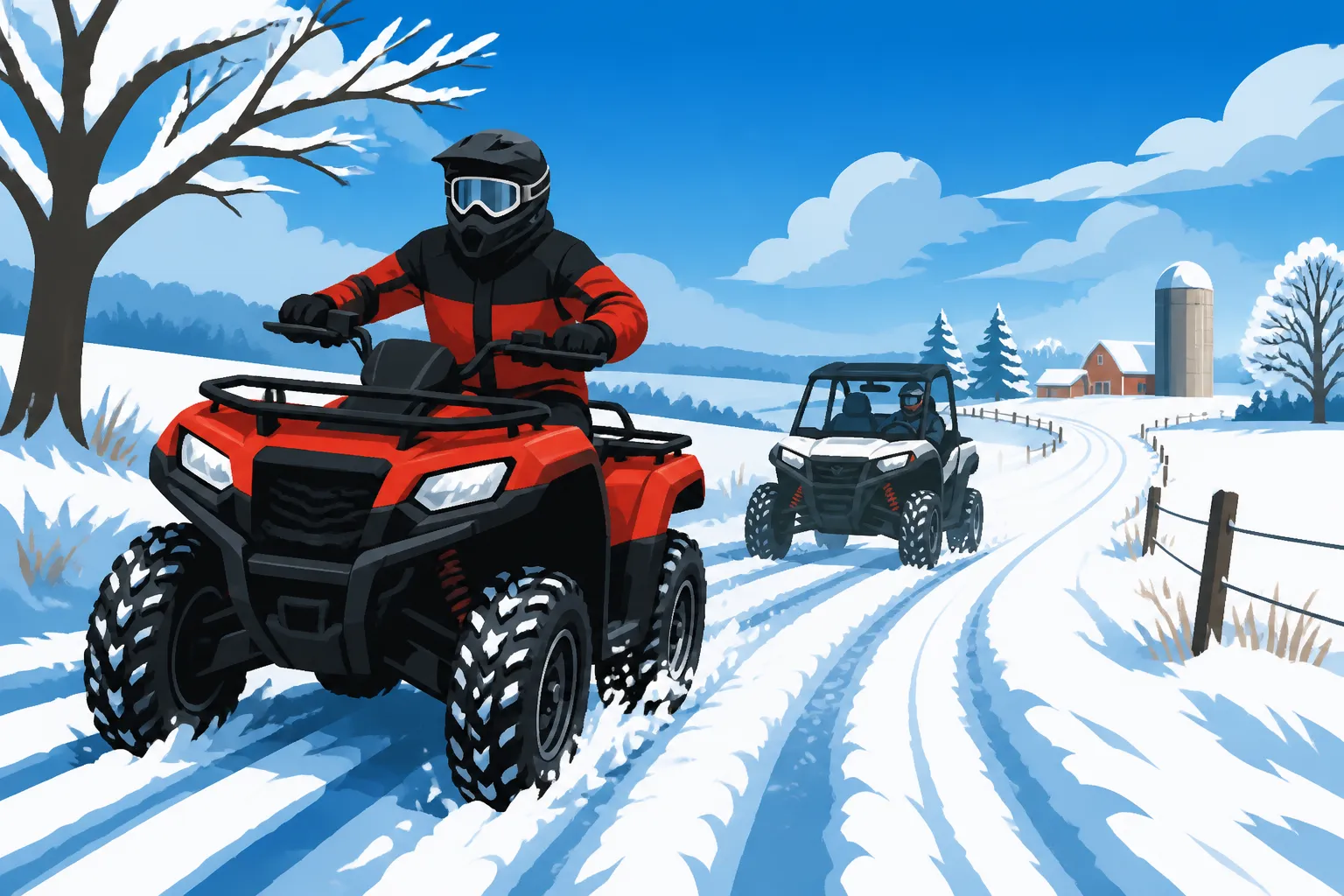
There's a unique thrill that comes with seeing a fresh blanket of snow, especially when you're an off-road enthusiast in Indiana. That crisp, quiet landscape just screams adventure. But before you fire up your ATV or UTV and consider taking to a snow-covered county road for a quick spin or even to help clear a path, there are some really important things you need to know about what's legal, what's safe, and what you absolutely need to prepare for. Many folks get caught up in the excitement, only to find themselves facing a ticket or, worse, a dangerous situation because they didn't understand Indiana's specific rules for off-road vehicles on public roads, especially when they're draped in winter white. This guide will walk you through the nuances of riding a snow-covered county road in the Hoosier State, helping you stay on the right side of the law and, most importantly, safe.
The Tricky Legal Landscape: Can You Actually Ride There?
It's a question every ATV and UTV owner in Indiana has probably pondered: "Can I just hop on the road for a bit?" The short answer, and one that often frustrates many riders, is generally no. Indiana's state law is pretty clear that off-road vehicles (ORVs) are not street legal by default. They're built for the trails, for private land, and for specific designated areas, not for the paved (or snow-covered) public highways and county roads. This stance is rooted in safety and the fundamental difference in design between an ORV and a vehicle meant for public road use. They lack many of the safety features, like turn signals and headlights that meet DOT standards, that regular cars and trucks are required to have.
However, like many things in life, there are exceptions and nuances. The state law does allow for certain limited uses of ORVs on public roads. For instance, you can often cross a public road at a right angle after coming to a complete stop, [Crossing a Road on an ORV in Indiana], or you might be able to ride along the shoulder or in the ditch of a public road, provided there's sufficient width and you're not interfering with traffic. This is known as [The Shoulder and Ditch Exception in Indiana]. But here's where the snow comes in: a snow-covered road, while it might feel more like a trail, doesn't automatically change its legal designation from a "public road" to an "off-road area." The rules still apply.
The temptation to ride that untouched layer of powder on a quiet county road is strong, especially when it feels like a natural extension of your property or a shortcut to a friend's house. But remember, the underlying pavement is still a public thoroughfare, and without specific authorization, riding your ORV on it, snow or no snow, can lead to a Class C infraction. That's a pretty heavy fine for a bit of winter fun, not to mention the potential for points on your driving record if a police officer decides to go that route. It's truly a scenario where ignorance of the law won't be a valid excuse. The best approach is to always assume public roads are off-limits unless you've verified a specific exception. After all, [Why Indiana Roads Are Closed by Default] is a pretty strong statement in the law.
Differentiating Public Roads from Private Property
Sometimes, it's easy to blur the lines between private property and public access, especially in rural areas or during winter. You might live on a private lane that connects to a county road, and that private lane gets snowed in. Clearing it with your UTV, possibly equipped with a plow, is perfectly fine. But the moment you push snow or even just drive onto the county road itself, you've transitioned from private property use to public road use.
This distinction is crucial. Your property, your rules (within reason). The county road, the county's and state's rules. Snow doesn't magically privatize a public road. It remains a public thoroughfare, even if it hasn't been plowed yet. This can be especially frustrating if your neighbors have a similar machine and you see them out and about. It doesn't mean it's legal for you, it just means they might be taking a risk, or perhaps they've done their homework on their specific county's ordinances. Every rider needs to understand that they are personally responsible for knowing where they can and cannot ride.
The Role of County Highway Departments
When snow blankets the roads, county highway departments are busy working to clear them. This introduces another layer of consideration for ORV riders. Your machine, especially a UTV with a plow, might seem like a great way to help out, but operating on a public road, even to clear snow, without specific permission or designation from the county can still be illegal. Furthermore, sharing the road with plows and other heavy machinery creates significant safety hazards.
Even if a county has an ordinance that permits ORV use on certain roads, it's highly unlikely that the ordinance would grant you special permission to operate outside of those designated rules just because there's snow. Highway departments prioritize clear roads for emergency services and public access, and an ORV, even a helpful one, can be an impediment or a liability if not properly authorized. Always check with your local county highway department or sheriff's office if you have specific questions about using your ORV for snow removal on county property.
Understanding Local Ordinances and Designated Routes
While state law generally restricts ORVs on public roads, Indiana law does grant individual counties the power to open their own roads to ORV traffic. This is a game-changer for many riders, as it means what's legal in one county might be illegal just across the county line. The key is to never assume and always do your homework. Snow-covered or not, if a county road hasn't been designated for ORV use by local ordinance, then the state's default rules apply, meaning your machine likely doesn't belong there.
Some progressive counties have indeed embraced the idea of opening certain roads, often to connect trail systems or provide access to businesses. For example, [Hancock County's Open County Roads] offers some opportunities, and [Dearborn County's Section 70.04] is another example of a county that has taken steps to create a framework for ORV use. These ordinances typically lay out specific requirements that go beyond just having a registered ORV, such as age limits for operators, insurance requirements, lighting rules, and often restrict machines over a certain weight. Snow doesn't alter these specific requirements; if anything, winter conditions might make adherence to things like lighting even more critical.
The most frustrating part for riders is the patchwork nature of these laws. There isn't a single, universal answer across Indiana. You can't just look at a map and say, "Okay, this entire region is open." Instead, you have to investigate county by county, and sometimes even within a county, road by road. This makes spontaneous winter rides on public ways a real challenge unless you've done your research beforehand.
How to Find Your County's ORV Ordinance
So, how do you figure out if your local county has opened any roads, especially for winter riding? It takes a bit of legwork, but it's absolutely worth it to avoid fines or accidents. The best place to start is often the county clerk's office, the county commissioner's office, or the county sheriff's department. Many counties also publish their ordinances online. A quick search for "[How to Find an Indiana County ORV Ordinance]" can often point you in the right direction.
When reviewing an ordinance, look for details that specifically mention ORVs (ATVs, UTVs, side-by-sides). Pay close attention to:
- Designated Roads: Which specific roads, if any, are open? Are they only certain sections?
- Operating Hours: Are there time restrictions, especially during nighttime? [Indiana Rules for Riding After Dark]
- Operator Requirements: Minimum age, driver's license requirements, etc.
- Machine Requirements: Are there specific lighting, width, or weight limits? Are certain types of ORVs excluded?
- Insurance Requirements: Some counties might mandate specific liability insurance.
- Helmet Laws: While state law covers riders under 18, counties might extend [Indiana Helmet Law for ORV Riders] to all riders on their designated roads.
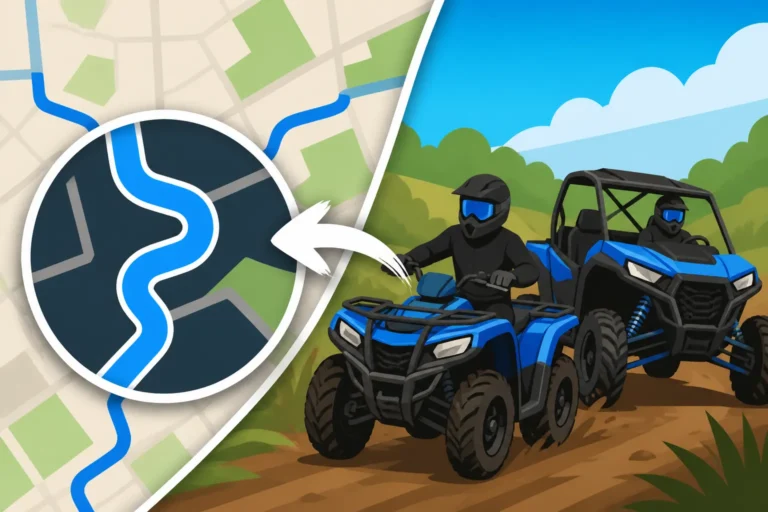
Remember, a lack of snow on the ground means the rules are still in effect, and the same goes for a heavy snowfall. The legal status of the road doesn't change with the weather. If you're in a county like Vanderburgh, which has a specific, color-coded map for ORV access, understanding [Vanderburgh County's Marked Road Map] is paramount. A red road means no ORV access, regardless of how much snow it has.
The "Shoulder and Ditch" Rule in Winter
The state's allowance for riding on the shoulder or in the ditch alongside a public road can be particularly tempting in winter. After all, if the shoulder is buried in snow, it feels more like an off-road track, right? However, the "sufficient width" requirement of the rule becomes even more critical in winter. If the shoulder is narrow due to snowbanks or ice, or if riding there brings you too close to the active traffic lane, you could still be in violation.
Furthermore, the "ditch" often implies a drainage area. Riding in a snow-filled ditch can be incredibly deceptive, hiding culverts, deep ruts, or unexpected obstacles that could lead to a serious accident. While the law might permit it under certain conditions, common sense and safety should always take precedence, especially when visibility is reduced, and the ground beneath the snow is unknown. It's an exception designed for practical, limited use, not for joyriding.
Safety First: Navigating Snow-Covered Roads and Trails
Okay, so you've done your homework, found a county road that's open to ORVs, and it's covered in beautiful, fresh snow. Or maybe you're on your own private property, just making your way through the drifts. Regardless of where you're riding, snow and ice introduce a whole new set of challenges that demand extra caution and preparation. Winter riding is a blast, but it's also inherently riskier than fair-weather excursions.
The biggest issue with snow is its deceptiveness. What looks like a smooth, even surface can hide anything from potholes and large rocks to fallen branches or even drainage grates. Beneath that inviting white layer, there could be black ice, particularly in shaded areas or after freeze-thaw cycles. This makes traction highly unpredictable. One moment you're cruising, the next your tires lose grip, and you're sliding.
Visibility is another major concern. Snow can reduce your ability to see hazards, but it also reduces other drivers' ability to see you, especially if you're riding on a county road, even a designated one. Snow plows and other vehicles operating in winter conditions often have limited visibility themselves, and they're not always expecting an ORV to be sharing their route. Short winter days also mean you're more likely to be riding in low light or darkness, making proper lighting on your machine absolutely non-negotiable.
Traction and Braking in Winter Conditions
When it comes to traction, snow, especially wet or icy snow, dramatically reduces grip compared to dirt or dry pavement. Your machine will handle differently, and you'll need to adjust your riding style significantly.
- Slower Speeds: This is the golden rule. Everything takes longer in snow – accelerating, turning, and especially stopping. Reduce your speed significantly to give yourself more time to react to changing conditions and maintain control.
- Smooth Inputs: Avoid sudden acceleration, hard braking, or jerky steering. Smooth, deliberate movements are key to maintaining traction and preventing slides.
- Engine Braking: Use engine braking whenever possible to slow down gently, especially on descents. Hard application of the brakes can easily lock up wheels and send you into a skid.
- Tire Pressure: While lower tire pressure can sometimes increase traction in deep snow, it can also make your machine feel mushy and less stable. Experiment on private land first to find what works best for your machine and the snow conditions. Some riders even opt for specific snow tires with aggressive, open tread patterns designed to "paddle" through snow.
Remember that even with four-wheel drive engaged, your ORV can still lose traction very quickly on ice. Be especially wary of bridges, shaded corners, and areas where snow has melted and refrozen. These are prime spots for hidden ice patches.
Visibility and Lighting in the Snow
Winter days are shorter, and weather conditions can quickly reduce visibility, making your machine harder to see for others, and making it harder for you to see what's ahead.
- Headlights and Taillights: Ensure all your lights are in perfect working order. Consider adding auxiliary LED lights for better forward illumination. Many UTVs, like those designed with accessories from SuperATV, come with robust lighting options, but make sure they're functional and clear of snow buildup.
- Reflective Gear: Wear bright, reflective clothing. Blaze orange or yellow jackets are excellent choices. This helps you stand out against the white backdrop of snow, especially in low light.
- Clean Your Machine: Keep your windshield, lights, and mirrors clear of snow, ice, and mud. A little visibility goes a long way.
- Slow Down in Reduced Visibility: If snow is falling heavily or blowing, reduce your speed even further. If you can't see, you shouldn't be moving fast.
If you are legally riding on a designated county road, you must adhere to all lighting requirements, including [Indiana Rules for Riding After Dark]. This often means having working headlights, taillights, and sometimes even turn signals, depending on the specific county ordinance. Don't assume that just because it's a snow day, those rules go out the window.
Gear and Machine Prep for Winter Riding Adventures
Riding in the cold and snow isn't just about legality and technique; it's also about being properly equipped and preparing your machine for the harsh conditions. There's nothing worse than being stuck in the cold because your machine failed or you weren't dressed appropriately. A little foresight goes a long way in making your winter ORV adventures enjoyable and safe.
First and foremost, your personal gear is paramount. Hypothermia is a real danger, and wet clothing can accelerate it rapidly. Layering is your best friend. Start with a moisture-wicking base layer, add insulating layers (fleece, down), and finish with a waterproof and windproof outer shell. Don't forget extremities:
- Heated Grips/Steering Wheel: These are game-changers for keeping your hands warm. If your machine doesn't have them, consider aftermarket options.
- Warm Gloves or Mittens: Waterproof and insulated are key.
- Warm, Waterproof Boots: Keep your feet dry and warm.
- Helmet and Goggles: A full-face helmet or a modular helmet with a good visor and anti-fog treatment is crucial. Goggles, perhaps with a double lens, prevent fogging and keep snow out of your eyes. Remember, [Indiana Helmet Law for ORV Riders] applies to anyone under 18, but it's a smart choice for all riders in winter.
- Neck Gaiter/Balaclava: Protect your face and neck from biting winds and snow.
For your machine, winter requires a bit more TLC and some specialized equipment. Your ORV works harder in the cold and snow, so make sure it's up to the task.
Essential Machine Preparation
Before you even think about hitting that snowy path, run through this checklist:
| Item | Winter Check |
|---|---|
| Battery | Cold weather saps battery power. Ensure your battery is fully charged and in good condition. Consider a battery tender if your machine sits for extended periods. |
| Fluids | Check antifreeze levels and ensure your coolant mixture is appropriate for freezing temperatures. Top off engine oil, making sure it's the correct viscosity for cold weather operation. |
| Tires | Inspect for wear and damage. Aggressive mud or snow tires offer better traction. Adjust pressure slightly downward for more float in deep snow, but be aware of stability. |
| Winch | Absolutely essential for winter riding. Getting stuck in deep snow or mud (which often lurks under snow) is common. Ensure your winch is in working order, with a strong rope/cable and remote. Brands like SuperATV offer reliable winch options that can be a lifesaver. |
| Plow/Snow Blower | If you're using your UTV for snow removal, ensure your plow or blower attachment is secure and functional. Check all hydraulic lines and connections. This is where a UTV with a powerful engine and strong frame, often bolstered by aftermarket parts, really shines. [Indiana Rules for Towing With a UTV] might apply. |
| Lights | All lights (headlights, taillights, brake lights) must be working. Clear lenses. Consider additional LED light bars for enhanced visibility. |
| Brakes | Test brakes thoroughly. Cold and moisture can affect braking performance. |
| Fuel | Start with a full tank of fresh fuel. Consider adding a fuel stabilizer, especially if the machine will sit between rides. |
| Recovery Gear | Beyond the winch, carry a recovery strap, shackles, a small shovel, and a saw or axe for clearing fallen branches. |
| Emergency Kit | Always have a first-aid kit, fire starter, knife, fully charged cell phone (and portable charger), and emergency food/water. |
Considerations for Electric ORVs
For those with electric ORVs, winter riding introduces additional challenges. Cold temperatures significantly reduce battery range and performance. The power drawn by tracks (if installed) or deep snow pushing can drain the battery much faster than in warmer conditions. Plan your routes carefully, especially if you're venturing out on a legally designated county road, and always account for reduced range. [Indiana Rules for an Electric ORV on a Road] still apply, but the practicalities of winter might limit how far you can go.
Winter riding on snow-covered county roads in Indiana can be a truly rewarding experience, offering a unique perspective on the landscape. But it's an adventure that demands respect for the law, for safety, and for the unpredictable nature of winter itself. Do your homework, prepare your machine and yourself, and ride smart.
Disclaimer
This article is for general informational purposes only and does not constitute professional advice. Laws, prices and regulations vary by location and change over time. Consult a qualified professional for guidance on your specific situation.