Indiana Rules for Riding a Ditch
Anyone who loves to get out on their ATV or UTV in Indiana eventually looks at those inviting ditches running alongside county roads and wonders, "Can I ride there?" It's a common question, and the temptation is real to venture off the pavement. However, Indiana's rules for off-road vehicles (ORVs) on or near public roads are quite specific, and misinterpreting them can lead to fines or worse. This guide will walk you through the nuances of riding in ditches, helping you understand where you can and cannot go, and how to stay on the right side of the law.
The General Rule: Ditch Riding and the Shoulder Exception
The first thing to understand about off-road vehicles in Indiana is that, by default, they are generally not permitted on public highways. This includes the paved surface, but also often extends to the immediate right-of-way. It's a fundamental rule designed to keep ORVs, which aren't built for highway speeds or traffic interaction, separate from cars and trucks. Many riders find this frustrating, especially when they're just trying to get from one section of private land to another.
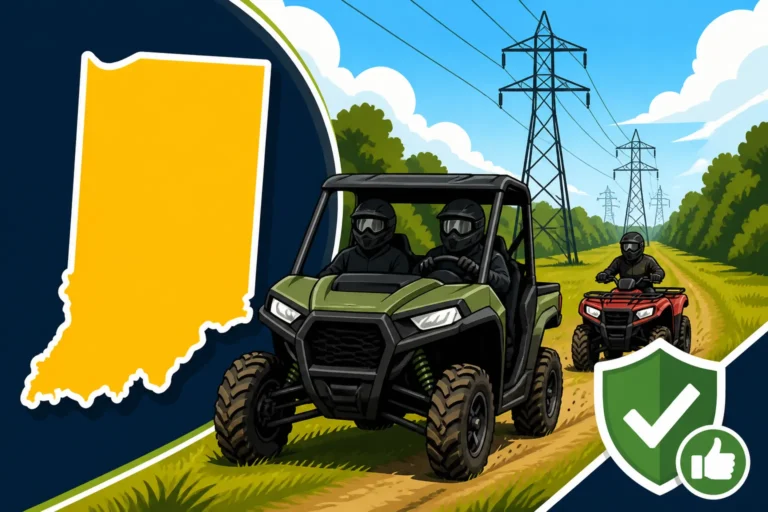
However, Indiana law does provide a crucial "shoulder and ditch exception" that offers some flexibility. This exception acknowledges that there are times when using the non-paved areas adjacent to a road is practical and can be done safely. It's not a blanket permission slip, though; there are very clear conditions that must be met. The essence of the rule is to allow passage without becoming a hazard to regular vehicle traffic or pedestrians. Understanding this exception is key to determining if that inviting ditch is a legal riding spot or a potential ticket.
When we talk about a "ditch" in the context of Indiana ORV law, we're typically referring to the sloped, often grassy or gravelly area that runs parallel to the roadway, designed for water drainage. It's distinct from the travel lanes and, in many cases, even distinct from a paved or well-maintained shoulder. The intent here isn't for recreational "ditch banging" but rather for practical transit when other options aren't available. A common scenario might be needing to travel a short distance along a county road to reach another trail or private property.
Specific Conditions for Riding in an Indiana Ditch
Just because there's an exception doesn't mean it's a free-for-all. Indiana's ORV laws are quite particular about how and when you can legally ride in a ditch. These conditions are in place to ensure safety for everyone using the public right-of-way. Ignoring them isn't just risky, it's illegal.
Sufficient Width and Non-Interference
The law stipulates that the ditch (or shoulder or right-of-way) must have "sufficient width to allow the safe operation of the off-road vehicle entirely off the traveled portion of the public highway." This is a critical point. If the ditch is narrow, steep, or obstructed by obstacles like utility poles, trees, or fences, then it's simply not wide enough for safe operation. "Safe operation" implies that you can maintain control of your machine, avoid rolling over, and stay completely clear of the main road. If you're constantly teetering on the edge of the asphalt or having to swerve onto the road to avoid an obstacle, you're not meeting this condition.
Furthermore, your operation in the ditch must "not interfere with traffic on the public highway." This means you shouldn't be kicking up dust that obscures drivers' vision, creating excessive noise that distracts them, or otherwise causing a disturbance that impacts the smooth flow of traffic. Your presence in the ditch should be as unobtrusive as possible to those using the paved road. This is especially true for wider machines like many UTVs, or those equipped with SuperATV aftermarket accessories that might increase the overall footprint of the vehicle.
Yielding and Crossing Public Highways
When riding in a ditch, you are legally required to "yield the right-of-way to pedestrians and all other vehicles." This is paramount. If you encounter a pedestrian walking along the shoulder or ditch, or a vehicle needing to pull over for some reason, you must stop or move to allow them clear passage. Remember, the ditch is not solely your domain; it's part of the public right-of-way, and others, especially pedestrians, have a primary right to its use.
Another common question is about crossing roads. The law allows you to "cross a public highway other than a limited access highway" under specific conditions. You must:
- Stop completely before entering the highway.
- Yield to all traffic on the highway.
- Cross the highway at right angles to the flow of traffic.
This means no diagonal crossings, no rolling stops, and absolutely no trying to beat oncoming traffic. A "limited access highway" refers to roads like interstates or major parkways where entry and exit are controlled, and ORVs are strictly prohibited from these at all times, including their shoulders and ditches. You cannot use a ditch adjacent to a limited-access highway to travel. For more details on crossing roads, you can check out [Indiana Rules for Crossing a Highway].
Here's a quick reference table for ditch riding conditions:
| Condition | Requirement | Explanation |
|---|---|---|
| Sufficient Width | The ditch must be wide enough for safe operation entirely off the main road. | No part of your ORV should infringe on the paved highway. Consider the width of your machine, especially if you have a wide side-by-side or a quad with extended SuperATV a-arms. |
| Non-Interference | Your presence and operation must not impede or distract traffic. | Avoid kicking up excessive dust, making loud noises, or performing actions that could draw the attention of drivers and create a hazard. |
| Yield Right-of-Way | Give way to all pedestrians and vehicles. | If a pedestrian is in the ditch or a car needs to pull over, you must yield. Their right to the space takes precedence. |
| Crossing Roads | Permitted only on non-limited access highways, with a complete stop, yielding, and crossing at a right angle. | Never attempt to cross an interstate or similar highway. Always treat road crossings with extreme caution, as if you were pulling out in a car. |
| No Limited Access | Absolutely no riding in ditches or shoulders adjacent to limited-access highways. | These highways are designed for high-speed traffic and do not accommodate ORV use in any capacity, even in the right-of-way. |
Local Ordinances and Enforcement
While the state law provides the foundational rules for ditch riding, it's important to remember that local jurisdictions can, and sometimes do, have their own ordinances regarding ORV use. This is particularly true for county roads. Some counties have taken steps to open certain roads to ORV traffic, but this is usually about allowing ORVs on the actual paved roadway itself, rather than altering the rules for ditches.
Before you head out, especially if you plan to explore a new area, it's always a good idea to check with the local county highway department or sheriff's office. They can provide specific information on any local ordinances that might affect your ditch-riding plans. For instance, [How an Indiana County Opens Its Roads] focuses on the main thoroughfare, but understanding if a county has a generally ORV-friendly stance might give you a clue about local enforcement perspectives, even for ditches.
Who Enforces These Rules?
Law enforcement officers, including county sheriffs, local police, and Indiana Department of Natural Resources (DNR) conservation officers, have the authority to enforce ORV laws. They are trained to recognize violations and will issue citations if they observe unsafe or illegal operation. Just because you're off the pavement doesn't mean you're invisible to the law.
Violations can lead to a Class C ORV infraction. This isn't a minor slap on the wrist. A Class C ORV infraction can carry significant fines. For example, [What a Class C ORV Infraction Costs in Indiana] can give you an idea of the financial penalty involved. Beyond the immediate fine, repeated violations could lead to more serious legal consequences, and may even affect your ability to ride your machine in the future.
Safety First, Always
Even when you're legally riding in a ditch, safety should be your top priority. Ditches often have uneven terrain, hidden obstacles, sudden drops, and poor visibility. They are not maintained for ORV use in the same way designated trails are.
- Speed: Keep your speed low. The conditions in a ditch can change rapidly, and a moment's inattention can lead to an accident.
- Visibility: Be aware of culverts, drainage pipes, and hidden dips. Your machine's suspension, even if upgraded with SuperATV components, can only do so much against an unexpected drop-off.
- Other Users: Always assume there could be pedestrians, cyclists, or even slow-moving farm equipment operating in or near the ditch.
- Protective Gear: Always wear appropriate safety gear, including a DOT-approved helmet, eye protection, gloves, and sturdy footwear. Accidents can happen quickly, even at low speeds.
- Machine Suitability: Ensure your ORV is suitable for the terrain. Some machines are wider or heavier than others, making ditch riding more challenging. Consider [Indiana Rules for a Machine Over 2,000 Pounds] if you have a larger UTV, as this weight threshold can sometimes trigger additional considerations in other ORV contexts.
Ultimately, while the shoulder and ditch exception offers a pathway for limited ORV travel adjacent to Indiana's roads, it's a privilege that comes with strict responsibilities. Ride smart, stay informed about both state and local rules, and always prioritize safety over convenience.
Disclaimer
This article is for general informational purposes only and does not constitute professional advice. Laws, prices and regulations vary by location and change over time. Consult a qualified professional for guidance on your specific situation.