Why an Indiana County Cannot Demand a License
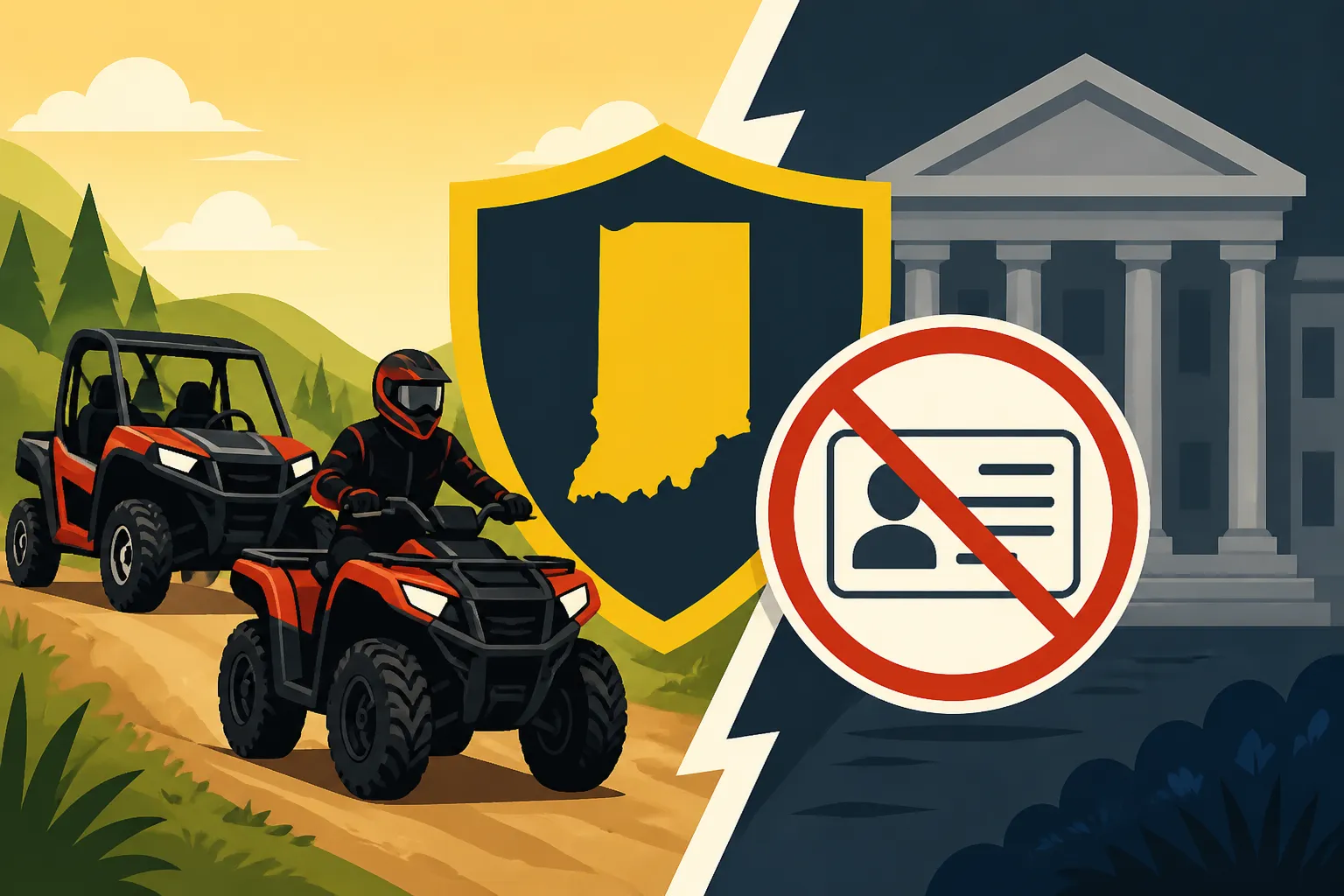
It can be incredibly confusing and frustrating trying to understand all the different rules for riding your ATV or UTV in Indiana, especially when you think about county roads. Many riders worry about needing a special license just to run down a designated county lane, and it’s a valid concern that can make you hesitant to explore new areas. This guide is here to clear up that confusion and explain exactly why, under Indiana law, a county typically cannot demand a separate driver's license for ORV operation on their designated roads.
The State's Authority vs. Local Ordinances
When it comes to regulating off-road vehicles, Indiana has a pretty clear framework, but local jurisdictions often try to add their own layers of rules. This can lead to a lot of headaches for riders who just want to enjoy their machines without fear of unknowingly breaking a law. Understanding the balance of power between the state and individual counties is key to navigating these waters.
Indiana's Unified Approach to ORV Regulation
Indiana law, specifically through the Indiana Code, establishes the foundational rules for ORV operation across the entire state. This includes everything from how you register your machine with the BMV to general age and supervision requirements for riders. The state aims for a certain level of uniformity, which means that while counties can take specific actions, they can't simply create an entirely new system of licensure that contradicts state mandates. Think of it like this: the state sets the main highway, and counties can add exit ramps and speed limits on those ramps, but they can't build a completely separate toll road right next to it without state approval. This statewide approach means that the core requirements for who can operate an ORV are generally set at the state level.
The Indiana Department of Natural Resources (DNR) also plays a significant role in managing state-owned lands and trails, like Redbird and Interlake. They have their own permit systems for trail access, but these are for access to specific recreational areas, not a general operating license for county roads. The confusion often stems from the different types of "permits" or "registrations" that exist—state-mandated ORV registration (a decal from the BMV), DNR trail permits, and any local permits a county might require for road use. It’s a lot to keep straight, and it’s easy to see why someone might assume a county could require a separate license on top of all that.
The Limit on County-Specific Licensing
Here’s the crux of it: Indiana Code largely reserves the authority to regulate operator licensing to the state. Counties are empowered to adopt ordinances that allow ORVs on their public roads, provided they meet certain criteria, but this power typically does not extend to demanding a separate driver’s license beyond what state law requires for operating a motor vehicle or an ORV. Essentially, if a county decides to open its roads to ORVs, it must do so within the existing state framework regarding operator qualifications. They can't just invent a new category of "county ORV license" that riders must obtain.
This limitation is crucial because it prevents a patchwork of 92 different licensing requirements across Indiana. Imagine if every county could demand its own unique license test or fee! It would make riding from one county to the next an administrative nightmare, completely hindering recreational use and commerce. So, while counties like Vanderburgh or Hancock might open their roads to ORVs, their ordinances will usually focus on things like vehicle equipment, insurance, and hours of operation, rather than creating a new licensing scheme for the rider themselves. They're working with the existing state definitions of who is qualified to ride. This aligns with the principles outlined in [Why Indiana Limits What a County May Demand].
What Indiana Law Says About Operator Licensing
So, if counties generally can't demand a separate license, what does Indiana law require for someone to operate an ORV, particularly on those designated county roads? It's a combination of age, supervision, and, in some cases, a standard driver's license.
Age and Supervision Requirements State Level
Indiana law sets specific age and supervision requirements for ORV operators, regardless of where they are riding (with some nuances for private property). For example, a person under 14 years of age cannot operate an ORV without direct supervision by a person at least 18 years of age. This "direct supervision" means they must be within sight and hearing of the supervising adult. If you have a younger rider, this is a critical rule to remember, whether you’re on a trail at Redbird or a designated county road. The state takes the safety of young riders very seriously.
For those aged 14 to 15, the requirements ease slightly. They can operate an ORV without direct supervision if they possess a valid driver's license, a learner's permit, or have successfully completed an approved ORV safety course. Once a rider turns 16, they generally operate under the same rules as an adult in terms of supervision, assuming they meet other criteria. These age and supervision rules are statewide, which means a county ordinance cannot generally override them to be more restrictive in terms of who is allowed to operate the machine based on age. A county cannot say, for instance, that you must be 18 to operate an ORV on their roads if state law allows a 16-year-old to do so. This falls under [Indiana Minimum Age to Ride an ORV] and [Indiana Supervision Rules for Minors].
Driver's License for Street-Legal Operation Where Applicable
Here's where the standard driver's license comes into play, but it's important to understand the context. Indiana ATVs and UTVs are not generally street-legal vehicles in the same way a car or motorcycle is. However, when a county opens its roads to ORVs, the state often expects operators to hold a valid driver's license, especially for those over a certain age. This isn't a special ORV license issued by the county, but rather the standard driver's license issued by the BMV that you’d use to operate any other motor vehicle. The rationale is that if you're going to share public roads, even designated ones, you should have the basic qualification to operate a motor vehicle.
For instance, Vanderburgh County's ordinance specifies that an ORV operator on their designated roads must be at least 18 years old and possess a valid driver's license. This isn't the county issuing a license; it's the county stating that to use their ORV-friendly roads, you must meet certain state-level operator qualifications. So, while the county can't demand its own license, it can certainly stipulate that an operator must meet the state's existing licensing standards for motor vehicles when on their roads. It’s a subtle but important distinction. This is key to understanding [Indiana Driver's License Rules for ORVs]. If you plan to ride on county roads, always assume you'll need your valid driver's license readily available, even if you don't need one for private land.
Why Some Counties Seem to Have Different Rules
It's completely understandable why riders get confused. You might hear about one county requiring "this" and another "that," leading you to believe there’s a whole host of different local licenses. Often, what seems like a different rule is actually a misinterpretation or a county implementing a different type of requirement within its legal bounds.
Misinterpretations of "Permit" vs. "License"
One of the biggest sources of confusion stems from the interchangeable, and often incorrect, use of the terms "permit" and "license." A "license" generally refers to official authorization from a governing body (like the BMV for a driver's license) that signifies a person's qualification to perform an activity. A "permit," on the other hand, is usually an authorization to do something or use something under specific conditions. For example, you get a permit to build a deck, or a permit to hunt.
When a county creates an ordinance allowing ORVs on its roads, it might require a "permit" for the vehicle to be operated on those roads, or an "endorsement" on your state ORV registration, or even a local "sticker" to indicate compliance with their local ordinance. This permit or sticker is usually tied to the specific ORV and verifies it meets the county's equipment, insurance, or other non-licensing requirements. It’s not a test of the operator's driving skill or knowledge; it’s a check of the vehicle’s readiness and compliance. You might see a local "ORV use permit" that costs a nominal fee, but this is distinct from a driver’s license. Always check if what they're calling a "permit" is actually a personal qualification (license) or a vehicle authorization (permit). This is why clarifying [Indiana ORV Permit Cost] is useful, as these are typically state trail permits, not local operator licenses.
Other Requirements Counties Can Impose
While counties can't demand a separate driver's license, they certainly have the power to impose other requirements for ORV operation on their roads. These often revolve around safety, equipment, and sometimes local financial contributions. Here are a few examples:
- Insurance: Many counties, like Vanderburgh, require proof of liability insurance for ORVs operated on their roads. This is a common and reasonable safety measure to protect against accidents. They won't issue the insurance, but they can demand you carry it. [Indiana ORV Insurance Requirement] is a common topic for this reason.
- Equipment: Counties can specify minimum equipment requirements, such as headlights, taillights, turn signals, mirrors, or even specific tire types. If you’re riding at night on county roads, ensuring you have proper lighting, perhaps even aftermarket lights from a brand like SuperATV, is absolutely essential.
- Operating Hours: An ordinance might restrict ORV use to certain hours of the day, prohibiting night riding or limiting it to daylight hours.
- Designated Roads: Crucially, counties only open specific roads or sections of roads to ORV traffic. They can designate which roads are open and which are closed. Just because a county has an ORV ordinance doesn't mean you can ride anywhere. Always look for maps or clear signage.
- Age Minimums (within state bounds): As mentioned, a county might set a higher minimum age for operators on their roads (e.g., 18 instead of 16), but this still relies on the state's driver's license framework rather than creating a new license.
These requirements, while sometimes burdensome to track, are within a county's legal authority to ensure public safety and manage road use. They are not, however, the same as creating a unique driver's license for ORV operators.
| Requirement Type | County Can Impose? | Example of What It Looks Like |
|---|---|---|
| Operator License | No | A county cannot issue its own "County ORV Driver's License." |
| Insurance Proof | Yes | Requiring riders to carry proof of liability insurance. |
| Vehicle Equipment | Yes | Mandating headlights, taillights, mirrors, or specific tire standards. |
| Operating Hours | Yes | Limiting ORV use on roads to specific daytime hours. |
| Road Designation | Yes | Specifying which roads are open and which are closed to ORV traffic. |
| Vehicle Permits | Yes | Requiring a local sticker or permit for the vehicle to identify it as compliant with local rules. |
| Age Limits | Yes (within state) | Setting a minimum operator age, often tied to a state-issued driver's license (e.g., 18+). |
Practical Implications for Indiana Riders
Understanding these distinctions has real-world consequences for you, the rider. It impacts what you need to carry with you, what you need to know before you venture out, and how you interact with law enforcement. Don't let the legal nuances intimidate you; instead, let them empower you with knowledge.
What an Officer Will Check Roadside
When a conservation officer or local sheriff’s deputy pulls you over on a county road, they aren't going to be asking for a "Brown County ORV License." Instead, they’ll be checking for compliance with the state-level regulations and any valid local ordinances that can be imposed. Here’s a rundown of what an officer will typically look for:
- State ORV Registration Decal: Is your machine properly registered with the Indiana BMV, and is the decal visible and current? This is non-negotiable for riding anywhere off private property in Indiana. [Where the Indiana Decal Mounts] is a good read for this.
- Proof of Operator Age/Supervision: If you're under 18, they'll verify your age and, if applicable, the presence and qualification of your supervising adult. They might also check for a valid driver's license if you're in the 14-15 age bracket and riding unsupervised.
- Valid Driver’s License: If the county ordinance for the road you’re on requires a driver’s license for operation (as many do for adult riders), they will ask for your state-issued driver's license.
- Proof of Insurance: If the local ordinance mandates it, expect to show proof of liability insurance for your ORV. Keep a physical or digital copy handy.
- Required Equipment: They'll quickly check for things like working headlights, taillights, and mirrors if required by the local ordinance. Some riders beef up their visibility with additional lighting, possibly from a brand like SuperATV, which is always a smart move for safety.
- Adherence to Designated Routes: They might verify that you are actually on a road designated for ORV use, and not riding on a prohibited section, such as a state highway or private property without permission.
- Helmet Use: If you are under 18, they will absolutely check if you are wearing a DOT-compliant helmet, as this is a statewide rule. [Indiana Helmet Law for ORV Riders] covers this in detail.
Knowing what to expect can ease the stress of a roadside stop. Always be courteous and have your documents organized and accessible. This is exactly what [What an Indiana Officer Checks Roadside] aims to clarify.
How to Verify County Ordinances
This is perhaps the most important proactive step you can take. Since counties can set specific rules for road use (even if not for licensing), you need to know what those rules are for your chosen riding area. You can't just assume one county's rules apply to its neighbor.
- County Website: The best first step is to visit the official website for the county you plan to ride in. Look for sections related to county government, ordinances, or specific departments like the Highway Department or Sheriff's Office. Many counties will publish their ORV ordinances online.
- County Clerk or Recorder's Office: If you can't find it online, a call or visit to the County Clerk or Recorder's office can often yield the information you need. They are typically responsible for maintaining records of all local ordinances.
- Local Law Enforcement: While not their primary role to educate, a non-emergency call to the county sheriff's department might provide quick guidance, especially if you're having trouble finding the official ordinance. Just remember, they are there to enforce, so try to have done your homework first.
- Online Legal Resources: Some legal databases or local government association sites might compile ordinances. However, always try to cross-reference with the official county source if possible, as these third-party sites might not always be perfectly up-to-date.
- Rider Forums and Clubs: While unofficial, local riding groups or forums can sometimes provide anecdotal information or links to ordinances. Use these as starting points, but always verify with an official source.
It's crucial to understand that while your Indiana BMV registration decal is required statewide, specific local rules about where and how you can ride on county roads vary. [How to Find an Indiana County ORV Ordinance] is a great resource to guide you through this process. Don't rely on word-of-mouth for these rules; always confirm with official sources.
Navigating Different County Rules with Confidence
Riding your ORV on Indiana’s designated county roads can be a fantastic way to link trails, access remote areas, or simply enjoy a scenic cruise. But doing so confidently means being well-prepared and understanding that while counties can’t demand a license, they certainly can set other rules that you need to follow.
Preparation is Key for County Road Riding
Before you even load your machine, a little homework can save you a lot of trouble. This isn't just about avoiding a ticket; it's about staying safe and enjoying your ride without unnecessary stress.
- Research Your Route: Identify which specific county roads are open to ORVs in the area you plan to visit. Many counties that have opened roads will publish maps or lists. For example, some counties might allow ORVs on all unincorporated county roads, while others designate specific routes. [Indiana Rules for Riding a County Road] covers this extensively.
- Check Local Ordinance Details: Once you know where you can ride, delve into the specific ordinance for that county. Pay close attention to requirements regarding:
- Operator Age and Licensing: Confirm if the county requires operators to be 18+ or to hold a standard driver's license.
- Insurance: Is liability insurance mandatory? If so, make sure your policy covers ORV operation on public roads.
- Equipment: Do you need mirrors, turn signals, or specific lighting beyond what you have? Perhaps you need a robust set of mirrors from SuperATV to ensure you’re compliant and safe.
- Time of Day Restrictions: Can you ride after dark? Or only during daylight hours?
- Helmet Laws: While state law mandates helmets for riders under 18, some counties might have specific guidance on this for their roads, even though the state law usually takes precedence.
- Prepare Your Machine: Ensure your ORV is in good working order and has all the necessary equipment as per the local ordinance. This includes working lights, horn, and any other mandated safety features. If you need to add anything, research durable aftermarket options.
- Carry All Documentation: Always have your BMV registration, proof of insurance, and your driver’s license (if required by the local ordinance and your age) readily accessible. Consider keeping copies in a waterproof bag or using digital copies on your phone, though a physical copy is often preferred.
By taking these steps, you’ll be much more prepared to encounter any law enforcement on the road, demonstrating your responsibility as a rider.
Advocating for Clearer Local ORV Policies
Sometimes, the problem isn't just understanding the rules, but the rules themselves are unclear, contradictory, or difficult to find. As a member of the ORV community, you have a voice.
- Engage with Local Government: If you find a county's ORV ordinance confusing or lacking, consider reaching out to your county commissioners, council members, or highway department. Politely express your concerns and advocate for clearer language, better dissemination of information (like online maps of designated roads), or more consistent regulations with neighboring counties.
- Join or Support ORV Clubs: Local and state-level ORV clubs often have active advocacy efforts. They work with lawmakers to shape legislation and address issues like inconsistent county regulations. Joining such a group can amplify your voice and connect you with others who share your passion for responsible riding.
- Share Information Responsibly: When you learn about a county's ORV rules, share that accurate, verified information with other riders. Use official links and avoid spreading rumors or unconfirmed details. The more informed the riding community is, the better we can all navigate the legal landscape.
- Highlight Best Practices: If you find a county with an excellent, clear, and rider-friendly ORV ordinance, commend them for it! Share what makes it effective. This can serve as a positive example for other counties considering opening their roads to ORVs.
The goal isn't just to follow the rules, but to help foster an environment where ORV use is safe, enjoyable, and clearly understood by everyone involved—riders, residents, and law enforcement alike. Understanding that a county cannot demand its own driver's license is a key piece of this puzzle, but it's just one part of the broader conversation about responsible ORV operation on Indiana's diverse roads and trails.
Disclaimer
This article is for general informational purposes only and does not constitute professional advice. Laws, prices and regulations vary by location and change over time. Consult a qualified professional for guidance on your specific situation.