Indiana’s Two State ORV Areas Compared
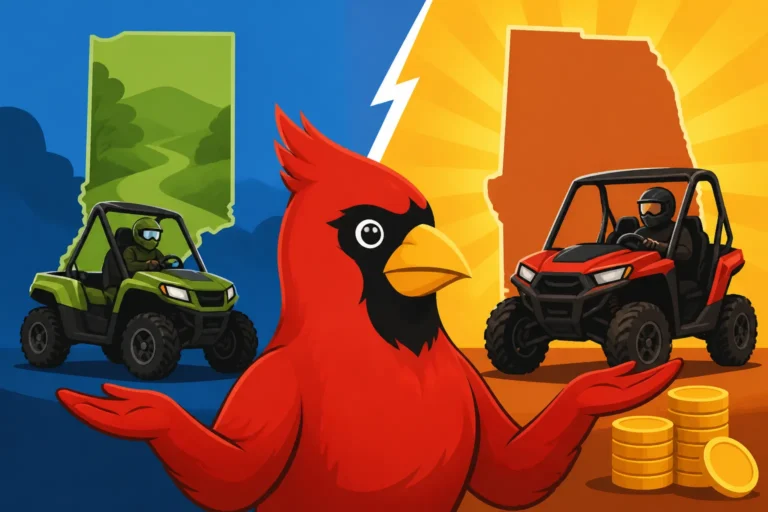
Redbird and Interlake are both Indiana state off-road riding areas, but they offer different kinds of days on the trail. One is a compact reclaimed-mine destination near Dugger; the other spreads a larger network around lakes near Lynnville. This guide compares their terrain, scale, planning needs, and practical trade-offs so you can choose the park that fits your machine and group.
Redbird and Interlake at a glance
The basic difference between the two parks
Redbird Off-Road State Recreation Area sits near Dugger in Sullivan County. Its roughly 1,400 acres make it a more compact destination, with riding shaped by the area’s reclaimed mining landscape. It can suit people who want to spend a day exploring a distinct trail system without navigating a sprawling property.
Interlake Off-Road State Recreation Area is near Lynnville and extends across Pike and Warrick counties. At roughly 3,550 acres, it is the larger of the two areas, with a broad network of trails and lakes within the property. The scale can make Interlake feel like a bigger outing, particularly if your group enjoys trying different routes and returning for another ride.
Those broad differences are useful starting points, not a guarantee that one park is always easier, more challenging, or better maintained. Conditions change with rain, season, maintenance, and closures. A familiar route can feel very different after a wet spell, and an open trail can still be a poor fit for a particular rider or vehicle.
| Feature | Redbird | Interlake |
|---|---|---|
| Location | Near Dugger in Sullivan County | Near Lynnville across Pike and Warrick counties |
| Approximate size | About 1,400 acres | About 3,550 acres |
| General character | Compact reclaimed-mine riding area | Larger trail network with lakes across the property |
| Best suited to | A focused day exploring a smaller park | Groups looking for a larger area and more route variety |
| Planning priority | Check current trail access and conditions before hauling in | Allow time for navigation and route planning across the larger area |
| Fees and permits | Check current DNR permit and entrance requirements | Check current DNR permit and entrance requirements |
For more on the individual destinations, see [Redbird Off-Road State Recreation Area] and [Interlake Off-Road State Recreation Area]. If you are deciding between them for a particular weekend, the practical questions are less about which one is “best” and more about what your group wants to do, how long you have, and what conditions you are willing to ride in.
How to interpret size and mileage
A larger acreage figure does not automatically mean more rideable trail on the day you arrive. Some routes may be closed, some sections may be affected by weather or maintenance, and different areas can have varied access rules. The trail map and current notices matter more than a single headline number when you are planning a real trip.
Interlake is commonly described as having a much larger network, with nearly 100 miles of trail and numerous lakes within the area. That scale can be appealing, but it also means you should think about how your group will navigate, where you plan to stop, and how much daylight you have. A group that spends time taking photos, helping a newer rider, or checking route choices may cover less ground than expected.
Redbird’s smaller footprint can make the day feel more contained, though it still deserves thoughtful planning. A compact park is not necessarily a quick park: riders may choose to repeat a favorite section, take breaks, or adjust their route to suit conditions. If your group is traveling from far away, the best use of the day may be to arrive early and avoid treating the park as a race to cover every trail.
Terrain, trail character, and riding feel
Redbird’s reclaimed-mine landscape
Redbird’s setting is strongly associated with reclaimed mining ground. That history shapes the landscape and gives the area a different feel from a conventional wooded trail loop. Riders may encounter varied elevations, uneven surfaces, and changing terrain features, so it helps to arrive ready to adapt rather than expecting every section to ride the same way.
The reclaimed ground can be especially sensitive to wet conditions. Clay and disturbed soil may become slippery or deeply rutted after rain. A route that feels manageable when dry can become tiring or difficult once the surface turns slick, particularly for a newer rider or a machine with tires that are not suited to the conditions.
That variability is part of the appeal for some riders, but it also calls for restraint. Choose a route within your ability, leave space between machines, and do not assume that a climb or muddy section is safe just because another rider has already gone through. If you are unsure about current conditions, check notices before leaving and ask park staff about access when you arrive.
Interlake’s larger network and lakes
Interlake’s larger footprint brings a different planning challenge: there is more area to consider and more potential for a varied day. The lakes are a prominent feature of the property, and the network crosses a broad landscape in Pike and Warrick counties. That variety can make Interlake attractive to groups that like exploring rather than repeating the same short circuit.
A bigger trail system can also make navigation more important. It is easy to underestimate the time needed to get from one part of an area to another, especially when people in the group ride at different speeds. Agree on a meeting point, keep the group together, and make sure every rider understands the route plan before heading away from the staging area.
Do not treat lakeside scenery as permission to leave marked routes or approach water wherever the ground looks convenient. Follow posted boundaries and park directions. Staying on designated trails protects the site, reduces the chance of getting stuck on soft ground, and helps prevent a scenic stop from turning into an avoidable safety problem.
Choosing the park for your group
Match the destination to your available time
For a one-day trip, think honestly about how long it takes to travel to the park, unload, complete any required entry steps, gear up, and get the group moving. If your group has only a few hours of riding time, Redbird’s more compact setting may feel easier to manage. That does not mean it will always take less time to ride, but the smaller scale can simplify the day’s plan.
Interlake may be the better fit when your group wants room to explore and is comfortable spending more time navigating a larger area. If you are arriving late or have to leave early, plan a modest route rather than trying to see everything. The most frustrating park day is often the one where the group spends more time rushing or arguing over directions than enjoying the ride.
For either destination, build in a margin. A minor mechanical issue, a rider who needs a break, or a weather change can alter the plan. Tell someone outside the group where you are riding and when you expect to be back, especially if your phone coverage may be unreliable in parts of southern Indiana.
Match the terrain to the least experienced rider
The most capable rider in the group should not set the pace or route for everyone. Consider the least experienced person, the machine they will be using, and how comfortable they are with mud, hills, uneven ground, and narrow trail sections. A route that feels routine to an experienced adult can be intimidating to someone on their first public-land ride.
For beginners, start with conservative choices and pause to assess conditions before committing to a difficult-looking section. Talk through how the group will handle a machine that gets stuck or needs assistance. Keep an experienced rider close enough to help, but avoid crowding a newer rider or making them feel pressured to attempt obstacles.
If your group includes children, new riders, or people on different types of machines, make the day about a shared pace rather than maximum mileage. Review [Indiana Trails for Beginners] before you settle on a destination, and check park-specific rules for age, supervision, helmets, and vehicle requirements. A comfortable first outing is more likely to lead to a safe second one.
Planning a safe and enjoyable riding day
Check access, conditions, and maps before leaving
Trail conditions can change quickly, particularly after heavy rain. Before driving to either park, check current trail notices, access information, and any closure updates. A route shown on a general map may not be open that day, and a road route to the park is not the same thing as permission to ride a machine on public roads.
The DNR’s trail information should be your first stop for official park access and current notices. [Indiana Trail Maps From the DNR] is a useful related guide for understanding where to look. A navigation app such as onX Offroad can also help with general route planning and offline preparation, but do not treat any third-party map as a substitute for posted signs, official maps, or staff instructions.
Download or save the information you will need before you leave home. Mobile service can be limited in rural areas, and a map that will not load at the trailhead is not much help. Carry a paper or offline backup if possible, and make sure more than one person in the group knows how to read the route and identify the staging area.
Choose a weather plan, not just a destination
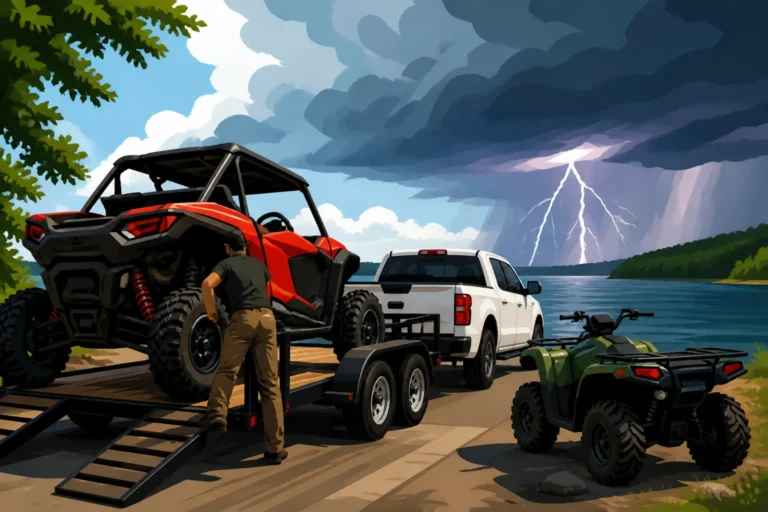
Rain can change the ride more than the temperature does. Clay and disturbed surfaces may become greasy, while ruts can deepen as machines pass through wet sections. If the forecast looks unsettled, be ready to shorten the ride, choose easier routes, or postpone rather than forcing the planned itinerary.
A dry forecast does not remove every concern. Heat, humidity, cold snaps, and earlier rainfall can all affect comfort and traction. Pack water, suitable layers, and basic supplies for the season. Leave room in your plan for a longer turnaround than your map estimate suggests, particularly if the group includes children or newer riders.
For a more detailed look at changing surfaces, read [Indiana Riding After Heavy Rain] and [Indiana Trail Seasons and Conditions]. Both are reminders that a park’s character is not fixed: the same ground can behave very differently from one visit to the next. If conditions look unsafe or posted directions advise against riding, choose a different day.
Permits, registration, and park rules
Understand the different requirements
A state trail permit, an entrance charge, vehicle registration, and local riding rules are not interchangeable. Visitors should confirm which requirements apply to their vehicle and trip before arriving. In particular, do not assume that paying an entrance charge covers every permit requirement, or that a machine’s registration decal replaces a park permit.
Requirements can depend on whether you are an Indiana resident, whether the machine is registered in another state, and what kind of vehicle you are bringing. Review [Indiana ORV Permits Explained] and [Indiana's Daily and Annual Trail Permits] for more background, then confirm the current details through official DNR information before you travel. Fees and procedures can change, so check the park’s own directions rather than relying on an old trip report.
Keep your documents accessible and make sure the right permit is associated with the right machine. If you are taking several vehicles, do not assume one permit covers the whole group. Check each machine’s requirements individually and have the group’s paperwork ready before reaching the gate.
Follow posted rules and stay on designated trails
Park rules are part of the ride plan, not an afterthought. Follow signs and barriers, use designated routes, and respect closures even if a closed section looks passable. Riding around a barrier can create safety risks, damage the property, and lead to enforcement action.
Requirements may also cover helmets, passengers, age and supervision, vehicle equipment, and permitted riding areas. Rules can differ by vehicle type and rider age, so confirm the details for everyone in your group. If you are unsure about a rule, ask park staff rather than relying on what another visitor says at the staging area.
Bring a courteous trail attitude with you. Slow down near other riders, give people space, and do not assume that everyone can hear you approaching. For more on sharing routes responsibly, see [Indiana Trail Etiquette on Shared Ground]. A respectful group helps keep the trail usable for others and makes the day more pleasant for families, beginners, and experienced riders alike.
Getting there, staging, and overnight plans
Plan the drive and unloading routine
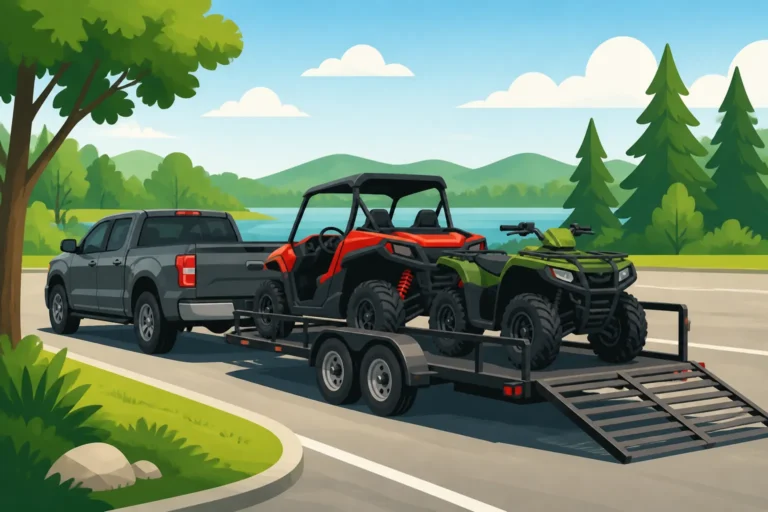
Both areas are in southern Indiana, so the best choice can depend on your starting point and the route you are willing to drive with a trailer. Check directions for the entrance you intend to use, allow extra time for rural roads, and confirm that your tow vehicle and trailer are suitable for the trip. Do not rely on a familiar route from a previous visit if you have not checked for changes or event-related access notices.
Before you leave home, make a quick equipment check: tie-downs secure, trailer lights working, fuel handled safely, and riding gear packed where you can reach it. At the staging area, unload without blocking traffic or access for other visitors. Keep children and bystanders clear of machines while loading and unloading.
A smoother arrival saves energy for the ride itself. Have the group’s permits and documents organized, agree on a place to regroup, and sort out last-minute gear adjustments before starting the engine. A little preparation can prevent the familiar trailhead scramble of searching for gloves, checking a phone map, and trying to decide who still needs to pay or register.
Decide whether the trip is a day ride or a weekend
A day trip is often the simplest way to visit either area, especially if your group is new to the parks. It limits the number of moving parts and makes it easier to adjust if weather or trail conditions are not what you expected. Start early enough to ride at a comfortable pace and still pack up before everyone is exhausted.
For a weekend outing, check lodging and camping options separately from your riding plans. Do not assume that a nearby campground is within the riding area or that a trail connects directly to your overnight location. Confirm where machines may be parked, whether trailers are permitted, and what campground rules apply. [Camping at an Indiana State Recreation Area] offers related planning context.
If you are splitting a weekend between parks, be realistic about travel and setup time. Riding Redbird one day and Interlake the next may sound like an easy way to compare both, but the drive, loading, unloading, and changing conditions can make it tiring. A more relaxed plan may be to spend the full weekend at one area and save the other for a separate visit.
A practical comparison before you book the trip
Redbird may fit when you want a focused outing
Redbird can be a good choice when your group wants to experience reclaimed-mine terrain and prefers a smaller overall area to plan around. It is worth considering for riders who like varied ground and are willing to adapt to conditions instead of expecting a uniform, groomed trail surface. Its compact scale can also make the day feel more manageable for a group that wants a straightforward plan.
It may be less appealing if your group expects a very long network to explore in one visit, or if muddy, uneven ground would make the day stressful. That is not a blanket judgment about difficulty; conditions and route choices matter. A dry day and a wet day can create very different experiences, even for riders who know the park.
Before you go, check current trail access, weather, permits, and the equipment each rider will use. If your group has a mix of experience levels, agree on conservative route choices in advance. The better trip is the one that leaves everyone feeling capable and ready to ride again, not the one that squeezes in the most challenging section.
Interlake may fit when you want more area to explore
Interlake may suit riders who enjoy a broad trail network, varied routes, and spending time exploring a larger property. Its lakes and expansive setting can make it feel like a more involved destination, especially for groups that enjoy navigating and taking breaks at different points in the ride.
That scale comes with a need for better coordination. Decide how the group will regroup if someone falls behind, what to do if a machine has a problem, and how you will keep track of the planned route. Do not split up casually just because the network feels roomy; larger areas can make it harder to find one another if plans are unclear.
Interlake is not automatically the right choice for every group simply because it is larger. A short visit, a first-time rider, or a group that dislikes navigation may be happier with a simpler itinerary. The key is to choose based on the people coming along, the current conditions, and the kind of ride everyone actually wants.
How to make the final choice
Use a simple decision checklist
Start with the practical details: where you are coming from, how long you have, what machines you are bringing, and who is riding. Then consider whether your group would rather spend the day exploring a larger area or focusing on a more compact reclaimed-mine setting. These questions often clarify the choice faster than comparing park descriptions alone.
Next, check conditions and access. If one area has a closure or recent weather has made the terrain a poor fit, the other may be the more sensible option—or neither may be right for that day. Keep the plan flexible, and do not let the time already spent towing the trailer become a reason to ride beyond your comfort level.
Finally, verify permits, entrance requirements, vehicle paperwork, and rules for the youngest or least experienced rider in your group. Save the official map and notices offline, share the plan with everyone, and make sure each person knows where to regroup. A few minutes of preparation can spare you a lot of frustration at the gate or on the trail.
Make the ride enjoyable for the whole group
The best park choice is not necessarily the one with the largest acreage or the most talked-about feature. It is the one that fits your group’s experience, machines, schedule, and tolerance for changing conditions. A relaxed day on a suitable route can be more satisfying than a hurried attempt to cover more ground than the group is ready for.
Set expectations before unloading. Agree on a pace, take breaks before people are worn out, and give newer riders permission to turn around or skip an obstacle. Experienced riders can help by choosing routes that leave room for learning, not by pushing the group toward a personal challenge.
Redbird and Interlake both offer memorable ways to ride in Indiana, but they reward a little planning. Check the current notices, respect the trail, and choose the destination that makes sense for the people and machines you are bringing. That is how a comparison becomes a useful trip plan rather than just a contest over which park is bigger.
Disclaimer
This article is for general informational purposes only and does not constitute professional advice. Laws, prices and regulations vary by location and change over time. Consult a qualified professional for guidance on your specific situation.