Camping Near Indiana ORV Trails
Camping near Indiana ORV trails takes more planning than finding a campsite with an appealing view. You need to confirm that the campground welcomes your machine, that you can legally reach the riding area, and that your trailer, power, and cleanup needs are covered. This guide helps you plan a practical base camp near Redbird, Interlake, and other Indiana riding areas.
Choose a campground by the kind of riding trip you want
A campsite that looks close to a trail on a map may still be inconvenient once you account for road access, trailer routes, check-in hours, and the need to haul your machine between locations. Start by choosing the riding area, then look for a campground that works as a base—not simply one with the shortest straight-line distance.
Camping near Redbird at Dugger
Redbird Off-Road State Recreation Area sits near Dugger in Sullivan County, in a landscape shaped by former mining. Riders often build a weekend around the park, but nearby camping options and their amenities can vary. Before reserving, confirm directly with the campground whether it accepts your type of rig, whether it has space for a tow vehicle and trailer, and whether the site can accommodate your planned setup.
Shakamak State Park, near Jasonville, is one regional location to investigate when planning a Redbird trip. It offers a different kind of outdoor stay than a private campground or a simple overnight stop. The drive between a campground and a riding area can still involve a trailer trip, so check the route and allow time for loading and unloading. Don’t assume that a campsite reservation includes access to the ORV trails or authorizes riding on roads between the two places.
Think through your group’s priorities before choosing. A family that wants swimming, walking trails, and a quieter evening may prefer a developed campground with broader recreation options. A group focused on early trail starts may care more about a convenient trailer route, a spacious parking area, and a place to wash mud off equipment. To get a feel for the riding destination itself, start with Redbird Off-Road State Recreation Area and confirm details with the relevant park or campground before you book.
Camping near Interlake in Pike and Warrick counties
Interlake Off-Road State Recreation Area is near Lynnville and spreads across parts of Pike and Warrick counties. Its size and trail network make it a destination where a little route planning pays off. Look for camping options in the surrounding area, then check actual drive times using roads suitable for your tow vehicle and trailer. A short distance on a map can turn into a longer drive when the route involves slower rural roads or a detour.
Scales Lake Park, operated by Warrick County near Boonville, is one place people may consider while researching a stay in the broader Interlake area. Verify whether its current camping arrangements match your needs, including vehicle access, site dimensions, reservation rules, and any restrictions on trailers or off-highway vehicles. A campground can be a good base even when it is not adjacent to the riding area, as long as you plan to transport the machine rather than ride it there.
Interlake’s setting can make the trip feel more remote than a quick map search suggests. Plan fuel, food, and supplies before you reach the trail area, and don’t count on every nearby business having the hours or services you need. For an overview of what makes the two main state ORV areas different, see Indiana's Two State ORV Areas Compared, then check the Interlake entrance, trail status, and campground details separately.
Match the campground to your equipment and group
The best campsite for a tent and one ATV may be a poor fit for a family bringing a side-by-side, a second machine, and a long trailer. Ask practical questions before paying a deposit. A few minutes on the phone can prevent the frustrating discovery that your rig doesn’t fit the site or that the campground has rules you hadn’t considered.
Check sites, trailers, and parking before booking
When you contact a campground, describe the full setup—not just the number of people in your party. Include the length of your trailer, the number of machines, whether you’re bringing a separate tow vehicle, and whether you need room to maneuver. If the campground assigns sites by size, ask whether your reservation guarantees a site that can handle your equipment or whether the final placement depends on availability.
Also ask where the trailer can stay after you unload. Some campers want the trailer beside the tent or RV; others are comfortable with designated overflow parking. Either way, confirm the arrangement ahead of time. A trailer parked across a narrow lane or blocking another site can create friction with campground staff and neighbors, especially on a busy weekend.
Consider how you’ll secure the machines overnight. Bring suitable locks and tie-downs, and find out whether the campground has rules about parking vehicles, running engines, or leaving equipment unattended. A well-lit site and a visible parking area can make loading feel easier, but they don’t replace basic security. Before you leave home, review Trailering an ORV Across Indiana and make sure your trailer, tie-downs, and load plan are ready for the whole trip.
Think through comfort, power, and family needs
A weekend of riding can leave everyone tired, muddy, and hungry. If someone in your group needs a hot shower, a quiet place to sleep, or easy access to restrooms, check those facilities before booking. Campground amenities can differ considerably, even when two places are described as “full service.” Ask whether facilities are open during your planned visit and whether seasonal closures could affect your stay.
Power needs deserve the same attention. A family in an RV may want a powered site, while a tent camper may be fine with no electrical hookup. If you’re relying on a refrigerator, medical device, charging station, or other essential equipment, confirm the type of power available and what your reservation actually includes. Don’t assume that a listing photo or a general amenity description tells the whole story.
Families with children may also appreciate a campground with space to unwind away from the trails. A playground, swimming area, or walking path can make a rainy afternoon or recovery day more pleasant. Just keep the riding plan separate from campground recreation: a child’s permission to use a campsite or campground path does not automatically mean they can ride a machine wherever they like. Review age, supervision, and equipment rules for the specific riding area, and see Indiana Trails Good for Kids when choosing a family-friendly destination.
Understand the difference between camping access and trail access
One of the easiest planning mistakes is assuming that a campground close to a trail area lets you ride directly from your campsite. In most cases, you should plan to transport your ORV to the designated riding area unless the campground and park explicitly say otherwise. Nearby roads, utility corridors, and informal tracks are not automatically legal connections.
Don’t assume you can ride between the campground and trailhead
A campsite reservation gives you a place to stay; it does not grant permission to ride on neighboring land, county roads, or unmarked paths. Property boundaries can be hard to see in rural areas, and a track that looks inviting may cross private property or a closed route. Ask the campground where machines may be started, unloaded, and parked, and get a clear answer about any permitted connection to the trail area.
For a typical trip, the simplest plan is to tow the machine to the park entrance, unload in the designated staging area, and ride only where the park permits. Keep the campground and riding-area addresses saved offline, and allow time for the trailer trip both ways. If the campground is near a public road, don’t treat that road as an informal trail extension. Indiana’s rules for public-road ORV use are separate from campground policies and can depend on local designations and other conditions.
If you’re unsure whether a route is legal, don’t rely on a colored line in a third-party map or on what another visitor says they did last weekend. Ask the park or land manager, and check any posted notices at the entrance. Where to Ride an ORV in Indiana is a useful starting point for understanding the range of riding options, but you still need to confirm access rules for the particular property and route you plan to use.
Get the right permits and check what each one covers
Camping reservations, park entrance charges, and ORV trail permits may be separate parts of a trip budget. Don’t assume that paying to camp covers trail use, or that a trail permit covers an overnight site. Ask each provider what its fee includes and whether you need to complete any additional steps before arriving.
For a riding area, confirm the permit requirements for each machine in your group. If you’re bringing several ATVs or UTVs, make sure you understand whether a permit is associated with an individual rider, vehicle, or another category. Keep proof of purchase accessible, and make sure the person who will show it at the gate knows where it is. The park’s own directions are the best place to confirm what applies to your planned visit.
If you’re traveling from outside Indiana, check how your home-state registration interacts with Indiana’s visitor rules and what separate trail-use requirements apply. Those questions are distinct: a machine’s registration status and permission to use a particular trail area are not necessarily the same thing. Before leaving, review Indiana's Twenty-Day Visitor Rule and Indiana's Daily and Annual Trail Permits, then confirm the details with the official park information for your destination.
| Trip detail | What to confirm before you go | Why it matters |
|---|---|---|
| Campground reservation | Site size, trailer parking, check-in rules, and seasonal facilities | Avoids arriving with a rig that does not fit |
| Trail access | Current entrance, riding hours, closures, and machine rules | Prevents a wasted drive to a closed or unsuitable area |
| Permits and fees | What is required for each machine and what each payment covers | Keeps camping, entrance, and trail-use costs distinct |
| Route between locations | Trailer-friendly roads and realistic drive time | Prevents assuming a nearby campsite is ride-connected |
| Weather and ground conditions | Rain, mud, and possible trail restrictions | Helps protect both riders and equipment |
| Emergency plan | Cell coverage, meeting point, and nearest services | Makes it easier to respond if plans change |
Build a realistic arrival and riding-day plan
A smooth trip often comes down to the less exciting details: when you can check in, where you can unload, how long the drive takes, and what happens if the weather turns. Planning those details in advance gives you more time to enjoy the trails and less time trying to solve logistics at the gate.
Schedule check-in, unloading, and the first ride
Ask the campground about check-in and arrival procedures before choosing your first riding day. If you’ll arrive late, confirm that you can still access your site and park your trailer without disturbing other campers. If you need to set up a tent, level an RV, or unload multiple machines, avoid building a schedule that leaves no room for delays.
Plan the first ride around the actual sequence of tasks. You may need to check into the campground, set up camp, hitch or re-hitch the trailer, drive to the park, pay or confirm permits, unload, and prepare helmets and gear. Trying to fit all of that into a narrow window can make the first afternoon feel rushed. For many groups, arriving the day before the main ride is more relaxing than driving several hours and expecting to be on the trail immediately.
Save the campground and riding-area addresses in your navigation app, but also write them down or store them somewhere that works without cell service. If one person is driving the tow vehicle and another is following in a separate car, agree on a meeting point in advance. A map tool such as onX Offroad can help with route planning and finding your bearings, but verify trail access and closures through the park itself. The map is a planning aid, not permission to ride a route.
Plan for fuel, food, and changing conditions
A remote-feeling ride can expose gaps in a simple supply plan. Check where you can refuel the tow vehicle and whether there are convenient places to buy groceries or basic supplies on your route. For the machine, follow its manufacturer’s guidance and bring only fuel containers that can be stored and transported safely. Don’t wait until you reach the trail entrance to discover that a needed item is back at camp.
Weather affects both riding and camping. Rain can make some surfaces slippery or change which trails are open; heat can make hydration and shade more important; a cool evening can feel much colder after a wet ride. Pack layers and a dry change of clothes, and keep a simple plan for drying gloves, boots, and riding gear without creating a fire or ventilation hazard.
Check conditions shortly before departure and again before unloading. A general forecast may not tell you what the trails are like at the riding area, so look for park notices and contact the relevant office when you need clarification. Use Indiana Trail Conditions Before You Ride and Indiana Trail Closures to Check First as planning prompts, then confirm the latest information with the park. onX Offroad may help you orient yourself or organize a route, but posted closures and land-manager instructions take priority.
Choose the right camping style for your trip
Indiana trips can involve established campgrounds, state recreation areas, private parks, and other nearby lodging. Each option suits a different kind of group. Think about how much comfort you want, how close you need to be to supplies, and whether the primary goal is an all-day ride or a longer family getaway.
Developed campgrounds and state recreation areas
A developed campground can simplify a family trip with amenities such as restrooms, showers, or a place to walk after riding. The tradeoff is that it may have quiet hours, assigned parking, site-size limits, or restrictions on vehicle movement. Read the campground’s rules before you arrive, especially if your group tends to unload early or return late.
State recreation areas can offer a broader outdoor setting, but don’t assume every area allows ORV riding or provides camping beside the trails. The word “recreation” describes a category of outdoor place, not a blanket authorization for motorized riding. Confirm whether camping is available, which activities are permitted, and how far you’ll need to travel to reach a legal ORV area. A campground in a scenic location may still require a trailer trip to the riding destination.
If your plan includes camping at an Indiana state recreation area, verify the reservation details and park rules directly before you commit. The post Camping at an Indiana State Recreation Area can help you identify the questions to ask, but the managing property’s instructions determine what is allowed at a particular site. Keep camping rules and trail rules in separate notes so that a rule for one property does not get mistakenly applied to another.
Private campgrounds and overnight stays near a park
Private campgrounds may be convenient when you want a more direct base for a riding weekend, but their policies can differ widely. One may welcome trailers and multiple machines, while another may restrict vehicle storage, generator use, or engine noise. Ask whether there are designated unloading areas and whether washing mud from a machine is permitted. A friendly phone conversation can reveal whether the campground regularly hosts ORV visitors or whether your group will be an unusual fit.
Some riders consider staying at a private ORV park or another nearby outdoor property. In that case, confirm whether overnight stays are actually offered, whether camping is included in any reservation, and which parts of the property are open to your machine. A place that hosts riding does not necessarily provide overnight camping, and lodging on the property may follow different rules from trail use.
If you’re comparing options, make a short list of non-negotiables: trailer space, quiet hours, power, a safe place to store machines, and a reasonable route to the riding area. Then choose the campground that meets those needs rather than booking solely because it appears closest. For broader comparisons of private riding destinations, see Indiana Private Off-Road Parks, and confirm overnight policies with each property before relying on them.
Pack for mud, machines, and shared campground space
Riding gear is only part of a camping checklist. Muddy clothing, wet equipment, trailer organization, and a crowded campsite can become bigger headaches than expected if you arrive without a way to keep things contained. A little preparation helps protect your gear and makes the campsite more comfortable for everyone.
Set up a clean and dirty gear system
Bring separate bags or bins for clean clothing, dirty riding gear, and items that need to stay dry. A small tarp or washable mat can help create a place to change boots without tracking mud through a tent or RV. Keep towels and spare clothes within easy reach, especially if the weather looks uncertain or your group includes children who may need a quick change.
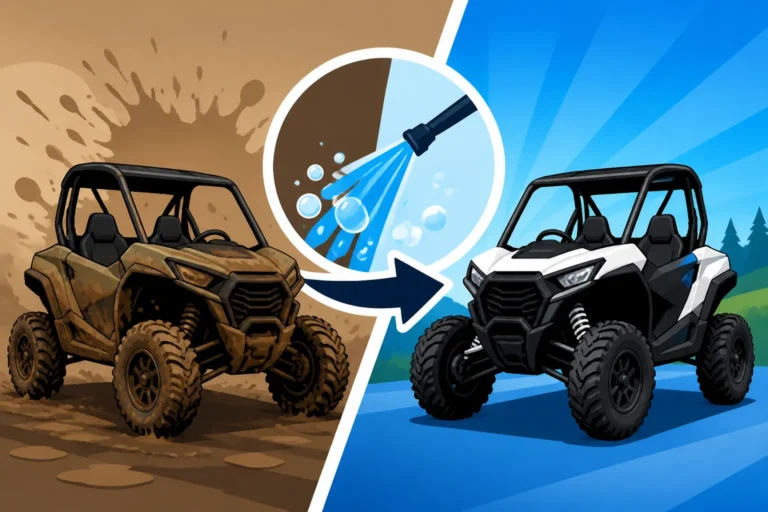
Don’t assume that you can rinse mud off at the campsite. Some campgrounds have rules about washing vehicles, directing runoff, or using shared water facilities. Ask before you arrive. If washing is not allowed, plan to leave the machine as it is until you reach an approved wash area, or bring supplies for a basic wipe-down that won’t create a mess or discharge muddy water onto the site.
A separate storage bin for helmets, gloves, goggles, and first-aid items keeps essential gear from disappearing into the trailer. After a ride, dry items where the campground permits and avoid blocking walkways or neighboring sites. These small routines matter when you’re camping with a group; they reduce the familiar end-of-day scramble for a missing glove or a clean pair of socks.
Keep a tidy, safe, and considerate campsite
Campgrounds are shared spaces, so follow posted quiet hours and be thoughtful about engine noise. Don’t idle or rev a machine beside other campers, and don’t use campground roads as a place to test equipment unless the rules specifically allow it. Keep machines and trailers within the area assigned to you, and leave enough space for neighbors to walk and park safely.
Store fuel and equipment in accordance with campground rules and safe handling practices. Keep containers secure and away from open flames or cooking areas. If you’re bringing a generator, ask about permitted hours and placement before turning it on. These details may feel minor when you’re planning from home, but they can affect everyone’s comfort once the campground fills up.
At the end of the stay, remove trash, inspect the site for small gear, and make sure your trailer is secured before departure. If you rode through wet or muddy conditions, check the machine for clinging debris that could drop onto the campsite or roadway while you load. For more on getting equipment ready for transport after a ride, Washing a Machine Before You Load offers a useful checklist.
Make a flexible plan for weather, closures, and last-minute changes
Even a carefully planned trip can change. A campground may be full, a trail may close, rain may alter conditions, or a family member may need a rest day. A backup plan helps you avoid feeling that the entire weekend has fallen apart when one part of the itinerary changes.
Keep a second option for riding or camping
Before you leave, identify at least one alternative campground or lodging option in the region. It doesn’t have to be your first choice; it just needs to be realistic if your reservation changes or the site does not meet expectations. Save the address, phone number, and rules so you are not searching from a weak cell signal with a trailer behind you.
For riding, an alternative does not necessarily mean driving to a different park that same day. It could mean shifting the ride to another day, taking a rest day, or choosing a non-motorized activity nearby. Near the Redbird area, for example, your group might build a relaxed day around another regional outdoor destination if riding conditions are poor. Near Interlake, you can similarly plan a meal, a walk, or a low-key afternoon rather than trying to force a ride on a closed or unsuitable trail.
Use a mapping app such as onX Offroad to help keep your route notes and points of interest organized, but confirm each property’s current access rules separately. Don’t treat a trail line as proof that the trail is open, public, or legal for your machine. A useful backup plan respects the same boundaries as the original plan.
Know when to postpone or change the ride
A muddy trail can be challenging, but conditions that feel entertaining to one rider may be damaging, unsafe, or prohibited at a particular park. Check posted rules and closures rather than deciding that a route must be open because another group is riding it. If officials close an area or restrict access, follow that direction and adjust the plan.
Consider your group’s experience and equipment when weather changes the ground. A machine that handles a dry trail well may struggle in slick clay, deep ruts, or a steep muddy climb. New riders may be happier with a shorter route or a different day than with a difficult recovery situation far from the staging area. Agree in advance that anyone can call for a break or turn back without being pressured to continue.
If you have to cancel or shorten the ride, contact the campground and understand its reservation and cancellation rules. Keep the campground’s number and the park’s contact details available offline, and tell someone at camp where your group plans to ride. Flexibility is not a failed trip plan; it is part of making sure the weekend stays enjoyable when Indiana weather or trail conditions don’t cooperate.
Use a final checklist before leaving home
A short check the night before can catch problems that are easy to miss during packing. It also gives your group one shared version of the plan, instead of leaving the driver, campground contact, and riders with different assumptions about where to go and what is allowed.
Confirm the reservation, route, and park information
Call or review the campground’s official information to confirm your dates, site type, check-in instructions, trailer parking, and any rules that affect ORVs. Make sure the reservation is under the correct name and that the campground knows how many vehicles and machines are arriving. Save the confirmation somewhere you can access without a strong signal.
Check the riding area’s official information for entrance procedures, permits, operating hours, closures, and machine-specific restrictions. Verify any details that could change your plan, such as whether the area is open on your chosen day or whether a particular trail section is unavailable. A third-party map can help with orientation, but it should not replace the park’s own information.
Review the route for your tow vehicle and trailer, not just a passenger car. Avoid relying on a shortcut that may be narrow, restricted, or difficult to turn around on. Save the campground, park entrance, fuel stops, and meeting point. If you’re traveling with multiple vehicles, agree on where to regroup if someone gets separated.
Pack documents, gear, and a backup plan
Before loading, check your machine’s paperwork, registration information, and any trail-use proof required for the trip. Keep documents protected from water and easy to reach. Pack helmets and protective gear that fit each rider, plus basic tools and supplies appropriate to your machine and the riding conditions.
Use this simple final checklist:
- Confirm the campground reservation and trailer arrangements.
- Verify park hours, trail status, permits, and machine rules.
- Check the weather and identify a backup riding day or activity.
- Load helmets, protective gear, first-aid supplies, and dry clothes.
- Secure machines and fuel safely for transport.
- Save addresses and contact details for the campground and riding area.
- Tell someone who is not on the ride where your group plans to go.
A little preparation can make camping near Indiana ORV trails feel much easier. Pick a campground that fits your actual rig, treat trail access and camping access as separate questions, and confirm details directly before you travel. That way, your group can spend less time troubleshooting at the gate and more time enjoying the trip.
Disclaimer
This article is for general informational purposes only and does not constitute professional advice. Laws, prices and regulations vary by location and change over time. Consult a qualified professional for guidance on your specific situation.