Riding a County Road Home After Sunset
That feeling when the sun starts to dip below the horizon after a perfect day of riding, and you know you’ve got a county road stretch ahead of you before you hit the driveway. It’s a common scenario for many of us who love hitting the trails or cruising private property in Indiana. But as soon as that golden hour fades into twilight, the rules of the road for your ATV or UTV change dramatically, and not just in terms of visibility. This guide will shine a light on the specific regulations, safety considerations, and practical tips for legally and safely riding your off-road vehicle on Indiana county roads once the sun has set.
The Legal Landscape of Night Riding on Indiana County Roads
Alright, let's talk brass tacks about what's actually allowed when it comes to ORVs and public roads here in Indiana, especially once the sun has decided to call it a day. It's not as simple as just "if you can see, you can go." There are layers of rules, and understanding them is your first line of defense against a roadside chat with a conservation officer or, worse, an accident.
Default Closures and County Designations
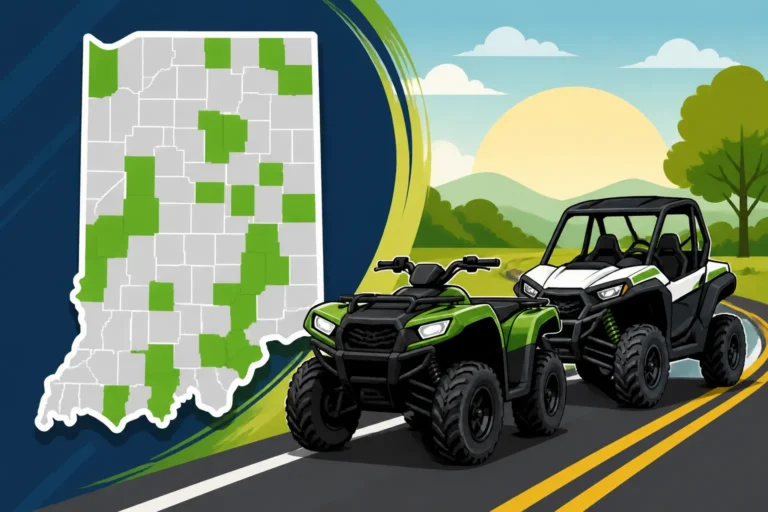
First and foremost, Indiana's general rule of thumb for off-road vehicles on public roads is that they are closed by default. This means unless a specific county, or even a specific stretch of road within a county, has been officially designated and opened for ORV use, you're not supposed to be on it. This foundational rule doesn't magically disappear when the streetlights flicker on. In fact, the challenges of night riding often make the enforcement of these designations even more critical for safety.
Imagine you're leaving a friend's farm in rural Sullivan County after a cookout, and you know a few county roads near [Redbird Off-Road State Recreation Area] might be open. But as it gets dark, the landmarks blur, and it's easy to accidentally stray onto a road that hasn't been designated for ORV use. The difficulty of navigating in low light only compounds the issue of knowing exactly where you're permitted to ride. That's why having a solid understanding of your local ordinances before you even think about night riding is paramount.
General Indiana ORV Road Rules (Day or Night)
Even if you're fortunate enough to be in a county that has opened some of its roads to off-road vehicles, remember that you're still sharing the road with cars, trucks, and all the usual traffic. This means all the standard rules of the road apply to you, day or night. We're talking about obeying speed limits, stopping at stop signs, yielding the right-of-way, and using hand signals or turn signals as required. These aren't suggestions; they are legal mandates.
The darkness doesn't grant you a special exemption from these rules; if anything, it demands even greater vigilance. Furthermore, any ORV operated on a public road in Indiana must be properly registered with the BMV and have an up-to-date [Indiana ORV Decal Explained]. This isn't just a daytime requirement; it's a 24/7 rule when you're on public land. You also need to ensure you have [Indiana ORV Registration and Insurance Proof] on hand, as some county ordinances specifically require proof of insurance when operating on their designated roads. It's always best practice to keep these documents in a waterproof bag on your machine, easily accessible for any situation that might arise.
Essential Lighting Requirements for Your Evening Commute
Once the sun is down, your ORV transforms from a fun daylight machine into something that needs to adhere to very specific illumination standards. This isn't just about avoiding a ticket; it's genuinely about your safety and the safety of everyone else on the road. Without adequate lighting, you're a hazard, plain and simple.
Headlights: Seeing and Being Seen
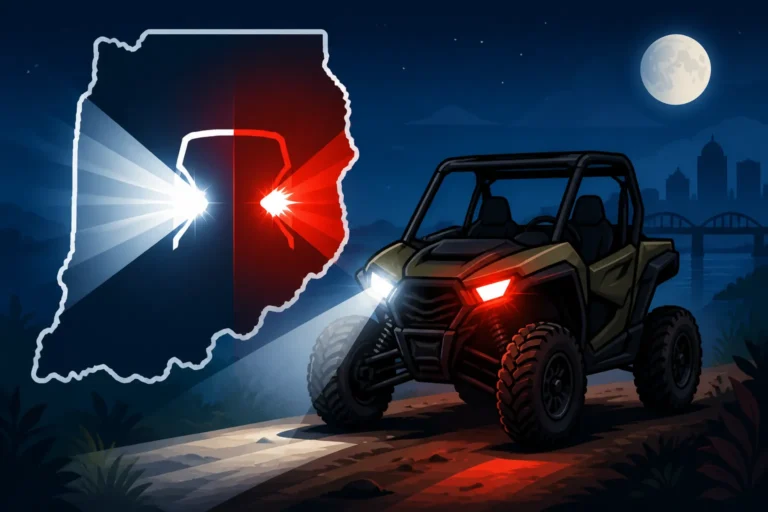
Indiana law is pretty clear: if you're operating your ORV on a public road after dark, or during periods of low visibility like fog or heavy rain, you need to have your headlights on. More specifically, your ORV must be equipped with at least two headlights, and they need to be strong enough to illuminate persons and vehicles at a safe distance ahead. While the exact distance can feel subjective, the general rule of thumb is that your lights should allow you to see far enough to stop safely at your current speed. This becomes especially critical on winding, unlit county roads where hazards can appear quickly.
Factory headlights are a good start, but let's be realistic: many stock ORV lights are designed more for trail visibility than for illuminating a pitch-black county road at 40 MPH. For enhanced visibility, especially if you anticipate frequent night riding on roads, consider aftermarket lighting solutions. High-quality LED light bars, like those you can find from brands such as SuperATV, can significantly improve your forward vision. These aren't just about making you look cool; they provide a much wider and brighter beam pattern, helping you spot deer lurking at the edge of the woods or potholes hiding in shadows. Just make sure your extra lights are aimed properly so you don't blind oncoming traffic, which is not only rude but also dangerous and potentially illegal. Always confirm that your setup meets the legal requirements for [Indiana Lighting Requirements for ORVs] and specifically [Two Headlights After Dark].
Taillights, Brake Lights, and Reflectors
While seeing where you're going is crucial, being seen from behind is just as vital, if not more so, on public roads. Indiana law also mandates that your ORV must have at least two red taillights visible from a specified distance to the rear. These taillights alert drivers approaching from behind to your presence on the road. Without them, you're virtually invisible on a dark night, inviting a rear-end collision.
In addition to taillights, functioning brake lights are non-negotiable. These bright red lights, which illuminate when you apply the brakes, are a critical signal to following vehicles that you're slowing down or stopping. They provide precious seconds for other drivers to react, preventing potential accidents. It's a simple function, but one that's often overlooked during pre-ride checks. Furthermore, strategically placed reflectors on your ORV can offer an extra layer of passive visibility. While they don't generate their own light, they effectively bounce back light from other vehicles' headlamps, making your machine more noticeable even if your electrical system falters. Before every evening ride, do a quick walk-around your machine: are your headlights bright? Do both taillights work? Do your brake lights come on when you hit the pedal? These checks, including for [Two Taillights After Dark], could literally save your life.
Navigating Local County Ordinances and Their Nighttime Nuances
Indiana's approach to ORV road use is decentralized, meaning each county gets to decide whether to open its roads and, if so, under what conditions. This is where it gets tricky, because a rule that applies in one county might be completely different in the next. Nighttime riding adds another layer of complexity to these local variations.
How to Research Your Specific County's Rules
This can't be stressed enough: do your homework before you ride. Assuming "it'll be fine" or relying on hearsay from a buddy is a recipe for trouble. The best way to find out if your specific county permits ORV use on its roads, and what rules apply after dark, is to consult their official ordinances. You can often find this information on the county's official website, typically under the county clerk's office, highway department, or sheriff's department sections. If you can't find it online, a polite call to the county highway department or the sheriff's non-emergency line can often point you in the right direction.
Some counties, like [Hancock County's Open County Roads], have clear ordinances available online. Others, such as Vanderburgh County, even provide specific maps, like the [Reading Vanderburgh's Color-Coded Map], illustrating which roads are open and which are closed. Imagine planning a trip through [Brown County's 2024 ORV Ordinance] or other scenic areas in southern Indiana. If you don't verify the specific rules for night riding in those areas, you could easily find yourself in violation without even knowing it. Always remember, ignorance of the law is not an excuse, especially when safety is on the line.
Specific Nighttime Regulations You Might Encounter
While the state sets minimum lighting requirements, individual counties might impose additional regulations, especially for night riding. For instance, a county ordinance might specify a different minimum illumination distance for headlights or require additional reflective tape on the sides of your machine. It's less common, but some counties could even impose curfews on ORV road use, meaning you might be allowed on roads during the day but not after a certain hour.
Beyond lighting, some local ordinances might reiterate or add to other requirements that become more important after dark. For example, a county might explicitly require you to carry your [Carrying an Insurance Certificate] on your person, not just have it available at home. Noise ordinances could also come into play; while most ORVs aren't excessively loud at cruising speeds, some aftermarket exhausts could draw unwanted attention after quiet hours in residential areas, even on an otherwise legal road. The key is that these local rules often fill in the gaps where state law is more general, making it essential to check every detail for the specific area you plan to ride.
Safety Beyond the Law: Practical Tips for Night Riding
Meeting the legal requirements is a baseline, but true safety on an ORV at night, especially on public roads, goes much further. The dangers are amplified when visibility drops, and proactive measures can make all the difference in preventing incidents.
Driver Visibility and Awareness
Riding at night fundamentally changes your perception. Your depth perception is reduced, and your peripheral vision is severely limited. This means you need to consciously compensate. Slow down. Seriously, reduce your speed significantly compared to what you'd ride during the day. This gives you more time to react to unexpected obstacles, wildlife, or changes in the road surface. Deer are an enormous hazard on Indiana county roads, especially at dusk and dawn. They often freeze in headlights, or worse, dart out from the tree line with no warning. A slower speed gives you a fighting chance to react.
To maximize your own visibility to other drivers, consider wearing reflective clothing or a reflective vest over your riding gear. Even small reflective strips on your helmet or jacket can make a huge difference in how early an oncoming car spots you. For your eyes, ensure you're using clear goggles or a clear visor. Tinted lenses, which are great for sunny days, become a dangerous hindrance at night. And while you're focused on the road ahead, remember to scan your mirrors frequently. If you've upgraded your machine with wider mirrors or side-view mirrors from a brand like SuperATV, they can provide a much better view of what's happening behind and around you, helping you stay aware of approaching vehicles.
Machine Maintenance and Preparedness
A breakdown during the day is an inconvenience; a breakdown at night on a dark county road can be genuinely dangerous. Regular [Indiana ORV Maintenance Costs] should always factor into your riding budget, but it becomes even more critical for night excursions. Before you head out, do a thorough check of your machine:
- Lights: Are all your headlights, taillights, and brake lights functioning perfectly? Are they clean and free of mud or dust?
- Battery: Is your battery fully charged and in good health? Running extra lights can draw more power, and a weak battery could leave you stranded.
- Tires: Check tire pressure. Riding on roads often requires different pressures than trails to maintain stability and prevent excessive wear.
- Fuel: Ensure you have plenty of fuel. Getting lost or running out of gas in the dark is no fun.
It's also a smart idea to carry a small emergency kit. This could include a flashlight, basic tools, zip ties, a small first-aid kit, and even a fully charged power bank for your cell phone. While cell signal can be spotty in the more rural corners of Indiana, having a phone for emergencies is still crucial. A basic tool kit could mean the difference between fixing a minor issue yourself and waiting hours for help.
What to Do If Stopped by Law Enforcement
No one wants to be pulled over, especially at night, but if it happens, how you react is paramount. If you see flashing lights behind you, pull over to the side of the road safely and as quickly as possible. Turn off your engine, keep your hands visible on the handlebars or steering wheel, and remain calm. The officer's primary concern is usually safety, both yours and theirs.
Be prepared to present all your necessary documentation: your driver's license (if required for the specific road or your age), your ORV registration certificate, and proof of insurance. If you're riding an unregistered machine or one without proper lighting, you could face significant penalties. [Indiana Fines for an Unregistered ORV] can be substantial, and operating without required lights after dark can lead to a [What a Class C ORV Infraction Costs in Indiana], which carries a hefty fine. Cooperate politely, answer questions clearly, and avoid sudden movements. The goal is always to resolve the situation safely and respectfully.
Disclaimer
This article is for general informational purposes only and does not constitute professional advice. Laws, prices and regulations vary by location and change over time. Consult a qualified professional for guidance on your specific situation.