Why an Entrance Fee Sits on Top in Indiana
When you take an ATV or UTV to an Indiana riding area, the amount due at the gate may include more than one charge. That can feel like paying twice for the same ride. The key is that an ORV trail permit and a property entrance fee generally serve different purposes, and one may not replace the other. Here’s how to tell what you need before you unload.
Why Indiana Charges Two Different Fees
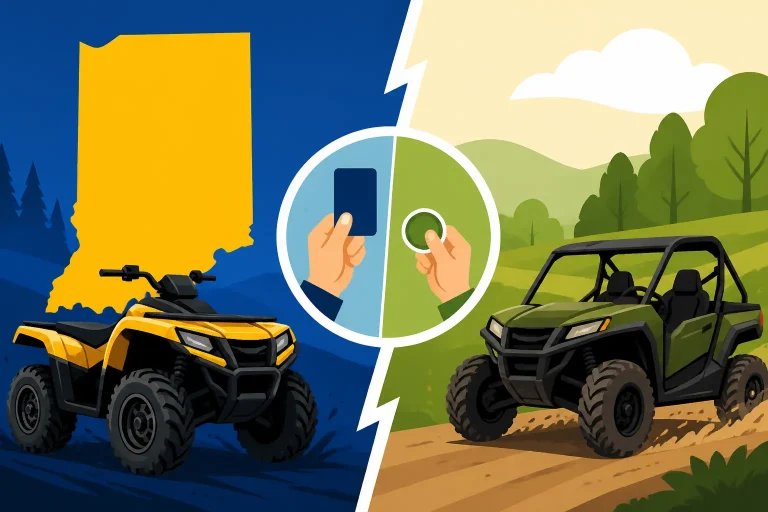
An ORV permit and an entrance fee answer different questions.
The trail permit is about the machine’s authorization to ride at designated off-road areas. The entrance fee is about access to the property itself. A useful way to think about it is that one charge is connected to using the trails with a machine, while the other is connected to entering a particular recreation area.
That distinction matters at Indiana riding areas such as Redbird and Interlake. A rider may need to account for both the required ORV permit and whatever entrance charge applies to the property and visit. Paying one does not automatically mean the other is covered. The exact combination can depend on where you’re going, who is entering, and what permits or passes you already have.
The permit system includes options intended for different riding patterns, including daily and annual permits. Indiana’s Daily and Annual Trail Permits explains how those options work. An annual trail permit may be useful across more than one ride, but it should not be treated as a universal property-entry pass. Likewise, paying an entrance fee at a gate does not necessarily provide the authorization required to ride an ORV on the trails.
| Charge | What it generally relates to | What it may not cover |
|---|---|---|
| ORV trail permit | Authorization to use designated ORV trails with a machine | Entry to a property, parking, or other separately charged access |
| Property entrance fee | Access to a recreation area or facility | The required ORV permit for riding |
| Annual property pass | Repeated entrance to eligible properties, subject to its terms | ORV trail authorization unless the pass specifically says it includes it |
| Out-of-state permit | ORV access under Indiana’s visitor rules, where required | Property entrance charges |
The distinction is easier to see when planning a day trip. Suppose you buy a daily ORV permit for your machine. That may satisfy the trail-permit requirement for the use described by the permit, but you still need to check the entrance rules for the property you’re visiting. On another trip, an annual permit may still leave an entrance fee due at the gate. Don’t assume that paying once settles every charge for every visit.
This separate structure is not unusual for recreation properties. Trail access and property access can be handled through different fee categories, even if they are collected at the same gate or during the same transaction. The practical result is that your total visit cost may combine charges with different purposes.
For the entrance-fee side of the question, see [Indiana State Recreation Area Entrance Fee]. For how the separate categories fit together, Why Entrance Fee Is Separate is also useful.
What the Entrance Fee Does—and Does Not—Mean
The word “entrance” can make the fee sound like a trail ticket. At a gate, the distinction may not be obvious: you arrive with a machine, pay, and go riding. But the entrance fee is associated with entering the recreation property, while the ORV permit addresses riding under the trail program’s rules.
That does not mean every property handles fees in exactly the same way. The charge could be collected according to the property’s current fee schedule, and the schedule may define who or what is covered by a payment. Before you travel, check whether the listed entrance charge applies per vehicle, per person, or under another arrangement. Also check whether a pass you own is accepted at that specific property.
An entrance fee generally should not be read as permission to ride anywhere on the property. Riding is still limited to areas and routes that are open to ORVs. A machine may have a valid permit and its operator may have paid to enter, but those facts do not authorize riding on a closed trail, outside a marked route, or in an area where ORVs are not allowed. Confirm the current rules and trail status before unloading.
The same logic applies in reverse. Having paid for a trail permit does not necessarily give you access to every Indiana property or cover all gate charges. A trail permit is not a substitute for checking the location’s entry requirements.
A few distinctions help avoid misunderstandings:
- The permit follows its own terms. Check what kind of permit you have, which machine it applies to, and where it is valid.
- The entrance fee follows the property’s rules. Confirm whether a day entry charge applies and whether an existing pass changes what you owe.
- Permission to enter is not permission to ride everywhere. Stay on authorized trails and follow closures.
- A receipt is not necessarily the permit itself. Keep whatever documentation the property or permit program requires you to show.
If you’re buying permits for a group, remember that an ORV permit may be required for each machine rather than each person. Why an Indiana Permit Is Per Vehicle covers that issue. The entrance-fee calculation may work differently, so don’t assume that the number of machines determines every charge. Check both sides separately.
The safest approach is to think of the visit as two checks: first, “What does each machine need to ride?” Then, “What does this property charge or require for entry?” If you can answer both before leaving home, the gate is less likely to bring an unwelcome surprise.
How Reciprocity and Out-of-State Registration Fit In
Visitors from outside Indiana sometimes confuse three separate questions:
- Does Indiana recognize my machine’s registration or decal?
- Do I need an Indiana ORV trail permit?
- Is there a property entrance fee for my visit?
These questions are related to the same trip, but one answer does not automatically settle the others. Reciprocity or a visitor rule may affect whether an out-of-state machine needs a separate Indiana registration or permit. It does not necessarily waive the entrance fee at an ORV recreation area.
Indiana’s visitor rules have their own conditions, including a limited period for some visiting machines. Read Indiana’s Twenty-Day Visitor Rule and Does Indiana Honor Out-of-State Registration? before relying on an out-of-state decal alone. Whether your registration is recognized and whether an Indiana trail permit is required are questions about riding authorization. Property entry remains a separate check.
A simple example shows why it helps to keep the questions apart. An out-of-state rider could have a registration that Indiana recognizes for a limited visit, yet still need to buy a trail permit for a particular riding area. The rider may also owe an entrance fee at that property. Another visitor may have a permit but still need to pay the entrance charge. Avoid treating “my machine is registered” or “I bought a permit” as proof that every requirement has been met.
Before a cross-border trip, verify:
- Your registration or decal meets Indiana’s visitor requirements.
- You have the Indiana trail permit required for your situation and the property you plan to ride.
- The property’s entrance fee applies to your visit, and any pass you hold is accepted there.
- Your permit and machine documentation are available to show if requested.
- Your chosen trails are open and suitable for your machine.
Because permit rules and property fees can change, confirm current details with the official Indiana program and the specific recreation area before setting out. A page about a general visitor rule may not describe a particular park’s entrance policy, and an entrance page may not explain whether your out-of-state registration satisfies trail requirements.
How to Budget for the Full Visit
To estimate what a ride will cost, don’t start with only the trail-permit amount or only the gate fee. List each cost category separately, then check which ones apply to your group.
Start with the machines
Write down how many ATVs or UTVs you’re taking and what registration or permit each one has. If you have more than one machine, don’t assume a permit for one covers the others. The permit rules and the property-entry rules can count people, vehicles, machines, or visits differently.
For each machine, ask:
- Is its registration valid for use in Indiana?
- Does it need an Indiana ORV permit?
- Is the permit daily or annual, and does it apply to the planned location?
- Does the permit need to be displayed or carried in a particular way?
If you’re riding more than once, compare the current daily and annual options rather than assuming one is better. Who an Indiana Day Permit Actually Suits can help you think through occasional riding, while Why an Indiana Annual Permit Pays for Itself is relevant if you expect to make multiple visits. Check the current terms before choosing; the best option depends on your plans and what the permit covers.
Check the property separately
Next, look up the entrance rules for each recreation area. Confirm whether the fee applies to your vehicle or group, whether a separate pass is accepted, and whether you need to pay on arrival or arrange anything beforehand. Don’t rely only on what a friend paid on a past trip. Their visit may have involved a different property, pass, group, or fee schedule.
A multi-day or multi-property trip deserves extra care. An annual trail permit may work across eligible riding areas, but you still need to verify whether each property has its own entry charge. Conversely, a property pass may provide repeat entrance at eligible locations without covering the trail permit for any machine. The details depend on the current program terms and property rules.
Make a quick pre-trip list
A practical checklist can keep the categories straight:
- Choose the property and check its current hours, closures, and entrance requirements.
- Identify every machine and confirm its registration or visitor status.
- Confirm the trail permit required for each machine.
- Check whether any entrance pass you already own is valid at that property.
- Add the applicable permit and entrance charges separately to your budget.
- Save the official information and any purchase confirmations where you can find them.
- Bring required documents and follow the gate’s instructions when you arrive.
For paperwork, a small waterproof pouch can help keep receipts and machine documents together. Some riders use a simple folder or dry pouch bought at an outdoor retailer or through Amazon. If you prefer digital records, save screenshots or confirmations before driving into an area with unreliable cell service; a phone photo can be useful, but it may not replace a document the rules require you to carry.
Amazon is just one place riders may find a basic waterproof document pouch. Choose something that fits your paperwork without making it hard to retrieve when a gate attendant or officer asks to see it. Don’t put original documents somewhere they can be damaged by mud or water.
You can also use Amazon to find a small organizer for keeping permit receipts and property-entry confirmations together between trips. The useful part is having a consistent place for them, not the brand or style of the holder. Keep digital copies as a backup, and check the official requirements for what must be carried or displayed.
Common Mistakes at the Gate
Assuming an annual trail permit includes entrance
An annual trail permit can make repeat riding simpler, but it does not automatically mean every entrance charge is covered. Check the permit terms and the property’s own entry policy. If the two are sold separately, budget for both.
Assuming the gate fee is the permit
A payment at the entrance may cover access to the property without satisfying the ORV permit requirement. Ask what each charge covers and keep the required permit documentation available. If you buy everything in one transaction, still confirm which item is your riding permit and which is the entrance charge.
Assuming an out-of-state decal removes every Indiana requirement
A recognized out-of-state registration may affect the registration question, but it does not necessarily cover an Indiana trail permit or a property entrance fee. Check the visitor rules, the riding-area rules, and the property’s entry schedule as separate items.
Relying on last season’s information
Fee schedules, accepted passes, hours, and trail closures can change. A printed screenshot or an old receipt can help you remember what you paid before, but it is not proof that the same terms apply now. Check the official information for the specific area shortly before you go.
Confusing an entrance pass with a trail permit
A pass that allows repeated entry to a property may not authorize a machine to ride. Read the pass description carefully and confirm whether it covers property entry only or includes any trail-use privileges. Don’t infer coverage from the word “annual.”
Arriving without a payment method or documentation
Even when you’ve checked the requirements, be ready to follow the property’s payment process and show the documents requested. Keep confirmations accessible, but don’t assume that a phone screenshot is accepted in place of a required permit, decal, or other documentation.
The straightforward rule is to verify both sides of the visit: what each machine needs for trail use and what the property requires for entry. Once those are clear, the fact that the entrance fee sits on top of the permit is less confusing. It is not necessarily a duplicate charge; it is a separate part of the trip with its own rules.
Disclaimer
This article is for general informational purposes only and does not constitute professional advice. Laws, prices and regulations vary by location and change over time. Consult a qualified professional for guidance on your specific situation.