Indiana Rules for Night Riding at a Park
If you’re planning an evening ride at an Indiana off-road park, the key question is not just whether your ATV or UTV has working lights. Park hours and site-specific rules decide whether riding after dark is allowed at all. Check the rules for the exact property before you haul out; a permit or out-of-state registration does not automatically authorize night riding.
Is night riding allowed at Indiana parks?
There is no safe assumption that every Indiana park allows riding after dark. Rules can differ between state-managed riding areas and privately operated parks, and a park may limit riding to its posted operating hours even if the trails look accessible after closing.
For a DNR-managed riding area, check the current hours and notices for that specific property. Treat night riding as prohibited unless the park’s official information clearly allows it. A gate that is still open, a machine with lights, or a permit valid for the day does not necessarily mean you may ride after the posted closing time.
Private parks set their own operating policies. Some may schedule special evening events or allow riding during certain hours; others may close trails at dusk. A general statement that a private park is open does not always mean every trail, track, or activity is available after dark. Confirm the permitted riding hours directly with the park, especially if you’re attending an event or staying overnight.
| Where you plan to ride | What to confirm before dark | What not to assume |
|---|---|---|
| DNR-managed ORV area | The property’s posted hours, trail notices, and any night-riding restrictions | That a valid permit allows riding after closing |
| Private off-road park | The park’s current hours, event rules, and which areas may be used at night | That night riding is allowed because the property is privately operated |
| A trail reached from a public road | Whether the trail itself is open and whether the road or route is legally available to ORVs | That road-use rules grant access to a closed park trail |
| An organized ride | The event’s stated schedule and any instructions from the organizer or park | That event registration overrides park rules |
Park hours can change for maintenance, weather, special events, or other operating reasons. Check the property’s current official information before departure, then read any signs and notices at the entrance when you arrive. If the posted information is unclear, ask park staff rather than trying to interpret an open gate or an empty parking lot as permission.
For a broader look at when Indiana riding areas operate, see Indiana State Recreation Area Hours. For a general overview of trail access and permits, Do You Need a Permit for Indiana ORV Trails? explains why permission to use a trail is separate from having a machine that is registered or equipped for riding.
A permit or out-of-state registration does not extend park hours
Indiana’s trail permits and a park’s operating schedule answer different questions. A permit may be required to use a particular public riding area, but it does not by itself authorize riding outside the area’s permitted hours. Similarly, an out-of-state registration or decal does not give a visitor permission to enter a closed trail after dark.
Before a trip, check whether your riding location requires a daily or annual permit, whether the permit applies to each machine, and whether any separate entrance or access requirements apply. These details are worth confirming even if you have ridden at the same park before; requirements and operating notices are location-specific. Indiana’s Daily and Annual Trail Permits covers the permit options, while Indiana’s Out-of-State Annual Permit can help visitors understand the separate question of an out-of-state machine.
If you are visiting from another state, do not treat reciprocity as a substitute for checking the park’s rules. A registration that is recognized for a visitor may address the machine’s registration status, not the park’s hours, trail closures, or night-riding policy. The same distinction applies to Indiana owners: being properly registered does not make a closed trail available.
Keep these separate checks in mind:
- Registration concerns the machine’s status and applicable state requirements.
- A trail permit concerns access to a particular riding area when one is required.
- Park hours determine when the property is open for riding.
- Trail notices may close all or part of an area, regardless of the hours.
- Local road rules apply to any road segment, and do not automatically open park trails.
This matters if you plan to arrive late, ride near closing, or return to a staging area after sunset. Build in enough time to finish your loop, load the machine, and leave before the park closes. If your group is delayed, stop at a safe, permitted location and contact park staff for direction. Don’t continue onto a closed trail because you are trying to reach the gate.
Park-specific requirements may also cover helmets, age and supervision, vehicle types, or other equipment. Those rules remain relevant during daylight and at night. Indiana Helmet Rules at a State ORV Area is a useful companion if you are checking requirements for riders on public riding areas.
Lights matter only when night riding is permitted
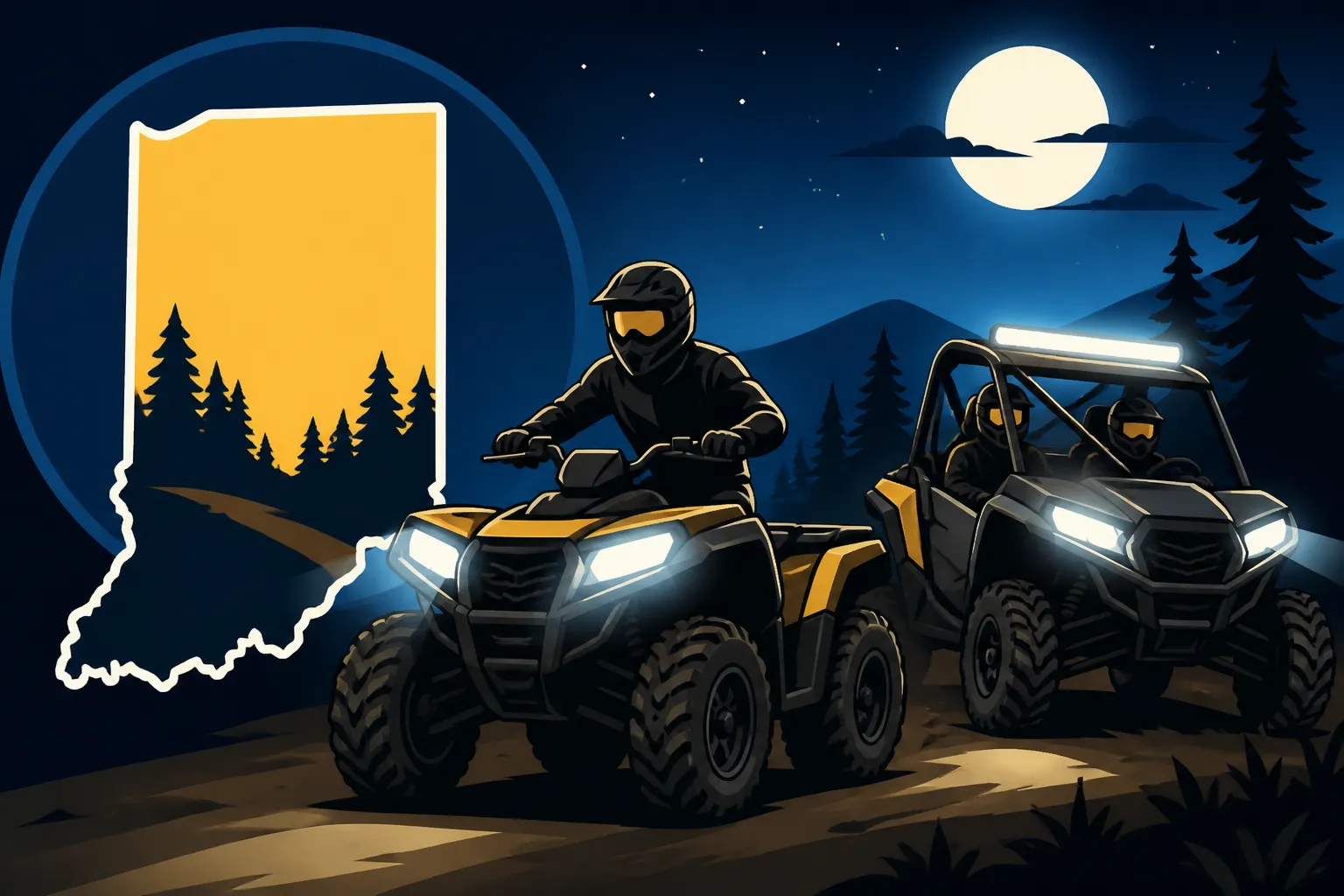
If the park expressly allows riding after dark, make sure the machine’s lights are suitable and working before leaving the staging area. Good lighting helps the operator see the trail and helps other riders notice the vehicle, but it cannot make an otherwise closed trail legal to ride.
Check the headlight, taillight, brake light if fitted, and any required reflectors or other equipment specified by the park. Clean the lenses and confirm that the lights remain secure over rough terrain. Carry a backup light source for roadside or repair situations, but don’t use a handheld light as a reason to ride a machine whose required lights have failed.
Use lighting that gives you a clear view without creating avoidable glare for oncoming riders. A very bright aftermarket lamp can make it harder for someone approaching from the opposite direction to see the trail. Aim lights so they illuminate the route ahead rather than shining directly into another operator’s eyes. If you add equipment, check compatibility with your machine’s electrical system and mount it securely. Retailers such as Amazon may carry replacement or auxiliary lights, but confirm the product’s fit and specifications before buying.
Night riding also changes how quickly hazards appear. A trail edge, rut, branch, steep drop, or stopped vehicle can be harder to spot after dark, even with a strong headlight. Reduce speed, leave more room between machines, and avoid following so closely that dust, mud, or spray fills your view. On a group ride, agree on hand signals or another clear way to communicate stops and hazards, and make sure each operator knows the route back to the staging area.
A practical pre-ride check includes:
- Confirm permission and hours. Verify that the park allows night riding on the route you plan to use and that the ride will finish within its permitted hours.
- Read current notices. Check for closures, event instructions, or temporary restrictions before unloading.
- Inspect the lights. Test them with the engine running, check the lenses and mounts, and make sure the controls work.
- Carry basic essentials. Bring a charged phone, a suitable backup light, water, and any repair items appropriate to the ride.
- Tell someone the plan. Share the park, expected return time, and a contact plan with someone who is not riding.
- Turn back early if visibility worsens. Darkness, fog, heavy rain, dust, or a failing light can make a permitted ride unsafe.
A light inspection is not a substitute for the park’s requirements. If staff or posted rules specify particular equipment, follow those instructions. If you are unsure whether a lighting setup meets the rule, ask the park before riding rather than trying to resolve the issue on the trail.
How to verify the rules before you unload
A quick confirmation can prevent a long drive for a ride that the park does not permit. Use the park’s official channel for current hours and restrictions, and make the question specific: ask whether your vehicle type may ride after dark, which trails or areas are included, and when riders must be off the trails.
Use this process before the trip:
- Identify the exact property. Don’t rely on a search result or an old message about a different Indiana park. A nearby campground, trailhead, or private riding area may have different rules.
- Check the official hours and notices. Look for posted operating hours, seasonal schedules, closures, and instructions for evening events. Indiana Trail Closures to Check offers a useful reminder to check notices before setting out.
- Contact the park if anything is ambiguous. Ask whether “open” means the trails are open for riding after dark, not just that the entrance or campground remains accessible.
- Confirm permits and vehicle requirements separately. Make sure your registration and any required trail permit are in order, but do not treat either as permission to ride after hours.
- Review the entrance signage. Rules displayed at the property may include current instructions or restrictions. If they conflict with what you expected, follow the posted direction and ask staff for clarification.
- Plan a daylight fallback. If the park does not allow night riding, arrive earlier or choose another location whose current rules expressly permit the ride.
For a private property, contact the operator directly and ask whether permission covers the specific trail or activity you intend to use. Rules for a motocross track, an off-road trail, and a campground can differ at the same location. [Indiana Rules for Riding a Private Park] is relevant when sorting out how private-property access differs from riding at a public area.
If you cannot confirm that night riding is allowed, plan to finish before dark. That is the clearest way to avoid trespassing, violating park hours, or being stranded on a closed trail. For more on hours and seasonal conditions, see Indiana Trail Conditions Before You Ride.
Disclaimer
This article is for general informational purposes only and does not constitute professional advice. Laws, prices and regulations vary by location and change over time. Consult a qualified professional for guidance on your specific situation.