Indiana Permit for a Second Machine
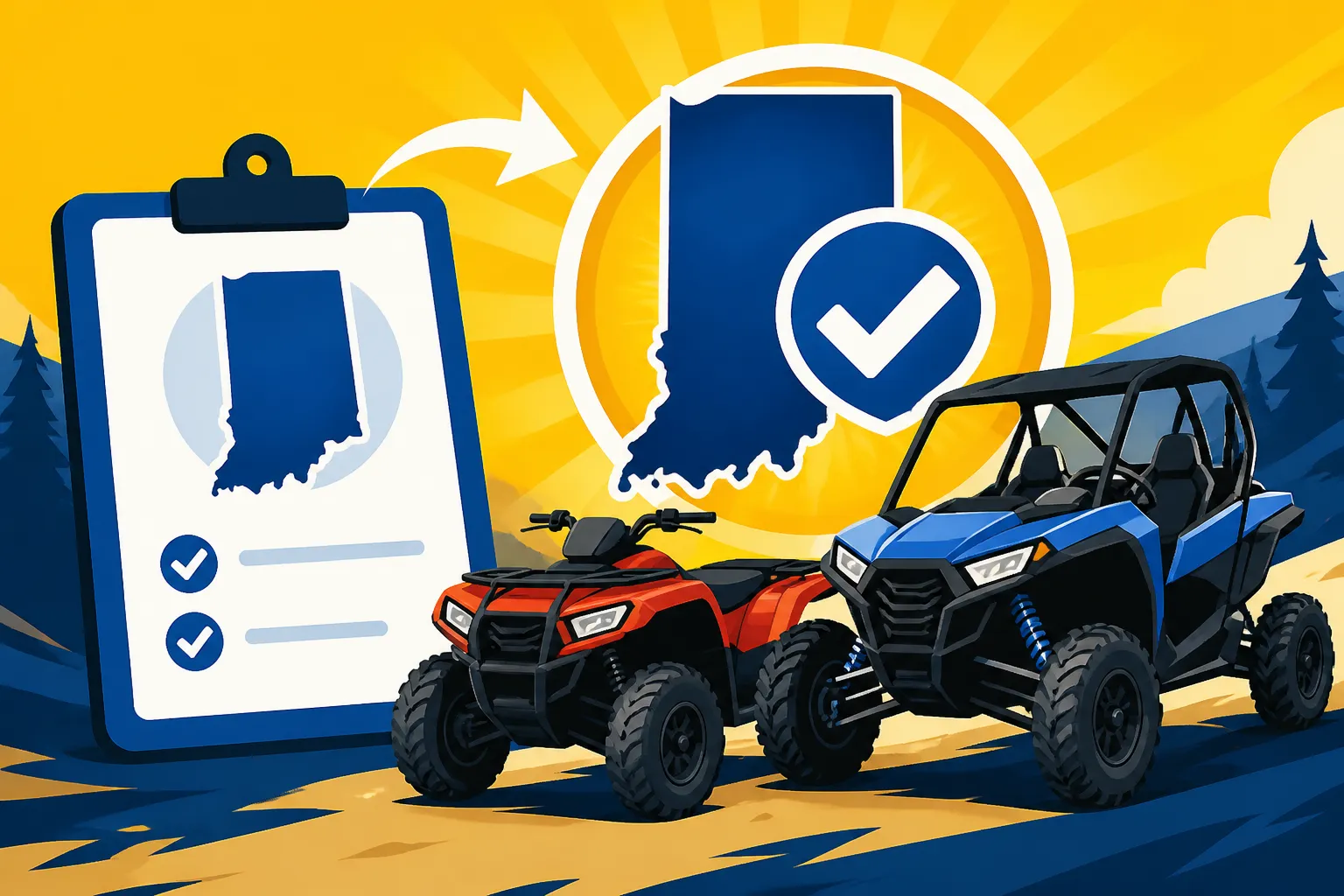
Taking two ATVs or UTVs to an Indiana riding area raises a simple but important question: can one permit cover both? For Indiana’s designated off-road riding areas, plan on a separate DNR trail permit for each machine you ride. This article explains how to choose coverage, avoid confusing permits with registration, and prepare for a trip with more than one vehicle.
Does the second machine need its own Indiana permit?
Yes. Indiana’s DNR trail permit applies to a particular off-road vehicle, not to every machine owned by a household, rider, or group. If you bring a second ATV or UTV onto a riding area where a DNR permit is required, that second machine needs its own valid permit too.
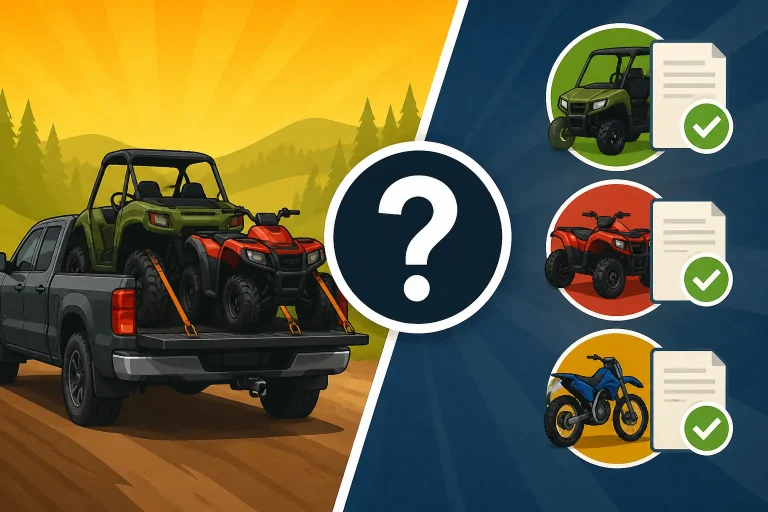
This is true even if the same person owns both machines, one person drives them on different days, or the vehicles arrive on the same trailer. A permit attached to one machine does not automatically extend to another. The practical rule is to check that every machine you plan to ride has its own coverage before unloading.
| Your riding plan | Permit arrangement to plan for |
|---|---|
| One machine for the day | Valid permit for that machine |
| Two machines ridden on the same trip | Separate valid permit for each machine |
| One machine used often, another used occasionally | Annual coverage for the regular machine; consider daily coverage for the occasional one |
| A visitor brings a machine from another state | Check which Indiana permit applies; out-of-state registration is a separate matter |
| One machine is parked while another is ridden | The parked machine generally does not need a riding permit for that outing, but check the area’s current rules |
Indiana’s daily and annual options are explained in Indiana’s Daily and Annual Trail Permits. The key point for a second machine is that whichever option you choose, it must cover that machine itself. A permit for your primary quad does not cover the side-by-side riding beside it.
A DNR permit is not the same as BMV registration
It helps to separate two requirements that riders often treat as interchangeable:
- DNR trail permit: Permission required for riding at designated Indiana off-road areas, subject to the applicable site rules.
- BMV registration and decal: State registration for machines that must be registered under Indiana requirements.
Having a BMV decal does not, by itself, mean that a machine has the DNR permit needed for a riding area. Likewise, an area permit does not replace required registration. The two systems serve different purposes, and a machine may need to meet both sets of requirements.
For background on the state registration side, see How Indiana ORV Registration Works. If you are unsure whether a particular ATV or UTV needs BMV registration, start with Do You Need a Permit for Indiana ORV Trails? for the trail-permit question and Indiana ORV Title Requirements for related title information. These requirements should not be treated as substitutes for one another.
The rule matters at the riding area, not just when you buy
It is easy to buy or display a permit for the machine you usually ride and overlook the second one. Before leaving home, match each permit to the vehicle it is meant to cover, and follow the current DNR instructions for displaying or carrying proof. At the gate, be prepared to show that each machine being ridden is covered.
If you ride at Redbird or Interlake, check the current instructions for the specific area before you travel. A permit rule can apply across a public riding area even when the machines arrived together and one driver paid for both. The second machine does not become covered merely because it is on the same trailer or belongs to the same family.
Choose annual or daily coverage for each machine
The right permit mix depends on how often each machine will be ridden at Indiana areas that require a DNR permit. You do not necessarily need to buy the same type of permit for both. One machine might be used through the season while the other only comes along for a single weekend.
When annual coverage may suit the second machine
Annual coverage may make sense if the second ATV or UTV is likely to be used repeatedly at covered areas. It can also be a practical choice if the machine is regularly shared by family members or riding partners, provided the permit is assigned to the correct vehicle and the current rules allow the intended use.
Think about the machine’s expected use, rather than only the number of people who might ride it. The permit is vehicle-specific; changing drivers does not turn it into a permit for a different vehicle. If both machines are likely to be used across several trips, compare the available annual and daily options for each one. Current requirements and amounts should be confirmed through the official permit seller or the riding area.
An annual permit is not a general pass for every cost at a park. You may still need to pay an entrance fee or meet other site requirements. For the distinction, see Why an Entrance Fee Sits on Top in Indiana.
When daily coverage may suit an occasional machine
If your second machine comes out only once in a while, a daily permit may be a better fit than annual coverage. The important detail is that the daily permit must cover that second machine for the day you ride it. Buying a daily permit for your regular machine does not cover the extra ATV or UTV.
A useful way to plan is to make a small list before each trip:
- Write down every machine that will be ridden.
- Note which one already has valid annual coverage.
- Identify any machine that needs daily coverage for the outing.
- Confirm the permit instructions, including how proof must be shown or displayed.
- Check whether separate entrance or facility fees apply.
This avoids the common mistake of counting riders instead of machines. Two people on two machines require coverage for both machines; two people taking turns on one covered machine is a different arrangement. Follow the area’s rules for the actual vehicles being used.
For out-of-state machines, check both permit and registration rules
A machine registered in another state may still need an Indiana DNR trail permit when it is ridden at a covered Indiana area. Out-of-state registration and Indiana trail access are separate questions. Do not assume that a home-state registration decal replaces an Indiana riding permit.
The visitor rule for registration is also distinct from trail permits. Indiana’s rules for an out-of-state machine are described in Indiana’s Twenty-Day Visitor Rule, while permit requirements for visitors are covered in Indiana’s Out-of-State Annual Permit. Confirm which visitor option applies to your situation and how it must be linked to the machine. A permit purchased for one out-of-state vehicle should not be assumed to cover a second one.
How to prepare two machines for a ride
Getting two machines ready involves more than making sure both fit on the trailer. A quick permit and paperwork check can prevent a problem at the gate or during a trail inspection.
Build a vehicle-by-vehicle checklist
Write down the make, model, and identifying details for each ATV or UTV. Then record which machine has annual coverage and which needs a daily permit. If the machines look similar, use a clear identifier—such as a note based on the registration or serial number—so you do not mix up their documents or permit information.
Before departure, confirm:
- Each machine you plan to ride has its own applicable DNR permit.
- Permit proof is available in the form the current instructions require.
- Any required BMV registration is current and associated with the correct machine.
- Any required decals are attached where the official instructions say they belong.
- You have checked current operating hours, trail status, and site rules.
- You have accounted separately for any entrance fees or other charges.
Do not rely on a photo of one permit to establish coverage for another vehicle. A photo can be useful as a backup record, but it does not change which machine the permit applies to. Keep any physical permit or proof in a place where it can be accessed without digging through a packed trailer.
Buy or arrange coverage before the trip when possible
If you can, confirm permit availability before loading. Where to Buy an Indiana ORV Permit explains the common purchase routes. Whether you buy ahead or at the site, check that you are selecting coverage for the right machine and the right period. Save any confirmation and follow the instructions for placing or presenting it.
If you are buying more than one permit at once, verify each entry before completing the purchase. Similar model names, two machines with the same color, or one household account can make it easy to assign the wrong details. Keep confirmation records separated by vehicle, especially if different people will haul or ride the machines.
A DNR permit is not an entrance pass. If the park charges an entrance fee, budget for that separately and confirm whether the fee is assessed by vehicle, visitor, or another method at that location. Conditions can differ by site, so check the current information for the area you are visiting rather than assuming one payment covers every part of the trip.
Make sure the machine is eligible and ready
A permit does not override the riding area’s equipment and conduct rules. Before taking the second machine onto a trail, check that it is suitable for the area and that the rider meets applicable requirements. If the second vehicle is a UTV rather than an ATV, review any rules that apply to its size, occupants, restraints, or equipment.
Also check the machine itself. A permit cannot make an unsafe vehicle trail-ready. Inspect tires, brakes, steering, lights where needed, fuel, and any recovery equipment appropriate to the route. If one of the machines has not been used recently, test it at home rather than discovering a problem at the staging area.
For groups, assign one person to verify the permit and paperwork for each vehicle. This is especially useful when different owners bring machines on a shared trailer. A group leader’s permit or receipt does not cover every vehicle in the convoy.
Common mistakes and how to avoid them
Most second-machine permit problems come from mixing up the unit of coverage, confusing permit types, or assuming that one document satisfies every requirement.
Assuming one permit covers a household
A household can own several machines, but ownership does not combine them into one permit. Treat each vehicle as its own line on your checklist. If two machines will be ridden, verify two separate permits, even if only one person is responsible for arranging them.
This remains important when riders trade machines during the day. If the permit belongs to one specific vehicle, switching drivers does not switch the permit to a different machine. Keep each permit tied to the vehicle it covers.
Treating registration as trail permission
A BMV registration decal may be required for a machine, but it is not a substitute for a DNR trail permit where one is required. The reverse is also true: a DNR permit should not be taken as proof that the vehicle has completed any separate registration or titling steps.
For a closer look at the difference between an area permit and state registration, see Does Every Machine in the Truck Need Its Own Permit?. Review the wording carefully: the question is not simply how many permits are in a household, but which vehicle each permit covers and what rule applies at the place you intend to ride.
Assuming out-of-state paperwork is enough
An out-of-state registration may help show that a visitor’s machine is registered at home, but it does not automatically provide Indiana trail access. Check the DNR permit requirement separately, especially if you are bringing more than one machine from another state. The number of days a visitor may ride under a registration rule and the number of permits required for trail access are different issues.
Forgetting costs and site rules are separate
A valid permit does not necessarily include every fee charged by a park or recreation area. Check entrance fees, hours, closures, and any machine-specific restrictions before travelling. If you plan to ride at more than one area, confirm that your permit applies to the intended locations and that each site is open to the type of machine you are bringing.
Leaving permit checks until the gate
A last-minute purchase or correction can delay a group, and a busy site may not be the best place to sort out which permit belongs to which vehicle. Check coverage at home, keep confirmations organized, and read the current gate instructions when you arrive. If the official directions are unclear, ask staff before riding rather than guessing.
The simplest rule is reliable: count the machines, not the owners or riders. If two ATVs or UTVs will be used on a trip, plan for a valid, machine-specific DNR permit for each one, and handle any BMV registration and entrance fees as separate requirements.
Disclaimer
This article is for general informational purposes only and does not constitute professional advice. Laws, prices and regulations vary by location and change over time. Consult a qualified professional for guidance on your specific situation.