A Passenger Under 18 at an Indiana Park
A passenger under 18 at an Indiana off-road park raises more questions than whether there is room on the machine. The answer can depend on the vehicle’s passenger seating, the rider’s age, and rules for helmets, seat belts and supervision. Here’s how to check those details before you load up, and what to confirm at the park gate.
Start with the park and the machine
Indiana’s public off-road areas and privately operated parks may not follow identical rules. A rule for a DNR-managed recreation area should not be assumed to apply at a private park, or the other way around. Check the rules for the specific place you plan to ride, including any posted requirements at the entrance.
The machine matters just as much. A side-by-side with a passenger seat and seat belt is not the same as a single-seat ATV with a passenger perched on the rack. Use a passenger position the manufacturer designed for carrying a person. Never treat a cargo rack, fender or improvised perch as a seat.
Before you go, identify the passenger’s age and the vehicle type, then check the park’s current instructions for both. If the passenger will be operating a machine at any point, operator-age and supervision requirements become relevant too. Those are separate from the rules for riding as a passenger. Indiana State Park Rules for Riders Under 16 and Indiana Rules for a Passenger Under 18 cover related questions about younger riders.
A practical first check is to consult the park’s official information and contact the office if the passenger’s situation is not clearly covered. Ask about the exact vehicle, whether the young person will ride as a passenger or operator, and what protection is required. Do not rely only on a friend’s recollection or a rule from a different riding area.
| Before the ride | What to check |
|---|---|
| Park | Whether it is a DNR-managed area or a private park, and which rules apply |
| Vehicle | Whether it has a manufacturer-designed passenger seat |
| Passenger | Age, ability to sit securely, and any supervision requirement |
| Protection | Helmet requirements, seat belt requirements, and any enclosed-cab exception |
| Entry | Current permit, admission, and park-specific requirements |
Permit and entry rules are another layer, not a substitute for passenger-safety rules. If you are heading to a DNR area, see Indiana’s Daily and Annual Trail Permits and Why an Entrance Fee Sits on Top in Indiana to understand how riding permits and park admission can differ.
Seats, helmets and seat belts are separate checks
A passenger needs a proper place to sit before you consider helmets or belts. On a side-by-side, use the passenger seat and its intended restraint. On an ATV, carry a passenger only if that model is designed to carry one and provides a passenger position meant for that purpose. A passenger who cannot sit securely, reach the intended handholds or remain within the seat’s protection is not ready to ride on that machine.
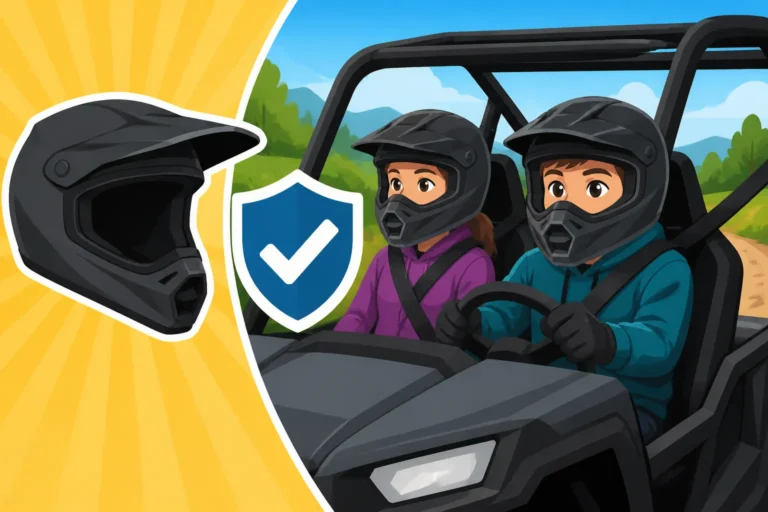
For DNR public riding areas, check the current rules for helmet use by riders under 18. The helmet requirement can apply to a young passenger even when an adult is driving. Do not assume that being in a UTV automatically removes the helmet requirement: an enclosed-cab exception may depend on the vehicle’s design and the rules in force at that location. If the exception is unclear, bring helmets and ask the park before riding.
A helmet should fit the passenger, fasten securely and meet the applicable standard. A loose helmet that shifts or exposes the forehead is not a useful substitute for a properly fitted one. If you buy online, including through Amazon, check the product’s certification markings and sizing details rather than relying on a listing title or a photo.
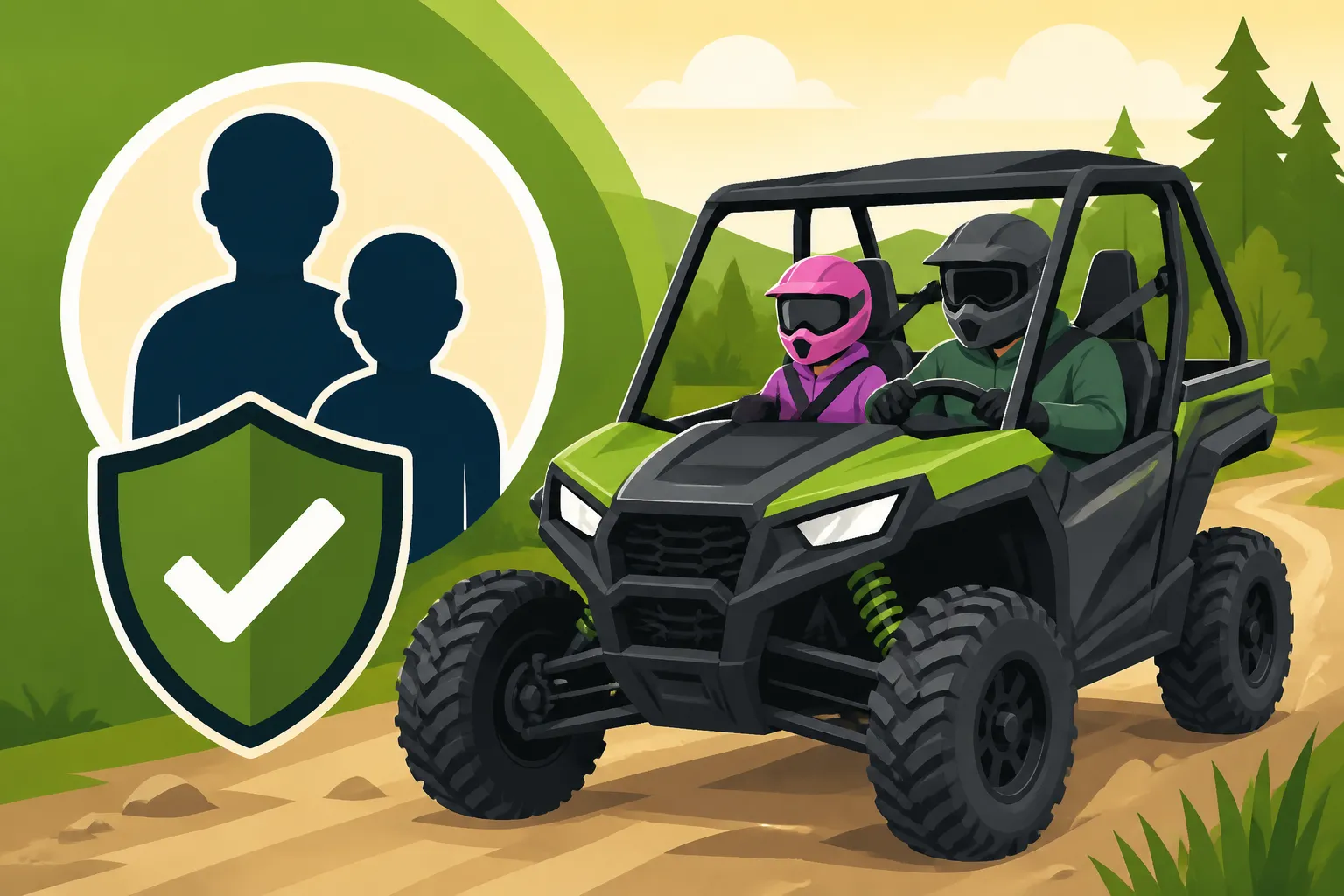
Seat belts are a separate issue. In a side-by-side, every occupant should use the seat belt provided for that seat, and the park may require it. A helmet does not replace a seat belt, and a seat belt does not replace a helmet when one is required. Keep the passenger inside the vehicle’s intended seating area; never let someone ride on a lap, cargo area or outside the cab.
The type of vehicle helps explain why requirements differ. A quad generally does not have a seat belt designed for an occupant, while a side-by-side usually has a seating position and belt for each passenger. That distinction does not make a quad safe for an extra rider. The machine must still be designed to carry that person. For more detail, see Seat Belts for Indiana Side-by-Side Occupants and Why Quads and Dirt Bikes Skip the Belt Rule.
If a passenger is too small for a belt to fit correctly, do not improvise by adding a cushion, altering the belt or letting the passenger ride unrestrained. Contact the park or vehicle manufacturer for guidance. A restraint that does not fit can create its own hazard, and a park may not allow the passenger to ride in that setup.
Supervision and the difference between riding and driving
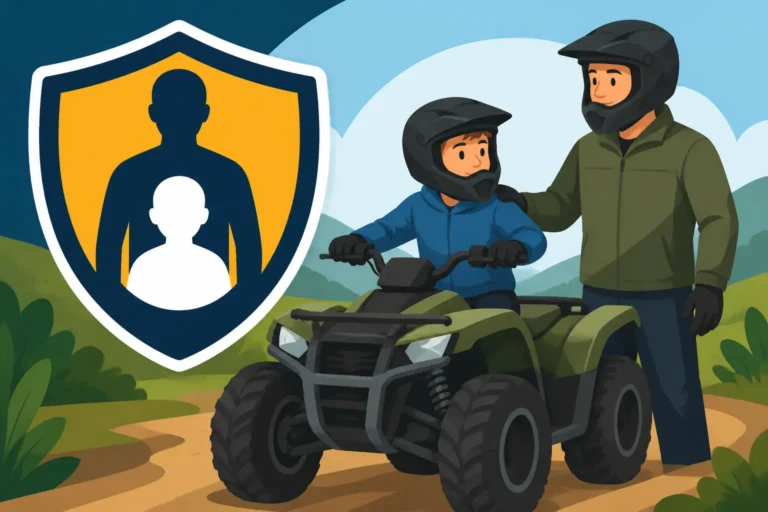
An under-18 passenger is not automatically subject to the same requirements as an under-18 operator. However, age-related supervision rules may still matter, and park policies can set requirements for young people on public riding areas. Do not assume that an adult driving nearby satisfies a supervision rule; check what the specific rule means by supervision and whether the adult must be in the vehicle, within sight or otherwise present.
The passenger’s age can also matter if the group plans to switch drivers during the day. A teen who is allowed to ride as a passenger may not be old enough to operate that machine, or may need direct adult supervision to do so. Confirm the operator rules separately before handing over the controls. Under Sixteen and Direct Parental Supervision explains why supervision should be checked rather than guessed.
A useful way to avoid confusion is to make a simple plan:
- Decide which machine the young person will ride in and identify its passenger seat.
- Check whether the park allows that passenger and whether age or supervision rules apply.
- Confirm helmet and seat-belt requirements for that vehicle at that park.
- Make sure the passenger can sit correctly, use the restraint and follow instructions.
- Keep the passenger in that role unless you have separately verified that they may operate the machine.
If a child cannot keep their feet and hands in the intended position, follow directions, or stay seated through ordinary bumps, choose a different activity or wait until they are ready. A passenger should be able to understand basic instructions such as keeping arms inside the vehicle, staying seated and waiting for the driver’s signal before getting out. A short ride does not remove the need for a suitable seat and restraint.
For a family ride, agree on a few rules before starting: no unbuckling while moving, no reaching outside the vehicle, and no getting off until the driver has stopped in a safe place. The driver should adjust speed and route to the passenger’s comfort and experience, not simply follow faster riders in the group.
A gate-ready check for your outing
Rules and operating details can change, and private parks may set their own conditions. Check the official park information shortly before the trip, especially if it has been a while since your last visit. If a rule is unclear, call the park and describe the passenger’s age and the exact machine. A quick confirmation is better than arriving with a passenger who cannot legally or safely ride.
Use this checklist before unloading:
- The vehicle is suitable: It has a passenger position designed for carrying someone, and the passenger can sit securely.
- The passenger is protected: The correct helmet is available if required, and any seat belt is used as directed.
- The age rules are clear: You know whether the person is allowed to ride and what supervision applies.
- The driver is eligible: If the young person may drive, you have checked operator-age and supervision requirements separately.
- The park requirements are current: You have checked rules for that specific area, including private-park conditions if applicable.
- The entry details are settled: You have checked permit and admission requirements rather than assuming one covers the other.
If you are uncertain about a passenger’s eligibility, do not try to resolve it by modifying the machine or interpreting a rule loosely at the gate. Ask the park first. A passenger under 18 can often join a ride when the vehicle, protective equipment and supervision all match the applicable rules—but the safe answer depends on those details, not simply on the passenger’s age.
Disclaimer
This article is for general informational purposes only and does not constitute professional advice. Laws, prices and regulations vary by location and change over time. Consult a qualified professional for guidance on your specific situation.