A Fire Ring at an Indiana Campground
A fire ring can make an Indiana campground feel like part of the trip, but it does not automatically mean a fire is allowed that night. Campground rules, temporary restrictions and the kind of site you booked all matter. Here’s how to confirm what’s permitted, keep a campfire controlled, and avoid confusing trail access with permission to camp or burn.
A fire ring is a place to contain a fire, not automatic permission
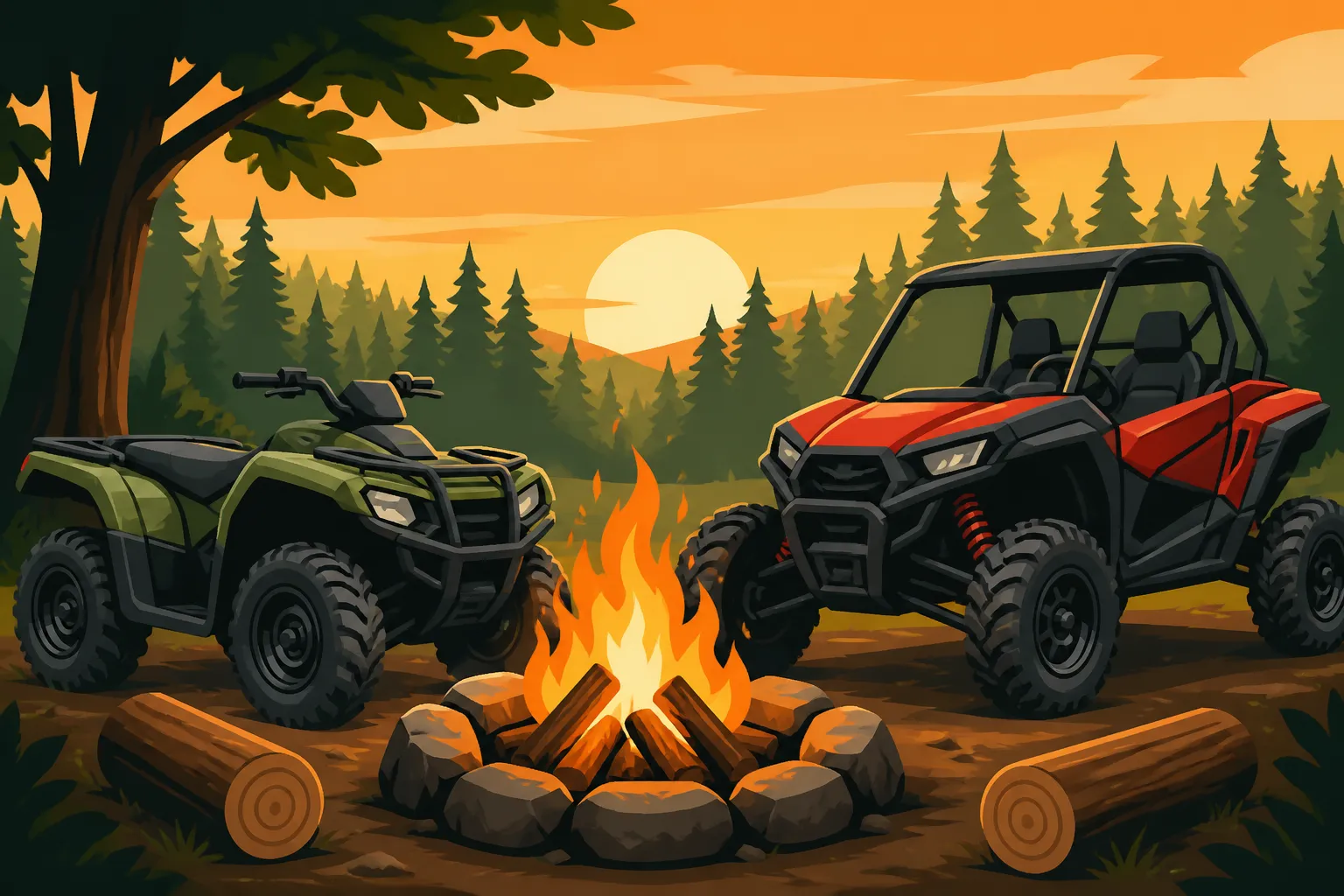
A built-in fire ring is a useful clue that a campground has a designated place for fires. It is not a guarantee that fires are permitted at all times. The campground operator may restrict fires because of dry conditions, wind, maintenance, or other site-specific concerns. Temporary burn restrictions can also apply, so check the rules for the campground and the conditions in effect when you arrive.
This matters because campgrounds near Indiana riding areas are not all managed the same way. A state recreation area, private campground, and off-road park may each set different rules for fires, firewood, quiet hours, and where you can camp. A rule at one property does not automatically apply at another. For trip planning, Camping Near Indiana ORV Trails can help you think through campsite location and access, but confirm fire rules directly with the place you plan to use.
Before you unload, find out:
- Whether fires are allowed at your assigned site
- Whether you must use the existing ring or may use another approved device
- Whether there is a current fire restriction or burn ban
- What the campground allows you to burn
- How ashes must be handled and where they should go
- Whether firewood or other supplies are available on site
If you are camping at a state recreation area, review the facility’s own information rather than assuming every location has identical rules. Camping at an Indiana State Recreation Area offers more context about planning a stay at one of these sites. A private campground may have its own check-in instructions or restrictions, and a riding park may distinguish between its camping area and trail property. Indiana’s Private Off-Road Parks is useful background when comparing private riding destinations.
A fire ring may be in place for convenience, but it can still be temporarily closed or unavailable. If you arrive and the rules are unclear, ask the campground host or office before lighting anything. A quick question is better than trying to interpret a sign after dark.
Check restrictions before you travel
Fire conditions can change during a trip. A campground that permitted fires when you booked may impose a restriction later, especially during dry or windy weather. Check again close to departure and, if practical, when you arrive. Follow posted notices and instructions from campground staff even if you have already packed firewood.
Do not rely on smoke from another campsite as proof that a fire is allowed. That fire may have been started before a restriction took effect, or it may simply be outside the rules. If a restriction is in place, use only the alternatives the campground explicitly permits. A portable stove, for example, should not be assumed acceptable just because it is not an open wood fire; the rules may distinguish between devices.
Keep camping permission separate from riding permits
A trail permit, vehicle registration, campsite reservation, and permission to have a fire are separate things. Paying for one does not necessarily cover the others. This distinction is easy to miss when a trip combines riding and camping, particularly if you are visiting Indiana from another state.
Indiana’s trail permit requirements depend on the riding situation and where you plan to ride. They do not, by themselves, establish that you have a campsite or permission to make a fire there. Review Indiana’s Daily and Annual Trail Permits for the trail-permit side of the trip, then check the campground’s reservation and fire rules separately. Out-of-state riders can also review Indiana’s Out-of-State Annual Permit to understand the permit topic without treating it as a campground authorization.
Before leaving home, match each part of the trip to the right permission:
| Trip detail | What to confirm | Why it matters |
|---|---|---|
| Riding area | The machine’s permit, registration, or other riding requirements | A campground reservation does not establish trail access |
| Campsite | Reservation, check-in rules, and permitted location | Trail access does not guarantee a place to camp |
| Campfire | Current fire rules and any temporary restriction | A ring may be present even when fires are not allowed |
| Firewood | What may be brought in or purchased on site | Campgrounds can set their own rules for wood |
| Riding and camping schedule | Trail hours, campground quiet hours, and gate procedures | The two areas may have different operating rules |
If you are riding in a state-managed area, check rules for both the riding location and the campground. Indiana’s Rules for Riding a State Forest can help clarify that riding access has its own restrictions. If your plans include a private riding park, do not assume that the park’s trail rules also explain its campground policies. Ask the operator whether camping is on the same property, whether a separate reservation is needed, and whether the fire ring is assigned to your site.
The same separation helps when you are traveling in from another state. Reciprocity or an out-of-state riding permit does not replace a campground’s local rules. Confirm each requirement with the organization that controls that part of the trip: the riding area for trail access, the campground for the campsite and fire, and the relevant agency or office for any registration question.
Use the ring carefully and keep the fire small
Once staff confirm that a fire is allowed, use the designated ring and keep the fire manageable. A small fire is easier to supervise and extinguish than a large one, and it is less likely to send embers beyond the ring. Do not move the ring, build a second fire elsewhere, or burn material that the campground has not approved.
Use only suitable firewood or other fuel allowed by the site. Avoid burning garbage, plastic, food packaging, treated wood, or anything that produces harmful smoke or leaves debris. If you are unsure about a piece of wood, leave it out and ask. Do not pour gasoline or other flammable liquids on a fire; keep fuel containers for your machines well away from the flames and any hot coals.
Set up the area before lighting the fire. Keep children, pets, riding gear, and loose items back from the ring. Park machines where the campground directs, not close to the fire to warm them or dry equipment. Hot exhaust parts and spilled fuel are a poor combination with sparks. Keep a clear path around the ring so people can move without stepping over gear or tripping on tie-downs.
Have what you need to manage the fire within reach. A water container and shovel are practical basics, but follow the campground’s instructions if it specifies different equipment or procedures. If you order a collapsible water carrier through Amazon, check that it is suitable for carrying water and large enough for the task; do not depend on a small drinking bottle to put out a fire. Keep water available before you light the fire rather than making a late trip to find it.
A few habits make a campsite easier to manage:
- Keep the fire within the ring and at a size you can control.
- Stay with it while it is burning; do not leave it unattended.
- Do not let children add wood or handle hot tools without close adult supervision.
- Keep chairs, sleeping bags, and other combustible items far enough away to avoid sparks.
- Do not burn during strong, gusty winds or when the campground has restricted fires.
- Stop adding wood well before you plan to turn in or leave the site.
The guidance in Indiana Rules for Campfires at a Park is a helpful starting point, but the campground’s current instructions still control at your specific site. Different properties may have different facilities, and a posted restriction can override what is usually allowed.
Put the fire out fully before leaving or going to sleep
A fire that looks finished can still have hot coals underneath ash. Do not assume the absence of visible flames means the fire is out. When you are done, stop adding wood and allow the fire to burn down only while you remain nearby and the site allows it. Then use the campground’s required method to extinguish it.
If water is allowed for extinguishing, apply it carefully to the coals and stir them with a shovel so water reaches beneath the ash. Continue until there is no heat, smoke, or glowing material. Avoid leaning over the ring while stirring, since steam and hot ash can rise. If the campground directs you to use another method, follow that instruction. Do not dump ashes into a trash bin, woods, or roadside area unless the campground specifically tells you to use that disposal location.
Never leave a fire burning while you go for a ride, leave the campground, or turn in for the night. If you need to leave the site, put it out completely first. That is especially important when a group is packing trailers or preparing for an early start, since someone may assume another person is watching the fire.
Before bed or departure, make one deliberate check:
- Stop adding fuel and let the fire reduce while you remain at the site.
- Extinguish it using the campground’s approved method.
- Stir the material to expose any hidden hot coals.
- Check for heat, smoke, or glowing embers.
- Dispose of cooled ash only as the campground instructs.
- Look around the ring for stray embers or sparks.
Also plan the next riding day around the campground’s schedule. Quiet hours, gate access, and trail operating rules can differ from the hours when you may use your campsite. Check Indiana Trail Closures to Check before setting out, and do not assume that an open campsite means nearby trails are open. If your trip includes riders who are minors, review the applicable public-land rules separately; a campsite does not change the riding requirements described in Indiana’s State Park Rules for Riders Under 16.
A fire ring can be a convenient feature, but the safest assumption is that permission must be confirmed. Check with the campground, follow current restrictions, keep the fire contained, and extinguish it completely. That simple approach helps protect the campsite and keeps the riding trip from ending with a preventable problem.
Disclaimer
This article is for general informational purposes only and does not constitute professional advice. Laws, prices and regulations vary by location and change over time. Consult a qualified professional for guidance on your specific situation.