Camping at an Indiana State Recreation Area
A weekend riding trip can unravel when the campground is miles from the trailhead, the trailer has nowhere convenient to park, or you arrive expecting overnight access that isn’t permitted. This guide explains how to plan camping around Indiana’s off-road state recreation areas, what to confirm before leaving home, and how to make camp work for your riders and machines.
Understand what camping at an Indiana state recreation area means
A riding area and a campground are not always the same thing
Indiana’s off-road destinations can make a campsite look like part of the riding experience, but camping access and trail access are separate details to confirm. A state recreation area may have a designated place to stay, limited facilities, or no suitable overnight option for the kind of trip you’re planning. Don’t assume that a riding permit, trail admission, or a place to park your trailer also gives you permission to camp.
This distinction matters at well-known destinations such as Redbird Off-Road State Recreation Area near Dugger in Sullivan County and Interlake Off-Road State Recreation Area near Lynnville, across Pike and Warrick counties. Each can be a destination for off-road riding, but you should check the official site information for the particular area before planning to sleep there. Verify whether overnight stays are allowed, where they’re allowed, and whether the site suits a tent, camper, or larger trailer.
If the area’s camping arrangements don’t fit your group, look for a designated campground or private campground within a reasonable drive. That may add a morning haul to the riding area, but it can be far less stressful than arriving late and trying to improvise. The guide to Camping Near Indiana ORV Trails can help you think through alternatives close to your chosen riding destination.
Confirm the specific rules before you reserve or load
Before building your itinerary around a campground, confirm its operating dates, reservation process, check-in instructions, facilities, and rules for trailers and tow vehicles. A campsite suitable for a tent and a passenger car may not comfortably fit a motorhome, a long truck-and-trailer combination, and additional vehicles. Ask about the actual space and access rather than relying on a general description.
Also check whether the campground and riding area operate on the same schedule. A campground might remain accessible when trails are closed, or riding access may be limited while overnight facilities are available. These details can change how you plan arrival, unloading, meals, and the drive home. Indiana State Recreation Area Hours is a useful topic to review, but check the information for the specific property you intend to visit.
It helps to write down the answers instead of trusting everyone in the group to remember them. Note the campground address, gate or check-in instructions, permitted camping area, and whom to contact with a late-arrival question. If the answer about camping is unclear, treat that as a reason to call or choose a different site—not as permission to camp somewhere unofficial.
Choose a campsite that works for people and machines
Match the site to your camping setup
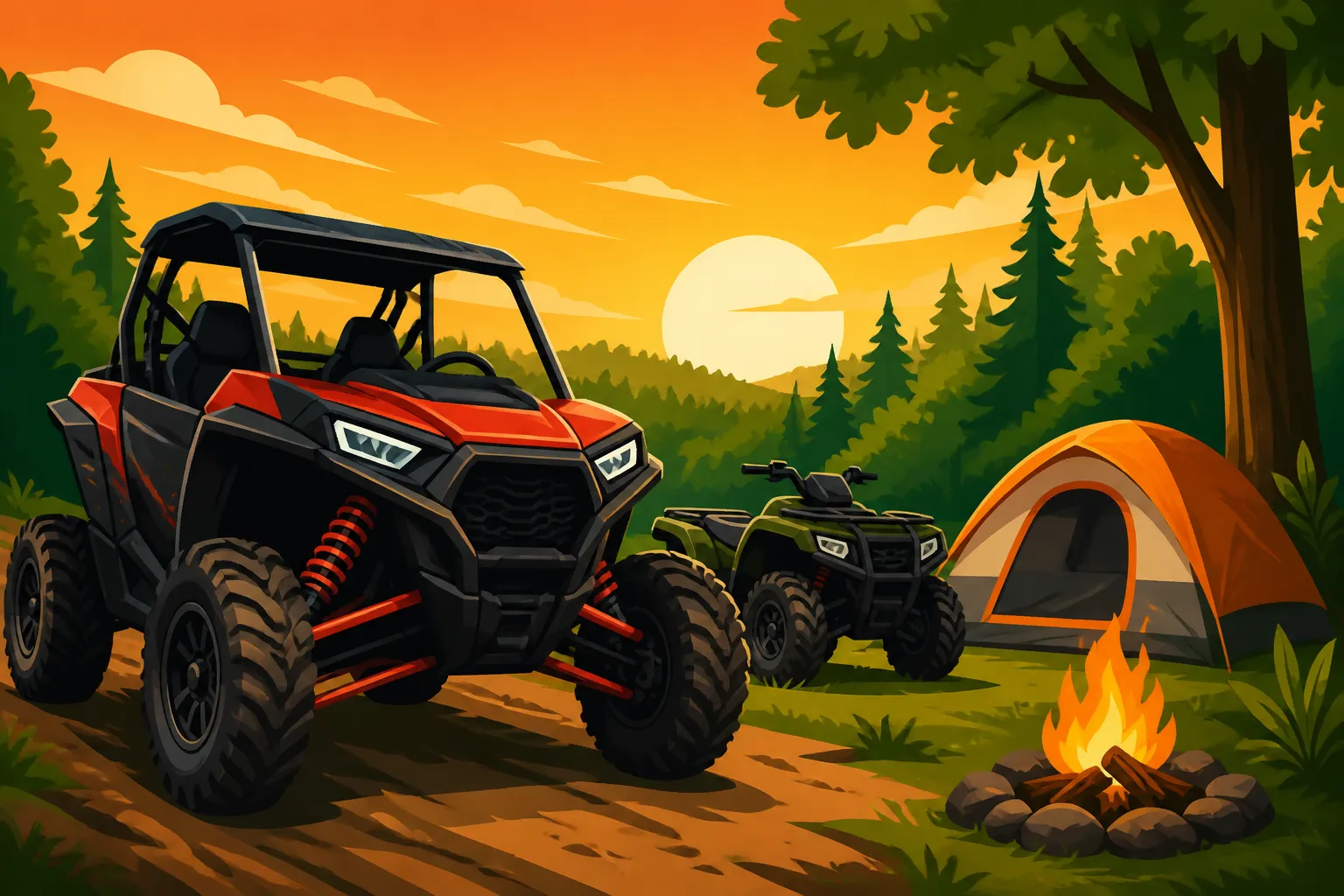
Your campsite needs to work for more than the place where you sleep. Think about the full footprint: tow vehicle, trailer, ORVs, tent or camper, cooking space, and the path people will use to move around after dark. A site that looks generous on a campground map can feel tight when a ramp is down and muddy gear is spread out.
| Camping setup | What to check before booking | Common planning concern |
|---|---|---|
| Tent and passenger vehicle | Tent space, vehicle parking, ground conditions, and access to restrooms or water | Rain, uneven ground, and wet riding gear |
| Pickup with an ORV trailer | Site length, turning space, trailer parking, and unloading rules | Limited room to maneuver or park |
| Camper or motorhome | Site dimensions, access roads, hookups if needed, and vehicle limits | A narrow approach or a site that cannot fit the full rig |
| Group with multiple machines | Number of permitted vehicles, shared-site rules, and overflow parking | Assuming one reservation covers the whole group |
If you’re towing a machine on a trailer, the last turn into a campsite matters. Narrow lanes, soft shoulders, tight loops, or low branches can turn arrival into a difficult backing exercise. Read the access details carefully, and call with the rig’s approximate length if the site information is vague. Planning parking for a state recreation area is its own task; see Parking a Trailer at a State Recreation Area before you commit to a site.
Decide how close you need to be to the riding area
A campsite close to the trail entrance can make early starts and quick breaks easier. A campground farther away may offer a better fit for your camper, quieter nights, or facilities that suit your family. There isn’t one right answer. The useful question is whether the extra drive is worth the camping arrangement you gain.
For families with young riders, a shorter morning drive can prevent the day from starting with an argument about helmets, snacks, and forgotten gloves. For a group of adults with a large trailer, a site with easier access may matter more than being the closest possible place to the riding area. Map the route between the campsite and the trail entrance before leaving, and allow for the fact that towing takes longer than driving a car.
Mapping apps can help you visualize roads and compare campground locations, but don’t treat a recreational trail line as proof that you may ride from camp to the trailhead. For example, onX Offroad can help you explore route context and organize ride planning, while official Indiana DNR maps and property rules should guide decisions about permitted access. Use Indiana Trail Maps From the DNR to check official trail information, and keep the campground-to-trail drive on routes open to your vehicle.
Plan the riding day around camping
Keep riding access, permits, and campground access separate
A campsite reservation does not automatically serve as a trail permit, and a trail permit does not automatically include a campsite. Treat these as separate items on your planning list. Confirm what each rider and machine needs, where permits are obtained, and whether the campground has separate admission or check-in requirements. If you’re riding with visitors from another state, verify the rules that apply to their machines before the group arrives.
The easiest time to resolve permit questions is at home, not at the gate with helmets on and engines loaded. Make a simple list of the paperwork and credentials your group expects to need. Keep confirmation details somewhere you can reach if cell service is unreliable. Indiana Permits for ORV Trails Explained provides useful background on the trail-permit side of planning; then check the rules for the particular property you’ll visit.
Be especially careful if your itinerary includes more than one riding area. An overnight stop between destinations can make a two-park weekend feel manageable, but it doesn’t make the trail rules identical. Confirm access, camping, permits, and operating conditions separately at each location. Don’t assume that a permit or approval for one area carries over to another.
Build a realistic schedule for arrival and departure
A riding weekend usually takes longer than the map suggests. You have to load the machines, reach the area, check in, set up camp, unload, secure equipment, and get everyone ready to ride. If you arrive just before dark, even a straightforward campsite can feel chaotic—especially after a long drive with a trailer.
Plan to reach camp with enough daylight to park, level a camper if needed, and inspect the trailer and tie-downs. If your group can’t arrive early, decide in advance who will handle check-in, who will guide the tow vehicle, and where the other vehicles should wait. Never let the excitement of arriving push you into unloading or riding in an area where it isn’t allowed.
On departure day, give yourselves time to pack without rushing. Muddy machines may need cleaning before they go back on the trailer, and wet tents or riding clothes need to be packed in a way that won’t soak everything else. Check the departure instructions, campground quiet or vehicle rules, and trail status before you set off. Indiana Trail Closures to Check is relevant because closures and conditions can affect whether the day’s ride is possible at all.
Pack for camping, mud, and changing conditions
Prepare for the ground you’re likely to encounter
Indiana riding areas can include reclaimed mine terrain, hills, loose material, and clay that becomes difficult after rain. A dry forecast at home doesn’t guarantee firm ground at the riding area. Check recent conditions before departure, especially if rain has passed through the region. Wet clay can cling to tires and equipment, while muddy trailer approaches can make unloading and parking more challenging.
Pack footwear that can handle both the campsite and the trailhead. A pair of shoes kept dry for the campsite makes a real difference when riding boots are wet or covered in mud. Bring towels, spare gloves, and a place to separate dirty gear from sleeping bags and clean clothes. If you’re camping with children, pack extra layers; a kid who is comfortable riding can still get chilled while sitting around camp after sunset.
Cleaning machines before loading helps keep mud out of the trailer, but follow posted instructions and use designated wash areas where available. Don’t assume that washing is allowed at the campsite. The small amount of time spent checking the rules can prevent a messy cleanup—or damage to the site—from becoming the last thing everyone remembers about the weekend.
Bring enough supplies without relying on campground conveniences
Before you leave, confirm which facilities are available and what you’ll need to bring. A campground description may not answer practical questions about drinking water, restrooms, electricity, waste disposal, fire rules, or showers. Bring essentials based on what is confirmed, and have a backup plan for anything your group considers necessary.
A useful packing approach is to divide supplies into three groups: camping basics, riding gear, and machine support. Camping basics include shelter, bedding, food, lighting, and weather protection. Riding gear includes helmets, eye protection, gloves, and clean clothing for afterward. Machine support includes tools and the recovery or repair equipment appropriate to your machines and experience. This keeps you from remembering every riding item while forgetting something as simple as a flashlight.
Navigation deserves a backup plan, too. onX Offroad may help riders review their planned routes before they arrive, but download or save the information you’ll need while you still have a reliable connection. Carry official property information and follow posted signs when on site. A phone map can be useful; it should not replace trail markers, staff directions, or current closure notices.
Make camp safe, courteous, and easy to leave
Keep people, equipment, and vehicles organized
After a day on the trail, everyone is tired, dusty, and ready to eat. That’s when a little campsite organization pays off. Park the truck and trailer where permitted, keep walking paths clear, and choose one spot for helmets, gloves, keys, and small tools. A helmet tossed under a wet jacket or keys left in a machine can make the next morning more frustrating than it needs to be.
Keep children away from moving vehicles and machines, particularly while a trailer is being positioned or an ORV is being loaded. Assign one adult to guide the driver if visibility is limited, and agree on clear hand signals before backing. Avoid running machines around the campground unless the property expressly permits it. A campsite is a shared space, not a warm-up area.
Secure machines and valuables when you leave camp. Store keys, tools, and riding gear consistently, and don’t leave loose items where wind or rain can scatter them. If you have a group, agree on a time and meeting point before anyone heads to the trail. When cell coverage is weak, a simple plan is much better than hoping everyone can call when something changes.
Respect campground neighbors and riding-area rules
A shared campground can bring together families, hikers, campers, and riders who keep different schedules. Keep noise down, follow posted quiet-hour rules, and don’t run an engine near someone else’s tent or camper. Use only the site, road, or parking area assigned to you. If the campground has fire restrictions or designated fire areas, follow them even when other visitors appear to be doing something different.
On the trail, stay on marked routes and ride at a pace that fits your ability and the conditions. Yield courteously, leave space for oncoming machines, and avoid spinning tires or making new paths around muddy sections. Trail etiquette protects both the riding area and the experience other visitors came for. Indiana Trail Etiquette on Shared Ground is a helpful companion for planning a ride with mixed users and different skill levels.
Before you depart, collect food scraps, trash, and small items that can be easy to miss in the grass. Check around the fire area or picnic table, inspect the campsite for dropped gear, and make sure the trailer is ready for the road. A last walk around the site is especially worthwhile when a group has multiple machines and several vehicles. It’s easier to catch a forgotten tie-down or water bottle before you’re miles down the road.
Use a final planning check before the trip
A brief check a day or two before departure can catch the problems that otherwise appear at the gate. Reconfirm the campsite, route, trail access, and current riding conditions. Check that everyone knows the meeting location and has the gear they are responsible for bringing. If you’re traveling with another family, share the practical details—not just a pin on a map.
Use this list as a final check:
- Confirm overnight camping is allowed at your chosen location and understand where to camp.
- Verify the site can accommodate your tent, camper, tow vehicle, and trailer.
- Check campground access and arrival instructions.
- Confirm riding access, permits, and trail status separately from the campsite.
- Review the route between camp and the riding area, including a backup route if needed.
- Pack for wet ground, changing weather, and muddy gear.
- Save the contact details and property information your group may need.
- Agree on where to meet if riders or vehicles become separated.
- Plan to leave the campsite clean and the machines secured for the drive home.
A few calls and checks can turn a complicated weekend into a much more comfortable one. That preparation is particularly valuable when you’re towing a trailer, traveling with children, or visiting a property for the first time. It lets you spend less time sorting out access and more time enjoying the ride and the people you came with.
Disclaimer
This article is for general informational purposes only and does not constitute professional advice. Laws, prices and regulations vary by location and change over time. Consult a qualified professional for guidance on your specific situation.