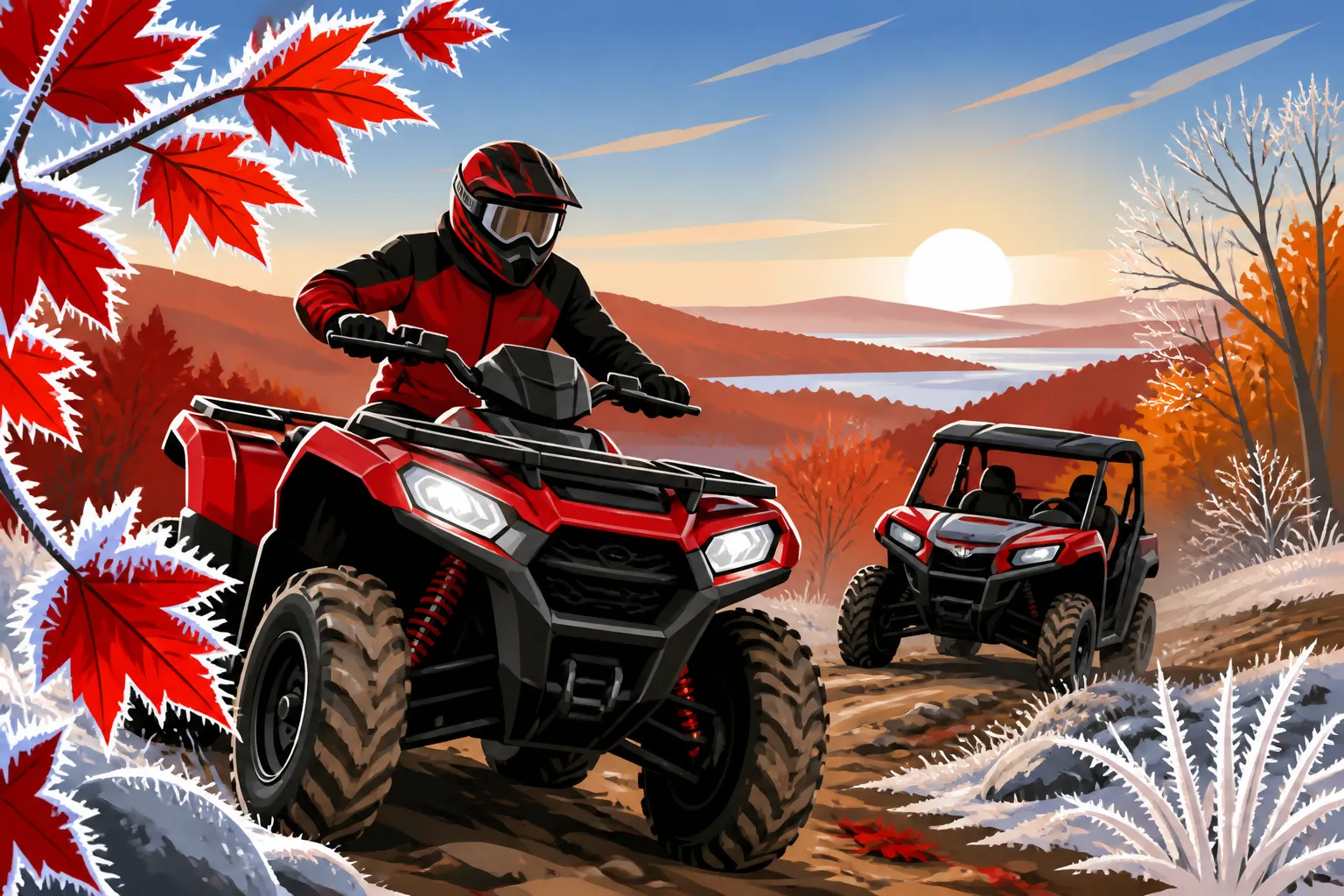
Riding Redbird After First Frost
A first frost can make a Redbird ride feel like a different trip: the staging area is cold, shaded ground may be slick, and a trail that looked dry can still hold damp clay. At Redbird near Dugger, Indiana, the best plan is to prepare for changing traction, shorter comfortable riding windows, and conditions that can shift as the ground warms.
What First Frost Changes at Redbird
Expect different traction from one part of a trail to the next
A light frost does not mean every trail is frozen or slippery. It can leave exposed grass and shaded surfaces slick while nearby ground feels firm. As sunlight warms those areas, the surface may soften again. On reclaimed mine terrain, a small change in moisture can affect how tires grip clay, ruts, and uneven slopes.
That patchwork is what catches riders off guard. You might roll across a dry-looking section, then reach a shaded dip where the tires lose traction sooner than expected. The reverse can happen too: an exposed section may soften while a sheltered trail remains firm. Treat each new surface as a fresh traction check rather than assuming the whole loop will ride the same.
Ease into turns, avoid sudden throttle changes, and give yourself more room to stop. If the machine starts to slide, abrupt steering or braking can make the situation worse. A controlled pace gives you more time to assess the ground and choose a safe line.
Check trail conditions before loading up
A cold morning at home does not tell you exactly what the trails will be like when you arrive. Recent rain, overnight temperatures, sunlight, and wind all affect how the ground behaves. Check park notices and trail updates before leaving, especially if the area has had rain or a freeze-thaw cycle. The guide to Indiana Trail Conditions Before You Ride offers a useful reminder to check conditions rather than relying on yesterday’s report.
You can also use a mapping app such as onX Offroad to prepare a general route and understand the area before you go. Treat any map as a planning aid, not confirmation that a specific trail is open or passable. Follow posted signs and park directions, and turn around if a route is closed or conditions look unsafe.
If rain preceded the frost, be especially cautious about assuming that a cold night made the ground firm. A thin frozen crust can cover softer ground underneath. For more on how moisture affects a ride, see Indiana Riding After Heavy Rain and Indiana Trails Closed After Rain.
| What you notice | Why it matters | A practical response |
|---|---|---|
| Frost on grass or shaded ground | The surface may be slick even when nearby ground is dry | Slow down and avoid sharp turns |
| A hard crust over soft soil | Tires may break through and sink or slide | Use a cautious line and avoid forcing the machine forward |
| Water pooled in a rut | The rut may be deeper or softer than it appears | Stop at a safe distance and assess before entering |
| Changing traction between sun and shade | Conditions may shift across a short distance | Reduce speed and reassess often |
| Trail closure or warning sign | The route is not available for riding | Turn around and use an open route |
How to Prepare Your ATV or UTV for a Cold Ride
Give the machine a careful pre-ride check
Cold mornings make a routine inspection especially worthwhile. Check tire condition and pressure according to the machine manufacturer’s guidance, then inspect the tires for embedded debris or damage. Do not assume that changing pressure will solve a slippery surface; the right setup depends on the machine, tires, terrain, and manufacturer recommendations.
Before unloading, look over the brakes, steering, throttle, lights, and visible suspension components. Make sure the machine has enough fuel for the outing and that the battery starts it reliably. A slow start at home is much easier to deal with than a no-start situation in a cold staging area.
For a UTV, check seat belts and doors or nets before riding. Secure loose gear so it cannot shift during a climb or sudden stop. Carry basic items appropriate to your machine and trip, such as a tool kit, tire repair supplies, water, and a way to contact your riding group. Keep equipment secured and within the vehicle’s storage capacity.
Dress for the ride, not just the parking lot
The temperature can feel very different once you are moving. Wind through a helmet or an open UTV can chill hands and faces, while active riding may make heavy layers uncomfortable. A flexible layering system usually works better than wearing one bulky outfit: start with a comfortable base, add an insulating layer, and bring an outer layer that blocks wind and light moisture.
Gloves deserve particular attention. Cold fingers make it harder to operate controls smoothly, which matters when the trail is slick. Bring a spare dry pair if you have room. Warm socks and footwear that stays comfortable when damp can also make a long morning much more enjoyable.
Pack a dry change of clothing in the tow vehicle, especially if the forecast includes damp conditions. Cold-weather riding can turn a minor splash or a stopped machine into a miserable wait. If someone in the group is getting chilled, take a break and warm up rather than pushing through because the trail plan says you should.
Ride More Conservatively on Frost-Affected Trails
Start slowly and adjust to the ground
The first stretch of the ride is a good time to settle into the conditions. Keep your speed modest, leave space between machines, and pay attention to how the tires respond when braking and turning. You are not trying to test the limits of traction; you are learning what the surface is offering that day.
On a climb, choose a steady, controlled approach rather than charging at the slope. Avoid stopping on a steep or slick section if you can safely keep moving, but do not continue if the line appears beyond your ability or the machine’s capability. On descents, keep your speed in check and avoid abrupt inputs. A rut that looks manageable from above may be deeper or more slippery than it appears from the bottom.
When riding with others, agree on a simple plan before entering a difficult section. Leave enough room to avoid a collision if the lead rider slows, and do not bunch up on a hill. If one machine gets stuck, give the rider space and use a recovery plan suited to the equipment. Avoid standing in a potential pull line or placing yourself where a machine could slide toward you.
Be willing to change the plan
A mapped route is only a starting point. With onX Offroad, you can review your planned route and keep track of where you are, but posted park information and conditions on the ground should guide the ride. If a trail is closed, blocked, too wet, or beyond the group’s comfort level, turn around rather than trying to find a way around the restriction.
That decision is not a wasted trip. Frost can make a familiar trail feel unfamiliar, and the safest route may be shorter than the one you planned. If the group includes newer riders, children, or machines with different capabilities, choose terrain that gives everyone room to ride comfortably. The advice in Indiana Trail Etiquette on Shared Ground is especially useful when riders have different speeds and experience levels.
A route plan should include a meeting point and a way to regroup if machines become separated. Cell reception can vary across rural riding areas, so do not make a phone connection your only plan for finding one another. Keep the group together, share route expectations, and tell someone outside the ride where you expect to be.
Make the Redbird Day More Comfortable and Responsible
Plan around daylight, breaks, and the drive home
Cold-weather comfort is easier to manage when you avoid turning the day into a race against time. Allow room for unloading, a slow first loop, breaks, and packing up. Check the park’s current operating information before you go; do not assume hours or access rules based on a previous visit. The overview of Redbird Off-Road State Recreation Area can help you plan the basics, while Riding Redbird Before the Gate Shuts is a reminder to leave enough time to finish and exit responsibly.
Bring water and food that are easy to manage in cool weather. Riders sometimes drink less when it is cold, even though they still need fluids. A warm drink in the tow vehicle can make a break more inviting, but keep the riding portion of the day focused and alert. Fatigue and cold hands can make it harder to respond smoothly to changing terrain.
If you are camping or staying nearby, check the practical details ahead of time, including where overnight parking is permitted and what facilities are available. Camping Near Indiana ORV Trails can help you think through those arrangements. Keep the machine secured when unattended and follow all posted instructions at the site.
Protect the trails and ride within park rules
Frost does not automatically make a trail ready for traffic. If tires begin cutting deep ruts or the surface is breaking apart, stop and consider whether continuing will damage the trail. Stay on designated routes, obey closures, and avoid widening a trail to get around a muddy or icy section. That kind of shortcut can leave lasting damage and may lead other riders into unsafe ground.
Pack out trash and leave the staging area as you found it. After riding, inspect the machine for packed mud around the wheels, brakes, and radiator area, following the owner’s manual for safe cleaning. Remove debris before it dries and hardens, and avoid washing mud into drainage areas or waterways.
Finally, review the rules that apply to your machine and riding group before the trip. Helmet requirements can depend on the riding area and rider circumstances, so check Indiana Helmet Rules at a State ORV Area rather than relying on what another rider remembers. If it is your first Redbird visit, Indiana Trail Seasons and Conditions is another helpful planning reference. A little preparation makes a first-frost ride more comfortable—and helps keep the trails usable for the next visit.
Disclaimer
This article is for general informational purposes only and does not constitute professional advice. Laws, prices and regulations vary by location and change over time. Consult a qualified professional for guidance on your specific situation.