Snow on a Reclaimed Mine Bench
Snow can make a reclaimed mine trail look smooth and inviting, while hiding ruts, slick clay, frozen puddles, and sudden drop-offs. If you’re planning a winter ride in Indiana, this guide explains how snow changes old mine benches, what to check before unloading, and how to make safer decisions at places such as Redbird and Interlake.
Why snow changes reclaimed mine trails
A smooth-looking bench may hide rough ground
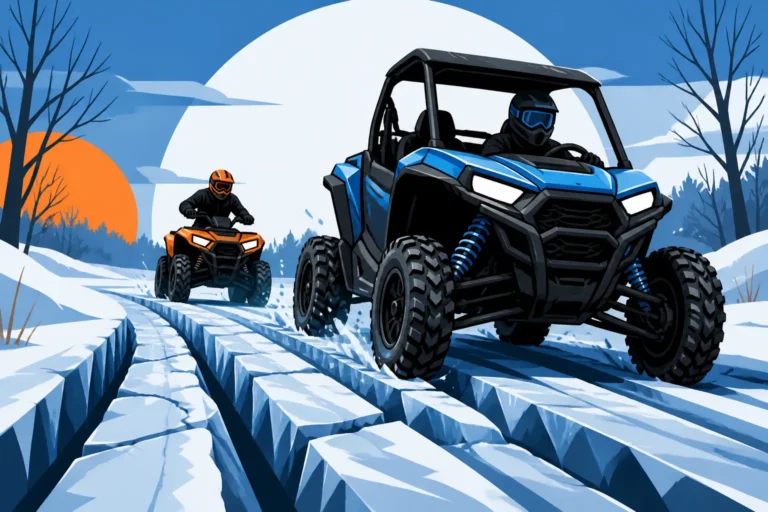
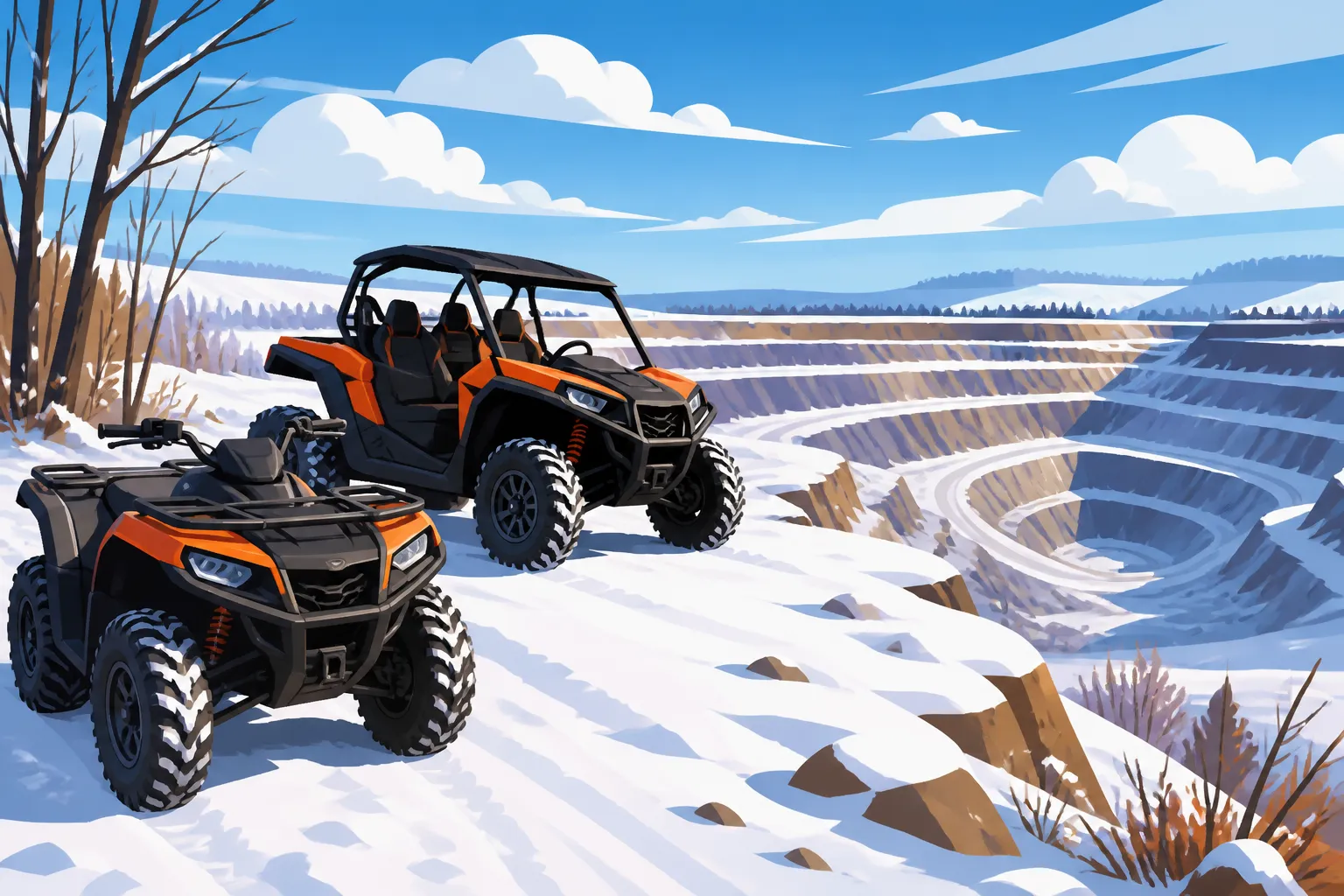
A reclaimed mine bench is a relatively level stretch cut into or across a slope. In southern Indiana, old mine terrain can include clay, loose spoil, steep faces, drainage channels, and uneven ground shaped by past excavation. A dusting of snow softens the outlines of those features, so a surface that looks flat from the staging area may conceal a rut, washout, or sharp edge.
The trouble is not limited to deep snow. A thin layer can cover the difference between packed ground and loose material, making it harder to judge whether a tire will grip. Snow may also bridge a shallow hole or pool, leaving you to discover the obstacle when a wheel drops through. Slow down when the surface changes color or texture, especially near a bench edge, a drainage line, or a turn where water naturally collects.
Reclaimed mine ground can also change noticeably from one part of a route to another. A packed track may feel firm, while the next section is soft, rutted, or slick under the snow. Read more about the terrain in Indiana’s Reclaimed Mine Riding—and remember that the ground beneath a winter coating may not behave like the surface you can see.
Freeze and thaw make traction unpredictable
Frozen ground can feel firm early in the day, then soften as temperatures rise. Snowmelt and runoff can leave a thin film of water over clay, or fill low spots that were frozen solid earlier. That combination can turn a predictable climb or turn into a slippery one, even if the snow cover looks unchanged.
Ruts deserve special attention. When water freezes inside them, a rut can become a hard groove that pulls a tire off its intended line. When the ice softens, the same rut may be slick or muddy. Avoid treating a frozen rut as a safe, reliable track just because it held firm on the way in. Conditions can vary with shade, slope, and exposure to wind and sun.
If you encounter a section that feels uncertain, stop somewhere stable and assess it before committing. Ask yourself whether you can turn around safely, whether the trail narrows beyond the obstacle, and whether there is enough room to recover without edging toward a drop. Winter riding is often less about finding the most exciting line and more about recognizing when a line is not worth taking.
Plan a winter ride before you reach the trailhead
Confirm the park is open and the route is suitable
Snow on the ground does not mean a riding area is open, and an open entrance does not necessarily mean every trail is available. Seasonal schedules, weather-related closures, maintenance, and local conditions can affect where you may ride. Check the park’s official notices before setting out, then check again close to departure if the weather has changed.
This matters at places such as Redbird Off-Road State Recreation Area and Interlake near Lynnville, where the riding experience depends on the route, terrain, and conditions that day. Use park maps and posted signs to stay on authorized trails. Do not assume a familiar summer route is suitable in winter or that an unmarked track is an acceptable alternative if a trail is closed.
A map app can help with planning, but it cannot confirm that a trail is open or safe. If you use onX Offroad, download the relevant map area before leaving home and check that you can access it without cell service. Treat it as a navigation aid—not as a substitute for current park information, trail signs, or sound judgment. For a practical pre-trip checklist, see Indiana Trail Conditions Before You Ride and Indiana Trail Closures to Check First.
Match the plan to daylight, weather, and your group
A winter trip can take longer than the same ride in warmer weather. Cold hands, reduced visibility, slower progress, and cautious route choices all add time. Plan a shorter loop than you might choose in summer, and set a turnaround point that leaves a comfortable margin before dark. Carry a charged phone, but do not count on having service throughout a ride.
Tell someone who is not riding with you where you plan to go and when you expect to be back. If your group splits, decide on a meeting point and a simple way to regroup before you start. A rider who stops to help with a stuck machine can become difficult to find if the others continue down the trail without noticing.
Navigation tools can be useful around confusing junctions or when snow makes tracks harder to follow. onX Offroad may help you keep track of your position where its map coverage and offline features are available. Before riding, compare the route shown on your device with the authorized trail map and the signs at the site. If the information does not match, pause and ask park staff rather than guessing.
| Trail condition | What it can mean | A cautious response |
|---|---|---|
| Thin snow over a smooth bench | Ruts, rocks, or holes may be hidden | Reduce speed and keep a wider following distance |
| Hard, frozen grooves | Tires may be pulled into a rut or lose grip | Avoid abrupt steering and braking |
| Wet or soft clay | Traction can change quickly | Do not enter a slope you cannot confidently exit |
| Snow-covered edge or drop-off | The ground boundary may be difficult to see | Stay well away from edges and unknown shoulders |
| Standing water under snow | Depth and firmness are hard to judge | Do not ride through unless you can assess it safely |
Ride with traction and recovery in mind
Adjust speed and spacing instead of chasing momentum
On snow-covered mine terrain, smooth control usually matters more than speed. Make gradual steering inputs and avoid sudden throttle changes that can spin the tires. Leave extra space between machines so the rider ahead has room to slow down, choose another line, or stop without creating a chain reaction.
Keep your line simple. Crossing a slope at an angle or climbing a snowy face may expose you to a slide, hidden ruts, or an awkward recovery. If you cannot see the surface beyond a rise, do not charge over it to find out. Stop in a safe place, look ahead on foot only if the ground is stable and it is permitted, and choose a route that leaves room to turn around.
Do not let the group’s excitement push someone into a climb they are unsure about. A rider who says a section feels wrong should be taken seriously. If the route becomes slicker or more exposed than expected, turning back is a sensible decision—not a failed ride. For background on seasonal conditions, Frozen Ruts at Interlake in January offers a useful reminder that winter ground can be difficult to read.
Prepare the machine and the people riding it
Start with a basic inspection. Check tires for damage and appropriate pressure, confirm that brakes and lights work, and make sure the machine is carrying no loose gear that could shift on uneven ground. Cold weather can make equipment and people less forgiving: a weak battery, stiff controls, or numb fingers may complicate an otherwise manageable ride.
Avoid making large tire-pressure changes based on guesswork. The right setup depends on the machine, tire, terrain, and manufacturer guidance. If you are considering an adjustment for clay, Tire Pressure for Reclaimed Clay can help you think through the terrain-specific factors. A pressure change is not a replacement for slowing down or choosing a safer route.
Wear layers that allow you to move and operate the machine comfortably. Bring gloves suited to the temperature, eye protection, and a spare dry layer stored in a protected bag. Riders should also follow the applicable park safety rules, including helmet requirements; review Indiana Helmet Rules at a State ORV Area before heading out. Cold and fatigue can affect judgment, so plan breaks and speak up early if someone is getting uncomfortable.
Have a recovery plan before anyone gets stuck
A machine sliding into a rut or settling into soft ground can quickly turn a short stop into a tiring recovery. Carry recovery equipment that you know how to use, and keep it secured so it cannot become a hazard. A winch or tow strap is only useful if it is rated for the situation and attached to an appropriate recovery point.
Keep bystanders clear of a loaded strap or winch line, and never stand in the likely path of a machine under tension. If you are unsure how to recover a vehicle safely, do not improvise with an unsuitable anchor or pull from a weak component. Call for help or use a safer route out if available. In winter, cold hands and slippery footing make rushed recoveries especially risky.
Before riding, agree on who will lead, who will bring up the rear, and what the group will do if a machine stops. Carry basic tools and a way to contact help, while recognizing that cell service may be unreliable. Respect other riders’ space and avoid blocking a trail while working through a problem. Indiana Trail Etiquette on Shared Ground covers the kind of courtesy that matters even more when everyone is moving cautiously.
Decide when to ride and when to turn around
Let the ground—not the calendar—make the call
A winter date does not guarantee good riding conditions. A cold night may firm up the surface, but a warmer afternoon can soften it. Recent rain, melting snow, and repeated freeze-thaw cycles can leave clay especially slippery. Check the forecast, but also pay attention to what is happening at the park: the entrance area may be firm while shaded low ground remains wet or icy.
If you arrive and find conditions are worse than expected, it is reasonable to change the plan. You might choose a shorter route, stay on an easier permitted section, or skip the ride altogether. Do not use tire tracks from another machine as proof that a route is safe; that rider may have had different equipment, experience, or conditions.
A useful rule is to turn around when you cannot clearly identify a safe way forward and a safe way back. That includes a hidden edge, an uncertain water crossing, a steep section with poor traction, or a trail that is deteriorating faster than your group can manage. Winter conditions can change between the outbound and return legs, so keep enough time and energy for the way back.
Protect the trail as well as your group
Riding a wet, soft surface can deepen ruts and damage trail edges. If your tires are digging in, spinning, or leaving deep tracks, continuing may make the problem worse for the next riders and park staff. Stay on designated routes, avoid cutting around muddy sections, and follow any closures or instructions posted at the site.
Mud and clay can hide trail boundaries just as snow does. Riding off the marked route to bypass a difficult patch may lead onto unstable ground or an unauthorized area. If you are unsure whether a side track is open, do not assume it is a shortcut. Check the park map and signs, and contact staff when clarification is available.
After the ride, inspect the machine before loading it. Remove packed snow and clay where practical, check for damage around tires and underbody components, and make sure gear is not left behind. A little cleanup and a careful review of what conditions you encountered can make the next outing safer. The best winter ride is not necessarily the longest one; it is the one where everyone gets back with enough daylight, energy, and traction to do so safely.
Disclaimer
This article is for general informational purposes only and does not constitute professional advice. Laws, prices and regulations vary by location and change over time. Consult a qualified professional for guidance on your specific situation.